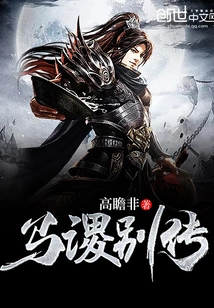
Farewell Biography of Ma Su
by Gao Zhanfei
About This Novel
Relive the story of the Three Kingdoms and explore the historical truth! "Ma Su's Farewell Biography" takes you closer to history. The three sworn brothers in Taoyuan actually had some unknown insider trading; Sun Ce was accidentally assassinated, and there was a lot of mystery behind it; Reinterpret the Battle of Chibi and clear away the millennium grievances of Chiang Kai-shek and Qian; Flooding the Seventh Army was actually an accident in which Cao Cao promoted Guan Yu's death, but it suddenly exhausted Guan Yu's good luck...
Official Sources
What Readers Think
Rating
Community(0)
Official(111)Scraped 1mo ago
Creative passion is fading
Although my level is not high, I have been working hard, and my daily encouragement comes from several old friends, which makes me feel embarrassed. . .
The title issue is seriously inconsistent with the social and cultural background of the time!
The first thing to write a book is to search for relevant information. The etiquette system in the Han Dynasty was very complicated, and the title was one of the key points in etiquette issues. Just after reading the beginning, the modern title "Fourth Brother" appeared. In the Han Dynasty, the title of elder brother was to address the elder brother directly. The fourth one should be the fourth brother, and it is more obvious when meeting outsiders. People who are not familiar with him can judge his origin by seeing his dress, behavior, etc. Generally, warriors are more arrogant. When you are angry, you will be called someone (me), you (you). For courtesy, you will also be called son or strong man. Literary officials are more particular. When familiar friends come to visit at home, they get off the car at the gate of the yard. The host and the guest will be on the left in front of the door. They salute each other, then enter the door, walk on both sides of the road (the origin of the screen wall), then gather together in front of the house to salute, slip into the house, salute in front of the seat, then kneel down and hold hands in salute, and then they can talk about business. This is in line with the etiquette of visiting. It can be seen that the etiquette at that time was very important. Not everyone can talk nonsense. Writing historical novels without historical background and historical and cultural connotation can only be a running account. No matter whether it is well written or not, the attitude of writing determines the quality and connotation of the work!
The author has no research on the place name. Kuai Qi seems to be the prefect of Fangling.
The story is wonderful, well conceived and written, and it's very interesting.
The description of the Battle of Hanzhong is very detailed and reasonable, but there are too few protagonist scenes!
Is Wei Yan's Ziwu Valley conspiracy really Fazheng's idea?
The internal situation of the Hanzhong War is really complicated, and these speculations seem to make sense.
The historical event happened too suddenly! The plot is quite reasonable
It feels a bit messy, mainly because the map is blurry. . .
After all, in the Battle of Hanzhong, Cao Cao had the advantage in terms of military strength, cavalry strength, and the advantage of the home field. It couldn't be one-sided, right?
Rating
Community(0)
Official(111)Scraped 1mo ago
Creative passion is fading
Although my level is not high, I have been working hard, and my daily encouragement comes from several old friends, which makes me feel embarrassed. . .
The title issue is seriously inconsistent with the social and cultural background of the time!
The first thing to write a book is to search for relevant information. The etiquette system in the Han Dynasty was very complicated, and the title was one of the key points in etiquette issues. Just after reading the beginning, the modern title "Fourth Brother" appeared. In the Han Dynasty, the title of elder brother was to address the elder brother directly. The fourth one should be the fourth brother, and it is more obvious when meeting outsiders. People who are not familiar with him can judge his origin by seeing his dress, behavior, etc. Generally, warriors are more arrogant. When you are angry, you will be called someone (me), you (you). For courtesy, you will also be called son or strong man. Literary officials are more particular. When familiar friends come to visit at home, they get off the car at the gate of the yard. The host and the guest will be on the left in front of the door. They salute each other, then enter the door, walk on both sides of the road (the origin of the screen wall), then gather together in front of the house to salute, slip into the house, salute in front of the seat, then kneel down and hold hands in salute, and then they can talk about business. This is in line with the etiquette of visiting. It can be seen that the etiquette at that time was very important. Not everyone can talk nonsense. Writing historical novels without historical background and historical and cultural connotation can only be a running account. No matter whether it is well written or not, the attitude of writing determines the quality and connotation of the work!
The author has no research on the place name. Kuai Qi seems to be the prefect of Fangling.
The story is wonderful, well conceived and written, and it's very interesting.
The description of the Battle of Hanzhong is very detailed and reasonable, but there are too few protagonist scenes!
Is Wei Yan's Ziwu Valley conspiracy really Fazheng's idea?
The internal situation of the Hanzhong War is really complicated, and these speculations seem to make sense.
The historical event happened too suddenly! The plot is quite reasonable
It feels a bit messy, mainly because the map is blurry. . .
After all, in the Battle of Hanzhong, Cao Cao had the advantage in terms of military strength, cavalry strength, and the advantage of the home field. It couldn't be one-sided, right?
You Might Also Like
Reborn Female General
Qianshan Tea Guest
The Three Kingdoms Began with Riding into Jingzhou Alone
Angry Eyebrows And Droopy Eyes
Silver Fox of the Three Kingdoms
Playing With Basilisk
Non-salted Fish Life in the Three Kingdoms
Batu Caves
Three Kingdoms: I, Ma Su, Just Want to Die
Swordsman In Shu
Three Kingdoms: I Have Been a Human Being for Three Generations, and I Have Been the Emperor of the Han Dynasty for Two Generations
Bai Linzhan
Ji Hantian Khan
Jiange Girl
I Have Cao Cao, Why Should I Fear the World?
Righteous And Carefree
To Revive the Great Han Dynasty, We Must Start with Dong Zhuo
Write Three Chapters A Day
Among the People, Lu Bu Helped the Han Dynasty
Old Mountains And Rivers