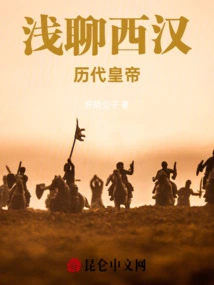
A Brief Talk About the Characters of the Western Han Dynasty
by Mr. Xianmo
About This Novel
When we open the long scroll of Chinese history, the Western Han Dynasty is undoubtedly one of the most dazzling chapters. It inherited the system of Qin and inspired the soul of Han. With more than two hundred years of national destiny, it established the basic pattern of Chinese civilization and shaped the cultural symbols of "Han people", "Han nationality" and "Chinese language" that are still in use today. From Liu Bang, who conquered the world with a three-foot sword, to Liu Che, who was a man of great talent and strategy, and expanded his territory, to Liu Xun, who worked hard to achieve the "Zhao Xuan Zhongxing", the successive emperors of the Western Han Dynasty (including the key rulers such as the young emperor and the deposed emperor) each wrote the rise, prosperity, turning point and end of a dynasty with their different personalities, wisdom and choices. This book is not a simple collection of imperial chronicles, but an attempt to restore the true face of each Western Han emperor with "people" as the core: their growth and difficulties, their ambitions and helplessness, how their decisions affected the direction of the country, and how their merits and demerits were commented on by later generations. We will follow Liu Bang and witness the difficulties of a dynasty emerging from war; follow Emperors Wen and Jing to experience the forbearance of recuperating and accumulating national strength; follow Emperor Wu of the Han Dynasty to appreciate the heroic spirit of expanding territory and respecting Confucianism; we will also follow the emperors after Zhaoxuan to witness the inevitable and sighing of the dynasty's transition from prosperity to decline. In the narration, we not only focus on official history, elaborating on key details in "Historical Records" and "Han Shu", but also take into account the historical context to explain the impact of institutions, culture, and social background on the emperor's decision-making; we neither deify the heroes nor criticize the ancients, and strive to objectively present the role and value of each emperor on the historical stage.
Official Sources
What Readers Think
Rating
Community(0)
Rating
Community(0)
You Might Also Like
Possessed by Lu Bu
The King Is No More Than A Hegemon
Hanxiang
Jie And 2
The Poor Man's Two Thousand Years
Non-player Character

Reborn Female General
Qianshan Tea Guest
Tomorrow
Jie And 2
Shao Song
Grenades Are Afraid Of Water
My Father, Emperor Gaozu of the Han Dynasty
History Wolf
My Brother-in-law is the Prince
Go Up The Mountain And Hit The Tiger On The Forehead
Qin Gong
When It Rains, I Bring A Knife
The World's Heroes
Gao Yue