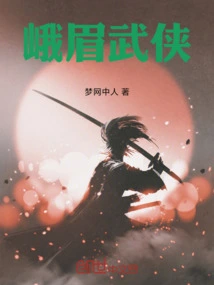
Emei Martial Arts
About This Novel
The novel uses the "White Ape's Clothes and Crown" as a token to connect the five historical periods from the Spring and Autumn Period and the Warring States Period to the late Ming and early Qing Dynasties and the development of Emei sect's martial arts. In the Warring States Period, after the defeat of Situ Xuankong, the general of Shu, he observed the ape and realized Taoism, created the "Tong-arm Boxing", split the white clothes as a legacy, and opened the Emei lineage. In the Wei, Jin, and Southern and Northern Dynasties, Master Danran integrated Buddhism, Taoism, and martial arts and hid them in murals, and the Black Clothes Society began to take revenge; in the Southern Song Dynasty, Taoist Baimei wrote classics, and martial arts protected civilization under the iron heel of Mongolia; in the Ming Dynasty, the Eight-leaf Master formed an anti-Japanese formation, and revealed the spirit of "White Ape" as the name shared by three generations of masters and apprentices. In the early Qing Dynasty, Yunshu, a tea-picking girl, realized during the three-party siege: "Clothes and hats are not objects, firewood is in people." Thousands of years of grudges finally disappeared, martial arts dispersed into opera, health care, and disappeared in the market. White clothes, white apes, and clothes are sublimated from physical objects to spiritual symbols, echoing that "the essence of martial arts is not a killing technique, but a cultural bloodline." The modern stage reappears the ancient tricks, and the fire is endless, and the millennium inheritance is reborn in the fission of the times.
Official Sources
What Readers Think
Rating
Community(0)
Rating
Community(0)
You Might Also Like
Wilderness Live Broadcast: Alone in the World
Countercurrent Sand

Reborn Female General
Qianshan Tea Guest
Rebirth in the Southern Song Dynasty and Seek Immortality
Siming Mountain New Rain
Martial Arts: the Starting Reward is Full-level Magical Skills
The Downtrodden Little Chastity
One Person Cuts Through the World
Queyue
The Days When I Was Working as an Errand in the West Factory
Listen To The Tide
Traveling Through Yuhuatian, the Beginning of the Sunflower Collection is Complete
With 20,000 Updates A Day, I Will Become A God
I Open a Medical Clinic in Zongwu
Swallow The Wind And Drink The Moon
Jiuding Ji
I Eat Tomatoes
Peach and Plum Spring Breeze and a Glass of Wine
Xiaolou Listens To The Wind And Clouds