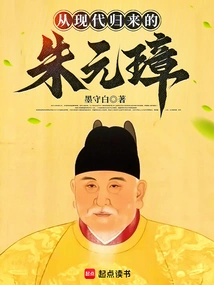
Zhu Yuanzhang Returns from Modern Times
by Mo Shoubai
About This Novel
[The only novel with Zhu Yuanzhang as the protagonist, arming the mind with modern knowledge and constantly exciting, not to be missed! In the thirty-first year of Hongwu, Zhu Yuanzhang, the founding emperor of the Ming Dynasty, completely closed his eyes, but his heroic spirit remained intact, awakening his memory in the body of a modern ten-year-old child. Fifteen years later, Zhu Yuanzhang, who had become an associate professor in the history department of a prestigious university, cried until he fainted in front of the Xiaoling Mausoleum of the Ming Dynasty. When he opened his eyes again, he actually returned to Hongwu eight years ago! After confirming that everything was true, Zhu Yuanzhang smiled. He held the Emperor's Sword at his waist and stood up from the dragon chair...
Official Sources
What Readers Think
Rating
Community(0)
Official(11)Scraped 2mo ago
Very novel perspective
After reading too many time-travelers, even though there are many reform measures, usually a large part of the novel is still reflected in how the time-travelers gain the trust of the emperor and gain status. This book directly assumes that Zhu Laoba himself is a time traveler, eliminating the need to describe the protagonist's awesomeness and the description of the protagonist's interaction with the emperor, so that the perspective can be completely focused on the changes in society and the court, and a detailed look at how a series of measures brought by the time traveler changed the world. For traditional readers of refreshing novels, the lack of a time-travel protagonist who can be substituted may feel that the article is not interesting enough. However, for those who have read too much about the system changes in the early stage, but ended up mentioning or even not mentioning the time-travel novel, I really want to read a work that focuses on social development.
First of all, the subject matter should be pretty good
Although I also want to see how the author wrote about Zhu Yuanzhang taking the people's road in the early Ming Dynasty when he founded the country for this point of view. Indeed, if I don't read it with my brain, I will be full of fantasy, but I will also think about what Lao Zhu would do if it really happened. After all, Lao Zhu still relied on the noble class to found the country, such as If the noble class is destroyed, the government decrees are blocked, and if you can't reach the bottom, there is a high probability that there is nothing you can do. Moreover, if there is no theoretical basis and no suitable environment for the steam engine, there is a high probability that it will still be classified as a miscellaneous subject. However, this book can be regarded as a book based on modern young people's yearning for the people to be the masters of the country.
First of all, we must affirm the author's writing style that pays attention to history. Although the author can't help but feel a sense of macro imbalance in the later stages of writing. But in the early stage, I think it was still very well written, especially the strategizing of Zhu Yuanzhang, the protagonist of this article who returned from modern times. Compared with Zhu Yuanzhang in history, he has less of a king and more of a world of mountains and rivers. Of course, 15 years of modern life account for a very important part of Zhu Yuanzhang's memory. But after all, he had been a general and an emperor for decades in ancient times. After all, his heart is still ancient. Even though he shows an adaptable life in modern times, in ancient times he was still the emperor who became a lone hero. The writing method of this article is only suitable for ordinary protagonist flow, and it is not suitable for group portrait flow. Otherwise, I personally prefer the group-oriented Daming. But generally this is a writing method often encountered in novels with two protagonists. But to be honest, there are only so many interesting points in this novel. It mainly shows the reform and the reformed Ming Dynasty. If this novel is to be written at a later stage, it really has to rely on the author's writing skills.
good
The crops are ripe thousands of times, and the people are long live for the first time
Good grass,,,,,,,,,,,,,,,, let the other party build a house, big brother introduces new ideas
good looking good looking
Looking at the novel from a new perspective, the emperor goes to the future to study, and uses the learned knowledge and broadened horizons to carry out reform and development.
It's okay, the ideas are good, the plot is reasonable, and the overall reading is quite smooth.
The author should write less about strategies, there are many logical problems, such as conferring kings overseas. . . In ancient times, the essence of making a prince a king was to withdraw from the throne and drive out the core group of powerful people to guard the border. This idea of making a king overseas is equivalent to saying that the land he wants is not given, the power he wants is not given, and he will not get a cent and starve to death. Unless you fight now, you will have to use food and troops, or the loss will directly damage the rights and interests of the central government. If you fight, the good guys will become their own territory. It is more life-saving than being sealed at home. It is a king of the earth. Historically, the king of the Ming Dynasty only gave half of the military power, did not give the government finances, and had guards to check and balance. The Song Dynasty only gave the title of King without a back cover.
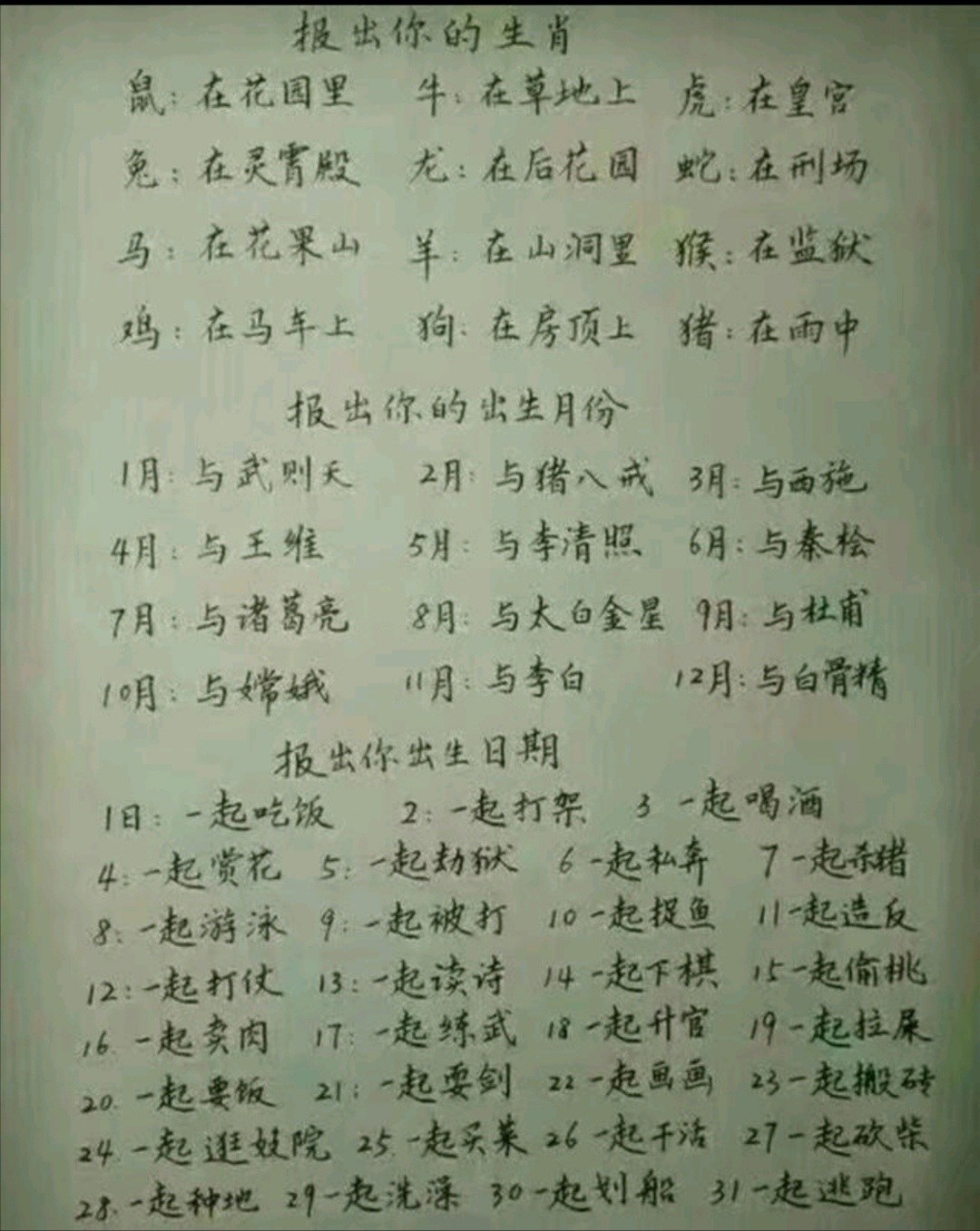
I took a picture from next door for everyone to play with.
It's nothing, it's just that some of the three companies are normal, and some are just... Hehe
The book was okay to read. The first hundred or so chapters were normal. After that, the word count started to get really verbose. I wrote down all kinds of inner activities, thoughts, and various educations. Aren't we educated enough these days? Reading a novel can still educate you.
Rating
Community(0)
Official(11)Scraped 2mo ago
Very novel perspective
After reading too many time-travelers, even though there are many reform measures, usually a large part of the novel is still reflected in how the time-travelers gain the trust of the emperor and gain status. This book directly assumes that Zhu Laoba himself is a time traveler, eliminating the need to describe the protagonist's awesomeness and the description of the protagonist's interaction with the emperor, so that the perspective can be completely focused on the changes in society and the court, and a detailed look at how a series of measures brought by the time traveler changed the world. For traditional readers of refreshing novels, the lack of a time-travel protagonist who can be substituted may feel that the article is not interesting enough. However, for those who have read too much about the system changes in the early stage, but ended up mentioning or even not mentioning the time-travel novel, I really want to read a work that focuses on social development.
First of all, the subject matter should be pretty good
Although I also want to see how the author wrote about Zhu Yuanzhang taking the people's road in the early Ming Dynasty when he founded the country for this point of view. Indeed, if I don't read it with my brain, I will be full of fantasy, but I will also think about what Lao Zhu would do if it really happened. After all, Lao Zhu still relied on the noble class to found the country, such as If the noble class is destroyed, the government decrees are blocked, and if you can't reach the bottom, there is a high probability that there is nothing you can do. Moreover, if there is no theoretical basis and no suitable environment for the steam engine, there is a high probability that it will still be classified as a miscellaneous subject. However, this book can be regarded as a book based on modern young people's yearning for the people to be the masters of the country.
First of all, we must affirm the author's writing style that pays attention to history. Although the author can't help but feel a sense of macro imbalance in the later stages of writing. But in the early stage, I think it was still very well written, especially the strategizing of Zhu Yuanzhang, the protagonist of this article who returned from modern times. Compared with Zhu Yuanzhang in history, he has less of a king and more of a world of mountains and rivers. Of course, 15 years of modern life account for a very important part of Zhu Yuanzhang's memory. But after all, he had been a general and an emperor for decades in ancient times. After all, his heart is still ancient. Even though he shows an adaptable life in modern times, in ancient times he was still the emperor who became a lone hero. The writing method of this article is only suitable for ordinary protagonist flow, and it is not suitable for group portrait flow. Otherwise, I personally prefer the group-oriented Daming. But generally this is a writing method often encountered in novels with two protagonists. But to be honest, there are only so many interesting points in this novel. It mainly shows the reform and the reformed Ming Dynasty. If this novel is to be written at a later stage, it really has to rely on the author's writing skills.
good
The crops are ripe thousands of times, and the people are long live for the first time
Good grass,,,,,,,,,,,,,,,, let the other party build a house, big brother introduces new ideas
good looking good looking
Looking at the novel from a new perspective, the emperor goes to the future to study, and uses the learned knowledge and broadened horizons to carry out reform and development.
It's okay, the ideas are good, the plot is reasonable, and the overall reading is quite smooth.
The author should write less about strategies, there are many logical problems, such as conferring kings overseas. . . In ancient times, the essence of making a prince a king was to withdraw from the throne and drive out the core group of powerful people to guard the border. This idea of making a king overseas is equivalent to saying that the land he wants is not given, the power he wants is not given, and he will not get a cent and starve to death. Unless you fight now, you will have to use food and troops, or the loss will directly damage the rights and interests of the central government. If you fight, the good guys will become their own territory. It is more life-saving than being sealed at home. It is a king of the earth. Historically, the king of the Ming Dynasty only gave half of the military power, did not give the government finances, and had guards to check and balance. The Song Dynasty only gave the title of King without a back cover.
I took a picture from next door for everyone to play with.
It's nothing, it's just that some of the three companies are normal, and some are just... Hehe
The book was okay to read. The first hundred or so chapters were normal. After that, the word count started to get really verbose. I wrote down all kinds of inner activities, thoughts, and various educations. Aren't we educated enough these days? Reading a novel can still educate you.
Featured in 2 Booklists
Official(2)
[75 points·Time travel and rebirth] The novel tells the story of Zhu Yuanzhang, the founder of the Ming Dynasty, who passed away in the 31st year of Hongwu. A ray of consciousness traveled to modern times and possessed the body of a ten-year-old boy, Zhu Jianjun, retaining complete memories of his past life. Fifteen years later, Zhu Yuanzhang, who had become an associate professor in the history department of a prestigious university, suffered an emotional breakdown in front of the Xiaoling Mausoleum of the Ming Dynasty and was unexpectedly reborn and returned to Hongwu for eight years. Relying on the dual advantages of modern historical literacy and imperial sagacity, he is determined to reverse the fate of the Ming Dynasty, eliminate corruption, reform the system, and at the same time make up for the regrets of his past life - especially the emotional memory of Empress Ma who died young. Through Zhu Yuanzhang's interactions with Prince Zhu Biao and other ministers, as well as events such as the establishment of royal guards and the rectification of officialdom, the plot shows how an emperor who combines modern thinking with ancient iron-fisted methods can reshape the historical trajectory. The work breaks the framework of traditional historical time travel novels with its novel "modern rebirth of ancient emperors" setting. Through the conflict and fusion of Zhu Yuanzhang's dual identities, the work deeply explores the dialectical relationship between historical inevitability and personal initiative. The author cleverly uses Zhu Yuanzhang's modern academic background to give his reform measures rationality (such as reflection on the maritime ban policy), but some plots are slightly idealistic in their simplified treatment of the complexity of ancient society. In terms of character creation, Zhu Yuanzhang not only retains the decisiveness of killing recorded in historical books, but also adds a human touch due to modern experience. In particular, his affectionate portrayal of Empress Ma becomes the emotional anchor throughout the story. Overall, the novel strikes a balance between historical research and artistic fiction, but if it can deepen the nuances of the power struggle in the later period, it will have more ideological depth.

The old author has opened a new book about Zhu Yuanzhang's return after fifteen years of living in modern times. The setting is quite interesting. You can take a look.
You Might Also Like
Reborn Female General
Qianshan Tea Guest
My Aunt is Queen Ma
See The Moonlight
Father Liu Hong, I'm Lying Down
Dan Qianyu
My Father, Emperor Chongzhen, Please Call Me Long Live!
Please Call Me Brother Xiaojiu
Ming Dynasty: He Was in Hongwu and Forced Zhu Yuanzhang to Abdicate
I Feel Unwilling To Do So
I Am Practicing Daily Life in Wanli
Shangguan Bu Shui
Chinese Medicine of the Ming Dynasty: from the Crisis of the Nine Tribes to the Independent Prime Minister of Hongwu
Half Watermelon
Ming Dynasty 1581, My Father Zhang Juzheng!
Sugar Cubes That Are Not Too Late
The Leisurely Life of Qin People
Zhang Jiuwen
Modern History Class Was Observed by Emperors
Indispensable