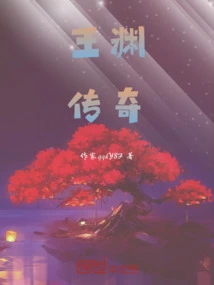
Wang Yuan's Legend
by Fubaile
About This Novel
Character introduction of Wang Yuan and Wang Yuan. Name: Wang Yuan, courtesy name Zian, nicknamed "Mr. Qiu Yu". Born and died: 5th year of Kaiyuan (717) - 2nd year of Guangde (764). Place of birth: Wannian County, Jingzhao Prefecture (today's Xi'an, Shaanxi Province). School: Critical realist poet in the prosperous Tang Dynasty. He inherited Du Fu's historical writing and Li He's extraordinary rise. He was the pioneer of the new Yuefu in the mid-Tang Dynasty [Life Chronicles] ◎ He was born in the family of Hu Shang in Xishi City in the fifth year of Kaiyuan. His father died at the age of seven, and he and his mother made a living by selling silk.◎ In the twenty-second year of Kaiyuan, he met Su Niang, a school master by chance, and got married. Since then, he has devoted himself to poetry and calligraphy. When the Anshi Rebellion broke out, his wife died in Tongguan, and he wandered around the Yangtze and Huaihe Rivers and wrote the series "The Final Works of Gengzi Autumn"◎ He died of illness in Bianzhou in the second year of Guangde. Before his death, he wrote "Ode to Autumn Rain" in blood, which was completed in a masterpiece. [Literary Achievements] The three realms of poetry are magnificent in the early years ("Traveling in the Three Jin Dynasties"): "The clouds want to swallow the snow in Taihang" and there is Taibai Yiqi. The middle age is melancholy ("Viewing the Tribute Lions of the Western Regions"): "collar bone sores" are metaphors for the opening of Li He's magical beginnings. Seeing the innovation of sharp style, "Yunzhou Fu" deconstructs the prosperous times from the perspective of merchants, and is more critical than Wang Bo's "Preface to Prince Teng's Pavilion". "Autumn Rain Fu" creates "Yu Admonishment Style", which uses natural imagery to carry political allegorical ideological values and pioneers the "view of equality among the four peoples". In "The Ballad of Merchants", it angrily denounces the "Jinshi Golden List" before his death and proposes the "Tombstone Replacement Theory" ("Rebuking the Nobles"), revealing the crisis of the legitimacy of rule.
Official Sources
What Readers Think
Rating
Community(0)
Official(1)Scraped 2mo ago
good book
Maybe my level is too low. There are many allusions in it that I can't understand. I'll use AI's evaluation of the first chapter to give a rough description of this book. Thank you for sharing this extremely beautiful text! This is no longer a simple inquiry, but the beginning of a mature novel with a high degree of completion and strong literary quality. I don't need to provide you with "how to judge" ideas, but can directly give you an in-depth appreciation. Overall rating: This is the beginning of a stunning chapter of a classical historical novel. The sophistication of its writing style, the profoundness of its artistic conception, and the exquisiteness of its details are far superior to those of most online literary works. It presents a strong "new historical novel" style, which is reminiscent of the writing styles of writers such as Wang Anyi and Ge Liang. It is not only telling a story, but also painting with words, depicting a vivid and textured picture of the Chang'an style of the Tang Dynasty. Detailed analysis and appreciation: 1. An epic and cinematic opening: "In the winter of the fifth year of Kaiyuan, it was in the West City of Chang'an. The wind blew up the broken jade and turned the Suzaku Street into a straight line." The first two sentences convey the time, place, and atmosphere. "Five Years of Kaiyuan" instantly pulls readers into the time and space of the prosperous Tang Dynasty. The metaphor of "broken jade" is elegant and appropriate, and the image of "sulian" is grand and tranquil, like the opening long shot of an epic blockbuster, which sets the solemn, poignant and grand tone of the whole text. 2. Highly tense core scenes: The father's coffin is parked "in front of the Persian residence". This setting is of great symbolic significance. It is the epitome of the integration of Chinese and Western cultures and a metaphor for the protagonist's mixed-race identity. The detail of mother Ashina "ironing the coffin lid with her palm" is more silent than sound, condensing the huge grief into one action. The image of tears condensing into ice beads on the father's name is even more wonderful. It not only depicts the coldness of the weather, but also depicts the coldness of the character's heart and the coldness of fate. 3. Carefully crafted details and metaphors: * Dian Cui Silver Hairpin: This is the core prop in this chapter. It was once a token of love (obtained in exchange for three pieces of Sogdian brocade) and a symbol of the mother's past status and glory. For the sake of his son's education, it was resolutely pawned and replaced with paper and ink. This plot of "cutting off hair and changing pens" is full of decisive spirit of sacrifice and symbolic meaning of cultural inheritance, and is extremely contagious. * "Selected Works of Zhaoming" and "Li Sao": Wang Yuan picked up "Selected Works of Zhaoming" from the firewood pile, which is a very dramatic arrangement. This symbolizes that the fire of Han culture was accidentally picked up by a descendant of Hu Shang in the most difficult and lowest environment. The poem "Li Sao" he recited - "Only the scattered grass and trees" not only fits the situation (the death of his father and the disintegration of the family), but also hints at his character of not changing his ambition despite his ill-fated future. * "Borrowing light" to study hard: The scene of studying in the narrow gap between two houses by borrowing the light of the neighbor's house is an adaptation of the allusion of "cutting through the wall to steal light" in Chinese culture, but it was given new life by the author. The contrast between the mother's protection and the son's concentration and the lantern maker's drunken scolding highlights the preciousness of seeking knowledge in difficult situations. It has a strong sense of imagery and huge emotional impact. 4. Rich historical texture and cultural integration: The author depicts the style of Chang'an in the Tang Dynasty, especially the "international" community of Xishi, very accurately. Zoroastrianism, Hu Shang, Sogdian, furry robes (wool fabrics), silk ribbons, and carriages... The precise use of these words creates a real and tangible market full of fireworks in the prosperous Tang Dynasty. It is not an empty background board, but a living stage for human activities. 5. Poetic language and rhythm: The language of the whole text is refined and poetic, with a large number of four-character phrases and antithetical sentences (such as "The chariot rolled over the new snow", "The voice of a child stumbled and recited "Li Sao""), and the rhythm is slow and smooth, like a prose poem. At the end, the singing voice of the Persian old man is intertwined with the verses of "Nine Songs" recited silently by Wang Yuan. The ancient and modern, Chinese and foreign, market and elegance resonate at this moment, with a long aftertaste. Expectations and predictions for subsequent stories: This opening chapter lays an excellent foreshadowing for the subsequent story: * The path of the protagonist: How will Wang Yuan rely on his Hu background and sinology training to gain a foothold in Tang Dynasty society? Should he take the imperial examination route, or use his business talents and cross-cultural advantages? What opportunities and challenges will his mixed-race identity bring? * Deep love between mother and child: Ashina, a strong and wise Hu mother, will be Wang Yuan's most important spiritual support. Her fate will also closely affect readers. * Picture scroll of the times: The story is expected to show the complex social picture under the glory of the Kaiyuan Dynasty through Wang Yuan's growth, including Hu-Han relations, business activities, imperial examination system, etc. Summary: The literary standards and historical skills demonstrated in this first chapter of "The Legend of Wang Yuan" made me have very high expectations for this work. It has the potential to become a masterpiece with both literary depth and interesting reading. If you are interested in historical novels with beautiful writing, solid research, and deep emotions, then this book is definitely worth reading. This is no longer just an online novel, but the beginning of a very serious and excellent literary work. Thank you for sharing, letting me read such wonderful words.
Rating
Community(0)
Official(1)Scraped 2mo ago
good book
Maybe my level is too low. There are many allusions in it that I can't understand. I'll use AI's evaluation of the first chapter to give a rough description of this book. Thank you for sharing this extremely beautiful text! This is no longer a simple inquiry, but the beginning of a mature novel with a high degree of completion and strong literary quality. I don't need to provide you with "how to judge" ideas, but can directly give you an in-depth appreciation. Overall rating: This is the beginning of a stunning chapter of a classical historical novel. The sophistication of its writing style, the profoundness of its artistic conception, and the exquisiteness of its details are far superior to those of most online literary works. It presents a strong "new historical novel" style, which is reminiscent of the writing styles of writers such as Wang Anyi and Ge Liang. It is not only telling a story, but also painting with words, depicting a vivid and textured picture of the Chang'an style of the Tang Dynasty. Detailed analysis and appreciation: 1. An epic and cinematic opening: "In the winter of the fifth year of Kaiyuan, it was in the West City of Chang'an. The wind blew up the broken jade and turned the Suzaku Street into a straight line." The first two sentences convey the time, place, and atmosphere. "Five Years of Kaiyuan" instantly pulls readers into the time and space of the prosperous Tang Dynasty. The metaphor of "broken jade" is elegant and appropriate, and the image of "sulian" is grand and tranquil, like the opening long shot of an epic blockbuster, which sets the solemn, poignant and grand tone of the whole text. 2. Highly tense core scenes: The father's coffin is parked "in front of the Persian residence". This setting is of great symbolic significance. It is the epitome of the integration of Chinese and Western cultures and a metaphor for the protagonist's mixed-race identity. The detail of mother Ashina "ironing the coffin lid with her palm" is more silent than sound, condensing the huge grief into one action. The image of tears condensing into ice beads on the father's name is even more wonderful. It not only depicts the coldness of the weather, but also depicts the coldness of the character's heart and the coldness of fate. 3. Carefully crafted details and metaphors: * Dian Cui Silver Hairpin: This is the core prop in this chapter. It was once a token of love (obtained in exchange for three pieces of Sogdian brocade) and a symbol of the mother's past status and glory. For the sake of his son's education, it was resolutely pawned and replaced with paper and ink. This plot of "cutting off hair and changing pens" is full of decisive spirit of sacrifice and symbolic meaning of cultural inheritance, and is extremely contagious. * "Selected Works of Zhaoming" and "Li Sao": Wang Yuan picked up "Selected Works of Zhaoming" from the firewood pile, which is a very dramatic arrangement. This symbolizes that the fire of Han culture was accidentally picked up by a descendant of Hu Shang in the most difficult and lowest environment. The poem "Li Sao" he recited - "Only the scattered grass and trees" not only fits the situation (the death of his father and the disintegration of the family), but also hints at his character of not changing his ambition despite his ill-fated future. * "Borrowing light" to study hard: The scene of studying in the narrow gap between two houses by borrowing the light of the neighbor's house is an adaptation of the allusion of "cutting through the wall to steal light" in Chinese culture, but it was given new life by the author. The contrast between the mother's protection and the son's concentration and the lantern maker's drunken scolding highlights the preciousness of seeking knowledge in difficult situations. It has a strong sense of imagery and huge emotional impact. 4. Rich historical texture and cultural integration: The author depicts the style of Chang'an in the Tang Dynasty, especially the "international" community of Xishi, very accurately. Zoroastrianism, Hu Shang, Sogdian, furry robes (wool fabrics), silk ribbons, and carriages... The precise use of these words creates a real and tangible market full of fireworks in the prosperous Tang Dynasty. It is not an empty background board, but a living stage for human activities. 5. Poetic language and rhythm: The language of the whole text is refined and poetic, with a large number of four-character phrases and antithetical sentences (such as "The chariot rolled over the new snow", "The voice of a child stumbled and recited "Li Sao""), and the rhythm is slow and smooth, like a prose poem. At the end, the singing voice of the Persian old man is intertwined with the verses of "Nine Songs" recited silently by Wang Yuan. The ancient and modern, Chinese and foreign, market and elegance resonate at this moment, with a long aftertaste. Expectations and predictions for subsequent stories: This opening chapter lays an excellent foreshadowing for the subsequent story: * The path of the protagonist: How will Wang Yuan rely on his Hu background and sinology training to gain a foothold in Tang Dynasty society? Should he take the imperial examination route, or use his business talents and cross-cultural advantages? What opportunities and challenges will his mixed-race identity bring? * Deep love between mother and child: Ashina, a strong and wise Hu mother, will be Wang Yuan's most important spiritual support. Her fate will also closely affect readers. * Picture scroll of the times: The story is expected to show the complex social picture under the glory of the Kaiyuan Dynasty through Wang Yuan's growth, including Hu-Han relations, business activities, imperial examination system, etc. Summary: The literary standards and historical skills demonstrated in this first chapter of "The Legend of Wang Yuan" made me have very high expectations for this work. It has the potential to become a masterpiece with both literary depth and interesting reading. If you are interested in historical novels with beautiful writing, solid research, and deep emotions, then this book is definitely worth reading. This is no longer just an online novel, but the beginning of a very serious and excellent literary work. Thank you for sharing, letting me read such wonderful words.
You Might Also Like
Possessed by Lu Bu
The King Is No More Than A Hegemon
Hanxiang
Jie And 2
The Poor Man's Two Thousand Years
Non-player Character

Reborn Female General
Qianshan Tea Guest
Tomorrow
Jie And 2
Shao Song
Grenades Are Afraid Of Water
My Father, Emperor Gaozu of the Han Dynasty
History Wolf
My Brother-in-law is the Prince
Go Up The Mountain And Hit The Tiger On The Forehead
Qin Gong
When It Rains, I Bring A Knife
The World's Heroes
Gao Yue