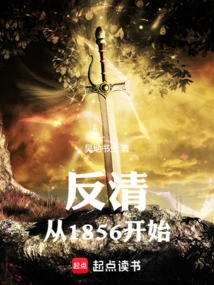
The Rebellion Against the Qing Dynasty Began in 1856
About This Novel
In 1856, the Taiping Heavenly Kingdom successively captured the Qing army's Jiangnan and Jiangbei camps, shocking the Qing court. Britain and France also used the "Arrow" and the "Xilin Mission Case" to declare war on the Qing Dynasty respectively and started the "Two Crows". Just when the Qing Dynasty was in turmoil, the Taiping Heavenly Kingdom actually suffered a serious civil strife called the "Tianjing Incident", which caused it to fall into ruin ever since. The protagonist happened to travel before the "Tianjing Incident" and became the younger brother of the female champion Fu Shanxiang, starting his own road to fight against the Qing Dynasty, and at the same time changing the fate of the Kingdom of Heaven...
Official Sources
What Readers Think
Rating
Community(0)
Official(10)Scraped 2mo ago
In fact, I would rather see the protagonist not from the Taiping Army, and the Taiping Army is not a good bird either.
It's okay after looking at it. Good luck, author.
I started to get excited after seeing it.
Here is a question to discuss. In the author's mind, the elimination of the enemy cavalry means the elimination of all men and horses. The Taiping Army destroyed the Sauron Cavalry and the Eight Banners Cavalry several times. Did they kill all the horses? Otherwise, why were they not collected? The Shenji Battalion's cavalry has always been 300. Later, it was said that it was 700 who recovered the Nian Army to form a large number of cavalry. Then the water flooded the Mongolian coalition army and did not mention the harvest of war horses. Were they all drowned? If a horse knows a little bit of water, it's impossible for him to drown.
The anti-Qing historical texts have already been anti-Qing and you still engage in a feudal society. Are you waiting to be beaten? Can't copy the homework of great men? Intellectuals are needed to develop industry. Isn't it funny for a modern person to engage in feudalism?
What are you writing about? Raising the status of several women so high, what kind of prime minister, what kind of number one female general, fuck me, the author is a woman, right? Otherwise, I wouldn't be able to write this kind of article. The writing style is too poor and the logic is illogical.
A brainless and cool article, the author is quite old.
This is a bit outrageous. A brainless one.
I have read many fictional historical novels that describe the Taiping Rebellion. I hope yours will be more exciting and not unfinished😐.
Hong Xiuquan is the second son of God! Which son of God are you?
How can we go down the river from Changsha to Xiangtan? It's against the current.
Let me tell you my most intuitive feelings
As for this book, if it hadn't been for 600,000 words, I wouldn't have been able to read it anyway. I skipped through most of it. I think the most important point is that a lot of the book is narrated in a straightforward manner, and it won't affect you if you skip it. I think there are very few dialogues. Except for some necessary dialogues, many events are the result of the direct process. Without dialogue, it is very flat. There are no contradictions in things, no human wisdom, and ideological thinking. It is more like just to make up for the pain of history. It is only narrated from a macro level without identifying specific characters. For example, in Li Yunlong's attack on Ping'an City in Bright Sword, if he just talked about the importance of Ping'an's success, and then did not describe the specific characters, he would just say that Li Yunlong, with all his thoughts and sorrow, ordered the bombardment of Ping'an with a backache, killing the Japanese and losing his newlywed wife. Seems very bland
Rating
Community(0)
Official(10)Scraped 2mo ago
In fact, I would rather see the protagonist not from the Taiping Army, and the Taiping Army is not a good bird either.
It's okay after looking at it. Good luck, author.
I started to get excited after seeing it.
Here is a question to discuss. In the author's mind, the elimination of the enemy cavalry means the elimination of all men and horses. The Taiping Army destroyed the Sauron Cavalry and the Eight Banners Cavalry several times. Did they kill all the horses? Otherwise, why were they not collected? The Shenji Battalion's cavalry has always been 300. Later, it was said that it was 700 who recovered the Nian Army to form a large number of cavalry. Then the water flooded the Mongolian coalition army and did not mention the harvest of war horses. Were they all drowned? If a horse knows a little bit of water, it's impossible for him to drown.
The anti-Qing historical texts have already been anti-Qing and you still engage in a feudal society. Are you waiting to be beaten? Can't copy the homework of great men? Intellectuals are needed to develop industry. Isn't it funny for a modern person to engage in feudalism?
What are you writing about? Raising the status of several women so high, what kind of prime minister, what kind of number one female general, fuck me, the author is a woman, right? Otherwise, I wouldn't be able to write this kind of article. The writing style is too poor and the logic is illogical.
A brainless and cool article, the author is quite old.
This is a bit outrageous. A brainless one.
I have read many fictional historical novels that describe the Taiping Rebellion. I hope yours will be more exciting and not unfinished😐.
Hong Xiuquan is the second son of God! Which son of God are you?
How can we go down the river from Changsha to Xiangtan? It's against the current.
Let me tell you my most intuitive feelings
As for this book, if it hadn't been for 600,000 words, I wouldn't have been able to read it anyway. I skipped through most of it. I think the most important point is that a lot of the book is narrated in a straightforward manner, and it won't affect you if you skip it. I think there are very few dialogues. Except for some necessary dialogues, many events are the result of the direct process. Without dialogue, it is very flat. There are no contradictions in things, no human wisdom, and ideological thinking. It is more like just to make up for the pain of history. It is only narrated from a macro level without identifying specific characters. For example, in Li Yunlong's attack on Ping'an City in Bright Sword, if he just talked about the importance of Ping'an's success, and then did not describe the specific characters, he would just say that Li Yunlong, with all his thoughts and sorrow, ordered the bombardment of Ping'an with a backache, killing the Japanese and losing his newlywed wife. Seems very bland
You Might Also Like

Reborn Female General
Qianshan Tea Guest
Ming Shizu
Flying Cable Car
I, the Ming Dynasty, Can Still Save Me
River Crab Taoist
Ming Dynasty Chenghua: I Am a Foolish King
Five And Six
Anti-qing: Starting from the Reincarnation of the Ming Dynasty
Listen To The Wind And Cook The Rainy Night
Anti-qing 1850
The Three Fat Men By The River
Gou Became a Clan Member in the Late Ming Dynasty
Late At Night
Lanfang
Yuyan
You Offer Peace to Heaven, but I Start a Rebellion
There Is A Dragon In Nanshan
Anti-qing: Starting from the Jintian Uprising
Listen To The Wind And Cook The Rainy Night