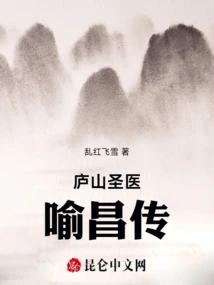
Lushan Holy Doctor: the Biography of Yu Chang
About This Novel
At the end of Ming Dynasty and the beginning of Qing Dynasty, the world was in turmoil and the mountains and rivers were broken. In troubled times, a scholar gave up his writing and became a doctor. He used his benevolent heart and skills to help people, and eventually became a generation of "holy doctors" - he was Yu Chang, also known as Jiayan and the old man of Xichang. "The Holy Doctor of Xichang: The Biography of Yu Chang" is a long historical novel based on real historical figures. It starts from the 13th year of Wanli in the Ming Dynasty (1585) and ends with the 3rd year of Kangxi in the Qing Dynasty (1664), spanning nearly eighty years of changes. The novel takes the ups and downs of Yu Chang's life as the main line, depicting his transition from Confucianism to Zen and from Zen to medicine after he failed in the imperial examination and his country was destroyed and his family was destroyed. It shows how he insisted on benevolence in troubled times, studied medicine diligently, and finally became one of the "Three Famous Doctors of the Early Qing Dynasty". The story takes Lushan Mountain in Jiangxi Province as its spiritual hometown and runs through Nanchang, Jing'an, Changshu and other places. It integrates traditional Chinese medicine culture, folk remedies, and palace secrets to reproduce the suffering and perseverance of the people in the late Ming and early Qing dynasties. Yu Chang took "Treatise on Febrile Diseases" as his sect, created the method of "Shang Lun", and wrote "The Law of Medicine". He has been practicing medicine for more than 40 years and has survived countless people. Not only did he widely practice benevolence among the people, but because of his outstanding medical skills, he was called into the royal palace and the royal palace to diagnose and treat the royal nobles, achieving the most glorious moment in his life. Through Yu Chang's interactions with his family, classmates, friends, disciples and colleagues, the novel shows his erudite, kind, upright and compassionate character, and also reflects the culture, beliefs and medical spirit of an era. This is not only a biography of a doctor, but also a hymn to the glory of humanity in troubled times.
Official Sources
What Readers Think
Rating
Community(0)
Rating
Community(0)
You Might Also Like
Possessed by Lu Bu
The King Is No More Than A Hegemon
Hanxiang
Jie And 2
The Poor Man's Two Thousand Years
Non-player Character
Reborn Female General
Qianshan Tea Guest
Tomorrow
Jie And 2
Shao Song
Grenades Are Afraid Of Water
My Brother-in-law is the Prince
Go Up The Mountain And Hit The Tiger On The Forehead
Qin Gong
When It Rains, I Bring A Knife
The World's Heroes
Gao Yue
The Best Servant
Yuyan