Taihang Zhijiang
by Zhao Yuchen
About This Novel
A powerful anti-war novel. A young village official who graduated from university sacrificed his life during a heavy rain rescue and was reborn in that turbulent era. At his best age, he chose to join the battlefield and fight for the country. From then on, a legendary regiment leader appeared in the Second Theater of the Anti-Japanese War. Welcome to join the book club group: Mao Geng Nursing Home~, group number: 361434131
Official Sources
What Readers Think
Rating
Community(0)
Official(46)Scraped 1mo ago
After the battle at Nan Zhang, the protagonist actually struggled with whether the battle was worth fighting! Kill three thousand enemies and lose eight hundred yourself. War has been like this since ancient times. Destroying the enemy's effective forces as much as possible is the essence of Mao Zedong's strategy and tactics. While destroying the enemy, corresponding sacrifices must be made. If this is not acceptable, then it is not a war, but a game. ......... On the frontal battlefield, the casualty ratio of the Chinese army to the Japanese army was generally more than four to one, and most of them ended in failure. In battles where the Eighth Route Army aimed to annihilate a larger number of Japanese troops, the casualty ratio was between two to one and three to one. Therefore, in the Nanzhang Annihilation War, nearly two thousand Japanese troops were annihilated with relatively small casualties. It was a brilliant victory. If there is such an opportunity in the future, we must fight it resolutely! ......... The author has a statement that I disagree with, saying that a regiment is a drop in the bucket to the Japanese army, which seems insignificant. Japan is a small country with a small population and insufficient human and material resources. This is evident from the fact that it only had a dozen permanent divisions before the war. The point is that a large number of Japanese troops are on the frontal battlefield, and there is a serious shortage of troops in the rear. Otherwise, there would not be so many puppet troops armed. Back then, behind enemy lines in North China, if three Japanese regiments were killed in a short period of time, the Japanese army would definitely be stretched thin and difficult to take care of. ......... The Eighth Route Army and the National Army have so many troops. Why should the protagonist bear all the pressure? This is not objective enough.
Update quickly, don't be lazy
A more realistic book, the Japanese are not easy to deal with
Lao Tie, please update soon? Don't be a eunuch anymore
Update soon, it's very good
Well worth seeing
Quick update
Update author
Work hard, more updates soon
There is a question. During the Battle of Nanzhang, when the Xicun Brigade was annihilated and the Japanese field artillery shelled, why did the Bailin Battalion resist within the shelling range? Wouldn't it be better to cooperate with the Third Battalion to annihilate the enemy at this time? The Japanese army initially dispatched a large group to attack, and the effect was obvious, but later it turned into a tactic of adding fuel to the fire, with inconsistencies that are difficult to understand. The Nishimura brigade was completely wiped out by a reinforced battalion, which was also an elephant drama. I hope the author will continue to work hard. Although it has shortcomings, it is much better than other similar novels.
Wasted The author is useless!
Rating
Community(0)
Official(46)Scraped 1mo ago
After the battle at Nan Zhang, the protagonist actually struggled with whether the battle was worth fighting! Kill three thousand enemies and lose eight hundred yourself. War has been like this since ancient times. Destroying the enemy's effective forces as much as possible is the essence of Mao Zedong's strategy and tactics. While destroying the enemy, corresponding sacrifices must be made. If this is not acceptable, then it is not a war, but a game. ......... On the frontal battlefield, the casualty ratio of the Chinese army to the Japanese army was generally more than four to one, and most of them ended in failure. In battles where the Eighth Route Army aimed to annihilate a larger number of Japanese troops, the casualty ratio was between two to one and three to one. Therefore, in the Nanzhang Annihilation War, nearly two thousand Japanese troops were annihilated with relatively small casualties. It was a brilliant victory. If there is such an opportunity in the future, we must fight it resolutely! ......... The author has a statement that I disagree with, saying that a regiment is a drop in the bucket to the Japanese army, which seems insignificant. Japan is a small country with a small population and insufficient human and material resources. This is evident from the fact that it only had a dozen permanent divisions before the war. The point is that a large number of Japanese troops are on the frontal battlefield, and there is a serious shortage of troops in the rear. Otherwise, there would not be so many puppet troops armed. Back then, behind enemy lines in North China, if three Japanese regiments were killed in a short period of time, the Japanese army would definitely be stretched thin and difficult to take care of. ......... The Eighth Route Army and the National Army have so many troops. Why should the protagonist bear all the pressure? This is not objective enough.
Update quickly, don't be lazy
A more realistic book, the Japanese are not easy to deal with
Lao Tie, please update soon? Don't be a eunuch anymore
Update soon, it's very good
Well worth seeing
Quick update
Update author
Work hard, more updates soon
There is a question. During the Battle of Nanzhang, when the Xicun Brigade was annihilated and the Japanese field artillery shelled, why did the Bailin Battalion resist within the shelling range? Wouldn't it be better to cooperate with the Third Battalion to annihilate the enemy at this time? The Japanese army initially dispatched a large group to attack, and the effect was obvious, but later it turned into a tactic of adding fuel to the fire, with inconsistencies that are difficult to understand. The Nishimura brigade was completely wiped out by a reinforced battalion, which was also an elephant drama. I hope the author will continue to work hard. Although it has shortcomings, it is much better than other similar novels.
Wasted The author is useless!
Featured in 7 Booklists
Official(7)
Anti-Japanese War novel, this one is not a divine drama after all! Good

A heroic soul in one life, a hero in two lives. In the face of great righteousness, he cast his pen and joined the army. Taixing shows its power and wisdom determines the world.
This book has vivid characters! The description of military battles during the Anti-Japanese War is more realistic than other anti-Japanese novels! And the author's plot and pacing are so good! ! ! Fascinating and intoxicating! ! ! ! ! Five-star recommendation!

Not a bad story. Nothing wrong with it. It's non-toxic, so those who like fighting can give it a try. Off-topic: Many of Qidian's novels were really good at 3 to 400,000 words before they were put on the shelves, but they slowly fell apart after they were put on the shelves. Therefore, don't be too picky when looking for a book. It's also good to read hundreds of thousands of words before they are released on the shelves, and it's free.
You Might Also Like
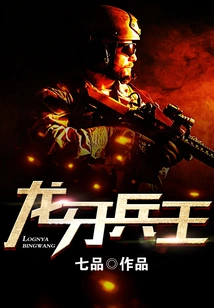
Dragon Tooth Soldier King
Seventh Grade
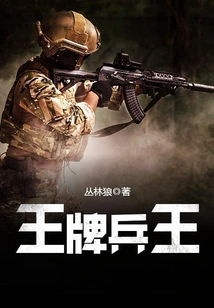
King of Aces and Soldiers
Coyote
Reborn Female General
Qianshan Tea Guest

The Peerless God of War in the City
Boiled Raccoon In Warm Wine
Beginning with Zheng Yaoxian and Become Sworn Friends
Still Fireworks
My Sword-fighting Career
Jack
Heavens, the Bad Guy Who Started with the Sword
Pacific Passenger
My Client Li Yunlong
Street Writer Passerby A
Bright Sword Starts with the Grenade Flat
Thick Starry Sky
Ballistic Wake
Tanhualang's Ink