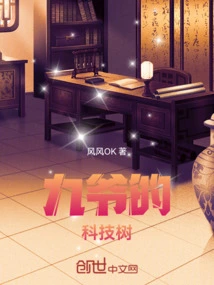
Jiuye's Technology Tree
by Fengfeng Ok
About This Novel
Core settings: 1. Protagonist: Lin Heng, an ordinary social worker in the modern 21st century\u002F Science and engineering man (mechanical engineering or history enthusiast background), accidentally traveled through time. 2. Time travel identity: The ninth son of Kangxi, Aixinjueluo Yinzhen (the "Ninth Master" in history). Reasons for choosing Yinzhen: His status is high enough (prince level), he participated in the seizure of the throne but is not the core heir to the throne (there is room for maneuver), he is historically known for being "good at doing business" and "supporting the Ba Ye Party" (facilitating the transformation of the protagonist), and his ending is tragic (the change of fate is dramatic). 3. Time point: At the beginning of the forty-seventh year of Kangxi (1708), before the first deposed Prince Yinreng. This is an important point at which the conflict over the succession in Kowloon begins to intensify but has not yet completely erupted.
Official Sources
What Readers Think
Rating
Community(0)
Official(1)Scraped 1mo ago
Jiuye's technology tree
When I opened "Jiuye's Technological Tree", I was greeted by a strange mash-up - the pyrotechnics of old teahouses collided with the cold metallic light of cutting-edge laboratories, and the Pu'er incense in the purple clay pot mixed with the heat waves emitted by the server chassis. The protagonist "Jiuye", a veteran who seems to be out of touch with the times, has become a "game-breaker" who stirs up the technological world. He doesn't understand the syntax of code, but he is well versed in the algorithms of human nature; he doesn't use a quantum computer, but he holds a yellowed notebook of "Tiangong Kaiwu" in his hand. The roots of this wildly growing "technological tree" are deeply rooted in the soil of five thousand years of survival wisdom, but its branches are piercing the sky of cyberpunk. The most fascinating subversiveness of the novel lies in its deconstruction of the arrogance of the "technological myth". When Silicon Valley elites were trapped in the involution of algorithms, and when venture capital investors chased exaggerated concept bubbles, Master Jiu used the most "unsophisticated" methods to solve the most "trendy" problems - he used the "monarch, minister, and envoy" principle of combining traditional Chinese medicine to optimize the cooling structure of servers, planned data center pipelines using Feng Shui and Kanyu's pattern thinking, and even realized the subtleties of modular hardware from the mortise and tenon structure. This is by no means a novelty-style collage, but the author's profound inquiry into the nature of technology: When technology becomes increasingly complex and out of touch with human perception, is it possible to re-anchor the coordinates of innovation by returning to the most basic survival wisdom? Jiuye's "Jianghu Technology" is like a mirror that reflects the collective anxiety of the current technology circle. Those "code alchemists" in suits and ties are running wildly in the maze of capital and KPIs, but they have lost their original intention to solve problems. On Master Jiu's worn-out notebook, what was written crookedly was not the financing plan, but "The optical fiber in a certain village often breaks due to squirrels biting the wires - the imitation cat hair coating can solve the problem". This kind of solution that grows out of specific pain points, with the roughness of earth and the warmth of life, just pierces the emperor's new clothes woven with jargon by the technological elite. The author uses a black humorous style to let Master Jiu use a jar of self-brewed sorghum wine to intoxicate the entire scientific and technological forum that pretends to be profound - the most advanced problems often require the simplest wisdom to solve. This is also a fable about the ethics of technology. When AI companies were frantically harvesting data for training models, Jiuye put up a sign at the entrance of the alley that read, "Swipe your face to exchange for eggs," and personally explained the privacy risks to the aunts. When self-driving companies were keen to replace human drivers, his modified tricycles insisted on retaining "manual emergency brakes." This is not anti-intellectual nostalgia, but an insistence on the "humanistic steering wheel" in technological evolution. The reason why Jiuye's technology tree is so luxuriant is that its roots are tightly entwined with the ancient creed of "serving people" - technology can be iterated, but the respect for people cannot be deleted. "Jiuye's Technology Tree" is a hymn written to "Technology Rangers". In this era of algorithm rule, it allows us to see another possibility: when the changes in the world collide with the rigor of the laboratory, and when the survival wisdom of our ancestors is injected into the context of the chip, those corners ignored by the giants can burst out sparks that change the world. Master Jiu used his purple clay pot and soldering iron to tell us: The real scientific and technological revolution may not be in the vacuum of the laboratory, but in the hot scenes of life in the streets and alleys; only when the real tree of innovation is rooted in the fertile soil of human nature can it bear fruit that will make the future delicious.
Rating
Community(0)
Official(1)Scraped 1mo ago
Jiuye's technology tree
When I opened "Jiuye's Technological Tree", I was greeted by a strange mash-up - the pyrotechnics of old teahouses collided with the cold metallic light of cutting-edge laboratories, and the Pu'er incense in the purple clay pot mixed with the heat waves emitted by the server chassis. The protagonist "Jiuye", a veteran who seems to be out of touch with the times, has become a "game-breaker" who stirs up the technological world. He doesn't understand the syntax of code, but he is well versed in the algorithms of human nature; he doesn't use a quantum computer, but he holds a yellowed notebook of "Tiangong Kaiwu" in his hand. The roots of this wildly growing "technological tree" are deeply rooted in the soil of five thousand years of survival wisdom, but its branches are piercing the sky of cyberpunk. The most fascinating subversiveness of the novel lies in its deconstruction of the arrogance of the "technological myth". When Silicon Valley elites were trapped in the involution of algorithms, and when venture capital investors chased exaggerated concept bubbles, Master Jiu used the most "unsophisticated" methods to solve the most "trendy" problems - he used the "monarch, minister, and envoy" principle of combining traditional Chinese medicine to optimize the cooling structure of servers, planned data center pipelines using Feng Shui and Kanyu's pattern thinking, and even realized the subtleties of modular hardware from the mortise and tenon structure. This is by no means a novelty-style collage, but the author's profound inquiry into the nature of technology: When technology becomes increasingly complex and out of touch with human perception, is it possible to re-anchor the coordinates of innovation by returning to the most basic survival wisdom? Jiuye's "Jianghu Technology" is like a mirror that reflects the collective anxiety of the current technology circle. Those "code alchemists" in suits and ties are running wildly in the maze of capital and KPIs, but they have lost their original intention to solve problems. On Master Jiu's worn-out notebook, what was written crookedly was not the financing plan, but "The optical fiber in a certain village often breaks due to squirrels biting the wires - the imitation cat hair coating can solve the problem". This kind of solution that grows out of specific pain points, with the roughness of earth and the warmth of life, just pierces the emperor's new clothes woven with jargon by the technological elite. The author uses a black humorous style to let Master Jiu use a jar of self-brewed sorghum wine to intoxicate the entire scientific and technological forum that pretends to be profound - the most advanced problems often require the simplest wisdom to solve. This is also a fable about the ethics of technology. When AI companies were frantically harvesting data for training models, Jiuye put up a sign at the entrance of the alley that read, "Swipe your face to exchange for eggs," and personally explained the privacy risks to the aunts. When self-driving companies were keen to replace human drivers, his modified tricycles insisted on retaining "manual emergency brakes." This is not anti-intellectual nostalgia, but an insistence on the "humanistic steering wheel" in technological evolution. The reason why Jiuye's technology tree is so luxuriant is that its roots are tightly entwined with the ancient creed of "serving people" - technology can be iterated, but the respect for people cannot be deleted. "Jiuye's Technology Tree" is a hymn written to "Technology Rangers". In this era of algorithm rule, it allows us to see another possibility: when the changes in the world collide with the rigor of the laboratory, and when the survival wisdom of our ancestors is injected into the context of the chip, those corners ignored by the giants can burst out sparks that change the world. Master Jiu used his purple clay pot and soldering iron to tell us: The real scientific and technological revolution may not be in the vacuum of the laboratory, but in the hot scenes of life in the streets and alleys; only when the real tree of innovation is rooted in the fertile soil of human nature can it bear fruit that will make the future delicious.
You Might Also Like
Possessed by Lu Bu
The King Is No More Than A Hegemon
Hanxiang
Jie And 2
The Poor Man's Two Thousand Years
Non-player Character
Reborn Female General
Qianshan Tea Guest
Tomorrow
Jie And 2
Shao Song
Grenades Are Afraid Of Water
My Father, Emperor Gaozu of the Han Dynasty
History Wolf
My Brother-in-law is the Prince
Go Up The Mountain And Hit The Tiger On The Forehead
Qin Gong
When It Rains, I Bring A Knife
The World's Heroes
Gao Yue