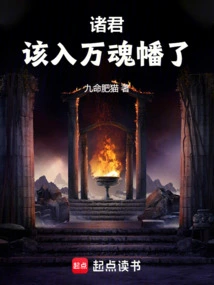
Gentlemen, It's Time to Enter the Ten Thousand Souls Banner
About This Novel
"Master, there are obviously many masters of the Demon Sect, who are much better than the righteous monks. Why are the Demon Sect always beaten so hard that they can't hold their heads up?" "Because the only enemies of the righteous monks are the demons, and the enemies of the demons include the people around them. It is impossible for the demon cultivators to work together like the righteous ones. Thirteen of the eighteen demons died at the hands of the demons." "My disciple understands that if you want to make the devil's path prosperous, you must first unify the devil sect and prohibit internal fighting." "You know what the heck, doesn't the evil way become the right way?" ... Many years later, Chen Ye finally understood what his master meant. When the demonic cultivator becomes the leader of the righteous path, then the demonic path will become the righteous path.
Official Sources
What Readers Think
Rating
Community(0)
Official(58)Scraped 27d ago
I want to know what the protagonist is afraid of? Why are you refusing to go to Qinghe? He didn't do anything evil. The only magic weapon he made was to save his master. What on earth were he afraid of?
The protagonist is a normal protagonist. He doesn't have too much kindness and won't do evil on his own. But I don't understand it. Some of the supporting characters are disgusting when they appear. You are a demon. Don't tell me you can't kill. There is a saying of righteousness and evil. Even if you kill everyone in the world, as long as they are all bad in your heart, , then you can have a clear conscience, but the pseudo-immortal and the fortune-teller are obviously on the opposite side, they just don't kill. The previous writing was normal, but now it's the Holy Mother. It's not that I am bloodthirsty when reading novels, but the enemies are meant to be killed. Is it interesting for you to write so much nonsense for these broken plots?
A masterpiece of cultivating immortality
It can be seen that the author has done some research on the three theories of Confucianism, Buddhism and Taoism. For me personally, this book is also a masterpiece with distinctive and unique characters, a twists and turns in the plot, and a connotation that is not superficial. Compared with various types of famous books today, the sections that involve sublimating the theme and showing the connotation are often written in a way that seems profound but is superficial and cannot withstand scrutiny. However, this book's discussion of cause and effect and human nature The analysis is more in-depth and three-dimensional, and the portrayal of the protagonist Chen Ye is consistent, neither exaggerated, brainless nor coquettish. Personally, I think the only slight shortcoming is that Mo Suixin's emotional changes to the male protagonist are too abrupt. If the emotional journey of Su Chunyi and Chen Ye is like cotton grass, then the emotional changes of Mo Suixin and Chen Ye are like thunderbolts and mountains. It is slightly abrupt, but compared to the excellence of the full text, it really stands out.
After Chapter 150, it's a bit draggy. The writing is okay, but I like the word "water". Many details are too embellished at the end, and the characterization of the characters is not good. It feels like reading a text, not a novel.
Children, run quickly, there is a pile of writing behind it.
Two points for the first 100 or so chapters. Are you always thinking about your dirty underworld? It's enough to establish the Six Paths of Reincarnation. We've written a lot like this, but what kind of stone is that written in Chapter 165? Why do you still need to superimpose and reverse time and space? There is no need to discuss any philosophical issues. Let me ask you, on a practical level, where does your poor place have the space to accommodate ghosts? You know that the strongest one is only to become an immortal. Where do you get the energy? Where do you get the confidence to think that you can reverse the time and space of the world and just resurrect the ghosts? Taking a step back, if you are so powerful as the God of Creation, then why would you create the six realms of the underworld and reincarnate to transform the world. It was originally written well, but you insist on breaking the six paths of reincarnation in the underworld. This thing itself is not logically consistent. You have to superimpose and reverse time and space. To which point in time do you want to reverse? I keep saying that I don't have double standards, but why do I see you trying to reverse the situation to the point where your master killed someone? It's really ridiculous. As long as you add the setting of reversing time and space, if you don't reverse it to the time when the world first opened and the first human died, that's a double standard. Do you understand? I really don't understand what I'm thinking. In fact, I already felt sick when this book mentioned the need to set rules and draw a line for people in this world that is universally applicable. When he saw all the injustices in the world, the solution he came up with turned out to be the six paths of reincarnation in the underworld, which was all logical! ? Is this something that a so-called young veteran cadre who claims to have struggled in society and worked in poverty alleviation and went to the mountains and countryside can come up with? I almost choked when I saw it. In the end, I endured the nausea and saw another big mess in Chapter 165. It was really a waste of time. .
Well enough
At first glance, it looks inexplicably beautiful, but I can't tell what's so good about it. Later, when I took a closer look, I found that there were still quite a few logical loopholes. There are a lot of changes in the characters. At the beginning, he was a little evil, but later he was quite righteous. When it came to fighting, his methods were not clever enough. He first set up the formation and then waited for the opponent to fall into the trap, which seemed not fair enough. Although the opponent was also very cheating, it still showed that he did not set up a good character. Then he founded a sect, which was extremely righteous, and his image became calm again. But scolding Yu Xing is not like the behavior of the sect leader. In general, the characters are fragmented. Moreover, in the story line, the first part is relatively free to play, and the part starting from the meeting with the Lord and the riot among the casual cultivators is such an important part of the story line. It seems that a lot has been written, but in fact there is not much content that touches the essence. The story of Fu Shoulu and the others has been briefly mentioned in a few strokes, but I feel it was not fully written. The tragedy of the casual cultivators was too little exaggerated, resulting in insufficient preparation before the riots. After the sect was established, the plot obviously changed (this is very critical and is a big problem in this work), and the feeling at the beginning also disappeared (but it is definitely impossible to be free again after the sect was established). It felt a lot more restricted, unable to write, and the means were limited, which also made the arrangement of the storyline become rigid. In the past, as a casual cultivator, every battle could be written wonderfully, but later it became too powerful, and it seemed that you could "kill" the opponent with one sword at any time like the Qinghe Sword Sect (of course the protagonist did not use a sword, but used means such as ghosts), but it was boring unless the opponent's level was improved. But with his own Lord sitting in charge and the blessing of incense, it is difficult to have an opponent who is stronger than him. It depends on the author's operation. And after the protagonist understands the ability, he will usually encounter an opponent who needs to defeat this ability very quickly. In fact, you can wait and write it later to keep it relaxed. Either cut off the emotional line, or avoid throwing away the character later. Don't follow your heart. Su Chunyi cannot be missing, otherwise the foreshadowing will be useless. That's about it, I hope the author can improve it.
Why does the protagonist have some feelings for every woman he meets, while the man is a life-and-death enemy?
Hanging the name of Ten Thousand Souls Banner, writing about the protagonist of Our Lady
Demon cultivators in the human world are not real demon cultivators at all, they are just castrated versions spread by some people.
I'm convinced, what about the method of cultivating demons and cultivating the mind? The change in the new realm is that your cultivation is constantly improving and unstable, and it's easy to have inner demons. I'm convinced, why are there demon monks and righteous monks? The mind attack method is different. The demon cultivator's mind attack method is the fusion of the inner demon and the monk, so what? Demonic cultivators are demonic cultivators
Looking forward to the follow-up!
Sign in as a Malaysian book lover. I am quite picky. I have only read the series of books by Chen Dong and Seeing Words Like Faces, but this one made me fall into the trap of novels again. The world view is surprisingly good, reincarnation is reshaped after the Great Fall - Looking forward to strengthening the Quheng/Feijian storyline - Looking forward to the future storyline of Heavenly Court - Looking forward to the sequel with the same world view
Rating
Community(0)
Official(58)Scraped 27d ago
I want to know what the protagonist is afraid of? Why are you refusing to go to Qinghe? He didn't do anything evil. The only magic weapon he made was to save his master. What on earth were he afraid of?
The protagonist is a normal protagonist. He doesn't have too much kindness and won't do evil on his own. But I don't understand it. Some of the supporting characters are disgusting when they appear. You are a demon. Don't tell me you can't kill. There is a saying of righteousness and evil. Even if you kill everyone in the world, as long as they are all bad in your heart, , then you can have a clear conscience, but the pseudo-immortal and the fortune-teller are obviously on the opposite side, they just don't kill. The previous writing was normal, but now it's the Holy Mother. It's not that I am bloodthirsty when reading novels, but the enemies are meant to be killed. Is it interesting for you to write so much nonsense for these broken plots?
A masterpiece of cultivating immortality
It can be seen that the author has done some research on the three theories of Confucianism, Buddhism and Taoism. For me personally, this book is also a masterpiece with distinctive and unique characters, a twists and turns in the plot, and a connotation that is not superficial. Compared with various types of famous books today, the sections that involve sublimating the theme and showing the connotation are often written in a way that seems profound but is superficial and cannot withstand scrutiny. However, this book's discussion of cause and effect and human nature The analysis is more in-depth and three-dimensional, and the portrayal of the protagonist Chen Ye is consistent, neither exaggerated, brainless nor coquettish. Personally, I think the only slight shortcoming is that Mo Suixin's emotional changes to the male protagonist are too abrupt. If the emotional journey of Su Chunyi and Chen Ye is like cotton grass, then the emotional changes of Mo Suixin and Chen Ye are like thunderbolts and mountains. It is slightly abrupt, but compared to the excellence of the full text, it really stands out.
After Chapter 150, it's a bit draggy. The writing is okay, but I like the word "water". Many details are too embellished at the end, and the characterization of the characters is not good. It feels like reading a text, not a novel.
Children, run quickly, there is a pile of writing behind it.
Two points for the first 100 or so chapters. Are you always thinking about your dirty underworld? It's enough to establish the Six Paths of Reincarnation. We've written a lot like this, but what kind of stone is that written in Chapter 165? Why do you still need to superimpose and reverse time and space? There is no need to discuss any philosophical issues. Let me ask you, on a practical level, where does your poor place have the space to accommodate ghosts? You know that the strongest one is only to become an immortal. Where do you get the energy? Where do you get the confidence to think that you can reverse the time and space of the world and just resurrect the ghosts? Taking a step back, if you are so powerful as the God of Creation, then why would you create the six realms of the underworld and reincarnate to transform the world. It was originally written well, but you insist on breaking the six paths of reincarnation in the underworld. This thing itself is not logically consistent. You have to superimpose and reverse time and space. To which point in time do you want to reverse? I keep saying that I don't have double standards, but why do I see you trying to reverse the situation to the point where your master killed someone? It's really ridiculous. As long as you add the setting of reversing time and space, if you don't reverse it to the time when the world first opened and the first human died, that's a double standard. Do you understand? I really don't understand what I'm thinking. In fact, I already felt sick when this book mentioned the need to set rules and draw a line for people in this world that is universally applicable. When he saw all the injustices in the world, the solution he came up with turned out to be the six paths of reincarnation in the underworld, which was all logical! ? Is this something that a so-called young veteran cadre who claims to have struggled in society and worked in poverty alleviation and went to the mountains and countryside can come up with? I almost choked when I saw it. In the end, I endured the nausea and saw another big mess in Chapter 165. It was really a waste of time. .
Well enough
At first glance, it looks inexplicably beautiful, but I can't tell what's so good about it. Later, when I took a closer look, I found that there were still quite a few logical loopholes. There are a lot of changes in the characters. At the beginning, he was a little evil, but later he was quite righteous. When it came to fighting, his methods were not clever enough. He first set up the formation and then waited for the opponent to fall into the trap, which seemed not fair enough. Although the opponent was also very cheating, it still showed that he did not set up a good character. Then he founded a sect, which was extremely righteous, and his image became calm again. But scolding Yu Xing is not like the behavior of the sect leader. In general, the characters are fragmented. Moreover, in the story line, the first part is relatively free to play, and the part starting from the meeting with the Lord and the riot among the casual cultivators is such an important part of the story line. It seems that a lot has been written, but in fact there is not much content that touches the essence. The story of Fu Shoulu and the others has been briefly mentioned in a few strokes, but I feel it was not fully written. The tragedy of the casual cultivators was too little exaggerated, resulting in insufficient preparation before the riots. After the sect was established, the plot obviously changed (this is very critical and is a big problem in this work), and the feeling at the beginning also disappeared (but it is definitely impossible to be free again after the sect was established). It felt a lot more restricted, unable to write, and the means were limited, which also made the arrangement of the storyline become rigid. In the past, as a casual cultivator, every battle could be written wonderfully, but later it became too powerful, and it seemed that you could "kill" the opponent with one sword at any time like the Qinghe Sword Sect (of course the protagonist did not use a sword, but used means such as ghosts), but it was boring unless the opponent's level was improved. But with his own Lord sitting in charge and the blessing of incense, it is difficult to have an opponent who is stronger than him. It depends on the author's operation. And after the protagonist understands the ability, he will usually encounter an opponent who needs to defeat this ability very quickly. In fact, you can wait and write it later to keep it relaxed. Either cut off the emotional line, or avoid throwing away the character later. Don't follow your heart. Su Chunyi cannot be missing, otherwise the foreshadowing will be useless. That's about it, I hope the author can improve it.
Why does the protagonist have some feelings for every woman he meets, while the man is a life-and-death enemy?
Hanging the name of Ten Thousand Souls Banner, writing about the protagonist of Our Lady
Demon cultivators in the human world are not real demon cultivators at all, they are just castrated versions spread by some people.
I'm convinced, what about the method of cultivating demons and cultivating the mind? The change in the new realm is that your cultivation is constantly improving and unstable, and it's easy to have inner demons. I'm convinced, why are there demon monks and righteous monks? The mind attack method is different. The demon cultivator's mind attack method is the fusion of the inner demon and the monk, so what? Demonic cultivators are demonic cultivators
Looking forward to the follow-up!
Sign in as a Malaysian book lover. I am quite picky. I have only read the series of books by Chen Dong and Seeing Words Like Faces, but this one made me fall into the trap of novels again. The world view is surprisingly good, reincarnation is reshaped after the Great Fall - Looking forward to strengthening the Quheng/Feijian storyline - Looking forward to the future storyline of Heavenly Court - Looking forward to the sequel with the same world view
Featured in 7 Booklists
Official(7)
8.9. The title of the book is not great, but the plot is surprisingly good.
Many years later, Chen Ye finally understood what his master meant. When the demonic cultivator becomes the leader of the righteous path, then the demonic path will become the righteous path.
A good book. I personally think that a good book should inspire people to improve. It seems to have returned to the era of online articles where literature was used to convey the truth.
Good apprentice good master A demon more upright than a gentleman?
You Might Also Like
Reborn Female General
Qianshan Tea Guest
Seeking Immortality for a Hundred Generations
Black Eggplant Brewed Beer
You Don't Want Your Secret to Be Known, Right?
Don't Care About The Person You Love
Tao and Tianqi
Pork Heart And Shrimp
Kyushu Immortal Palace First Pass Guide
His Majesty The King
Wet Ovulation
Black Ring
Ancestor, Times Have Changed
Ajiuwei
Yefuti Daolu
The Brain Is Hollowed Out
I Will Give You a Little More Strength as a Teacher
Feeding Pigeons In The Square
What's Wrong with Us Officials Raising a Few Demons?
Vpoor Ghostv