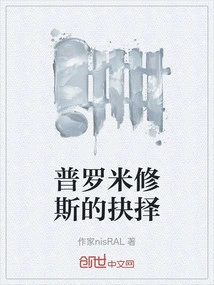
Prometheus' Choice
by Writernisral
About This Novel
Come to China Literature's website to read more of my works!
Official Sources
What Readers Think
Rating
Community(0)
Official(4)Scraped 1mo ago
The narrative rhythm is comfortable and the text is concise and smooth. As the author's first novel, it can be seen that the writing skills are profound.
After reading it, I fell silent. As one of my friends said, I felt that the world was completely different after I came out. Without any presuppositions, I plunged into this layered and extremely clear story almost without knowing anything. The writing techniques are complex, gorgeous, unrestrained, and full to the point of overflowing. Even if you don't like it, you can't deny that these are compliments. While the technology is too powerful, it still maintains respect for the human heart. Good stories always quietly output value, and better stories are introspective compassion. Science, in front of politics, is naive, and politics, in front of science, is nothingness.
The protagonist's life is an eternal struggle between science and conscience. He was both the creator of the atomic bomb and the earliest confessor of its destructive power. As a mushroom cloud rose over the desert of Los Alamos, his quote from the Bhagavad Gita-"I became Death, the destroyer of worlds"-was as much a declaration of victory as a fear of the future. After the war, this giant of physics fell from grace due to political suspicion and became a victim of McCarthyism. His tragedy is that he can neither get rid of his mission as a scientist, nor bear the moral burden brought by weapons. Today, when the shadow of nuclear power is shrouded, Oppenheimer's dilemma still asks every scientific and technological worker: When knowledge can both illuminate mankind and burn the world, how should we choose?
The Choice of Prometheus: The Flame of Divinity and Humanity "Prometheus' Choice" re-tempers ancient myths in the furnace of modern philosophy. The work does not stop at the tragic story of Prometheus stealing fire and being bound, but boldly reconstructs it - when the pain of an eagle pecking at the liver is given a new symbolic meaning, and when the "chain" becomes a trial ground for free will, his resistance transcends the single dimension of sacrifice for mankind. The Prometheus described by the author is not only a "fire thief", but also a "foreseeer". He knew that after the divine fire fell into the mortal world, the fate of mankind would be involved in the eternal struggle between light and darkness, but he still chose to break the oracle and embrace the unknown. This sober choice makes the ancient heroic myth suddenly burst out with the dazzling light of existentialism: the brilliance of divinity is truly revealed precisely in the moment of choice when one knows the cost but takes the initiative to bear it. This new chapter of the myth wraps a fiery core with a cold writing style - it not only retells the story of a victim, but also is an eternal question on the nature of freedom, resistance to fate and the cost of civilization.
Rating
Community(0)
Official(4)Scraped 1mo ago
The narrative rhythm is comfortable and the text is concise and smooth. As the author's first novel, it can be seen that the writing skills are profound.
After reading it, I fell silent. As one of my friends said, I felt that the world was completely different after I came out. Without any presuppositions, I plunged into this layered and extremely clear story almost without knowing anything. The writing techniques are complex, gorgeous, unrestrained, and full to the point of overflowing. Even if you don't like it, you can't deny that these are compliments. While the technology is too powerful, it still maintains respect for the human heart. Good stories always quietly output value, and better stories are introspective compassion. Science, in front of politics, is naive, and politics, in front of science, is nothingness.
The protagonist's life is an eternal struggle between science and conscience. He was both the creator of the atomic bomb and the earliest confessor of its destructive power. As a mushroom cloud rose over the desert of Los Alamos, his quote from the Bhagavad Gita-"I became Death, the destroyer of worlds"-was as much a declaration of victory as a fear of the future. After the war, this giant of physics fell from grace due to political suspicion and became a victim of McCarthyism. His tragedy is that he can neither get rid of his mission as a scientist, nor bear the moral burden brought by weapons. Today, when the shadow of nuclear power is shrouded, Oppenheimer's dilemma still asks every scientific and technological worker: When knowledge can both illuminate mankind and burn the world, how should we choose?
The Choice of Prometheus: The Flame of Divinity and Humanity "Prometheus' Choice" re-tempers ancient myths in the furnace of modern philosophy. The work does not stop at the tragic story of Prometheus stealing fire and being bound, but boldly reconstructs it - when the pain of an eagle pecking at the liver is given a new symbolic meaning, and when the "chain" becomes a trial ground for free will, his resistance transcends the single dimension of sacrifice for mankind. The Prometheus described by the author is not only a "fire thief", but also a "foreseeer". He knew that after the divine fire fell into the mortal world, the fate of mankind would be involved in the eternal struggle between light and darkness, but he still chose to break the oracle and embrace the unknown. This sober choice makes the ancient heroic myth suddenly burst out with the dazzling light of existentialism: the brilliance of divinity is truly revealed precisely in the moment of choice when one knows the cost but takes the initiative to bear it. This new chapter of the myth wraps a fiery core with a cold writing style - it not only retells the story of a victim, but also is an eternal question on the nature of freedom, resistance to fate and the cost of civilization.
You Might Also Like
Possessed by Lu Bu
The King Is No More Than A Hegemon
Hanxiang
Jie And 2

The Poor Man's Two Thousand Years
Non-player Character
Reborn Female General
Qianshan Tea Guest
Tomorrow
Jie And 2

Shao Song
Grenades Are Afraid Of Water
My Brother-in-law is the Prince
Go Up The Mountain And Hit The Tiger On The Forehead
Qin Gong
When It Rains, I Bring A Knife
The World's Heroes
Gao Yue

The Best Servant
Yuyan