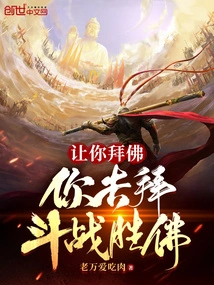
If You Are Asked to Worship Buddha, Will You Worship the Buddha of Fighting and Victory?
About This Novel
Carve statues, worship gods, get feedback, and get involved in martial arts. After traveling through time and entering Kongyun Temple, Zheng Yang carved the Buddha of Fighting and Victory, but was ridiculed by his peers. Is carving a monkey considered a deity? Unbeknownst to the monks, Zheng Yang won the "Great Immortal Jue", "Seventy-two Changes of Earthly Evil" and "Somersault Cloud" by defeating the Buddha statue in battle. Not only that, Brother Hou also worked hard to help Zheng Yang! Many years later, the world collapsed, and the evil dragon cavalry broke through the temple door. The pressure of the evil god enveloped the entire Kongyun Temple. The most powerful sweeping monk in the temple was also seriously injured and defeated. The monks were desperate, but Zheng Yang came slowly. "Someone asked me, if you worship a monkey, what does it mean to worship a Buddha?" "I will tell you today that the Buddha I worship is the Buddha of Fighting and Victory!" After fighting against the Buddha statue, he slowly opened his eyes, and the golden cudgel fell from the sky and fell into Zheng Yang's hands. "I forgot to tell you that Brother Monkey had a name before he became a Buddha. He was called the Monkey King!"
Official Sources
What Readers Think
Rating
Community(0)
Official(57)Scraped 1mo ago
Then you might as well carve a Tathagata Buddha
Protagonist: Before Brother Monkey became a Buddha, his title was Monkey King. Tathagata Buddha: Not yet under my Five Fingers Mountain
The author reads it to me, and I solemnly swear: starting from today, I will never update it. I will not watch dramas, travel, or get sick. I will play no games, no hydrology. Strict self-discipline, quiet time is like gold, unyielding, hard work, advocating first-class, striving for brilliance, taking pleasure in coding, and steel will be refined a hundred times, worthy of readers, worthy of youth, and worthy of the future. As a work Author, I solemnly swear: I firmly believe that I am an excellent author. Codewords are my destiny, I have great potential and am not afraid of hardships! I can work hard to codewords. I am the keyboard in the dark, the Yuwei on the Great Wall of Internet. I voluntarily dedicate my life to codewords day by day and night by day.
nice
It's been a long time since I've seen a great novel. Come on Lao Wan!
Author, can't you just check it after you finish writing? Typo, too few words and too many! A bit outrageous
The author, the Guinness record is typing 807 letters per minute. Calculating that each Chinese character requires six letters, you can type approximately 134 words per minute. Since you are not a holder, we will calculate it as 100 words per minute. According to the WHO standard, the healthy sleep time for an individual is eight hours, and it takes about two hours for you to eat every day, and another 20 minutes for going to the toilet, and 40 minutes. Come and wash up, do one hour of exercise, two hours to get inspired, and then strip off the one hour of indolence, and you should have nine hours to type. Typing 50,000 words is not a problem, right? According to the 2,000 words per chapter, there should be 25 chapters, but you only put so much content every day, what's going on? To be honest, are you going to direct? The donkeys in the production team don't dare to be like this, the author quickly got up and coded!
First, in the 100-chapter version of "Journey to the West", Sun Wukong was born from the fairy stone since the beginning of the world (chapter 1), and Tathagata Buddha is the ruler of the world (chapter 86 of the original book). It is the current Buddha derived from Buddhism, not many treasures. Second, Sun Wukong himself is a born saint (the second chapter of the original work) and there is another saint who is Confucius (the eighty-sixth chapter) and the others are not saints. Third, Tathagata Buddha suppressed Sun Wukong not by cutting off his arm, but by relying on the six-character mantra of "Om Mani Padme Hum" (Chapter 7 of the original work). The six-character mantra symbolizes the endless blessing and compassion of the Buddhas, and is the sound of the compassion and wisdom of the Buddhas. Fourth, Bai Huibenli's riot in the Heavenly Palace was not an act, nor did he fight from the Nantianmen, but from the Tushita Palace. It really gave Laojun a "head-on" attack, and the fight closed the doors of the Jiuyao Star, and the four heavenly kings disappeared (Seventh (Return) Fifth, before the Naotian Palace, the Heavenly Court had two more attacks on Sun Wukong. The first time, the giant spirit god was defeated, Nezha was defeated in Chapter 30, and the King of Heaven was also defeated. The second time, Sun Wukong incarnated outside his body and defeated Nezha, the King of Heaven, Jiuyaoxing, etc. The Bodhisattva recommends Erlang to show his sage. Here, Sun Wukong encounters an evenly matched opponent for the first time (the second time he uses the method of heaven, elephant and earth), but then he is attacked by Laojun and is captured.
In a world with monsters, humans all worship human gods. If the protagonist worships a monkey, you really won't be considered a traitor to the human race and be beaten to death later.
Come on, come on, come on, come on, come on
Although it is also a systematic text, the text is smooth and the characters are clear. You can read it at a glance
You worship Wukong from Chinese mythology, and your protagonist is called Gohan?
Rating
Community(0)
Official(57)Scraped 1mo ago
Then you might as well carve a Tathagata Buddha
Protagonist: Before Brother Monkey became a Buddha, his title was Monkey King. Tathagata Buddha: Not yet under my Five Fingers Mountain
The author reads it to me, and I solemnly swear: starting from today, I will never update it. I will not watch dramas, travel, or get sick. I will play no games, no hydrology. Strict self-discipline, quiet time is like gold, unyielding, hard work, advocating first-class, striving for brilliance, taking pleasure in coding, and steel will be refined a hundred times, worthy of readers, worthy of youth, and worthy of the future. As a work Author, I solemnly swear: I firmly believe that I am an excellent author. Codewords are my destiny, I have great potential and am not afraid of hardships! I can work hard to codewords. I am the keyboard in the dark, the Yuwei on the Great Wall of Internet. I voluntarily dedicate my life to codewords day by day and night by day.
nice
It's been a long time since I've seen a great novel. Come on Lao Wan!
Author, can't you just check it after you finish writing? Typo, too few words and too many! A bit outrageous
The author, the Guinness record is typing 807 letters per minute. Calculating that each Chinese character requires six letters, you can type approximately 134 words per minute. Since you are not a holder, we will calculate it as 100 words per minute. According to the WHO standard, the healthy sleep time for an individual is eight hours, and it takes about two hours for you to eat every day, and another 20 minutes for going to the toilet, and 40 minutes. Come and wash up, do one hour of exercise, two hours to get inspired, and then strip off the one hour of indolence, and you should have nine hours to type. Typing 50,000 words is not a problem, right? According to the 2,000 words per chapter, there should be 25 chapters, but you only put so much content every day, what's going on? To be honest, are you going to direct? The donkeys in the production team don't dare to be like this, the author quickly got up and coded!
First, in the 100-chapter version of "Journey to the West", Sun Wukong was born from the fairy stone since the beginning of the world (chapter 1), and Tathagata Buddha is the ruler of the world (chapter 86 of the original book). It is the current Buddha derived from Buddhism, not many treasures. Second, Sun Wukong himself is a born saint (the second chapter of the original work) and there is another saint who is Confucius (the eighty-sixth chapter) and the others are not saints. Third, Tathagata Buddha suppressed Sun Wukong not by cutting off his arm, but by relying on the six-character mantra of "Om Mani Padme Hum" (Chapter 7 of the original work). The six-character mantra symbolizes the endless blessing and compassion of the Buddhas, and is the sound of the compassion and wisdom of the Buddhas. Fourth, Bai Huibenli's riot in the Heavenly Palace was not an act, nor did he fight from the Nantianmen, but from the Tushita Palace. It really gave Laojun a "head-on" attack, and the fight closed the doors of the Jiuyao Star, and the four heavenly kings disappeared (Seventh (Return) Fifth, before the Naotian Palace, the Heavenly Court had two more attacks on Sun Wukong. The first time, the giant spirit god was defeated, Nezha was defeated in Chapter 30, and the King of Heaven was also defeated. The second time, Sun Wukong incarnated outside his body and defeated Nezha, the King of Heaven, Jiuyaoxing, etc. The Bodhisattva recommends Erlang to show his sage. Here, Sun Wukong encounters an evenly matched opponent for the first time (the second time he uses the method of heaven, elephant and earth), but then he is attacked by Laojun and is captured.
In a world with monsters, humans all worship human gods. If the protagonist worships a monkey, you really won't be considered a traitor to the human race and be beaten to death later.
Come on, come on, come on, come on, come on
Although it is also a systematic text, the text is smooth and the characters are clear. You can read it at a glance
You worship Wukong from Chinese mythology, and your protagonist is called Gohan?
You Might Also Like

Reborn Female General
Qianshan Tea Guest
Global Gamification: God-level Beta Players
Acacia Washed Red Beans
Plane: Apostle of the Secret Realm
Longcheng Scholar
Infinite Simulation Starts from Suolongjing
A Niu Wants To Eat Food
I Quietly Added Some Upgrades in the Demon World
Monochromatic Glasses
Card Maker: My Cards Have Unlimited Chains
Righteousness To The Side
My Understanding is Against the Heavens, I Create a Family of Villains with Longevity
Twist Brother
Why Are Ordinary Heroic Spirits so Arbitrary for Eternity?
Tianbang Strawberry
From Raising Corpses to Raising Corpses, a Right-wing Immortal Came Out of His Liver
Flying Bird Wins Cup
I Live Forever by Seeking Good Fortune and Avoiding Misfortune
Green Caterpillar's Dream