


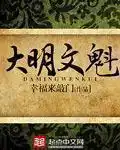
Wenkui of Ming Dynasty
大明文魁
- Status
- Completed
- Length
- 4.1M Words
- Genre
- Historical
- Subgenre
- Historical Transmigration
- Updated
- 2y ago
- Source
- Qimao
Stats
All-time: Popularity, Must-read votes.
1.4kChapters
579kPopularity
1.7kReaders
14kMust-read votes
9.3Score
4.2kRatings
Tags
Synopsis
More by this author
Readers also read
 After Severing the Relationship, the Prince and His Family Regretted It for the Rest of Their Lives.
 Prince Wushuang
 Reborn as an Emperor
 Li Er Wants to Be the Emperor? Next Life!
 Dominance of North America: Starting with World War I Labor
 My Father, the King of Zhenbei, Asked Me to Support My Younger Brother, so I Quit.
 From the Exiled Prince to the Eternal Tyrant of the Tang Dynasty
 After Guarding the Border for Eight Years, the Emperor Begged Me to Ascend the Throne.
 Brilliant Wanli: I Carried Out Reforms in the Ming Dynasty
 Ming Dynasty Master
 Civil Servants of Ming Dynasty
 From Son-In-Law to the Emperor's Favorite
 Summon Li Kui at the Beginning of the Three Kingdoms
 The Tang Dynasty Started as a Village Chief
 Happy Little Governor
 Three Kingdoms: Defending the Border for Ten Years, Li Yuanba Was Signed at the Beginning
 Invincible Little County Magistrate
 Little Scholar in Civilian Clothes
 Three Kingdoms: the Shu Han Was a Prodigal, and Wollongong Was Burned at the Beginning
 Life Simulator: Fool the Old Eunuch at the Beginning
Reader comments 50
Google Translate
After reading this book, you can be a good person and understand your principles. I am very lucky to have finished reading the five-year-old series of masterpieces in just over a month. Being upright can accumulate virtue, and a family that accumulates good deeds will be blessed. Nowadays, the Four Books and Five Classics are not compulsory to learn, and it is difficult to carry forward the essence of Chinese traditional culture. What a pity!
During the Wanli period, the protagonist's journey as a civil servant was both treacherous and loyal. The protagonist travels to the Ming Dynasty and steps towards the so-called position of one person below ten thousand people. He wants to change the Ming Dynasty, which is about to collapse. How should I put it? The protagonist has the thoughts of a traditional scholar-bureaucrat. He seems to be loyal, but he is also sinister! He is neither a gentleman with no desires nor a treacherous villain. He is just an ordinary official who works hard for fame and fortune. It is not like the traditional Ming Dynasty time-traveling literature to engage in industry, copying the public, etc., But writes a true civil servant style. The single heroine has a very deep character creation, a full plot, a sophisticated and fluent writing style, and a very deep study of the social nature of the late Ming Dynasty hidden behind the historical events of the Wanli period. The strategy is very strong, and it is highly recommended!
The nature of Yantide is dangerous, secluded and negative, deep and forbidding, restraining the upper and lowering, without the gentle and gentlemanly style. However, he has the courage to do his job and reform the law to correct the disadvantages. He can rectify the universe and rectify the sun and the moon, serve the barbarians and clarify the holy way. In the twenty years since the establishment of the Kingdom, the country has been spared and the money has been raised, the world has been in great order, the people are virtuous and happy, and the prosperity of the three generations has been restored. This contribution to the country's economic development is far greater than that of Yao and Song Dynasties, and directly overshadows Xiao and Cao. Since ancient times, ministers have been compared to husbands and wives.
The reserve of historical knowledge is too rich. The author is a graduate student in history.
First, in terms of writing style, it can be said that the author in the online literary world who is closest to the ancient writing skills of the Three Idiots does not "bring his own" ancient poetry collection to time travel, but writes a lot of his own. Secondly, in terms of the structure of the article, it is common to see virtue and meritorious service in various time-travel farming articles, but it is rare to "establish words" and establish a system through teaching, debates, writings, etc.! (Although it is borrowed, it is not easy to organize and extend it yourself). Third, the ending is very pleasant: the actual historical Wanli reign was adjusted to conclude the timeline of the full text very cleverly, and the descriptions in the last few chapters are still calm and leisurely, which is different from the rush-filling endings of many long chapters. Also: If you don't have a harem or a stallion, please like it! Fortunately, I accidentally searched for this book. Although I have only briefly read the story line, I already found it useful and interesting to read (it also has the fun of business writing). It takes two or three brushes to understand the proposition and the way to conduct one's life.
The story seems out of date, always looking down on others and then pretending to be a pig to eat the tiger. It's too superficial. The routine would have worked ten years ago. If this book was written ten years ago, then I wouldn't have said it, but now it seems really unpalatable.
The novel has great literary talent and rigorous plot, but its ideological level is not high enough. This book advocates governing the country with culture and does not understand that class conflicts were already very acute during the Wanli Dynasty, and the Ming dynasty would collapse if there were no drastic reforms. This book does not write much about the miserable lives of farmers and craftsmen and the fierce class struggle. It almost does not mention that during the Wanli period, the Ming Dynasty had weak soldiers, corrupt gentry, and corrupt government without knowing it. No matter how hard the Apocalypse and Chongzhen dynasties worked hard, they could not save the situation of defeat. In the middle and late Ming Dynasty, it began to decline and the world was replaced by slaves. When I think about it carefully, there are many reasons: serious land annexation, Donglin party struggle, emphasizing civility over military affairs, blood-sucking by vassal kings, peasant uprisings, seclusion, the rise of slave-building, etc. However, Confucianism severely restricted people's thoughts at this time and seriously restricted the development of social productivity. This was the fundamental reason for the demise of the Ming Dynasty and the Qing Dynasty. In the late feudal society, the author tried to use Confucian culture to govern the country to save the decline of society. What a scholarly spirit!
I saw someone saying that this is the pinnacle of time travel literature, so I tried reading it. The first few dozen chapters seemed okay, but then it felt like it was written by a different person. The slap-in-the-face routine is always the same. There are quite a few typos, and they are all very new and unseen typos. Sometimes the previous names of relatives can be spelled incorrectly.
I can only say that I can see it. Let's talk about the negative points. This Lin Qianqian is a beautiful child bride in the classic beginning. Forget it. In the early stage, Lin Qianqian was portrayed as a very normal rural woman. Although she did not work in the fields, she worked at home to support the family. Later, when she bought pens, she set the price and usually described the protagonist's classmates. It can be seen that she has no culture and is petty. But when it came to the Miss Gong family, she said that Lin Qianqian was extraordinary in conversation and knowledgeable. How could you, a child bride who grew up in a rural area, be so knowledgeable and reasonable without going to school? It's true that her father is rich, but since she said she was raised since childhood, her father has never been rich, so how can she speak so well? And the spoiled young lady of the Gong family is not as good as the child bride who grew up in the countryside? It's not that I have any opinion about Lin Qianqian. This logic is too ridiculous. If you don't know how to write, just don't write it, okay? Is it okay to pick one up normally with peace of mind in the later period? A daughter who has been rich for more than ten years is not as good as a child bride who has difficulty getting enough food and clothing in the countryside. Even if you write a protagonist who is rich and well-nourished and has sex, I can accept it. Is it possible that the rich family spent all the money they spent on feeding their children, while the peasant family used all the money they spent on food and clothing to support themselves?
To be fair, the writing and logic are both top-notch. If the protagonist did not have the identity of a time traveler, there would be no problem with the main idea of the novel. But it is a bit unreasonable for a modern person to serve as a loyal dog to the decadent feudal ruling class and regard Confucianism as the Bible.