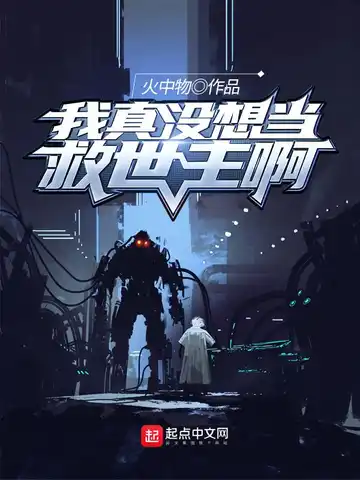
I Never Wanted to Be a Savior
我真没想当救世主啊
- Status
- Completed
- Length
- 2.6M Words
- Genre
- Sci-Fi
- Subgenre
- Futuristic Fantasy
- Updated
- 2y ago
- Source
- Qimao
Synopsis
All-time: Popularity, Must-read votes.
741Chapters
44kPopularity
1.1kReaders
1.2kMust-read votes
9.3Score
251Ratings
More by this author

Readers also read
 The Extraordinary Martial Era
 Wasteland Red Alert Commander
 Global Catastrophe: I Can Upgrade Rewards
 Super Zombie Factory
 The End of Technology
 Reborn in the Apocalypse: Contracting a Maid Battle Maiden from the Start
 Infinite Evolution
 Global Martial Arts: From the Start, I Sign In for a Divine Spirit Pet
 Mecha Galaxy
 The Throne of War
 Notes on Paranormal Investigations
 Highway Survival for All: One Shot, One Kill, and My Forging Always Upgrades the Quality
 This Really Isn't Mechanical Ascension
 Apocalypse RV System
 Reborn in the Apocalypse: Free Shopping and Building a Trillion-Yuan Shelter
 With a Level Nine Civilization Behind Me, You Expect Me to Believe in an Electronic God?
 Others Tame Beasts, I Tame Demons
 Armed Storm
 Global Awakening: I Strip Everything Away and Become a Saint
 Taboos of the Ten Thousand Clans
Reader comments 14
Translated by Google Translate
The prelude is too long and deviates from the author's theme of the book. I suggest that the author delete the prelude. I haven't read the rest of the story, but I'm afraid it will take 60 chapters to understand the plot. The author can't expect every reader to have the patience to read such a long prelude. It's boring to skip chapters and it's wrong.
Overall, it's a slow-burning one, but the pace will be very exciting later on, so impatient book lovers don't need to write negative reviews. Bad reviews are about poor content, not unpalatable narrative techniques. Just like the "Foundation" series, it is an undeniable science fiction masterpiece of the last century and has been widely praised. But for impatient book lovers, half a book may be a bit boring, but the essence of a good book is undeniable.
This book is actually very well written. It is a slow-burner and prefers the paper books of the past. Therefore, it is not very interesting to readers who are accustomed to fast-food novels.
I like this book very much, especially the conjectures and explanations about future technology. Recommended Well, I have a few questions. In this book, it seems that only private companies in China have scientific research institutions, but there are no official ones. The protagonist either builds his own research institutes in China or relies on research institutes from private companies, and no other research institutions are mentioned. The official only brought negative impact to the protagonist, which can be seen from Lu Wei's scenes It is probably due to some review reasons. But this will have a worse impact. I hope the review will relax some of this unnecessary scrutiny in the future.
In the vast market of online articles, "I Really Don't Want to Be the Savior" has successfully stood out with its unique setting and profound core. It is not only a science fiction novel, but also a tragic epic that explores human nature, responsibility and the survival of civilization. The most fascinating thing about this novel is its "anti-routine" core setting. The protagonist Chen Feng is not a hero in the traditional sense who is radiant and blessed with divine destiny. On the contrary, he is an ordinary person with many shortcomings: lazy, self-interested, and greedy for pleasure. The author Huo Zhongwu extremely boldly places the burden of the "savior" on such a seemingly completely unqualified shoulder. This strong contrast constitutes the great tension and humor in the early stages of the story - we watch a "common man" who just wants to make a fortune from copying songs, and is forced to witness the tragic destruction of human civilization thousands of years later. His struggle, fear and gradually awakening sense of responsibility appear extremely real and believable. His growth is not a saint's mentality that can be achieved overnight, but a last resort that is tempered by death and reincarnation and filled with blood and tears. This inner monologue of "not wanting to be a savior" gives the final act of "becoming a savior" the power to shake people's hearts. His novel cleverly constructs a narrative structure driven by dual timelines. The comfortable "now" (the 21st century) and the desperate "future" (the apocalyptic battlefield) form an extremely sharp contrast. In the present line, we see how Chen Feng uses the advantages of "prophet" to transform from a civil servant to a technology giant. It seems to be a relaxed urban cool novel; while in the future line, the tone instantly changes to hardcore and tragic, depicting the tenacity and sacrifice of human beings in interstellar wars. This kind of reading experience of ice and fire allows readers to enjoy the pleasure of development and construction, but at the same time they are always enveloped by a huge sense of crisis and fate, making them unable to stop. Future Line's sacrifice gives Present Line's every move a heavy and great meaning: every song he copies may become the spiritual comfort of future warriors; every technology he lights up may become the hope for the survival of the human fleet. Ultimately, the book transcends individual heroism and sublimates into a grand hymn to civilization. Chen Feng's greatest contribution is not how many enemies he killed directly in the future line, but that he "sowed fire" to the entire civilization in the present line. He is like a lonely gardener, fertilizing and watering mankind's technological trees across thousands of years. What we see is how a civilization, under the guidance of the "prophet", moves step by step from a Type I civilization to the starry sky, and how to gather the power of all mankind to face a doomsday war that is destined to come. It explores: Where does the resilience of a civilization come from? The answer may lie in ordinary individuals and seemingly small technological breakthroughs.
When I first read the first part, I thought it was a time-travel-type novel. The last timeline started to feel a little tense, but I also couldn't understand it. The depiction of space battles is spectacular. Too much ideological preaching.
What I wrote earlier is so annoying, it's true! This is my first time writing a book review! I almost have the urge to go berserk when I see it!
How did this book win the award? There was a pitfall at the beginning. The copyright of the song was not registered? The protagonist doesn't understand it. Is it so difficult that even Zhong Lei doesn't understand it?
Wasting time makes me see four o'clock in the morning
The ending is a bit hasty