Observing History and Entering the World: a Novel, Half of the World
观史入世:一部小说,半部人间
There are only a few words in history books, but behind them are the magnificent lives of millions of people. This book list is a literary bridge to the historical scene. It does not tell boring years and events, but uses the writing style of a novel to allow you to experience the moments that determine the fate of the dynasty, the details of the empire's operation, and the struggles, choices, joys and sorrows of each specific and small person under the grand hegemony.
 1
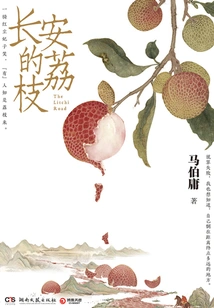
1Lychees of Chang'an (original Novel of the Film and Television Series Starring Lei Jiayin and Yue Yunpeng)
General Fiction长安的荔枝(雷佳音、岳云鹏主演影视剧原著小说)
Ma Boyong
The physical book of the same name is now on the market, a masterpiece in Ma Boyong's historical short novel "Jianwei" series! In the 14th year of Tianbao in the Tang Dynasty, Li Shande, a small official in Chang'an City, suddenly received a task: to transport fresh lychees from Lingnan before the birthday of the imperial concubine. The shelf life of lychees is only three days, and Lingnan is more than 5,000 miles away from Chang'an, with vast mountains and rivers, making this an impossible task. For the sake of his family, Li Shande had no choice but to give it a try... The ancient costume version of the story of survival of a social animal, an epic about a little man caught in the cracks of the empire.
The physical book of the same name is now on the market, a masterpiece in Ma Boyong's historical short novel "Jianwei" series! In the 14th year of Tianbao in the Tang Dynasty, Li Shande, a small official in Chang'an City, suddenly received a task: to transport fresh lychees from Lingnan before the birthday of the imperial concubine. The shelf life of lychees is only three days, and Lingnan is more than 5,000 miles away from Chang'an, with vast mountains and rivers, making this an impossible task. For the sake of his family, Li Shande had no choice but to give it a try... The ancient costume version of the story of survival of a social animal, an epic about a little man caught in the cracks of the empire.
From a microscopic view of history, when a red concubine rides on a horse and laughs, some people know that it is a lychee. The desperate express delivery of more than 5,000 miles has become a survival epic written by a ninth-grade official in the cracks of the empire using algorithms and blood and sweat.
 2
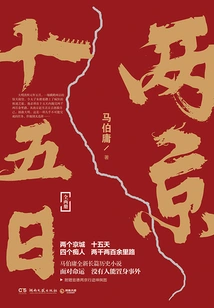
2两京十五日全集(成毅、林更新主演《两京十五日》原著)
Ma Boyong
Ma Boyong's new full-length historical novel. Four idiots, fifteen days, and more than 2,200 miles of spiritual journey. Thousands of miles of river, galloping on a starry night, besieged on all sides, life hanging by a thread. The prince's extremely fast run along the Grand Canal escapes the game between imperial power and public opinion, escapes the scheming battle between the palace and the officialdom, escapes the complicated grievances that have been entangled for decades, and escapes the delicate human heart from the noble to the humble. This is the spiritual journey of a young detective, a female doctor, a sesame official and a current prince, a vivid picture depicting the customs along the Grand Canal in the Ming Dynasty.
Ma Boyong's new full-length historical novel. Four idiots, fifteen days, and more than 2,200 miles of spiritual journey. Thousands of miles of river, galloping on a starry night, besieged on all sides, life hanging by a thread. The prince's extremely fast run along the Grand Canal escapes the game between imperial power and public opinion, escapes the scheming battle between the palace and the officialdom, escapes the complicated grievances that have been entangled for decades, and escapes the delicate human heart from the noble to the humble. This is the spiritual journey of a young detective, a female doctor, a sesame official and a current prince, a vivid picture depicting the customs along the Grand Canal in the Ming Dynasty.
A road movie about a desperate race along the blood vessel of the empire (the Grand Canal). In the extreme race of 2,000 miles in fifteen days, the imperial power, bureaucracy, business and people of the Ming Dynasty were completely exposed at every dock and beacon along the way.
 3
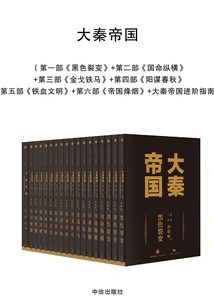
3Great Qin Empire (set Version)
General Fiction大秦帝国(套装版)
Sun Haohui
The original work of the popular CCTV drama "The Qin Empire" is the most influential historical novel in more than ten years, and it is the Warring States version of "The Rise of the Great Powers" that inspires and benefits contemporary Chinese people. The book is divided into six parts and seventeen volumes, including "Black Fission", "National Destiny", "Golden Arms", "Spring and Autumn", "Iron-Blooded Civilization" and "Empire's Beacon", plus one volume "Advanced Guide to the Great Qin Empire". At the end of the Warring States period when rituals and music were broken and heroes were vying for the throne, the Qin State, which was facing the disaster of national subjugation, was surrounded by great powers and emerged in the forest of iron-blooded competition among great powers. Beginning with Qin Xiaogong, he had to work hard, make thorough changes, uphold the rule of law, and unify political orders. After more than 160 years and six generations of leaders' unswerving pursuit, they completed a great imperial revolution, wiped out the Liuhe and unified the world, and established a strong and unified empire. This masterpiece restores the huge historical gap and the dramatic fate of the empire, and reproduces the tragic process of a country realizing its dream step by step. Every line and page of the book is full of wisdom, strategy, and political character, and the spirit of hard work and strong survival. It is full of heroic spirit and true soul from the era of China's original civilization. The first three films have been adapted into TV series. The first film, "The Fission of the Great Qin Empire," stars Hou Yong, Wang Zhifei, Lu Yong, Lu Zhong, and Gao Yuanyuan, and is known as a domestic drama. The second film, "The Fission of the Great Qin Empire," stars Ning Jing, Fu Dalong, Fu Miao, and Yu Entai. The third film, "The Rise of the Great Qin Empire," stars Ning Jing, Zhang Bo, and Li Liqun, and also has a high reputation.
The original work of the popular CCTV drama "The Qin Empire" is the most influential historical novel in more than ten years, and it is the Warring States version of "The Rise of the Great Powers" that inspires and benefits contemporary Chinese people. The book is divided into six parts and seventeen volumes, including "Black Fission", "National Destiny", "Golden Arms", "Spring and Autumn", "Iron-Blooded Civilization" and "Empire's Beacon", plus one volume "Advanced Guide to the Great Qin Empire". At the end of the Warring States period when rituals and music were broken and heroes were vying for the throne, the Qin State, which was facing the disaster of national subjugation, was surrounded by great powers and emerged in the forest of iron-blooded competition among great powers. Beginning with Qin Xiaogong, he had to work hard, make thorough changes, uphold the rule of law, and unify political orders. After more than 160 years and six generations of leaders' unswerving pursuit, they completed a great imperial revolution, wiped out the Liuhe and unified the world, and established a strong and unified empire. This masterpiece restores the huge historical gap and the dramatic fate of the empire, and reproduces the tragic process of a country realizing its dream step by step. Every line and page of the book is full of wisdom, strategy, and political character, and the spirit of hard work and strong survival. It is full of heroic spirit and true soul from the era of China's original civilization. The first three films have been adapted into TV series. The first film, "The Fission of the Great Qin Empire," stars Hou Yong, Wang Zhifei, Lu Yong, Lu Zhong, and Gao Yuanyuan, and is known as a domestic drama. The second film, "The Fission of the Great Qin Empire," stars Ning Jing, Fu Dalong, Fu Miao, and Yu Entai. The third film, "The Rise of the Great Qin Empire," stars Ning Jing, Zhang Bo, and Li Liqun, and also has a high reputation.
This is a seventeen-volume book about the iron-blooded soul of the Warring States Period. It not only writes about the rise of the Qin Dynasty, but also about the fission and rebirth of Chinese civilization, the strong light of survival that has never been extinguished and that "old Qin bravely fought against the national calamity together."
 4
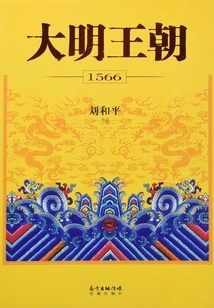
4Ming Dynasty 1566 (complete Collection)
General Fiction大明王朝1566(全集)
Liu Heping
The novel "Ming Dynasty 1566", a highly praised drama with a score of 9.5 On Douban, is a must-read for Taiwan's ruling and opposition parties, and a reference book for Singapore's cabinet politics. This book is the famous work of Liu Heping, the screenwriter of "Yongzheng Dynasty" and the author of "All Quiet in Peking". The book uses the overthrow of the big tiger Yan Song as a clue to tell the story of an intricate and thrilling anti-corruption drama in the Ming Dynasty. Uncover the mystery of Jiajing, the most unconventional emperor in Chinese history, who did not come to power for decades; reveal the way that the upright official Hai Rui in Chinese history replaced "intelligent loyalty" with "foolish loyalty"; reveal the truth that Yan Song, the chief auxiliary of the traitorous officials in the Qing Dynasty and Ming Dynasty, declined due to his extreme power; reveal the deepest secrets of the eunuch group, a special political institution of the Ming Dynasty. After ten years, the show was re-broadcast on Youku on February 13, 2017.
The novel "Ming Dynasty 1566", a highly praised drama with a score of 9.5 On Douban, is a must-read for Taiwan's ruling and opposition parties, and a reference book for Singapore's cabinet politics. This book is the famous work of Liu Heping, the screenwriter of "Yongzheng Dynasty" and the author of "All Quiet in Peking". The book uses the overthrow of the big tiger Yan Song as a clue to tell the story of an intricate and thrilling anti-corruption drama in the Ming Dynasty. Uncover the mystery of Jiajing, the most unconventional emperor in Chinese history, who did not come to power for decades; reveal the way that the upright official Hai Rui in Chinese history replaced "intelligent loyalty" with "foolish loyalty"; reveal the truth that Yan Song, the chief auxiliary of the traitorous officials in the Qing Dynasty and Ming Dynasty, declined due to his extreme power; reveal the deepest secrets of the eunuch group, a special political institution of the Ming Dynasty. After ten years, the show was re-broadcast on Youku on February 13, 2017.
The pinnacle original work of a historical drama, a suffocating political Tai Chi diagram that weaves together the Jiajing Emperor's "Yun Xiu Xian", the upright official Hai Rui's "dead remonstrance", the chief minister Yan Song's "power manipulation" and the empire's financial deficit. It describes the pinnacle art and ultimate dilemma of Chinese-style power operation.
 5
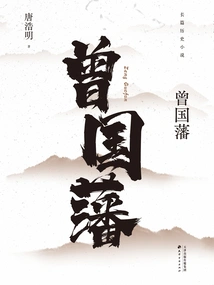
5Zeng Guofan
General Fiction曾国藩
Tang Haoming
"Zeng Guofan" is a long historical novel written by Tang Haoming. Since its first publication in 1990, this book has set off an upsurge in reading Zeng Guofan among Chinese people with its vivid storyline, vivid characters, rich historical atmosphere, and profound wisdom in life. In 1999, it was named one of the top 100 Chinese novels of the 20th century by Asia Weekly. In 2003, it won the first Yao Xueyin Historical Novel Award. To this day, with a cumulative circulation of more than one million copies, it has always been the first choice for the public to learn about Zeng Guofan.
"Zeng Guofan" is a long historical novel written by Tang Haoming. Since its first publication in 1990, this book has set off an upsurge in reading Zeng Guofan among Chinese people with its vivid storyline, vivid characters, rich historical atmosphere, and profound wisdom in life. In 1999, it was named one of the top 100 Chinese novels of the 20th century by Asia Weekly. In 2003, it won the first Yao Xueyin Historical Novel Award. To this day, with a cumulative circulation of more than one million copies, it has always been the first choice for the public to learn about Zeng Guofan.
If there is a master of "making things" in Chinese history, then the answer is hidden in this novel - it is not about a perfect person, but about how a stupid man used the most hard-hitting and fighting methods to live up to a practical philosophy of "cultivating oneself, managing one's family, and governing the country" in the troubled times of the late Qing Dynasty.
 6
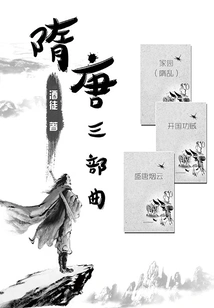
6Trilogy of Sui and Tang Dynasties (rebellion of Sui Dynasty, Founding Thieves, Smoke and Clouds of the Tang Dynasty)
General Fiction隋唐三部曲(隋乱、开国功贼、盛唐烟云)
I
This book is composed of three works with the background of the Sui and Tang Dynasties: "The Rebellion of the Sui Dynasty", "The Founding of the Nation and Attacking the Thieves" and "The Smoke and Clouds of the Prosperous Tang Dynasty" written by Drunkard.
This book is composed of three works with the background of the Sui and Tang Dynasties: "The Rebellion of the Sui Dynasty", "The Founding of the Nation and Attacking the Thieves" and "The Smoke and Clouds of the Prosperous Tang Dynasty" written by Drunkard.
This is a set of three turbulent times, describing the survival epic of the heroes of the Sui and Tang Dynasties from the wilderness to the temple - whether you are a border soldier in "The Rebellion of the Sui Dynasty", a hero in "The Founding Thief", or a famous general in "The Smoke and Clouds of the Tang Dynasty", in the end you cannot escape the torrent of the times and the price of personal choices.
 7
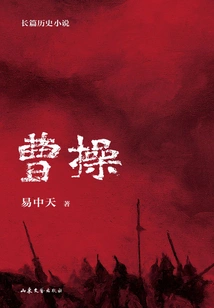
7Cao Cao (all Three Volumes)
General Fiction曹操(全三册)
Yi Zhongtian
Cao Cao originally did not have this obligation, nor did he have the ability. Why did he step forward and completely break with Dong Zhuo, who had used him so much, and did not hesitate to fight him with an egg against a stone? After the defeat, how did Cao Cao survive from the desperate situation, develop and grow while constantly correcting his mistakes, conquer Yanzhou, welcome the emperor, defeat Yuan Shu, capture Lu Bu, surrender Zhang Xiu, fight Yuan Shao, and become the greatest winner? Why did Cao Cao, who unified northern China, defeat Chibi and never cross the Yangtze River? From then on, how should Cao Cao, who was in his old age and full of ambitions, plan his world and life? One by one, former allies have become Cao Cao's enemies: Dong Zhuo, who looked at him differently, Lu Bu, who shared hardships, Yuan Shao, who was sympathetic to his brothers, Yang Biao, who secretly communicated with each other, Liu Bei, who cherished each other, Xiandi who relied on each other, Xun Yu who supported each other with Tao, Wu Yan who committed himself to each other, and even Xi Liu, who gave his whole heart and soul, finally left him. Whose fault is it?
Cao Cao originally did not have this obligation, nor did he have the ability. Why did he step forward and completely break with Dong Zhuo, who had used him so much, and did not hesitate to fight him with an egg against a stone? After the defeat, how did Cao Cao survive from the desperate situation, develop and grow while constantly correcting his mistakes, conquer Yanzhou, welcome the emperor, defeat Yuan Shu, capture Lu Bu, surrender Zhang Xiu, fight Yuan Shao, and become the greatest winner? Why did Cao Cao, who unified northern China, defeat Chibi and never cross the Yangtze River? From then on, how should Cao Cao, who was in his old age and full of ambitions, plan his world and life? One by one, former allies have become Cao Cao's enemies: Dong Zhuo, who looked at him differently, Lu Bu, who shared hardships, Yuan Shao, who was sympathetic to his brothers, Yang Biao, who secretly communicated with each other, Liu Bei, who cherished each other, Xiandi who relied on each other, Xun Yu who supported each other with Tao, Wu Yan who committed himself to each other, and even Xi Liu, who gave his whole heart and soul, finally left him. Whose fault is it?
This is a footnote about "loneliness" - a story about how Cao Cao, through repeated betrayals and choices, was tempered from a passionate young man to a lonely man. Finally, burdened with everyone's incomprehension, he walked alone to the road of hegemony that led to the throne and the judgment seat of history, with no one side by side.
 8
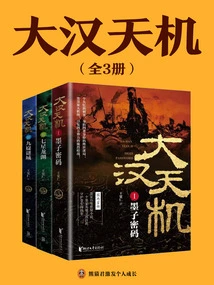
8Dahan Tianji (all 3 Volumes)
General Fiction大汉天机(全3册)
Wang Jueren
In the autumn of the sixth year of the Han Dynasty, court officials were assassinated one after another, and the circumstances of the case were strange. The assassin Qing Mang fell off a cliff and lost his memory. In the process of tracing his true identity, he fell into a treacherous and confusing crisis step by step. He unexpectedly discovered that he seemed to be inextricably connected with the imperial court, the Huns, the Mohists, and the princes. During this period, the mysterious "Heavenly Secret Map" surfaced, triggering fierce competition among various forces. Qingmang was caught between various forces, using his special identity as a fourth-level spy to mediate and maneuver around, fighting wits and courage with powerful opponents, fighting his way out step by step, and clearing up the doubts bit by bit.
In the autumn of the sixth year of the Han Dynasty, court officials were assassinated one after another, and the circumstances of the case were strange. The assassin Qing Mang fell off a cliff and lost his memory. In the process of tracing his true identity, he fell into a treacherous and confusing crisis step by step. He unexpectedly discovered that he seemed to be inextricably connected with the imperial court, the Huns, the Mohists, and the princes. During this period, the mysterious "Heavenly Secret Map" surfaced, triggering fierce competition among various forces. Qingmang was caught between various forces, using his special identity as a fourth-level spy to mediate and maneuver around, fighting wits and courage with powerful opponents, fighting his way out step by step, and clearing up the doubts bit by bit.
When the amnesiac assassin discovered that he was both a chess piece and a chess player, a "Heaven's Secret Map" carrying the secrets of the empire, the Huns, the Mohists and the princes became his only map to fight his way out of the chaos and find himself.
 9
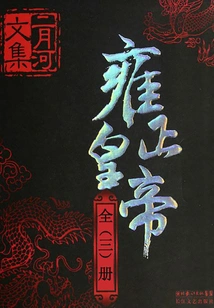
9Emperor Yongzheng (complete Works)
General Fiction雍正皇帝(全集)
February River
The behavior of emperors and the secrets of the palace have always been of concern to readers. This book describes the little-known life of the Qing court, but it is not limited to the small Forbidden City. The elder brother's faction fights, murderous intent looms, Longting changes hands, and Yongzheng narrowly wins. Change the imperial edict, say patricide, say succession? A period of history that is full of doubts, confusing and difficult to decipher. The author writes articles with a historical pen and establishes history with a writing pen. No matter how high the temple is, or how far the rivers and lakes are, he can capture everything under his pen. From the rules and regulations, palace architecture, food and clothing, etiquette and music, it is narrated in a eloquent way, with a strong sense of writing; down to the Goulan tile houses, temples and halls, markets and countryside, travelers and ancient ferry, it unfolds slowly and has various styles. The elder brother competes with each other, fighting openly and secretly, and every word is about power and deceit; the female singer and singer are full of lingering sounds, and their sentences are soul-stirring. The plot is laid out with ups and downs, the characters are created with appropriate shades, and the plots are all original. With thought as the warp and art as the weft, a bird's-eye view of history and an exploration of life are something that only everyone can do.
The behavior of emperors and the secrets of the palace have always been of concern to readers. This book describes the little-known life of the Qing court, but it is not limited to the small Forbidden City. The elder brother's faction fights, murderous intent looms, Longting changes hands, and Yongzheng narrowly wins. Change the imperial edict, say patricide, say succession? A period of history that is full of doubts, confusing and difficult to decipher. The author writes articles with a historical pen and establishes history with a writing pen. No matter how high the temple is, or how far the rivers and lakes are, he can capture everything under his pen. From the rules and regulations, palace architecture, food and clothing, etiquette and music, it is narrated in a eloquent way, with a strong sense of writing; down to the Goulan tile houses, temples and halls, markets and countryside, travelers and ancient ferry, it unfolds slowly and has various styles. The elder brother competes with each other, fighting openly and secretly, and every word is about power and deceit; the female singer and singer are full of lingering sounds, and their sentences are soul-stirring. The plot is laid out with ups and downs, the characters are created with appropriate shades, and the plots are all original. With thought as the warp and art as the weft, a bird's-eye view of history and an exploration of life are something that only everyone can do.
Under the age-old mystery of "patricide by changing edicts" and the bloody storm of nine sons seizing the heir, this novel restores an imperial ruler who was forged by ambition, conspiracy and loneliness - how he used thirteen years of hard work and harshness in the Forbidden City to forcefully extend the life of a dynasty, and finally turned himself into the most complicated footnote in history.
 10
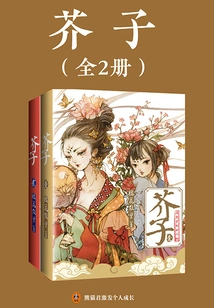
10Mustard Seed (2 Volumes in Total)
General Fiction芥子(全2册)
Orange Blossoms
A classic masterpiece by Juhua Sanli, the author of "The General is Here"! 24 Little people around historical celebrities. Xumi hides mustard seeds, and mustard seeds absorb Xumi - in the three thousand worlds, everyone is a mustard seed. From the Spring and Autumn Period to the Republic of China, from palace maids and guards to merchants and children, little people took on the role of protagonists, performing a life that has not been recorded in history: Huang Gouer could assassinate Jing Ke for his beloved sister, and Niu Dali and Hua Mulan had an unknown relationship. Knowing the secret, the humble Lu Liuer will fight hard to survive, and the slave girl who pretends to be the real Daji turns out to be a witch who overthrows a country... The little people may not have names, they will live in history in another way.
A classic masterpiece by Juhua Sanli, the author of "The General is Here"! 24 Little people around historical celebrities. Xumi hides mustard seeds, and mustard seeds absorb Xumi - in the three thousand worlds, everyone is a mustard seed. From the Spring and Autumn Period to the Republic of China, from palace maids and guards to merchants and children, little people took on the role of protagonists, performing a life that has not been recorded in history: Huang Gouer could assassinate Jing Ke for his beloved sister, and Niu Dali and Hua Mulan had an unknown relationship. Knowing the secret, the humble Lu Liuer will fight hard to survive, and the slave girl who pretends to be the real Daji turns out to be a witch who overthrows a country... The little people may not have names, they will live in history in another way.
While history books only record the names of heroes, this novel focuses on the yellow dogs, female slaves and grooms around the heroes - it is in those tiny destinies that are caught up in the huge waves that we can truly touch the temperature and weight of history.
 11
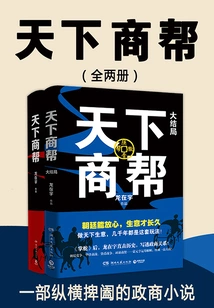
11World Business Gang (complete Collection)
General Fiction天下商帮(全集)
Long Zaiyu
Meng Yuanheng, who was born into a merchant family, only wanted to gain fame and had no interest in doing business. However, his father was suddenly framed and his path to the imperial examination was blocked. In order to survive and take revenge, he resolutely embarked on the road of business. The road to business is difficult and the road to survival is difficult and dangerous! Faced with competition and entrapment from his peers, how can Meng Yuanheng survive in danger and defeat his opponents by relying on his business talent? When facing extortion and oppression from bureaucrats, how can we use political and business wisdom to avert danger and improve ourselves step by step? Meng Yuanheng experienced dangerous roads in high mountains, robbers demanding lives, and almost died several times during long business trips. But he passed all the way, seized the opportunity, and won the appreciation of Kangxi with his excellent logistical services in the Qing court's campaign to conquer Galdan. He finally stood out and became a famous first-class businessman in the world.
Meng Yuanheng, who was born into a merchant family, only wanted to gain fame and had no interest in doing business. However, his father was suddenly framed and his path to the imperial examination was blocked. In order to survive and take revenge, he resolutely embarked on the road of business. The road to business is difficult and the road to survival is difficult and dangerous! Faced with competition and entrapment from his peers, how can Meng Yuanheng survive in danger and defeat his opponents by relying on his business talent? When facing extortion and oppression from bureaucrats, how can we use political and business wisdom to avert danger and improve ourselves step by step? Meng Yuanheng experienced dangerous roads in high mountains, robbers demanding lives, and almost died several times during long business trips. But he passed all the way, seized the opportunity, and won the appreciation of Kangxi with his excellent logistical services in the Qing court's campaign to conquer Galdan. He finally stood out and became a famous first-class businessman in the world.
This is not the legend of a "Business Sage", but how a young man who was deprived of his scholarship turned his obsession for revenge into an abacus, turned the dangers of business into a sophisticated political and business chess game, and finally found a way to survive for himself in the cracks between imperial power and the world.
 12
12O
General Fictiono
J
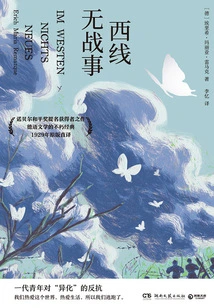
The original novel of the two-time Oscar-winning film and Nobel Peace Prize nominee, the original literal translation was released in 1929. Paul, a 19-year-old student, ignorantly signed up to join the war. He was forced to abandon his previous belief in knowledge and freedom and undergo a complete transformation. Life on the front line was always shrouded in fear and despair. Paul witnessed his close comrades dying one after another. In order to protect himself, he had to kill enemy soldiers, but he suddenly realized that the enemy in front of him was a living person like him, suffering the same pain, dying, and missing his family. Before joining the army, Paul was just an ordinary student; after joining the army, he could no longer foresee his future. Paul felt that his life had been completely changed... This book was first published in 1929 and has been translated into more than 50 languages around the world and is loved by many readers. The film of the same name adapted from the book has won multiple Oscars, and the author Remarque was nominated for the Nobel Peace Prize for writing the novel.
The original novel of the two-time Oscar-winning film and Nobel Peace Prize nominee, the original literal translation was released in 1929. Paul, a 19-year-old student, ignorantly signed up to join the war. He was forced to abandon his previous belief in knowledge and freedom and undergo a complete transformation. Life on the front line was always shrouded in fear and despair. Paul witnessed his close comrades dying one after another. In order to protect himself, he had to kill enemy soldiers, but he suddenly realized that the enemy in front of him was a living person like him, suffering the same pain, dying, and missing his family. Before joining the army, Paul was just an ordinary student; after joining the army, he could no longer foresee his future. Paul felt that his life had been completely changed... This book was first published in 1929 and has been translated into more than 50 languages around the world and is loved by many readers. The film of the same name adapted from the book has won multiple Oscars, and the author Remarque was nominated for the Nobel Peace Prize for writing the novel.
When Peiping turned into a huge secret room on the eve of the decisive battle between the Kuomintang and the Communist Party, a pilot suspected of "communism" became the sharpest knife in Chiang Ching-kuo's hand against family corruption and financial collapse - this was a silent spy war on the economic front, and the outcome was determined long before the gunshot was fired.
 13
13Juliuhe (commemorative Edition)
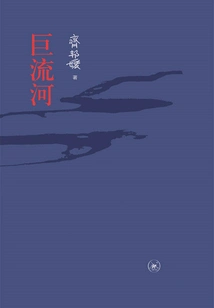
General Fiction巨流河(纪念版)
Qi Bangyuan
The author Qi Bangyuan's father, Qi Shiying, was a passionate young man who studied in Germany in the early years of the Republic of China. He was a reformer in the Northeast before the September 18th Incident. His lifelong regret revolved around the failed battle of the Juliu River. The unsurmountable Juliu River was like a severe cold in reality. Diplomacy and innovative ideas were trapped here. From then on, the modern suffering of the Northeast began, which eventually spread to the entire China. The author's life is a microcosm of the entire twentieth century. The author, who is over eighty years old, took four years to write "Juliu River". With careful and transparent writing, he starts from the "Juliu River" outside the Great Wall and ends at the "Yakou Sea" in Hengchun, the southern tip of Taiwan. It records the changes of the great era that span a hundred years and span both sides of the Taiwan Strait.
The author Qi Bangyuan's father, Qi Shiying, was a passionate young man who studied in Germany in the early years of the Republic of China. He was a reformer in the Northeast before the September 18th Incident. His lifelong regret revolved around the failed battle of the Juliu River. The unsurmountable Juliu River was like a severe cold in reality. Diplomacy and innovative ideas were trapped here. From then on, the modern suffering of the Northeast began, which eventually spread to the entire China. The author's life is a microcosm of the entire twentieth century. The author, who is over eighty years old, took four years to write "Juliu River". With careful and transparent writing, he starts from the "Juliu River" outside the Great Wall and ends at the "Yakou Sea" in Hengchun, the southern tip of Taiwan. It records the changes of the great era that span a hundred years and span both sides of the Taiwan Strait.
This is a long river of life from the giant river in Northeast China to the Yakou Sea in Taiwan. Mr. Qi Bangyuan used the family's ups and downs as paper and the joys and sorrows of the century as ink to write an epic of a century of chaos that is more concrete than a history book and quieter than poetry. It allows us to see all the possibilities for those individual souls to remain silent, tenacious and noble under the roar of the torrent of history.
 14
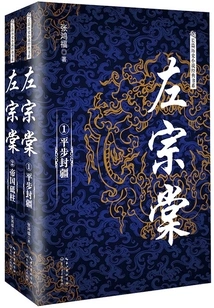
14左宗棠(全集)(长篇历史小说经典书系)
Zhang Hongfu
This book is a full-length historical novel. Zuo Zongtang was an important minister of the late Qing Dynasty, a strategist, a politician, a famous general of the Hunan Army, and the leader of the Westernization Movement. He failed in many trials when he was young, so he turned his attention to farming, read many books, studied geography and military art, and later became a famous minister of the Qing Dynasty.
This book is a full-length historical novel. Zuo Zongtang was an important minister of the late Qing Dynasty, a strategist, a politician, a famous general of the Hunan Army, and the leader of the Westernization Movement. He failed in many trials when he was young, so he turned his attention to farming, read many books, studied geography and military art, and later became a famous minister of the Qing Dynasty.
A Hunan scholar who failed in many trials finally carried a coffin and went to war in his later years, regaining one-sixth of China's territory. This book is not only about Zuo Zongtang's counterattack, but also about the last lonely courage and determination of a nation in the decadent era of "looking northwest and shooting at the wolf".
 15
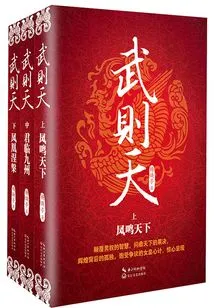
15Wu Zetian (complete Works)
General Fiction武则天(全集)
Yang Huanting
Why would she cross the bottom line of human ethics and kill her own children? How did she transform from talent to queen? How could she become a queen in a world ruled by men for thousands of years? The Great Zhou Dynasty she founded was at its peak, so why wasn't it passed down to future generations? Why do Li Tang's descendants always respect her and regard her as their emperor? For more than a thousand years, she has been both history and legend. The book begins with Wu Zetian's entry into the palace and the death of Emperor Taizong of the Tang Dynasty. It vividly depicts the complex and rich emotional life of a generation of empresses, their wisdom and strategies for managing the country and the world, and their extraordinary life of rebellion and isolation. It reproduces the thrilling power situation of the Tang Dynasty and describes the counterattack life of the first empress in Chinese history.
Why would she cross the bottom line of human ethics and kill her own children? How did she transform from talent to queen? How could she become a queen in a world ruled by men for thousands of years? The Great Zhou Dynasty she founded was at its peak, so why wasn't it passed down to future generations? Why do Li Tang's descendants always respect her and regard her as their emperor? For more than a thousand years, she has been both history and legend. The book begins with Wu Zetian's entry into the palace and the death of Emperor Taizong of the Tang Dynasty. It vividly depicts the complex and rich emotional life of a generation of empresses, their wisdom and strategies for managing the country and the world, and their extraordinary life of rebellion and isolation. It reproduces the thrilling power situation of the Tang Dynasty and describes the counterattack life of the first empress in Chinese history.
In an era when even the gods were statues of men, she lived her life as the only law - from killing her own flesh and blood to sitting on the dragon's throne. This book describes how Wu Zetian used blood, wisdom and loneliness to carve the unprecedented name "I" with her own hands in the thousand-year male imperial genealogy.