Chinese Classics
国学经典
Chinese Classics
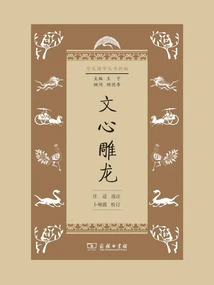
🐲Recommendation index: ★★★★☆ 🐲Era: Nanchaoliang 🐲Liu Xie's "The Literary Mind and the Carving of Dragons" is very exquisite, and it explains the essence and origin of the article. It also tells the development history of the article and representative works and figures in each period. The vocabulary in it is gorgeous, very beautiful, and very beautiful. If you want to learn some advanced ancient terms and beautiful nicknames for things, this book is highly recommended! ! !
 2
2V
General Fictionv
I
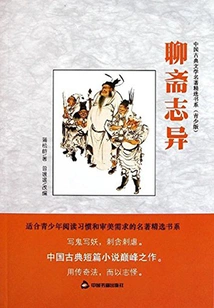
"Strange Stories from a Chinese Studio" has nearly 500 chapters, with superb thinking and sharp writing, and promotes the anti-feudal democratic spirit. The lonely ghosts, flower demons and the underworld are undoubtedly the focus and interpretation points of Pu's legendary legend. However, the vast world and all kinds of human beings, including animals, insects and butterflies, mountains, rivers and ravines, diving fish and dragons, wind, frost, thunder and lightning, study halls and examination halls, government offices, market shops, and boudoir houses, are all transformed and transformed in the writing. Among them, the satirical exposure of the shortcomings of the imperial examinations and official corruption is extremely heart-wrenching; the flower demons, ghosts and foxes endowed with beautiful humanity, and the life-or-death love story between humans and demons are particularly touching...
"Strange Stories from a Chinese Studio" has nearly 500 chapters, with superb thinking and sharp writing, and promotes the anti-feudal democratic spirit. The lonely ghosts, flower demons and the underworld are undoubtedly the focus and interpretation points of Pu's legendary legend. However, the vast world and all kinds of human beings, including animals, insects and butterflies, mountains, rivers and ravines, diving fish and dragons, wind, frost, thunder and lightning, study halls and examination halls, government offices, market shops, and boudoir houses, are all transformed and transformed in the writing. Among them, the satirical exposure of the shortcomings of the imperial examinations and official corruption is extremely heart-wrenching; the flower demons, ghosts and foxes endowed with beautiful humanity, and the life-or-death love story between humans and demons are particularly touching...
🐲Recommendation index: ★★★★☆ 🐲Era: Qing Dynasty 🐲This is a very classic fantasy novel. The stories in it such as A Chinese Ghost Story, Painted Skin, and Water Ghost are well-known and popular. I particularly like the fox fairy in it, especially the scene where Ying Ning is sitting on the tree and laughing, looking forward to the scene. The storyline inside is ups and downs and deeply touching. Highly recommended! ! !
 3
3Guanwen Guanzhi
Literature古文观止
(qing Dynasty) Wu Chucai (qing Dynasty) Editor's Notes By Wu Tiaohou
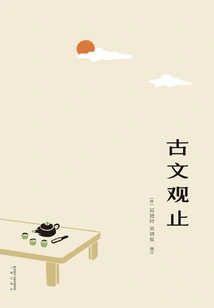
"Guan Zhi", compiled by the mid-Qing literati Wu Chucai and Wu Tiaohou's uncle and nephew, is a comprehensive book of the essence of Chinese prose from all dynasties. It is an enlightenment reading book for classical Chinese since the Qing Dynasty. Together with "Three Hundred Tang Poems", it is called the "double wall" of Chinese ancient poetry anthology. Lu Xun praised it as being as beautiful as "Selected Works of Zhaoming". "Guanzhi of Ancient Prose" means that one can view the ancient promulgation at a glance in this book, and all the beauties selected from it will be collected together. The collection of articles starts from the pre-Qin Dynasty and ends at the end of the Ming Dynasty. It consists of twelve volumes and 222 articles. It includes various literary styles and selects famous articles by sages. It is short in length, refined in language, and easy to read. It represents the highest level of prose from the pre-Qin to the late Ming Dynasty. It also shows the development of Chinese articles from one side. It is the first choice for understanding Chinese culture and enlightening Chinese articles.
"Guan Zhi", compiled by the mid-Qing literati Wu Chucai and Wu Tiaohou's uncle and nephew, is a comprehensive book of the essence of Chinese prose from all dynasties. It is an enlightenment reading book for classical Chinese since the Qing Dynasty. Together with "Three Hundred Tang Poems", it is called the "double wall" of Chinese ancient poetry anthology. Lu Xun praised it as being as beautiful as "Selected Works of Zhaoming". "Guanzhi of Ancient Prose" means that one can view the ancient promulgation at a glance in this book, and all the beauties selected from it will be collected together. The collection of articles starts from the pre-Qin Dynasty and ends at the end of the Ming Dynasty. It consists of twelve volumes and 222 articles. It includes various literary styles and selects famous articles by sages. It is short in length, refined in language, and easy to read. It represents the highest level of prose from the pre-Qin to the late Ming Dynasty. It also shows the development of Chinese articles from one side. It is the first choice for understanding Chinese culture and enlightening Chinese articles.
🐲Recommendation index: ★★★★☆ 🐲Era: Qing Dynasty 🐲Contains the most representative and excellent ancient texts from the pre-Qin Dynasty to the late Ming Dynasty. The logic is clear and the language is beautiful, like drinking mellow cheese. If you want to learn more about classical Chinese and how to write argumentative essays, this is a very good book and well worth reading. If you are interested in ancient imperial examination articles and court policy, this is also a very suitable book. Highly recommended! !
 4
4Mirror Flowers
General Fiction镜花缘
(qing Dynasty) Li Ruzhen
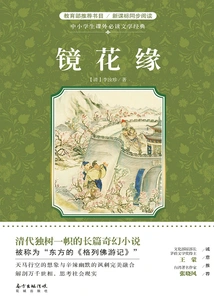
"Flower in the Mirror" is a long fantasy novel from the Qing Dynasty. It tells the story of Tang Ao and his party traveling overseas by boat. During the journey, they visited different countries and experienced various adventures. These countries are all reflections of various phenomena in reality, such as the daughter country where the status of men and women is completely reversed, the heartless country where the rich are unkind, the hypocritical and cunning two-faced country, etc. The author presents the various social issues of his own era, the values he advocates, and the good and evil in human nature in a symbolic and exaggerated way, making it both fresh and interesting to read, and also thoughtful. Therefore, some people compare this book to "Gulliver's Travels in the East".
"Flower in the Mirror" is a long fantasy novel from the Qing Dynasty. It tells the story of Tang Ao and his party traveling overseas by boat. During the journey, they visited different countries and experienced various adventures. These countries are all reflections of various phenomena in reality, such as the daughter country where the status of men and women is completely reversed, the heartless country where the rich are unkind, the hypocritical and cunning two-faced country, etc. The author presents the various social issues of his own era, the values he advocates, and the good and evil in human nature in a symbolic and exaggerated way, making it both fresh and interesting to read, and also thoughtful. Therefore, some people compare this book to "Gulliver's Travels in the East".
🐲Recommendation index: ★★★★☆ 🐲Era: Qing Dynasty 🐲This book can be said to be a very interesting ancient fantasy novel. After the protagonist goes to sea, he goes to various exotic places, including the country of adults with auspicious clouds, the country of tall adults, the country of daughters where the identities of men and women are interchanged, and the country of people with dog heads. . . . . . Countless interesting and magnificent imaginations make up this book. Although the Chinese literature and the temple plot in the second half may be a little boring, it is still very interesting. Even though it has been a hundred years, it is still shocking. Highly recommended! !
 5
5Historical Records
History史记
(han) Original Work By Sima Qian, Adapted By Song Kaijin
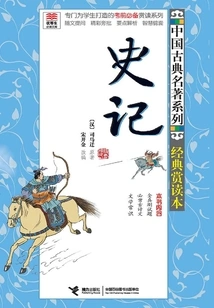
This series (must-read library series for top students) is a series of classic works specially tailored for students. Each selected book is carefully equipped with opening questions from famous teachers, exciting side comments, analysis of key points in the text, and wisdom tips and other reading aids. This book "Historical Records" is the first biographical general history in Chinese history. It records a history of more than 3,000 years from the legendary Huangdi era to the fourth year of Emperor Wu of the Han Dynasty. In the first year of Taichu (104 BC), Sima Qian began the creation of "Tai Shi Gong Shu", which was later called "Historical Records". It took 14 years to complete the work.
This series (must-read library series for top students) is a series of classic works specially tailored for students. Each selected book is carefully equipped with opening questions from famous teachers, exciting side comments, analysis of key points in the text, and wisdom tips and other reading aids. This book "Historical Records" is the first biographical general history in Chinese history. It records a history of more than 3,000 years from the legendary Huangdi era to the fourth year of Emperor Wu of the Han Dynasty. In the first year of Taichu (104 BC), Sima Qian began the creation of "Tai Shi Gong Shu", which was later called "Historical Records". It took 14 years to complete the work.
🐲Recommendation index: ★★★★★ 🐲Era: Western Han Dynasty 🐲 It is the first biographical general history in Chinese history. The work covers more than 3,000 years of history from the legendary Huangdi era to the fourth year of Emperor Wu of the Han Dynasty. The biographies in it, especially the biographies of assassins and cruel officials, are very interesting. Welcome to come and see! !
🐲Recommendation index: ★★★★☆ 🐲Era: Southern and Northern Dynasties 🐲This is a book about the anecdotes of celebrities in the Wei and Jin Dynasties written by Liu Yiqing of the Southern Dynasty. In it, you can see Yong Xucai and Xie Daoyun, you can see Wang Xizhi confessing his belly and sleeping in the east bed, you can see the visit to friends on a snowy night and return with great joy, and you can see the orchid and jade trees and the jade mountain falling down. . .
🐲Recommendation index: ★★★★☆ 🐲Era: Spring and Autumn Period 🐲"The Art of War" tells the wisdom of the ancients and describes the principles of struggle. Although we may not go to war, Sun Tzu's wisdom is reflected in all aspects of our lives, in shopping malls, workplaces, studies, and life. Countless great men fell in love with him and found their own path. I believe it will be helpful to you if you read it.
🐲Recommendation index: ★★★★☆ 🐲Period: Warring States Period 🐲I personally like the (metaphorical?) Short stories in it. There is a fish in the North Ming Dynasty, and its name is Kun. The Kun is so big that it cannot be stewed in a pot (cross out 🐶). There are also the trout in the rut, Zhuang Zhou dreaming of butterflies, etc., Which are very interesting. At the same time, the language inside is beautiful, the truth is profound, and the aftertaste is long.