History of the Three Kingdoms
三国历史文
The Three Kingdoms was a fascinating era when heroes emerged in large numbers. Probably because of the Romance of the Three Kingdoms, the Three Kingdoms can be said to be the era that Chinese people are most familiar with. Everyone can easily tell a lot of anecdotes about civil servants, generals, and celebrities. I guess there are many people like me who got into historical literature because of the Three Kingdoms. This book only contains the Romance of the Three Kingdoms, which I think is quite good. Let us experience the era of fighting and iron horses together.
 1
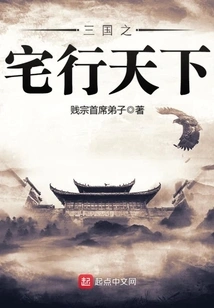
1三国之宅行天下
Chief Disciple Of The Jian Sect
"If I had known I was going to time travel, I would have searched up the methods of making gunpowder and glass..." Jiang Zhe looked at the big tree in front of the door and sighed, and said unconfidently, "Glass, well, it should be made of sand. What about gunpowder, saltpeter, black charcoal, and what else? Sulfuric acid or sulfur?" "Husband..." Xiu'er walked up to Jiang Zhe and asked strangely, "Husband, aren't you going to work yet?" "Gone, gone..." Jiang Zhe shook his head and walked away, "I worked so hard just for those few hundred pennies... To get..." "Zhai Xing" zero group: 34375614 (full) "Zhai Xing" group: 87817071 (full) provided by Book Friends Xian Yuan Niwu! "Home Travel" Group 2: 12158910 (full) provided by book friends Death and Fengjun! Three groups of "Zhai Xing": 97474881 (full) Friendly provided by book friends, please ignore me! Four groups of "Zhai Xing": 104143590 Book Friends Dragon Blood Shang is kindly provided! Five groups of "Zhai Xing": 114668942 Book Friends Lost╄YANG is kindly provided!
"If I had known I was going to time travel, I would have searched up the methods of making gunpowder and glass..." Jiang Zhe looked at the big tree in front of the door and sighed, and said unconfidently, "Glass, well, it should be made of sand. What about gunpowder, saltpeter, black charcoal, and what else? Sulfuric acid or sulfur?" "Husband..." Xiu'er walked up to Jiang Zhe and asked strangely, "Husband, aren't you going to work yet?" "Gone, gone..." Jiang Zhe shook his head and walked away, "I worked so hard just for those few hundred pennies... To get..." "Zhai Xing" zero group: 34375614 (full) "Zhai Xing" group: 87817071 (full) provided by Book Friends Xian Yuan Niwu! "Home Travel" Group 2: 12158910 (full) provided by book friends Death and Fengjun! Three groups of "Zhai Xing": 97474881 (full) Friendly provided by book friends, please ignore me! Four groups of "Zhai Xing": 104143590 Book Friends Dragon Blood Shang is kindly provided! Five groups of "Zhai Xing": 114668942 Book Friends Lost╄YANG is kindly provided!
Most of the Three Kingdoms novels follow the hegemony style, and I guess everyone is a little tired of it. This is not the case in this book. It is a rare auxiliary stream. The protagonist assists Cao Cao in conquering the world as a civil servant, rather than fighting for hegemony himself. This is one of the highlights of this book. In addition, this book is an old book that was written more than ten years ago. Looking at it today, it does have many so-called "poisonous points", but the flaws do not hide the good points, and it is still a good book. I hope book friends who have not read this book can be more tolerant and patient with this book, and maybe they will like it too. Suitable for the crowd: This book is more suitable for book lovers who like the Three Kingdoms and Cao Cao, do not need to be very sophisticated in history, and are tired of watching the hegemony genre. Rating of the work: 8 (The language is humorous. The characters are flesh-and-blood. The history is not sophisticated. It is mixed with fantasy, which I don't like very much.) Content summary: This book tells the story of a modern young man who traveled to before the Yellow Turban Rebellion. With his personal efforts and understanding of the future, he gained Cao Cao's favor, joined Cao Cao's army, and finally helped him achieve hegemony. Author: Ji Zong can be said to be a master of historical writing, famous for his brisk writing style and good character creation. This book is his first book, so there were various problems in the beginning, but it gradually got better later. I hope everyone can be more tolerant and patient with this book. If you like fictional historical texts, Wei Zong's Wei Zong is well worth reading. Personal review: First of all, the language is humorous and the writing style is brisk and delicate. This is a consistent characteristic of Ji Zong, because his history is not sophisticated and his writing style is average, so sometimes people feel that he is white or poisonous. But the witty language makes up for this shortcoming. First, it makes the article interesting, and second, it clearly tells readers that this is a romance and should not be so sophisticated. Secondly, this book is willing to write positive content about princes and other figures, even if they are hostile forces. To be honest, the general Three Kingdoms novels always use various methods to criticize other hostile princes, as if this can highlight the superiority of the protagonist. I don't like this. I think the princes who stand out must have done something right and cannot be full of shortcomings. In this book, even though the protagonist is opposed to Liu Bei, the focus is still on his unparalleled benevolence and righteousness. Yuan Shao, Gongsun Zan and other princes also wrote about their own advantages. Finally, the characters are well created and have flesh and blood. Perhaps because it is an auxiliary stream, compared to the perspective of "Strive for Hegemony" that focuses on the overall situation and the whole country, this book often focuses on the protagonist's family and the people who are close to the protagonist. Therefore, if the characters interact more, the character's personality characteristics can be expressed through normal social activities. Unlike most supporting characters in hegemony stories, they seem to be just puppets and sound transmission tools for the protagonist. Personal complaints: The mixture of a bit of fantasy is really a major flaw of this book, especially the fantasy setting is not perfect😰
 2
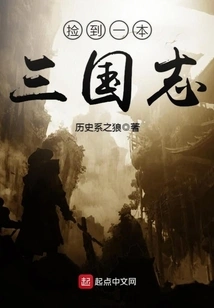
2捡到一本三国志
History Wolf
The new book "Picked Up a First Emperor", I hope you can read it! In the ninth year of Yanxi of the Eastern Han Dynasty, Liu Hong, who was only nine years old, fished a goldfish from the river, cut its belly open, and obtained a volume of the heavenly book, which is called "Three Kingdoms"! As a result, the Han Dynasty had a different spiritual emperor and a different world. Book club group: 932493822 VIP group: 168673501 Verified that the number of fans is more than 2,000.
The new book "Picked Up a First Emperor", I hope you can read it! In the ninth year of Yanxi of the Eastern Han Dynasty, Liu Hong, who was only nine years old, fished a goldfish from the river, cut its belly open, and obtained a volume of the heavenly book, which is called "Three Kingdoms"! As a result, the Han Dynasty had a different spiritual emperor and a different world. Book club group: 932493822 VIP group: 168673501 Verified that the number of fans is more than 2,000.
I believe everyone has read the Master's List, and is familiar with the words "I might as well sigh and hate Yu Huan and Ling Ye". Indeed, the Eastern Han Dynasty actually fell at the hands of Huan and Ling. If Emperor Ling knew the subsequent history, could he be a good emperor and change the outcome of destruction? If you are also interested in this, you may wish to read this book, because this book is described from this perspective. Suitable for the crowd: This book is more suitable for book lovers who like the history of the Three Kingdoms, regret the fall of the Han Dynasty, are patient, do not reject expressions in classical Chinese, and like group portraits. Rating of the work: 10 (The characters are well created. The group portraits are well done. The historical knowledge is solid and sophisticated. The language is archaic.) Content summary: This book tells the story of Emperor Ling of the Han Dynasty who picked up a copy of the Chronicle of the Three Kingdoms and learned about the subsequent history. In order to change the outcome of the Han Dynasty's demise, he worked hard to save the building from collapse. He then passed on the Chronicle of the Three Kingdoms and combined the efforts of the three generations of Han emperors to finally realize the resurgence of the Han Dynasty. Author: Lao Lang is a master of historical texts, especially the historical texts of the Qin and Han Dynasties. He currently has three completed historical texts with more than one million words. He has a solid foundation in history, his articles are in an ancient style, and his descriptions are delicate and good at foreshadowing. If you are a lover of historical literature, I suggest you read Lao Lang's three books. You won't be disappointed. Personal review: To be honest, everyone's tastes are different, and it's not uncommon to see "one person's honey, another's arsenic" situation. Here I will just talk about what I like better. First, the text is more ancient and more classical. To use an analogy, it is a bit like the lines in the Three Kingdoms. For me, reading such words makes me feel more immersed, as if I am integrated into that era. However, for some book lovers, such text may be a bit boring. Second, the characters are well created and the group portraits are good. By the way, I have to remind you here that strictly speaking, this book does not have a protagonist in the general sense. Emperor Ling of the Han Dynasty, who was thought to be the protagonist in the early stage, also went offline in the middle, and then his children and grandchildren Liu Bian and others became emperors one after another. So if you put too much emotion into the little fat guy, it will be difficult to get into the plot for a while. Each character is also flesh and blood. There is no need to cure the irritability of the male sheep. He only goes in but cannot get out and hears people attacking him. The deaths of many characters made me shed a lot of tears. The little fat man worked hard, but in the end he died early in his thirties. He was reluctant to leave. He had not yet managed the country well. Here, the song "I really want to live another five hundred years" came to my mind. Although Song Dian hanged himself, he should be happy and liberated, because he followed the meaning of his life. He just hoped that his majesty would be slower so that he could catch up. Third, the plot is logical, and the characters' behaviors are in line with their personalities. Although the various celebrities in the Three Kingdoms have different endings from history, upon careful consideration, what they can do is logical and will not feel inconsistent.
 3
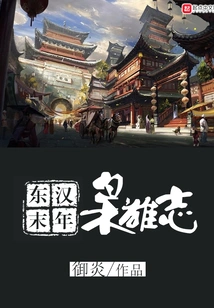
3东汉末年枭雄志
Yuyan
The last years of the Eastern Han Dynasty in the Romance of the Three Kingdoms were full of ups and downs. There are brave generals, wise counselors, cunning heroes, benevolent and righteous rulers, and alluring beauties. But in Guo Peng's eyes, the late Eastern Han Dynasty was cold. Not gentle at all, not correct, not civilized, always murderous He saw hunger, poverty, war, and plague He saw the white bones exposed in the wild, and there were no roosters crowing for thousands of miles. He saw the desolate earth and the gray sky Only the color of blood is bright Therefore, he wants to become a wolf, a cold-blooded, cunning, despicable, brave, tough, tenacious and never discouraged wolf Then step by step, step by step, climb to the highest ---------------- The new book "Xuan De" has been uploaded, please support it~
The last years of the Eastern Han Dynasty in the Romance of the Three Kingdoms were full of ups and downs. There are brave generals, wise counselors, cunning heroes, benevolent and righteous rulers, and alluring beauties. But in Guo Peng's eyes, the late Eastern Han Dynasty was cold. Not gentle at all, not correct, not civilized, always murderous He saw hunger, poverty, war, and plague He saw the white bones exposed in the wild, and there were no roosters crowing for thousands of miles. He saw the desolate earth and the gray sky Only the color of blood is bright Therefore, he wants to become a wolf, a cold-blooded, cunning, despicable, brave, tough, tenacious and never discouraged wolf Then step by step, step by step, climb to the highest ---------------- The new book "Xuan De" has been uploaded, please support it~
This book can be said to be a unique Three Kingdoms novel. Generally, the Three Kingdoms novels focus more on the process of fighting for hegemony, that is, the military aspect. This book focuses on the governance process after the struggle for hegemony, that is, the political aspect. If you just read the first half of the book, it can only be said to be a decent Three Kingdoms novel, but adding the second half can be said to push the book to a new level. Suitable for the crowd: This book is more suitable for book lovers who like the history of the Three Kingdoms, but prefer political descriptions to military aspects. Work rating: 8 (The plot is smooth and natural. The protagonist is well portrayed and multi-faceted. The political description is eye-catching. The middle part is a bit watery.) Content summary: This book tells the story of a modern young man who traveled through time and became a poor man at the end of the Eastern Han Dynasty. With his personal efforts and understanding of the future, he ended the war, established a new dynasty, and carried out drastic reforms. Author: Yu Yan is quite accomplished in the literature of the Three Kingdoms. He is good at analyzing the structure of the entire society in addition to military affairs, and focuses on some political expressions and descriptions, which are of thought-provoking significance. By the way, his later Xuande is also very good. If this book is not enough, you can read Xuande's book. Personal review: First of all, the protagonist is well portrayed. Although many people say that the protagonist is abused at the beginning, I think that part is very good, lying on the ice and begging for carp, showing the character of the protagonist who is willing to do whatever it takes to succeed. Moreover, the protagonist is quite powerful and has been deceiving Yuan Shu all the time. After bringing peace to the world, he brutally suppressed the aristocratic family again and again. But on the other hand, he loved the people and this country deeply. The characters are more three-dimensional. Secondly, compared to the military aspect, the description of the political aspect really made me think deeply. Through this book, I have a deeper understanding of the Twenty-Four Filial Piety and why most of the stories in the Twenty-Four Filial Piety took place during the Han, Wei and Jin Dynasties. I also know why the Yuan family has become the fourth generation and the third prince. It can be said that it is beneficial to open the book. Finally, this book writes something that is not written in other historical texts, that is, the protagonist is not understood by others, even his own son. Yes, as a modern person, the ideas of people at that time are very different. And relying on the productivity at that time, it was difficult to implement the various systems now. So in the end, the protagonist is not understood by others, his son is just a traditional feudal emperor, and the ending of the final dynasty is no different from the previous dynasties. Although writing this way does make people feel a little depressed, I think it really sublimates the whole book. In short, as an unusual Three Kingdoms novel, this book is well worth reading.
 4
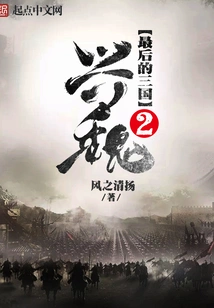
4最后的三国2兴魏
Clear Wind
The new book "My Empire on which the Sun Never Sets" has been released. I hope book friends will go and read it, collect it, recommend it, and read it! ! ! !
The new book "My Empire on which the Sun Never Sets" has been released. I hope book friends will go and read it, collect it, recommend it, and read it! ! ! !
I believe that not many book friends have a good impression of the Sima family. Cao Cao was disliked by some book friends because he relied on his own strength to gain territory with real swords and guns. The Sima family only gained power by bullying orphans and widowed mothers. Moreover, under the rule of the Sima family, the clan system was unprecedentedly strengthened, and wars continued in the Central Plains. Everyone hopes that the Sima family will not be in power. This book fulfills everyone's wishes. The protagonist is from the Cao Wei clan and successfully prevented the Sima family from ascending to power. This alone is very attractive to me. Suitable for the crowd: This book is more suitable for book lovers who like the history of the Three Kingdoms, especially the history of the late Three Kingdoms, and do not dislike Cao Wei or the Sima family. Rating of the work: 6 (The subject matter is very novel and very pleasing. The plot in the early stage is good. After the middle stage, it is relatively weak. The writing style is average. Generally speaking, it is quite satisfactory.) Content summary: This book tells the story of a modern person who traveled through time and became the Cao Wei clan at the end of the Three Kingdoms. With personal efforts, he fought against the Sima family with great difficulty, and finally eliminated the Sima family, unified the world, and made Cao Wei strong again. Personal review: First of all, this subject matter is very novel and very pleasing. It may be that there were no capable ministers or generals in the late Three Kingdoms period, or that people didn't know much about the history of the late Three Kingdoms period, which resulted in very few writing about the history of the late Three Kingdoms period. This book is not only about the end of the Three Kingdoms, but also about preventing the Sima family from ascending to power, something that everyone loves to hear about. This subject matter alone is very attractive. Secondly, the early plot is really exciting and reasonable. When the protagonist comes through, the Sima family is already very powerful, and it is difficult for the protagonist to directly confront the Sima family. Watching him walking on thin ice, struggling to survive, and resisting the Sima family step by step, the tense atmosphere was quite exciting. The rationality is that in the central government and where the Sima family is powerful, it is difficult for the protagonist to fight against the Sima family. Therefore, the author arranges for the protagonist to escape to Bingzhou, where only the protagonist has the possibility of success. Because there are many mountains there, the protagonist can guerrilla. Because of its proximity to the Xiongnu and Xianbei, the court's control was relatively low. In another place, the protagonist might have followed in the footsteps of Guanqiu Jian. Personal complaints: Things get really good after the middle period of the book. The protagonist has become so powerful that he actually fought against the declining Shu Han for so long (hundreds of chapters)😓
 5
5三国好孩子
Wu Laolang
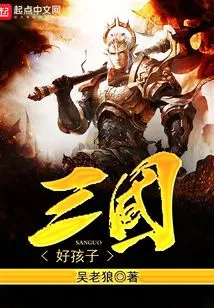
Cao Cao, Guo Jia, Xun You, Xiahou Dun, Xiahou Yuan, Cao Ren, Cao Chun, Cao Hong, Le Jin, Li Dian, Yu Jin, Dian Wei! They are here to kill me. Liu Bei, Guan Yu, Zhang Fei, Zhao Yun, and maybe Chen Dao, that macho man who didn't leave his name in "The Romance of the Three Kingdoms" but whose actual military strength is not inferior to Zhao Yun at all! They are here to steal my territory. God, I'm not Boss Dong, and I don't have Lu Bu to deal with these fierce men. I'm just a good boy, an honest boy, a typical soy sauce man in the troubled times of the Three Kingdoms, Tao Ying, the second son of the honest Tao Qian. What can I do to fend off these awesome people? I had no choice but to fight with them! No matter how brave and invincible they are, how cunning and cunning they are, and how vicious and cruel they are. No matter how loyal and honest I am, how kind-hearted and kind-hearted I am, I will hold high my banner of justice and fight them to the end! My banner is: benevolence, justice, propriety, wisdom and trust! Be gentle, courteous and thrifty! My slogan is: I would rather teach the world to betray me than teach me to betray the world!
Cao Cao, Guo Jia, Xun You, Xiahou Dun, Xiahou Yuan, Cao Ren, Cao Chun, Cao Hong, Le Jin, Li Dian, Yu Jin, Dian Wei! They are here to kill me. Liu Bei, Guan Yu, Zhang Fei, Zhao Yun, and maybe Chen Dao, that macho man who didn't leave his name in "The Romance of the Three Kingdoms" but whose actual military strength is not inferior to Zhao Yun at all! They are here to steal my territory. God, I'm not Boss Dong, and I don't have Lu Bu to deal with these fierce men. I'm just a good boy, an honest boy, a typical soy sauce man in the troubled times of the Three Kingdoms, Tao Ying, the second son of the honest Tao Qian. What can I do to fend off these awesome people? I had no choice but to fight with them! No matter how brave and invincible they are, how cunning and cunning they are, and how vicious and cruel they are. No matter how loyal and honest I am, how kind-hearted and kind-hearted I am, I will hold high my banner of justice and fight them to the end! My banner is: benevolence, justice, propriety, wisdom and trust! Be gentle, courteous and thrifty! My slogan is: I would rather teach the world to betray me than teach me to betray the world!
When mentioning Tao Qian, everyone will probably think of his beautiful talk about giving Xuzhou to Liu Bei three times. But why did Tao Qian have to give Xuzhou to Liu Bei when he clearly has two sons? And what will be the outcome of Tao Qian's son after letting Xuzhou go? Fans of the Three Kingdoms can't help but wonder about this. This book is about Tao Qian's son as the protagonist. It reinterprets the three concessions to Xuzhou from the perspective of a conspiracy theory (black Liu Bei), and writes a lot of space about how the protagonist prevents Xuzhou. The setting at the beginning is quite attractive. Suitable for the crowd: This book is more suitable for book lovers who like the history of the Three Kingdoms, like a more sinister and shameless protagonist, like less serious historical texts, and don't like Liu Bei. Rating of the work: 7 (The language is witty and humorous. The characters are three-dimensional and flesh-and-blood. Liu Bei is a black man. This depends on personal preference. The plot in the later period becomes cliche.) Content summary: This book tells the story of a modern man who traveled through time and became Tao Qian's son, who prevented the three concessions to Xuzhou, and used Xuzhou as the foundation to finally unify the world. Personal review: First of all, the setting is very novel and attractive. Although it is an old book more than ten years ago, it is not outdated now. From the perspective of conspiracy theory, Xuzhou's three concessions are reinterpreted. It is indeed a bit strange that Tao Qian did not pass it on to his son, and there was no record of his son at all afterwards. In fact, not only Tao Qian's son, but also Liu Biao's son Liu Qi, the nominal governor of Jingzhou, also died after the Battle of Chibi, allowing Liu Bei to control Jingzhou reasonably and legally, which makes people suspicious. Secondly, the protagonist is well portrayed. Not only is he exactly the same as the title of this book, it has nothing to do with it either. He worshiped his father-in-law in various ways and cheated on him in various ways. He claimed that he was a gentleman and a good boy, but in fact he was extremely shady and indifferent to human affairs. It's really full and full of flesh and blood. Finally, the writing style of this book is very light and humorous, which is more suitable for relaxation. To be honest, I often laughed out loud while reading this book. Especially when the Gentleman Army appeared, the protagonist's various tricks, the slogans shouted by the army, etc., Are still fresh in my memory even after more than ten years. Personal complaints: Although I also know that if Xuzhou is to start the process, Liu Bei will definitely be hacked, but it's a bit too much.
 6
6The Age of Huangtian
History黄天之世
Luo Xiaoming
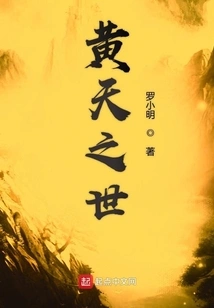
The sky is dead, the yellow sky should stand, and the age of Jiazi will bring good luck to the world! "Misery, corruption, bullying!" "We, the common people, have suffered so much, and the officials are so corrupt and bully us wantonly. We are nothing more than traffickers and pawns, farmers and soldiers. We have no family, and are not known to the Emperor of the Han Dynasty. To the Emperor of Han Dynasty, who is above us, we are nothing more than ants!" "The officers and soldiers called us moth thieves!!!" "There is a severe drought in the world, no crops are harvested, and taxes are heavy, just because the officials, powerful officials, are arrogant, extravagant, lustful, and indulged in pleasure!" "Our family has no place to stand, and we are unarmed. We only have the strength of many people. Now we are wearing yellow scarves and gathering together to revolutionize the destiny of the world. The Han Dynasty has exhausted its power, and we will definitely replace it!" "The sky is dead, the yellow sky should be established, and the age of Jiazi will bring good luck to the world!!!"
The sky is dead, the yellow sky should stand, and the age of Jiazi will bring good luck to the world! "Misery, corruption, bullying!" "We, the common people, have suffered so much, and the officials are so corrupt and bully us wantonly. We are nothing more than traffickers and pawns, farmers and soldiers. We have no family, and are not known to the Emperor of the Han Dynasty. To the Emperor of Han Dynasty, who is above us, we are nothing more than ants!" "The officers and soldiers called us moth thieves!!!" "There is a severe drought in the world, no crops are harvested, and taxes are heavy, just because the officials, powerful officials, are arrogant, extravagant, lustful, and indulged in pleasure!" "Our family has no place to stand, and we are unarmed. We only have the strength of many people. Now we are wearing yellow scarves and gathering together to revolutionize the destiny of the world. The Han Dynasty has exhausted its power, and we will definitely replace it!" "The sky is dead, the yellow sky should be established, and the age of Jiazi will bring good luck to the world!!!"
To be honest, most of the Three Kingdoms novels are about nobles and nobles from aristocratic families as the protagonists. There are very few civilians as the protagonists, and there are almost none with the so-called "yellow scarf thieves" as the protagonists. This book takes the generals of the Yellow Turban Army as the protagonist, which makes people's eyes bright. Why doesn't everyone choose the Yellow Turban Army as the protagonist? Or because it is more difficult to write, the Yellow Turban Army has an inherent disadvantage that is difficult to make up for, that is, there are few educated people and it is difficult to develop and grow. It is also rare that this book can solve this problem logically and self-consistently through reasonable plot design. Suitable for the crowd: This book is more suitable for book lovers who like the literature of the Three Kingdoms, sympathize with the Yellow Turban Rebels, and are not very particular about history. Rating of the work: 6 (The subject matter is novel and very attractive. It is rare for the Yellow Turban Army to win the world while the plot design is reasonable. The three views are correct and the people are concerned about the working people. The writing is average and the plot design can only be said to be reasonable. Overall, it can only be said to be quite satisfactory.) Personal review: First of all, the subject matter is very novel. As I wrote above, the Three Kingdoms seems to only pay attention to those capable ministers and powerful generals, nobles and nobles, and pays little attention to the poor people including the Yellow Turban Army. And the majority of book lovers are probably tired of watching emperors and generals, and suddenly they saw a novel about the Three Kingdoms with the Yellow Turban Army as the protagonist, which made people's eyes brighten. Secondly, the plot design is very reasonable. It would be difficult for the Yellow Turban Army to succeed. Fortunately, the author designed the protagonists to escape to Bingzhou, where they found a chance to breathe and take root. Because there are many mountainous areas in Bingzhou, guerrilla attacks are possible. In addition, being close to the Xiongnu and Xianbei, the imperial control was weak. That's why the protagonist can gain a foothold in Bingzhou and unify the world. And historical reality can also support this. After the Yellow Turban Uprising, the Yellow Turban Army in other places was quickly wiped out. Only the Yellow Turban Army in Bingzhou, under the leadership of Zhang Yan, survived for more than ten years. In addition, it is really amazing to form an alliance with the Xiliang people, who are looked down upon by the Central Plains people. On the one hand, the rear is stabilized, so there is no need to worry too much about Xiliang attacking from the rear. On the other hand, some talents from Liangzhou can be obtained through this, which can make up for and solve the extreme shortage of talents. Finally, the values of this book are very positive. Maybe it's because the Yellow Turban Army itself comes from the bottom, or maybe it's because other people will not join the protagonist who is the leader of the Yellow Turban, and can only cultivate talents internally. The protagonist of this book pays great attention to the life and education of ordinary people and other aspects, and promotes many civil servants and generals who did not exist in history. This kind of value is also very worthy of appreciation. Personal complaints: It's not really a complaint, but in the end the protagonist didn't take advantage of the opportunity of reunification to make big reforms, which disappointed me a bit. Of course, I also understand that the productivity at that time may not be able to support major changes or reforms.