Ordinary We Live Like This
平凡的我们如此生活
Delivering food, driving a taxi, cleaning, selling vegetables at the market, working in factories... Behind each of these seemingly inconspicuous jobs, ordinary people are working hard to survive.
 1
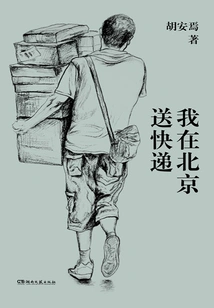
1I Deliver Express in Beijing
Literature我在北京送快递
Huan Yan
In the ten years since he entered social work, Huan Yan has traveled extensively in Guangdong, Guangxi, Yunnan, Shanghai, Beijing and other places. He has worked as a courier, night shift picker, convenience store clerk, security guard, bicycle shop salesman, clothing store salesman, gas station refueler... He has turned his daily life and the hardships of work into a sincere self-narration, recording the hard work, selfishness, warmth and integrity of an ordinary person in life. A year of picking goods at night in a logistics company left a deep physiological mark on him: "This job can also make people have bad tempers. Because of long-term late nights and overwork, people's emotional control will significantly decline... I already feel that my brain is not working well, mainly because my reactions have changed." He became sluggish and his memory began to decline." During the two years of delivering express delivery in Beijing, he "viewed himself as a delivery machine earning 30 yuan an hour. He would become angry and frustrated if he could not reach the rated output value"... But he finally realized that a life with resentment is not worth living. These work experiences, written in post-mortem recollections, are permeated with his attitude and reflection on life and the world, and are intended to express an individual's direct confrontation and affirmation of the meaning of life in the limited choices and cramped reality: many ordinary and meaningful moments in life are more decisive in life than all aspects of reality that troubles life.
In the ten years since he entered social work, Huan Yan has traveled extensively in Guangdong, Guangxi, Yunnan, Shanghai, Beijing and other places. He has worked as a courier, night shift picker, convenience store clerk, security guard, bicycle shop salesman, clothing store salesman, gas station refueler... He has turned his daily life and the hardships of work into a sincere self-narration, recording the hard work, selfishness, warmth and integrity of an ordinary person in life. A year of picking goods at night in a logistics company left a deep physiological mark on him: "This job can also make people have bad tempers. Because of long-term late nights and overwork, people's emotional control will significantly decline... I already feel that my brain is not working well, mainly because my reactions have changed." He became sluggish and his memory began to decline." During the two years of delivering express delivery in Beijing, he "viewed himself as a delivery machine earning 30 yuan an hour. He would become angry and frustrated if he could not reach the rated output value"... But he finally realized that a life with resentment is not worth living. These work experiences, written in post-mortem recollections, are permeated with his attitude and reflection on life and the world, and are intended to express an individual's direct confrontation and affirmation of the meaning of life in the limited choices and cramped reality: many ordinary and meaningful moments in life are more decisive in life than all aspects of reality that troubles life.
In the ten years since he entered social work, Huan Yan has traveled extensively in Guangdong, Guangxi, Yunnan, Shanghai, Beijing and other places. He has worked as a courier, night shift picker, convenience store clerk, security guard, bicycle shop salesman, clothing store salesman, gas station refueler...
 2
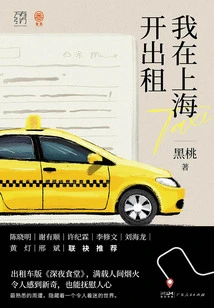
2我在上海开出租(万有引力书系)
Spades
"I Drive a Taxi in Shanghai" is a non-fiction work known as the taxi version of "Late Night Diner". The author describes in detail what he saw and heard while driving a taxi in Shanghai. It not only includes all kinds of drivers' stories, various aspects of life, but also intersperses the daily life and industry conditions of taxi drivers. It is also embellished with descriptions of Shanghai's cityscape and historical slices. The stories are rich and interesting, and the language is concise and humorous. The taxi version of "Late Night Diner" is full of human fireworks, which is novel and soothing.
"I Drive a Taxi in Shanghai" is a non-fiction work known as the taxi version of "Late Night Diner". The author describes in detail what he saw and heard while driving a taxi in Shanghai. It not only includes all kinds of drivers' stories, various aspects of life, but also intersperses the daily life and industry conditions of taxi drivers. It is also embellished with descriptions of Shanghai's cityscape and historical slices. The stories are rich and interesting, and the language is concise and humorous. The taxi version of "Late Night Diner" is full of human fireworks, which is novel and soothing.
"I Driving a Taxi in Shanghai" is a detailed account of what the author saw and heard when driving a taxi in Shanghai. It not only includes all kinds of drivers' stories and various aspects of life, but also intersperses the daily life and industry conditions of taxi drivers. It is also embellished with descriptions of Shanghai's urban landscape and historical slices.
 3
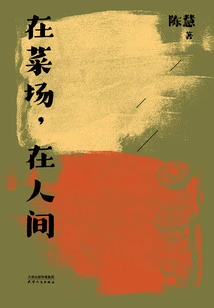
3In the Market, in the Human World
Literature在菜场,在人间
Chen Hui
"In the Market, In the World" is a book about the hot life of a group of ordinary market vendors. It is also a book about the joy of living close to the ground. The author is Chen Hui, who writes while setting up a stall and was praised by CCTV as a "female writer in the market". Chen Hui's first half of life roughly went through four stages: being given up for adoption as a child; getting sick as a teenager; marrying far away as a young man; and divorced in middle age. All the misfortunes of a low-class woman seemed to happen to her. Fortunately, during the days when she set up a stall in a vegetable market to earn a living, she set up a stall during the day and wrote at night, and found salvation in the pyrotechnic market.
"In the Market, In the World" is a book about the hot life of a group of ordinary market vendors. It is also a book about the joy of living close to the ground. The author is Chen Hui, who writes while setting up a stall and was praised by CCTV as a "female writer in the market". Chen Hui's first half of life roughly went through four stages: being given up for adoption as a child; getting sick as a teenager; marrying far away as a young man; and divorced in middle age. All the misfortunes of a low-class woman seemed to happen to her. Fortunately, during the days when she set up a stall in a vegetable market to earn a living, she set up a stall during the day and wrote at night, and found salvation in the pyrotechnic market.
Chen Hui's first half of life roughly went through four stages: being given up for adoption as a child; getting sick as a teenager; marrying far away as a young man; and divorced in middle age. Later, when she was setting up a stall in a vegetable market in order to earn a living, she set up a stall during the day and wrote at night. She actually found salvation in the pyrotechnic market.
 4
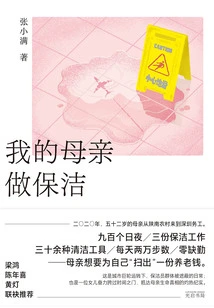
4My Mother Does Cleaning
Literature我的母亲做保洁
Zhang Xiaoman
In 2020, a 52-year-old mother came to Shenzhen from rural Shaanxi to work. After living independently for more than ten years, "I" and my mother reunited in Shenzhen and lived under the same roof again. We quarreled in the small room. My mother couldn't stand the way "I" spent money, and "I" couldn't stand my mother's living habits. We are entangled, burdened, and dependent on each other. However, we love each other, and "I" know very well that my mother's weakness is her unreserved love for me. So, "I" wanted to understand her. "My" mother spent her youth working in mines and construction sites, and now works as a cleaner in a few spaces in a city office building. "I" want to record my mother's working history and try to travel through the life in her memory. My mother's life established an "enclave" of life for "me" who was working like a screw, allowing "me" to breathe, look back, and cherish where I came from. This is a writing project that we, mother and daughter, completed together.
In 2020, a 52-year-old mother came to Shenzhen from rural Shaanxi to work. After living independently for more than ten years, "I" and my mother reunited in Shenzhen and lived under the same roof again. We quarreled in the small room. My mother couldn't stand the way "I" spent money, and "I" couldn't stand my mother's living habits. We are entangled, burdened, and dependent on each other. However, we love each other, and "I" know very well that my mother's weakness is her unreserved love for me. So, "I" wanted to understand her. "My" mother spent her youth working in mines and construction sites, and now works as a cleaner in a few spaces in a city office building. "I" want to record my mother's working history and try to travel through the life in her memory. My mother's life established an "enclave" of life for "me" who was working like a screw, allowing "me" to breathe, look back, and cherish where I came from. This is a writing project that we, mother and daughter, completed together.
In 2020, a 52-year-old mother came to Shenzhen from rural Shaanxi to work. After living independently for more than ten years, "I" and my mother reunited in Shenzhen and lived under the same roof again. We argue in small rooms and we love each other in small rooms.
 5
5Factory Girl
Literature工厂女孩
Ding Yan
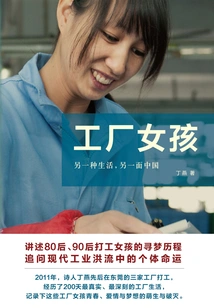
In order to deeply understand the lives of factory girls in Dongguan, the poet Ding Yan worked in two electronics factories and an injection molding factory, and experienced the most authentic and profound factory life for 200 days. She recorded the birth and disillusionment of youth, love and dreams of these factory girls, and also questioned the torrent of modern industry that has affected the fate of countless people.
In order to deeply understand the lives of factory girls in Dongguan, the poet Ding Yan worked in two electronics factories and an injection molding factory, and experienced the most authentic and profound factory life for 200 days. She recorded the birth and disillusionment of youth, love and dreams of these factory girls, and also questioned the torrent of modern industry that has affected the fate of countless people.
In order to deeply understand the lives of factory girls in Dongguan, the poet Ding Yan worked in two electronics factories and an injection molding factory, and experienced the most authentic and profound factory life for 200 days. She recorded the birth and disillusionment of youth, love and dreams of these factory girls, and also questioned the torrent of modern industry that has affected the fate of countless people.
 6
6Fine Dust
Literature微尘
Chen Nianxi
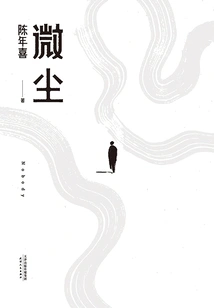
I have seen so much misfortune that I have never been depressed. --Chen Nianxi. This book contains 21 original non-fiction essays by Chen Nianxi. The book tells the story of a group of ordinary and simple workers. They are blasters, stone movers, country carpenters, farmers, farm women, small workshop owners... And the writer's own story runs throughout: blasting rocks five kilometers underground, raising a family amidst the smoke and roar, writing poems in work sheds and in the mountains, recording the explosion and silence of fate. Although they have gone through the hardships of life, they are simple and tough, and they calmly tell life themes about family, love, death, and desire... This is a book of life and a book of death. In the final analysis, it is a book of life. What does the world look like? What is life like? In my feeling, except for the long and ubiquitous wind, the rest is dust. We rush around in it, trying to stand firm, but most of the time we stagger around and can't help ourselves.
I have seen so much misfortune that I have never been depressed. --Chen Nianxi. This book contains 21 original non-fiction essays by Chen Nianxi. The book tells the story of a group of ordinary and simple workers. They are blasters, stone movers, country carpenters, farmers, farm women, small workshop owners... And the writer's own story runs throughout: blasting rocks five kilometers underground, raising a family amidst the smoke and roar, writing poems in work sheds and in the mountains, recording the explosion and silence of fate. Although they have gone through the hardships of life, they are simple and tough, and they calmly tell life themes about family, love, death, and desire... This is a book of life and a book of death. In the final analysis, it is a book of life. What does the world look like? What is life like? In my feeling, except for the long and ubiquitous wind, the rest is dust. We rush around in it, trying to stand firm, but most of the time we stagger around and can't help ourselves.
I have seen so much misfortune that I have never been depressed. This book tells the story of a group of ordinary and simple workers, who are blasters, stone movers, village carpenters, farmers, peasant women, small workshop owners... And the writer's own story runs throughout: blasting rocks five thousand meters underground, raising a family amidst smoke and roar, writing poems in work sheds and mountains, recording the explosion and silence of fate.
 8
8赶时间的人:一个外卖员的诗
Wang Jibing
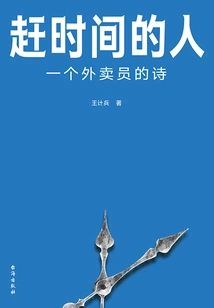
The author of this book, Wang Jibing, is a delivery boy who has traveled a total of 150,000 kilometers, which is equivalent to running 15 times along the Great Wall. During the days when he traveled around the city, he saw more people like him who were struggling for survival, including delivery workers, migrant workers, cleaners, and nannies. They rush around in a hurry, but lose their identity: they can neither find a place to stay in the city, and their hometown and parents are constantly moving away. Like a troubadour from the lower class of China, Wang Jibing recorded himself and their embarrassment, as well as his self-esteem as a laborer. He wrote: I also have my own independent country. My boiling blood is my endless river, and my rugged bones are my towering mountains. These verses, written on cigarette boxes and scrap newspapers when in a hurry, are folk songs from the labor scene, full of vitality, rough and sharp. Some were accidentally posted online, triggering unexpected resonance, with a single poem read by as many as 20 million people. This book is the first collection and publication of his poems.
The author of this book, Wang Jibing, is a delivery boy who has traveled a total of 150,000 kilometers, which is equivalent to running 15 times along the Great Wall. During the days when he traveled around the city, he saw more people like him who were struggling for survival, including delivery workers, migrant workers, cleaners, and nannies. They rush around in a hurry, but lose their identity: they can neither find a place to stay in the city, and their hometown and parents are constantly moving away. Like a troubadour from the lower class of China, Wang Jibing recorded himself and their embarrassment, as well as his self-esteem as a laborer. He wrote: I also have my own independent country. My boiling blood is my endless river, and my rugged bones are my towering mountains. These verses, written on cigarette boxes and scrap newspapers when in a hurry, are folk songs from the labor scene, full of vitality, rough and sharp. Some were accidentally posted online, triggering unexpected resonance, with a single poem read by as many as 20 million people. This book is the first collection and publication of his poems.
Wang Jibing is a deliveryman. When he travels through the city, he sees migrant workers, cleaners, and nannies running around in a hurry. They can neither find a place to stay in the city, nor their hometown and parents are constantly moving away. And he wrote: I also have my own independent country. My boiling blood is my endless river, and my rugged bones are my towering mountains.