Island Literature Reserve: Drizzle, Night, Sea Breeze, Human World
岛屿文学自留地:细雨、夜晚、海风、人间
"Perhaps, in the cold air, the meaning and value will become clearer. After all, literature is not here for excitement." There is a constant drizzle in the sky in Taipei, just like the words here, long, moist, salty, and delicate.
 1
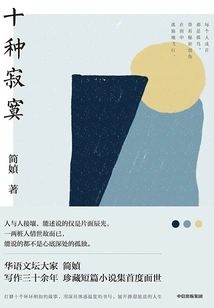
1Ten Kinds of Loneliness
General Fiction十种寂寞
Jian Yu
What happened at that time will take many years to learn the full plot. The humble things planted in times of sadness and pain can silently blossom and bear fruit. What is loneliness? Loneliness is misunderstanding, loneliness is abandonment, loneliness is bullying, loneliness is failure, loneliness is failure, loneliness is decision-making... Loneliness is pervasive. There is a loneliness seed in the bodies of men, women, old and young. When you pry open the hard shell, the seed is trust, kindness, strength, breakthrough, sublimation, and relief. The ten stories, written with deep emotional warmth, reveal the sweet and salty life and tell the ten kinds of unspeakable loneliness. Jian Yu writes about the real joy and bitterness in life with a flexible, graceful and humorous writing style.
What happened at that time will take many years to learn the full plot. The humble things planted in times of sadness and pain can silently blossom and bear fruit. What is loneliness? Loneliness is misunderstanding, loneliness is abandonment, loneliness is bullying, loneliness is failure, loneliness is failure, loneliness is decision-making... Loneliness is pervasive. There is a loneliness seed in the bodies of men, women, old and young. When you pry open the hard shell, the seed is trust, kindness, strength, breakthrough, sublimation, and relief. The ten stories, written with deep emotional warmth, reveal the sweet and salty life and tell the ten kinds of unspeakable loneliness. Jian Yu writes about the real joy and bitterness in life with a flexible, graceful and humorous writing style.
"Many years later, when she gasped several times between life and death, she more or less regained the ability to shed tears from the feeling of landing on this memory extraction, and she was willing to believe that there was still love around her."
 2
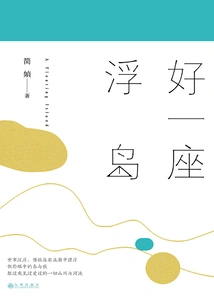
2What a Floating Island
Literature好一座浮岛
Jian Yu
This book is the work of the famous Chinese prose writer Jian Yu who has accumulated ten years of transformation. The writing has changed from the fresh and gentle style of the past, and looks at the ups and downs of the world with a more sharp and humorous perspective. As she mentioned in the book: "I feel that when this book enters the black linen Period; the taste is due to anger, and some chapters even have a burnt taste." Jian Yue looks at the world with a calm gaze and depicts this era with a sharper pen. She observes the ups and downs of the world from a mature perspective and sighs at the helplessness of middle age. I believe that readers can get to know another Jian Yu in this work and see this era in her eyes.
This book is the work of the famous Chinese prose writer Jian Yu who has accumulated ten years of transformation. The writing has changed from the fresh and gentle style of the past, and looks at the ups and downs of the world with a more sharp and humorous perspective. As she mentioned in the book: "I feel that when this book enters the black linen Period; the taste is due to anger, and some chapters even have a burnt taste." Jian Yue looks at the world with a calm gaze and depicts this era with a sharper pen. She observes the ups and downs of the world from a mature perspective and sighs at the helplessness of middle age. I believe that readers can get to know another Jian Yu in this work and see this era in her eyes.
"The human body is the ship that the soul uses to explore. A fat person is as calm and steady as a sailing battleship, while a thin person is as light as a small sail in the clouds. As long as the psychiatrist and cardiothoracic surgeon thinks there is nothing wrong with you, why not stand in front of the mirror and re-appreciate this unique flesh art, treating it as the master's most satisfying sculpture."
 3
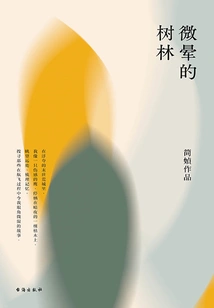
3Dim Woods
Literature微晕的树林
Jian Yu
Jian Yue said that in "The Fainting Woods", "some are crawling through ordinary things, refining the taste of life, or nostalgic about old feelings in the hometown, or chatting about travels, what they saw and thought while reading, some are transformed into novelistic fables, or some are returning to oneself to record the experiences and insights of growth, creation, and dreams..." This is a collection of essays that Jian Yu records his ordinary life, nostalgia, travel, and reading experiences, and is exquisitely conceived.
Jian Yue said that in "The Fainting Woods", "some are crawling through ordinary things, refining the taste of life, or nostalgic about old feelings in the hometown, or chatting about travels, what they saw and thought while reading, some are transformed into novelistic fables, or some are returning to oneself to record the experiences and insights of growth, creation, and dreams..." This is a collection of essays that Jian Yu records his ordinary life, nostalgia, travel, and reading experiences, and is exquisitely conceived.
"Although we are mortals, if we love him to the extent that the snow covers our bows and swords, the next thing is to say goodbye softly." "I originally couldn't meet him, but the journey was like a chess game. Once a piece was made, the rest of the game was full of troubles."
 4
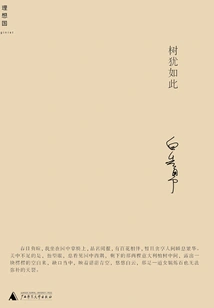
4The Tree is Like This
Literature树犹如此
Bai Xianyong
"Trees Are Like This" is a self-selected collection of Bai Xianyong's essays, which mainly includes articles in which he recalls his personal experiences and interactions with relatives and friends. Among them, "The Tree Is Like This", which commemorates a deceased friend, has been deeply painful for six years. It is called "a song of life completed with blood, tears and the purest emotions in the world." Also included are two new works about friends: "Looking for the Bodhi Tree" by the painter Xi Song on his journey to practice Buddhism, and "Practice the Bodhisattva" by Du Cong, who rescued tens of thousands of AIDS orphans. This shows what Bai Xianyong has been thinking about in recent years. Most of the works in the book were written after Bai Xianyong "knows destiny at fifty". Dong Qiao was once "surprised that he was already like an old monk who was at ease and let go, letting a fallen flower silently exude instant brilliance in his palm." Written to my friends Wang Guoxiang and my third sister Xianming, the simplicity contains magnificence and compassion for the world. Guilin, Shanghai, Nanjing, Taipei, cultural nostalgia is superimposed, making it difficult to find a place to return. In the fan magazine "Modern Literature" where he devoted his efforts and youth, Bai Xianyong used literature to make friends, and his love lasted a lifetime.
"Trees Are Like This" is a self-selected collection of Bai Xianyong's essays, which mainly includes articles in which he recalls his personal experiences and interactions with relatives and friends. Among them, "The Tree Is Like This", which commemorates a deceased friend, has been deeply painful for six years. It is called "a song of life completed with blood, tears and the purest emotions in the world." Also included are two new works about friends: "Looking for the Bodhi Tree" by the painter Xi Song on his journey to practice Buddhism, and "Practice the Bodhisattva" by Du Cong, who rescued tens of thousands of AIDS orphans. This shows what Bai Xianyong has been thinking about in recent years. Most of the works in the book were written after Bai Xianyong "knows destiny at fifty". Dong Qiao was once "surprised that he was already like an old monk who was at ease and let go, letting a fallen flower silently exude instant brilliance in his palm." Written to my friends Wang Guoxiang and my third sister Xianming, the simplicity contains magnificence and compassion for the world. Guilin, Shanghai, Nanjing, Taipei, cultural nostalgia is superimposed, making it difficult to find a place to return. In the fan magazine "Modern Literature" where he devoted his efforts and youth, Bai Xianyong used literature to make friends, and his love lasted a lifetime.
"On a spring day, I sat on a chair in the garden, sipping tea and reading the newspaper, accompanied by hundreds of flowers, and enjoying the transient prosperity of the world for the time being. The only drawback is that when I look up, I always see a blank space in the west corner of the garden, between the two remaining Italian cypress trees. In the gap, the clear blue sky and leisurely white clouds are reflected, which is a crack in the sky that even Nuwa's stone refinement cannot make up for."
 5
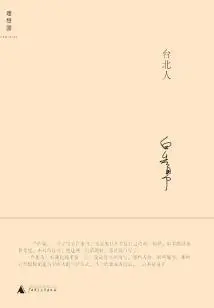
5Taipei People
General Fiction台北人
Bai Xianyong
"Taipei People" by Bai Xianyong is a deeply complex work. This book consists of fourteen short stories, each with different writing techniques and different lengths. Each story can stand on its own and can be regarded as a first-class short story. But the fourteen pieces are gathered together and connected into one, and the effect suddenly increases: not only does the novel expand in scope, allowing us to see the "all living beings" in society, but more importantly, because the theme is repeated and complements each other, we can further understand the meaning of the work, and we can get a glimpse of the author's outlook on life and the universe hidden in the work.
"Taipei People" by Bai Xianyong is a deeply complex work. This book consists of fourteen short stories, each with different writing techniques and different lengths. Each story can stand on its own and can be regarded as a first-class short story. But the fourteen pieces are gathered together and connected into one, and the effect suddenly increases: not only does the novel expand in scope, allowing us to see the "all living beings" in society, but more importantly, because the theme is repeated and complements each other, we can further understand the meaning of the work, and we can get a glimpse of the author's outlook on life and the universe hidden in the work.
"It was like a burst of uncontrollable blood spurted out suddenly, sprinkling the garden with blood-red spots. I have never seen azaleas blooming so wildly and angrily."
 6
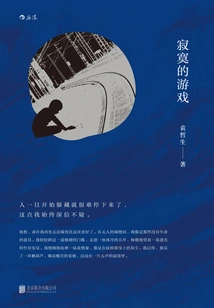
6Lonely Game
General Fiction寂寞的游戏
Yuan Zhesheng
In "The Game of Loneliness", which is composed of seven short stories, Yuan Zhesheng repeatedly captures loneliness, the "sense of dilemma that all human beings must face" through various interpersonal emotions, such as the affection between parents and sons, the friendship between classmates when they were young, or the love between two people who have been married for many years. The feeling of loneliness is everywhere in the words. Loneliness has always been a common theme in literary works, and it is also an emotion that many writers strive to describe. However, when we carefully taste Yuan Zhesheng's calm and controlled words in "The Lonely Game", we will eventually discover a kind of lonely writing that is unique to Yuan Zhesheng.
In "The Game of Loneliness", which is composed of seven short stories, Yuan Zhesheng repeatedly captures loneliness, the "sense of dilemma that all human beings must face" through various interpersonal emotions, such as the affection between parents and sons, the friendship between classmates when they were young, or the love between two people who have been married for many years. The feeling of loneliness is everywhere in the words. Loneliness has always been a common theme in literary works, and it is also an emotion that many writers strive to describe. However, when we carefully taste Yuan Zhesheng's calm and controlled words in "The Lonely Game", we will eventually discover a kind of lonely writing that is unique to Yuan Zhesheng.
"I think it's not surprising that people are born with a desire to hide and long to disappear; what's more, before we came to this world, didn't we hide so well that we couldn't even remember where we were hiding?"