Aheng's Personal Book List Recommendation
阿珩的个人书单推荐
I have always had a belief in online writing. Just as Dickens's popular novels have become literary monuments today, Chinese romance novels from hundreds of years ago have now become masterpieces, and Jin Yong and Gu Long's miscellaneous books have now become classics: I believe that with the development of online literature in the past few decades, the best among them will also ascend to the hall of elegance. Based on this idea, this book has selected a number of works that the author believes will have literary value one day in the future. Similarly, this book list has eliminated many books that are highly praised by old online readers. The screening criteria include personal emotions (nonsense, my own book list), and do not exclude light or heavy topics, but resolutely resist views that are too trashy. Ps: I have several ptsds, and if I encounter them, I will definitely not add them to the book list. I will not list them all in detail here. Pss: The recommendation index is not completely equivalent to my absolute evaluation of the book. Please see my essay for specific evaluations. If there are too many substitutes for a book or too many eunuchs, the index may be low; if the work data is significantly lower than it should be or there are almost no substitutes, the index may be high. The specific correction method is purely subjective. It just expresses how much I, as a person who has read these books, hope that you, who are passing by, can also take a look at these books.
我的女友来自未来!
Sao Cha
One day in September, a beautiful girl fell from the sky and appeared in He Tianran's life. She said that she was a reborn person and she wanted to change the boy's future. Butterflies flap their wings, and the wind rises in my heart. Ever since, stories of encounters or reunions began to unfold. Also known as "It's Me Now" and "This Is Not the Love I Want"
One day in September, a beautiful girl fell from the sky and appeared in He Tianran's life. She said that she was a reborn person and she wanted to change the boy's future. Butterflies flap their wings, and the wind rises in my heart. Ever since, stories of encounters or reunions began to unfold. Also known as "It's Me Now" and "This Is Not the Love I Want"
Status: Completed/Serialized Recommendation index: 4.5 Stars
 2
2When the Summer Cicada Cries
Light Novel夏蝉鸣泣之时
Zhuang Zhou Sleeping
On July 13, one year ago, Li Wangshi and four friends went to the mountains to explore the secrets, and saw a majestic heavy rain that they will never forget in this life. Since then, his girlfriend Xia Tong has become strange, and Qingmei Jiang Muyun has also said incomprehensible words. During this year, many accidental deaths of "celebrities" continued to occur in the small town, and theories of divine punishment were rampant. Li Wangshi thought that all abnormalities would gradually calm down. Until another July 13th, Jiang Muyun hanged himself in the rental house. Xia Tong is not herself at all. ... Li Wangshi can go back in time, although this ability rarely listens to his wishes. But in the darkest moment of life, the regression is initiated. ... However, the time was not the node he expected, and Xia Tong was still not the real Xia Tong. God's punishment, accident, the soul of Gu Laoshan; recollection, memory, the shadow of the puppet-bearer. There must be a way to redeem everything. This story is about courage, about right and wrong, about mutual redemption, a little mysterious, a little romantic, and a little desperate.
On July 13, one year ago, Li Wangshi and four friends went to the mountains to explore the secrets, and saw a majestic heavy rain that they will never forget in this life. Since then, his girlfriend Xia Tong has become strange, and Qingmei Jiang Muyun has also said incomprehensible words. During this year, many accidental deaths of "celebrities" continued to occur in the small town, and theories of divine punishment were rampant. Li Wangshi thought that all abnormalities would gradually calm down. Until another July 13th, Jiang Muyun hanged himself in the rental house. Xia Tong is not herself at all. ... Li Wangshi can go back in time, although this ability rarely listens to his wishes. But in the darkest moment of life, the regression is initiated. ... However, the time was not the node he expected, and Xia Tong was still not the real Xia Tong. God's punishment, accident, the soul of Gu Laoshan; recollection, memory, the shadow of the puppet-bearer. There must be a way to redeem everything. This story is about courage, about right and wrong, about mutual redemption, a little mysterious, a little romantic, and a little desperate.
Status: serialized Recommendation index: 4 stars
 3
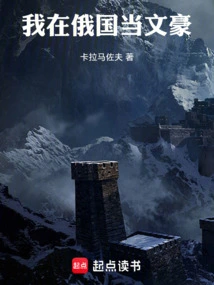
3我在俄国当文豪
Karamazov
(Qidian's first book by a foreign writer) Years later, when Nabokov was lecturing on Russian literature in the United States. This is how he operates. In the dark room, he first turned on a lamp in the corner and said: "Pushkin is the first bright light of Russian literature." Then he opened the middle one and said, "This is Gogol." Then he turned on a lamp and said, "This is Chekhov." Then, he strode to the window, forcefully opened the curtains, let the bright sunshine shine into the room, and shouted: "This is Tolstoy!" After calming down for a while, a student raised his hand and asked: "Professor, what about the sky outside?" "You know it without me telling you." Nabokov opened the window and looked at the boundless sky: "The origin of the modern world! Both spiritually and realistically!" The Immortal Mikhail Romanovich Raskolnikov! " Brief version: Going back to the winter of 1844 in Russia, Mikhail gradually became a Russian literary giant and the spiritual leader of the entire European continent. This book is also known as: "The Years I Diagnosed Diseases in Russia", "Don't Dare to Diagnose Diseases?" Then you are a bit of a writer!
(Qidian's first book by a foreign writer) Years later, when Nabokov was lecturing on Russian literature in the United States. This is how he operates. In the dark room, he first turned on a lamp in the corner and said: "Pushkin is the first bright light of Russian literature." Then he opened the middle one and said, "This is Gogol." Then he turned on a lamp and said, "This is Chekhov." Then, he strode to the window, forcefully opened the curtains, let the bright sunshine shine into the room, and shouted: "This is Tolstoy!" After calming down for a while, a student raised his hand and asked: "Professor, what about the sky outside?" "You know it without me telling you." Nabokov opened the window and looked at the boundless sky: "The origin of the modern world! Both spiritually and realistically!" The Immortal Mikhail Romanovich Raskolnikov! " Brief version: Going back to the winter of 1844 in Russia, Mikhail gradually became a Russian literary giant and the spiritual leader of the entire European continent. This book is also known as: "The Years I Diagnosed Diseases in Russia", "Don't Dare to Diagnose Diseases?" Then you are a bit of a writer!
Status: serialized Recommendation index: four stars
 4
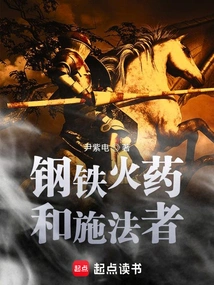
4Iron Powder and Spellcaster
Fantasy钢铁火药和施法者
Yin Zidian
Is magic really just a wish machine? No, in a universe where magic truly existed, magic would be as simple and beautiful as the laws of physics. This is the story of a mass-produced magic war tool man who learned the ultimate nature of magic. But so what? Just like a bird can fly without understanding aerodynamics, a magician does not need to understand its nature to use magic. Knowing the ultimate nature of magic also does not mean that the tool man can transform into a great magician. But the desire for knowledge is human instinct, and curiosity is the first driving force of human civilization. Even if it is magic that should have no reason at all, humans still hope to understand its inner operating rules. Exploring the ultimate nature of magic requires no reason! The story in the book takes place in a parallel universe where the social environment is approximately the 16th century of our universe. However, due to a bit of a butterfly effect, the continents and oceans of this planet are different from our geographical environment. Here, muskets are on the rise, but armor has not yet come to an end. Military theories are changing with each passing day, and innovations in systems and craftsmanship are endless. And this world has one more thing than ours: magic. The world is undergoing earth-shaking changes, and no one can stay out of it.
Is magic really just a wish machine? No, in a universe where magic truly existed, magic would be as simple and beautiful as the laws of physics. This is the story of a mass-produced magic war tool man who learned the ultimate nature of magic. But so what? Just like a bird can fly without understanding aerodynamics, a magician does not need to understand its nature to use magic. Knowing the ultimate nature of magic also does not mean that the tool man can transform into a great magician. But the desire for knowledge is human instinct, and curiosity is the first driving force of human civilization. Even if it is magic that should have no reason at all, humans still hope to understand its inner operating rules. Exploring the ultimate nature of magic requires no reason! The story in the book takes place in a parallel universe where the social environment is approximately the 16th century of our universe. However, due to a bit of a butterfly effect, the continents and oceans of this planet are different from our geographical environment. Here, muskets are on the rise, but armor has not yet come to an end. Military theories are changing with each passing day, and innovations in systems and craftsmanship are endless. And this world has one more thing than ours: magic. The world is undergoing earth-shaking changes, and no one can stay out of it.
Status: Breaking out of the underworld, breaking things off and starting over again, asking for leave to be serialized Recommendation: five stars If one day the world ends, only one copy of the fantasy literature in the entire starting point will remain, and this one must be "Steel Gunpowder and the Spellcaster" by Den Huang - even if it is not completed. This would be the War and Peace of our time. This wonderful book has a great tension. Its author is not only the fantasy writer who respects historical details the most, but also the most passionate historical researcher I have ever seen. Stripping away the appearance of fantasy or magic, what the chair cushion actually writes is a historical romantic drama from the Enlightenment period in the 17th and 18th centuries. What is romance? Call it ideal, call it anger, call it a torrent, call it a violent surge from the sky. The successors of the Great Alliance each have their own secrets and wield swords against their colleagues in the name of loyalty; the white lion Khan's banner stands on the grassland, so the riders gather into a river, and a hundred thousand warriors are loyal to him; in the countless killings of the Holy See and the Reformed Church, the fire of change is quietly bred; in the newly cultivated land on the border of civilization, a group of defeated soldiers came together and vowed to rebuild their homeland... But why history? This reflects the author's ambition. Almost every description of society, culture, and country in the chair cushion has a source, and every form of human existence corresponds to the real history. Especially for the evolution of the war, the author has truly managed to remain faithful to the battlefield details from the Infantry Revolution to the Seven Years' War, while also being consistent with its newly added settings. Appropriate and clever selection of historical prototypes not only prevents readers from losing the sense of freshness, but is also supported by sufficient war history and life history materials. In terms of more detailed descriptions, the author did not hesitate to draw on classics of the era such as Quiet Don and Gone with the Wind, which added a lot to the work. An idealistic fairy tale full of history. Hey, brother, do you have any reason not to read it?
 5
5Die on Mars
Science Fiction死在火星上
Tianrui Talisman
My name is Tang Yue and I am on Mars. I just saw the earth explode.
My name is Tang Yue and I am on Mars. I just saw the earth explode.
Status: Completed Recommendation: 4.5 Stars It can definitely be called the top science fiction work in China. It is an excellent story even if it ignores the science fiction background. It has reached the upper level of popular literature. It has a strong narrative and is extremely cinematic. Unfortunately, it is not easy to change it into a script. After changing it into a script, it will lose a lot of charm. Tianfu Shuorui is a talented science fiction writer. Compared with the three domestic science fiction kings, Tianfu is obviously younger, and his speech and conversation are closer to the tone of young people. However, his writing style is more sophisticated, which means he is catching up from behind. Of course, I don't intend to criticize them here. Tianfu's works have obvious commonalities, and as a whole, they fill the gap in domestic science fiction. Unlike the Liu we are familiar with, Tianfu almost never writes about macro-social thinking, and he is too lazy to criticize the so-called darkness of human nature; instead, he always uses delicate writing to outline the inner world of characters, and in it we can always see people's courage, perseverance, compassion and sacrifice - the brilliance of humanism permeates between the lines. A major feature of Tianfu's works is the emphasis on technical details, which also makes his themes often near-future or even contemporary. In a sense, Tianfu's works are engineering fantasies rather than science fantasies. The research on details shapes the authenticity of the fantasy world and provides assistance to the author in shaping the characters. However, the author is obviously not overly obsessed with this. After all, the attention to technical details is subordinated to the needs of story narrative and character creation, making the technology more interesting without limiting the author's unbridled ideas. Death on Mars is, in my opinion, the most representative of Tianfu's works so far, and it is also the one with the best balance between overall proposition and story type. The first three volumes of this book really astounded me. The finitude of life has never been expressed so explicitly in any other science fiction work that I know of. Human beings are so fragile, so human nature is so beautiful, so human nature is so noble. This is a completely Nietzschean proposition, and Tianfu provides us with a very unique answer. Unfortunately, like Tian Fu's other works, the ending volume of Die on Mars is not satisfactory. Not to mention the problem of the deus ex machina at the end, in the last volume, the technical details with the characteristics of heavenly symbols are significantly reduced, and the story processing is also quite open and closed. It can be seen that the author either ran out of manuscripts or was eager to start a new book. In short, it is a bit anticlimactic, and I regret to deduct half a star.
 6
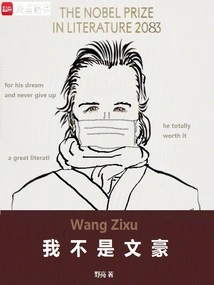
6我不是文豪
Ye Liang
(Not a copy. There is no time travel, no rebirth, no system, and no cheats.) Many years later, when Wang Zixu stood on the podium of the Nobel Prize for Literature, he would think of that distant afternoon when his wife cut her hand. At that time, he was still working as a clerk in a public institution in a small city. He had little money and was unable to enter the literary world. Now he has become the leader of the literary world among the three rivers, four lakes and five mountains. Everyone knows his great reputation and is the number one national treasure-level writer in the world. He walked countless roads and paid countless prices. When he stood in front of the podium, he said: I am not a literary giant. I just want to make some money. ---- Romanticism is the most heroic brilliance human beings can aspire to. Humanitarianism is the gentle bottom line for human beings in the most bleak and unspeakable times. This story is about romanticism and humanism.
(Not a copy. There is no time travel, no rebirth, no system, and no cheats.) Many years later, when Wang Zixu stood on the podium of the Nobel Prize for Literature, he would think of that distant afternoon when his wife cut her hand. At that time, he was still working as a clerk in a public institution in a small city. He had little money and was unable to enter the literary world. Now he has become the leader of the literary world among the three rivers, four lakes and five mountains. Everyone knows his great reputation and is the number one national treasure-level writer in the world. He walked countless roads and paid countless prices. When he stood in front of the podium, he said: I am not a literary giant. I just want to make some money. ---- Romanticism is the most heroic brilliance human beings can aspire to. Humanitarianism is the gentle bottom line for human beings in the most bleak and unspeakable times. This story is about romanticism and humanism.
Status: serialized Recommendation index: 3.5 Stars This is generally what Wang Xiaobo feels when he writes cool articles, but Wang Xiaobo probably can't write about the arrogance of this office. Bitterness is more like a normal person, and madness is more like a crazy person rather than a madman. Man, you are really setting the benchmark for first-class popular literature and even serious literature. My assessment is that Goncharov, Gogol and Turgenev were reincarnated, and Goethe and Nietzsche drank too much that night and gave birth to Dostoevsky. But the brothers are too old and not crazy enough. Update: The recent chapters are really too exciting and hard to criticize.
 7
7Shao Song
History绍宋
Grenades Are Afraid Of Water
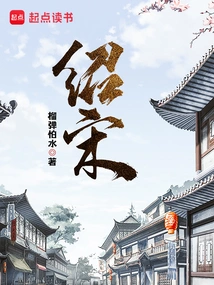
The first one is called "continuation"; the second one is called "guidance". In 1127 AD, the Northern Song Dynasty fell. Immediately, Zhao Gou, the ninth son of the emperor, ascended the throne in Shangqiu amid great expectations, inherited the Song Dynasty, and changed the Yuan Dynasty to Jianyan. However, within three months, Li Gang was dismissed as prime minister, Chen Dong was killed, Yue Fei was expelled from the army, Zongze was abandoned in Tokyo, and the anti-gold arrangements in Hebei were completely dismantled... After so many efforts, the civil and military forces of the Manchu Dynasty finally unified their thinking and established a glorious anti-golden route to support Zhao Guan's family in moving south to Huaidian and then to Yangzhou. But as soon as he set off, after paying homage to Taoist ancestors at Mingdao Palace in Bozhou, Zhao Guanjia fell headlong into the world-famous Nine Dragon Well. When he got up, he didn't recognize who his confidant was! I want to resist gold! But where are my confidants? ! This is a sincere cry from the soul nine hundred years later. After he had no choice but to inherit the name of the Song Dynasty, he wanted to lead the court and the world to a new path. Therefore, it is called Shaosong.
The first one is called "continuation"; the second one is called "guidance". In 1127 AD, the Northern Song Dynasty fell. Immediately, Zhao Gou, the ninth son of the emperor, ascended the throne in Shangqiu amid great expectations, inherited the Song Dynasty, and changed the Yuan Dynasty to Jianyan. However, within three months, Li Gang was dismissed as prime minister, Chen Dong was killed, Yue Fei was expelled from the army, Zongze was abandoned in Tokyo, and the anti-gold arrangements in Hebei were completely dismantled... After so many efforts, the civil and military forces of the Manchu Dynasty finally unified their thinking and established a glorious anti-golden route to support Zhao Guan's family in moving south to Huaidian and then to Yangzhou. But as soon as he set off, after paying homage to Taoist ancestors at Mingdao Palace in Bozhou, Zhao Guanjia fell headlong into the world-famous Nine Dragon Well. When he got up, he didn't recognize who his confidant was! I want to resist gold! But where are my confidants? ! This is a sincere cry from the soul nine hundred years later. After he had no choice but to inherit the name of the Song Dynasty, he wanted to lead the court and the world to a new path. Therefore, it is called Shaosong.
Status: Completed Recommendation index: four stars An old work by Emperor Danling, a historical classic. The character creation and war scenes are all a level above the previous one. The most common problem in historical novels is the sense of detachment. For some people, this is not a big problem, but for a story writer, I don't need to elaborate on how important this matter is. It is for this reason that I think the protagonist Zhao Jiu is the best dealt with in this book. Fear, regret, responsibility and chivalrous spirit mixed a wandering soul into the historical wave of the confrontation between Song and Jin Dynasties and the Northern Expedition to the Central Plains. My only evaluation of Zhao Jiu is that he is heroic. If readers want to read a heroic story, this book is a must. Ps: I still don't know what the poisonous point is in the preservation chapter. Even if you fight, you should fight him and change Wanqi Mo into a loyal minister (laughs)
 8
8Lord Beyond the Mountain
Fantasy山那边的领主
Eskimol
Soldiers in bright armor, green fields of wheat seedlings, nettles climbing over stone walls, and roses beside farmhouses. This is the Middle Ages. When the horn blew the dawn in the fields; when the warriors picked up and raised the broken battle flag; when the farmers shed tears and watched the land being burned. Troubled times began. This is a time of suffering, this is a time of heroes. After witnessing the horror of war, the first-generation lord chose to recuperate in the valley and create a paradise. He called himself the lord on the other side of the mountain; Bored by his family, the second-generation lord left his hometown by chance. When the big time comes, where will he go? How will "I" who record all this continue to write the legend of my father's generation! Should we draw our swords and rise up, or turn our swords into plowshares? This is the century-long tragedy of three generations of lords. On the other side of the mountain, the lords struggled with the reincarnation of their own destiny. This is the story of ordinary people, and this is the story waiting for you to create miracles. Welcome to join the discussion group: 128600538, "The Lord Beyond the Mountain" looks forward to your attention!
Soldiers in bright armor, green fields of wheat seedlings, nettles climbing over stone walls, and roses beside farmhouses. This is the Middle Ages. When the horn blew the dawn in the fields; when the warriors picked up and raised the broken battle flag; when the farmers shed tears and watched the land being burned. Troubled times began. This is a time of suffering, this is a time of heroes. After witnessing the horror of war, the first-generation lord chose to recuperate in the valley and create a paradise. He called himself the lord on the other side of the mountain; Bored by his family, the second-generation lord left his hometown by chance. When the big time comes, where will he go? How will "I" who record all this continue to write the legend of my father's generation! Should we draw our swords and rise up, or turn our swords into plowshares? This is the century-long tragedy of three generations of lords. On the other side of the mountain, the lords struggled with the reincarnation of their own destiny. This is the story of ordinary people, and this is the story waiting for you to create miracles. Welcome to join the discussion group: 128600538, "The Lord Beyond the Mountain" looks forward to your attention!
Status: Eunuch Recommendation index: four stars A story of three generations based on the worldview of riding and slashing but completely beyond this worldview. The story is not that legendary, but has enough drama to keep you from getting bored. The author really uses his writing style to take you into such a world, and the almost solid sense of reality even makes the place names such as Vikia and Nord seem abrupt. Only then will you suddenly remember that this is a novel in an imaginary world. Such writing power is rarely seen in contemporary realist literature. And some of our "serious writers" are best at writing realistic literature and the real world as if they were in another world. The comparison between the two makes people laugh. I won't narrate the plot too much, as the author may not be good at it, let alone it's too detailed. But the distinct characters are indeed worthy of my special praise: the grandfather is gentle and loyal to his family, the father is upright and firm, and the son is sinister but has a bottom line... All of this gave me a sense of déjà vu of a hundred years of solitude. The pastoral is so bright, but the turbulent reality has drawn people into the quagmire of politics. War forces people to make choices - hesitation, despair, anger, perseverance, resistance, patience - it is these choices that constitute their history, as well as our history. Ps: Although he is a eunuch, he was castrated because he was involved in politics and is not considered a self-castrate.