Invisible America: the Political Dilemmas of Class, Culture, and Identity
看不见的美国:阶层、文化与身份的政治困境
From the decline of the Rust Belt, the antagonism between elites and blue-collar workers, to racial conflicts and political polarization, this book documents the social fissures and struggles of the underclass in contemporary America. Taking "Redneck Elegy" as the core and combining sociological investigation, memoirs and political analysis, it reveals the structural crisis behind the "American Dream".
 1
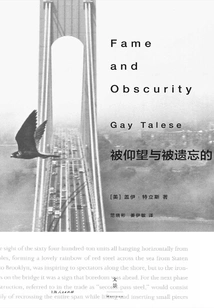
1Looked up to and Forgotten
Literature被仰望与被遗忘的
J
The works of Guy Tellis, the "Father of New Journalism", are great non-fiction writings of the 20th century and a model for feature writers around the world! Before Tellis, no one looked at the city and wrote news like this: Every day, New Yorkers drank 460,000 gallons of beer, ate 3.5 Million pounds of meat, and used 21 miles of dental floss. In this city, 250 people die every day, 460 are born, and 150,000 people walk around with glass or plastic prosthetic eyes. This is a New York symphony. With his sharp vision and precise writing style, the author Tellis shows us the style of New York: the unknown anecdotes among the faceless crowds, and the embarrassing situations after the stars under the spotlight turn around. The shoe shiner at the club door, the doorman of the high-end apartment, the bus driver, the building cleaner, the construction worker, and stars such as Frank Sinatra, Joe DiMaggio, Peter O'Toole, etc. Were respected by Tellis, and he treated them with the same curiosity.
The works of Guy Tellis, the "Father of New Journalism", are great non-fiction writings of the 20th century and a model for feature writers around the world! Before Tellis, no one looked at the city and wrote news like this: Every day, New Yorkers drank 460,000 gallons of beer, ate 3.5 Million pounds of meat, and used 21 miles of dental floss. In this city, 250 people die every day, 460 are born, and 150,000 people walk around with glass or plastic prosthetic eyes. This is a New York symphony. With his sharp vision and precise writing style, the author Tellis shows us the style of New York: the unknown anecdotes among the faceless crowds, and the embarrassing situations after the stars under the spotlight turn around. The shoe shiner at the club door, the doorman of the high-end apartment, the bus driver, the building cleaner, the construction worker, and stars such as Frank Sinatra, Joe DiMaggio, Peter O'Toole, etc. Were respected by Tellis, and he treated them with the same curiosity.
Guy Tellis, the father of New Journalism, dissected New York with scalpel-like strokes, staring equally at the aura of stars and the dust of the city, allowing the city's breathing, heartbeat, and hidden scars to emerge nakedly in numbers and stories.
 3
3看不见的美国(译文纪实)
(us) Jenny Laskas
More than 150 meters underground, Jenny Laskas asked a miner named Smitty: "Do you find it strange that people know so little about you?" He replied: "I think they may not know how this country works." "Invisible America" is about such a group of people who work hard every day to keep our lives running, but we never take them to heart. The unseen world is diverse: mining companies in Ohio, oil rigs in Alaska, migrant labor camps in Maine, air traffic control centers at LaGuardia, beef cattle ranches in Texas, landfills in California, long-haul truckers in Iowa, gun shops in Arizona, and Cincinnati Bengals cheerleaders. Cheerleader? Yes, they also represent the America you can't see.
More than 150 meters underground, Jenny Laskas asked a miner named Smitty: "Do you find it strange that people know so little about you?" He replied: "I think they may not know how this country works." "Invisible America" is about such a group of people who work hard every day to keep our lives running, but we never take them to heart. The unseen world is diverse: mining companies in Ohio, oil rigs in Alaska, migrant labor camps in Maine, air traffic control centers at LaGuardia, beef cattle ranches in Texas, landfills in California, long-haul truckers in Iowa, gun shops in Arizona, and Cincinnati Bengals cheerleaders. Cheerleader? Yes, they also represent the America you can't see.
This book is a model of non-fiction writing and won the National Magazine Award. Its narrative style has profoundly influenced contemporary documentary literature. Through 12 little-known career stories, a "real America" parallel to the mainstream narrative is constructed.
 4
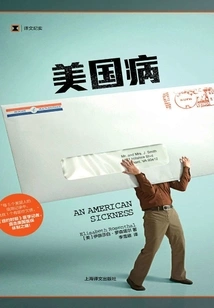
4美国病(译文纪实)
(us) Elizabeth Rosenthal
The Washington Post, Wall Street Journal, and NPR Best Books of 2017. "The New York Times" medical reporter directly attacks the pain of the American medical insurance system! Why does a test that charges $1,000 in a top teaching hospital in the United States cost $7,000 in some small community hospitals in New Jersey, but only costs $100 in Germany and Japan? We live in an era filled with medical miracles such as organ transplants, gene therapies, life-saving drugs, and preventive strategies, but it's incredible that the U. S. Health care system remains overpriced, inefficient, confusing, and full of injustice. In the face of disease, everyone is a potential victim of medical robbery. The United States spends nearly one-fifth of its GDP on health care, more than $3 trillion for the year, equivalent to the entire economy of France. Despite this, the medical insurance effect achieved by the United States with this money is generally lower than that of any developed country, and the per capita expenditure in these countries is only half that of the United States. For Americans, who hasn't opened a medical bill and stared at the scary numbers in disbelief? Who hasn't been bewildered by copays, deductibles, "in-network" and "out-of-network" terms on their insurance policy, only to write a check under the threat of collection? Who hasn't been stunned by a $500 bill for a simple blood test, a $5,000 bill for three shots in the emergency room, a $50,000 bill for a minor outpatient foot surgery, or a $500,000 bill for a three-day hospitalization for a heart attack? Where has all the money gone?
The Washington Post, Wall Street Journal, and NPR Best Books of 2017. "The New York Times" medical reporter directly attacks the pain of the American medical insurance system! Why does a test that charges $1,000 in a top teaching hospital in the United States cost $7,000 in some small community hospitals in New Jersey, but only costs $100 in Germany and Japan? We live in an era filled with medical miracles such as organ transplants, gene therapies, life-saving drugs, and preventive strategies, but it's incredible that the U. S. Health care system remains overpriced, inefficient, confusing, and full of injustice. In the face of disease, everyone is a potential victim of medical robbery. The United States spends nearly one-fifth of its GDP on health care, more than $3 trillion for the year, equivalent to the entire economy of France. Despite this, the medical insurance effect achieved by the United States with this money is generally lower than that of any developed country, and the per capita expenditure in these countries is only half that of the United States. For Americans, who hasn't opened a medical bill and stared at the scary numbers in disbelief? Who hasn't been bewildered by copays, deductibles, "in-network" and "out-of-network" terms on their insurance policy, only to write a check under the threat of collection? Who hasn't been stunned by a $500 bill for a simple blood test, a $5,000 bill for three shots in the emergency room, a $50,000 bill for a minor outpatient foot surgery, or a $500,000 bill for a three-day hospitalization for a heart attack? Where has all the money gone?
This book is like a "pathological diagnosis report" of the American medical system, which has triggered a major discussion on medical reform in the United States. Through the microscope of medical finance, the most vulnerable weakness of people's livelihood in this superpower is revealed.
 5
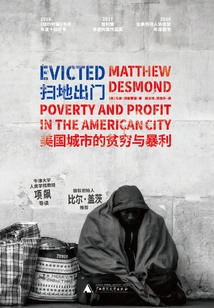
5扫地出门:美国城市的贫穷与暴利
L
"Sweeping Out: Poverty and Profits in American Cities" focuses on the increasingly severe housing problem in the United States - housing prices continue to rise, the cost of living continues to rise, but incomes remain stagnant or even decrease instead of increasing - Matthew Desmond is determined to go deep into poor communities to explore the core of the problem. Readers will face the displacement caused by poverty and witness the graceful figure of those in need who refuse to submit. This is an enlightening book about poverty and eviction, and a call to action and change.
"Sweeping Out: Poverty and Profits in American Cities" focuses on the increasingly severe housing problem in the United States - housing prices continue to rise, the cost of living continues to rise, but incomes remain stagnant or even decrease instead of increasing - Matthew Desmond is determined to go deep into poor communities to explore the core of the problem. Readers will face the displacement caused by poverty and witness the graceful figure of those in need who refuse to submit. This is an enlightening book about poverty and eviction, and a call to action and change.
Pulitzer Prize winner Matthew Desmond used eight years of field research to tear apart the chain of huge profits in the American rental market. When landlords know the law better than tenants, eviction becomes the coldest business of this era.
 6
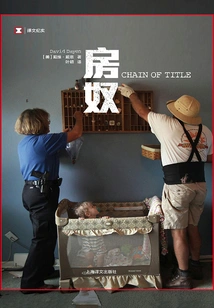
6House Slave (translated Documentary)
Literature房奴(译文纪实)
(us) David Dane
Few accounts of the 2008 financial crisis are told from the perspective of the millions of ordinary Americans who bore the greatest pain of the economic collapse. Because in such a system, how people are treated depends on their wealth and power. Since 2009, three ordinary Americans have decided to uncover this mystery, clarify the crimes of Wall Street, and explore the reasons why. They are a cancer care nurse, a car salesman and an expert in insurance fraud. They are foreclosure victims, who are often referred to as "morts" or house slaves. They discovered that the entire mortgage industry had fundamentally undermined the centuries-old U. S. Real estate legal system; that the millions of documents that caused people to lose their homes to foreclosure were all false; that all Americans who took out mortgages were taking a huge gamble, and they were very likely to be evicted from their homes with nothing, even if they complied with the law and made their payments on time every time. This is a major failure of public policy. We don't know how many families have lost their homes during the foreclosure crisis, but estimates are at least closer to 6 million. Numerous studies show that people who live in foreclosure areas suffer more physical and psychological illnesses. A 2014 report in the American Journal of Public Health concluded that foreclosure rates are related to the number of suicides. The foreclosure crisis is the most damaging to the wealth of middle-class American families in the past century.
Few accounts of the 2008 financial crisis are told from the perspective of the millions of ordinary Americans who bore the greatest pain of the economic collapse. Because in such a system, how people are treated depends on their wealth and power. Since 2009, three ordinary Americans have decided to uncover this mystery, clarify the crimes of Wall Street, and explore the reasons why. They are a cancer care nurse, a car salesman and an expert in insurance fraud. They are foreclosure victims, who are often referred to as "morts" or house slaves. They discovered that the entire mortgage industry had fundamentally undermined the centuries-old U. S. Real estate legal system; that the millions of documents that caused people to lose their homes to foreclosure were all false; that all Americans who took out mortgages were taking a huge gamble, and they were very likely to be evicted from their homes with nothing, even if they complied with the law and made their payments on time every time. This is a major failure of public policy. We don't know how many families have lost their homes during the foreclosure crisis, but estimates are at least closer to 6 million. Numerous studies show that people who live in foreclosure areas suffer more physical and psychological illnesses. A 2014 report in the American Journal of Public Health concluded that foreclosure rates are related to the number of suicides. The foreclosure crisis is the most damaging to the wealth of middle-class American families in the past century.
This book won the New York Times Book of the Year. Through the struggles of ordinary people, this book shows the darkest legacy of the financial crisis - when the legal system is corroded by capital, every homeowner may be legally robbed without repayment. This is not only a financial documentary, but also an indictment of institutional violence.
 7
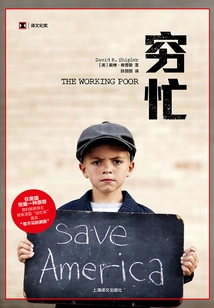
7Poor and Busy (translated Documentary)
Literature穷忙(译文纪实)
(us) David Shipler
In America, poverty is an original sin. Why do people get busier as they get poorer, and get poorer as they get busier? Education, medical care and housing, employment, taxes and benefits, and even gender, region and culture. Poverty is always a "system" problem. Pulitzer Prize winner, focusing on the "working poor" in the United States and seeing the "invisible America". This is the America that has been forgotten. The car washer has no car to drive, the bank clerk's account only has US$2.02, And the income of a female medical textbook editor in ten years cannot keep up with that of a dentist. This book tells the stories of some of them: their families, their dreams, their failures. And what failed more than them was their country. Although the United States is richer than ever before, and although the United States promotes the credo of "working to get rich," the problems of low-income people have made all this questionable. For most of the people I write about, anger is a luxury. They are struggling, exhausted and unable to find a way out. Their wages did not improve their lives and lift them out of poverty. On the contrary, they were burdened by life. People often use the word "working poor" to describe them, and the word itself is an oxymoron. In America, hard-working people should not be poor. The U. S. Economy has had its ups and downs, and the latest statistics show that the lives of poor people have remained basically unchanged, except that they have become more difficult. The gap in net worth between the richest and poorest households has widened, creating a polarization. The resource gap between wealthy school districts and other school districts has further widened. More children are missing school due to asthma, more people do not have access to health insurance, more people are hungry, more people are in jail, and more illegal immigrants are working at the bottom of the workforce. Americans generally do not understand the causes of poverty and, therefore, do not know how to solve it. They believe in the American Dream and believe that even people from the poorest backgrounds can live a happy life. But this also gives people an excuse to blame the poor: to some extent, low wages are the worker's fault, because low wages simply mean that the value of his labor is low. In the American context, poverty always carries the aura of original sin. Indeed, being poor in a rich country is much more difficult than being poor in a poor country.
In America, poverty is an original sin. Why do people get busier as they get poorer, and get poorer as they get busier? Education, medical care and housing, employment, taxes and benefits, and even gender, region and culture. Poverty is always a "system" problem. Pulitzer Prize winner, focusing on the "working poor" in the United States and seeing the "invisible America". This is the America that has been forgotten. The car washer has no car to drive, the bank clerk's account only has US$2.02, And the income of a female medical textbook editor in ten years cannot keep up with that of a dentist. This book tells the stories of some of them: their families, their dreams, their failures. And what failed more than them was their country. Although the United States is richer than ever before, and although the United States promotes the credo of "working to get rich," the problems of low-income people have made all this questionable. For most of the people I write about, anger is a luxury. They are struggling, exhausted and unable to find a way out. Their wages did not improve their lives and lift them out of poverty. On the contrary, they were burdened by life. People often use the word "working poor" to describe them, and the word itself is an oxymoron. In America, hard-working people should not be poor. The U. S. Economy has had its ups and downs, and the latest statistics show that the lives of poor people have remained basically unchanged, except that they have become more difficult. The gap in net worth between the richest and poorest households has widened, creating a polarization. The resource gap between wealthy school districts and other school districts has further widened. More children are missing school due to asthma, more people do not have access to health insurance, more people are hungry, more people are in jail, and more illegal immigrants are working at the bottom of the workforce. Americans generally do not understand the causes of poverty and, therefore, do not know how to solve it. They believe in the American Dream and believe that even people from the poorest backgrounds can live a happy life. But this also gives people an excuse to blame the poor: to some extent, low wages are the worker's fault, because low wages simply mean that the value of his labor is low. In the American context, poverty always carries the aura of original sin. Indeed, being poor in a rich country is much more difficult than being poor in a poor country.
This book is like a "pathological slice" of poverty in the United States, and won the 2017 Pulitzer Prize for nonfiction. Through the stories of dozens of "working poor", it shows how in countries with peak GDP, poverty is institutionalized as a tool to maintain class privileges - when effort is decoupled from reward, the "American Dream" becomes the cruelest black humor.
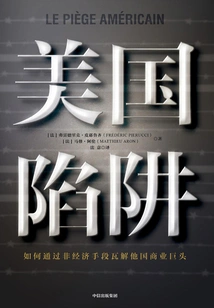
This "espionage documentary" about transnational business wars was recommended by French President Macron to be read by the entire cabinet. Through the complete process of Alstom's forced acquisition by General Electric, it shows how the United States combined legal, financial, and diplomatic means into a "modern pirate ship" of economic warfare - when national power escorts commercial competition, free trade becomes a dangerous illusion.

American phenomenon bestseller. The Great Game between China and the United States, read Trump in the next four years and Vance in the next 20 years. This book allows you to understand Trump and Vance at the same time. See clearly the inner logic of the Trump administration's isolationism, tariff war, and anti-immigration policies. Recommended by Peter Thiel, Bill Gates and other big names.