General Economics: a Wisdom Toolbox from Beginner to Master
经济学通识:从入门到精通的智慧工具箱
Economics is not about boring formulas and charts, but a way of thinking about understanding the world. This book selects classic and cutting-edge works in the field of economics, covering basic theory, behavioral analysis, financial practice, social policy and other dimensions to help readers grasp economic logic, see through market laws, and optimize personal decision-making.
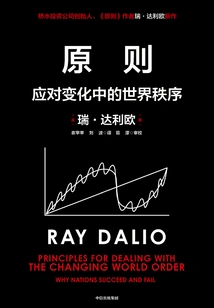
From the Dutch tulip bubble to the decline of US dollar hegemony, Dalio uses the 500-year cycle law to decipher the code of national rise and decline. When the world order faces a "typical great change", this book is the ultimate navigator through the crisis, teaching you to use the debt cycle and historical laws to predict the next ten years.
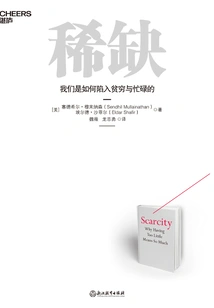
Poor people are always short of money, and busy people are always short of time - Harvard economists use the "scarcity mentality" to uncover the endless cycle of poverty and busyness: Our brains are being kidnapped by a sense of scarcity, and the way to solve it is not to have more resources, but to recapture the overwhelmed 'mental bandwidth'.
From the Japanese bubble to the Greek crisis, this book uses the ups and downs of global economic history to tell you - inflation can steal your savings, interest rates can rewrite your mortgage, and understanding financial logic is to insure your future life.
From reform and opening up to the integration of the Yangtze River Delta, this book uses four main lines and 16 key propositions to analyze the Chinese economy like dismantling a precision instrument - allowing you to understand the industrial code, structural contradictions and disruptive driving forces behind the "China Model", and understand the past, present and future of the economy of a major country.
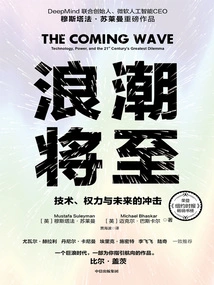
The "Three-Body Wave" of AI, gene editing and quantum computing is reshaping human civilization - this technological tsunami can not only bring unlimited prosperity, but also may swallow up the foundation of nation-states, and we only have ten years left to build levees.
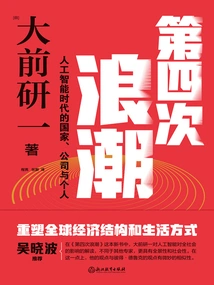
Kenichi Ohmae uses "The Fourth Wave" as a navigator - in this technological tsunami that is more ferocious than the Industrial Revolution, one must either learn the survival rules of the "one-man economy" or be crushed on the beach by the algorithm.
Compare China's heyday with the rise of Europe, Argentina's golden age and Africa's resource curse; decipher the common genes of Jews, Chinese, and Lebanese in accumulating wealth around the world; expose the statistical trap of "political correctness" and verify economic laws with 2000 years of civilization history.
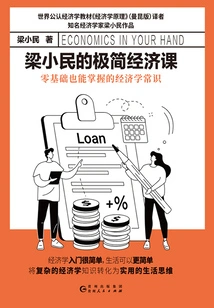
When bargaining at the market encounters opportunity costs, when game theory is hidden in a blind date dinner - Liang Xiaomin explains economics thoroughly using vegetable baskets and salary slips. It will make you smile after reading it, but you will then see through the rules of the world behind the price tags.
From the code of Switzerland's rise in chocolate to the American hegemony in the banana trade, Cambridge economist Zhang Xia Zhun used an "economics feast" to prove that every bite of food chews the genes of a country's rise and fall, and true free trade is never just a story on the dinner table.
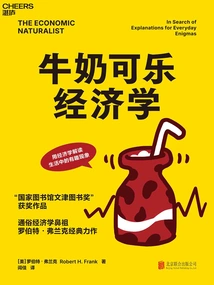
This interesting introductory book on economics uses 100 life puzzles to prove that economics is not a profound theory, but a "decision-making navigator" for you every day in supermarkets, restaurants, and even on blind dates.