The Imperial Road - the Conqueror's Path to Supreme Power
帝王之路-通向至高权力的征服者
The destiny and people's hearts behind the change of dynasties can clear up the fog of history, understand the subtleties of human nature, sort out the process of world history from the history of emperors, and explore the rules of the power game from the change of imperial power.
 1
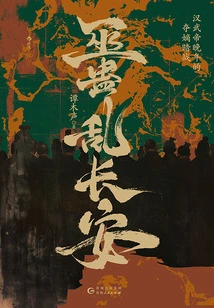
1巫蛊乱长安:汉武帝晚年的夺嫡暗战
Tan Musheng
The disaster of witchcraft was a major event in the history of the Western Han Dynasty, which involved the political struggle of Emperor Wu of the Han Dynasty, and the overt and covert struggles of various princes to seize the throne. The truth of this major historical event has become an unsolved mystery due to the lack of historical data. The author of this book uses historical materials and existing research results to make bold and creative arguments and conjectures about the gaps in history, reexamines the origins of the witchcraft disaster, reveals the truth, and proposes a new perspective that cannot be falsified.
The disaster of witchcraft was a major event in the history of the Western Han Dynasty, which involved the political struggle of Emperor Wu of the Han Dynasty, and the overt and covert struggles of various princes to seize the throne. The truth of this major historical event has become an unsolved mystery due to the lack of historical data. The author of this book uses historical materials and existing research results to make bold and creative arguments and conjectures about the gaps in history, reexamines the origins of the witchcraft disaster, reveals the truth, and proposes a new perspective that cannot be falsified.
Re-examine the origins of the witchcraft disaster and restore the historical truth; the confusing mystery of human nature in the witchcraft Rashomon. What enlightenment can a human tragedy bring to us modern people?
 2
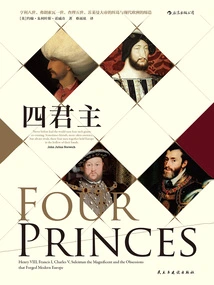
2Four Monarchs
History四君主
L
King Henry VIII of England, King Francois I of France, Holy Roman Emperor Charles V and Sultan Suleiman the Magnificent of the Ottoman Empire, these four great monarchs were born in the same decade (1491-1500). They were all important in the history of their respective countries, and in this book, John Julius Norwich zooms in to show how the feud between these four monarchs laid the foundation for modern Europe, against the backdrop of the Renaissance and Reformation. Individually they were different, Henry had six wives and Charles was ascetic; together they dominated the world stage. This book describes the meeting of the Golden Sea that nearly bankrupted France and Britain, tells the story of Suleiman's pile of two thousand enemy heads after the Battle of Mohács, mentions that Anne Boleyn's left hand has six fingers that pious people are afraid of, and mentions the true story of the Maltese Falcon. These stories make "The Four Monarchs" an extremely vivid and interesting historical work.
King Henry VIII of England, King Francois I of France, Holy Roman Emperor Charles V and Sultan Suleiman the Magnificent of the Ottoman Empire, these four great monarchs were born in the same decade (1491-1500). They were all important in the history of their respective countries, and in this book, John Julius Norwich zooms in to show how the feud between these four monarchs laid the foundation for modern Europe, against the backdrop of the Renaissance and Reformation. Individually they were different, Henry had six wives and Charles was ascetic; together they dominated the world stage. This book describes the meeting of the Golden Sea that nearly bankrupted France and Britain, tells the story of Suleiman's pile of two thousand enemy heads after the Battle of Mohács, mentions that Anne Boleyn's left hand has six fingers that pious people are afraid of, and mentions the true story of the Maltese Falcon. These stories make "The Four Monarchs" an extremely vivid and interesting historical work.
This book is an authoritative work generally recognized by European academic circles. It tells the complex and changeable history of Europe in the first half of the 16th century, and restores the half-century feud between Henry VIII, Francois I, Charles V and Suleiman the Magnificent.
 3
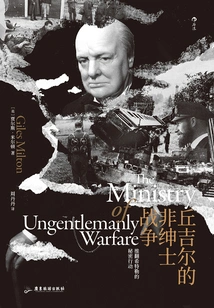
3丘吉尔的非绅士战争
I
During World War II, facing the powerful Nazi war machine, Britain had to find ways to weaken the enemy. The author of this book, Giles Milton, uses vivid descriptions to describe several wonderful sneak attacks and assassinations carried out by the British army outside the main battlefields of World War II. With the support of Churchill, several typical British gentlemen planned and led these completely ungentlemanly actions, despite the opposition of the old-fashioned people in the army and government who insisted on tradition. They invented new weapons, established schools for training guerrillas, and transported explosives to the resistance organizations in the occupied areas... These secret fighters who did not belong to the conventional army made a huge contribution to the final victory of the war.
During World War II, facing the powerful Nazi war machine, Britain had to find ways to weaken the enemy. The author of this book, Giles Milton, uses vivid descriptions to describe several wonderful sneak attacks and assassinations carried out by the British army outside the main battlefields of World War II. With the support of Churchill, several typical British gentlemen planned and led these completely ungentlemanly actions, despite the opposition of the old-fashioned people in the army and government who insisted on tradition. They invented new weapons, established schools for training guerrillas, and transported explosives to the resistance organizations in the occupied areas... These secret fighters who did not belong to the conventional army made a huge contribution to the final victory of the war.
In order to defeat the enemy, whether it is necessary to use any means necessary, the unknown hero brought down Hitler's war machine, opened the dusty archives, and got closer to Churchill's most mysterious meritorious soldier!
 4
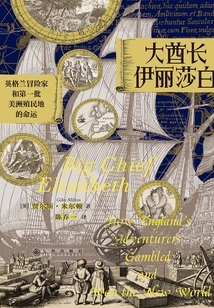
4Elizabeth, the Great Chief: an English Adventurer and the Fate of the First American Colonies
History大酋长伊丽莎白:英格兰冒险家和第一批美洲殖民地的命运
I
This book tells the story of how merchants and adventurers from Elizabethan England crossed the Atlantic and settled in the New World. In 1584, a voyage organized by Walter Raleigh arrived at Roanoke Island. In order to establish a settlement here, they made many attempts and explorations over the next 20 years and invested a lot of money, manpower and materials. Their experiences ranged from funny to tragic, and the whereabouts of some remain a mystery to this day. With the efforts of generations of adventurers, Jamestown was finally built in 1611. This was the first permanent colony established by the English on the far side of the Atlantic Ocean. Based on a large number of diaries and manuscripts, the author tells readers this ups and downs, exciting, mysterious and vivid story, and leads readers on an adventure journey to America.
This book tells the story of how merchants and adventurers from Elizabethan England crossed the Atlantic and settled in the New World. In 1584, a voyage organized by Walter Raleigh arrived at Roanoke Island. In order to establish a settlement here, they made many attempts and explorations over the next 20 years and invested a lot of money, manpower and materials. Their experiences ranged from funny to tragic, and the whereabouts of some remain a mystery to this day. With the efforts of generations of adventurers, Jamestown was finally built in 1611. This was the first permanent colony established by the English on the far side of the Atlantic Ocean. Based on a large number of diaries and manuscripts, the author tells readers this ups and downs, exciting, mysterious and vivid story, and leads readers on an adventure journey to America.
This book tells the story of how merchants and adventurers from Elizabethan England crossed the Atlantic and settled in the New World. The mystery of the mysterious disappearance of Roanoke, the first North American settlement established by British colonists more than 400 years ago!
 5
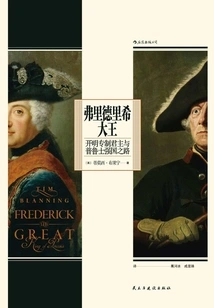
5弗里德里希大王:开明专制君主与普鲁士强国之路
Q
In European history, there are few figures as great as King Friedrich the Great. When he succeeded to the Prussian throne in 1740, he ruled a weak and scattered kingdom; by the end of his reign, Prussia had become one of the great powers of continental Europe. In this book, historian Timothy Braining gives us a comprehensive portrait of the king who dominated the political, military, and cultural life of Europe half a century before Napoleon. Friedrich had a complex and multi-faceted character. He was sometimes a ruthless monarch, sometimes a strategizing battlefield commander, and sometimes an enthusiastic patron of the arts. He also maintained active contacts with other major thinkers of the era such as Voltaire. Timothy Breining's ambitious biography recounts Friedrich's remarkable life and the sweeping political and cultural transformation of Prussia under his rule. Readers can delve into the mind of this great monarch and better understand Prussia's rise to become a European power.
In European history, there are few figures as great as King Friedrich the Great. When he succeeded to the Prussian throne in 1740, he ruled a weak and scattered kingdom; by the end of his reign, Prussia had become one of the great powers of continental Europe. In this book, historian Timothy Braining gives us a comprehensive portrait of the king who dominated the political, military, and cultural life of Europe half a century before Napoleon. Friedrich had a complex and multi-faceted character. He was sometimes a ruthless monarch, sometimes a strategizing battlefield commander, and sometimes an enthusiastic patron of the arts. He also maintained active contacts with other major thinkers of the era such as Voltaire. Timothy Breining's ambitious biography recounts Friedrich's remarkable life and the sweeping political and cultural transformation of Prussia under his rule. Readers can delve into the mind of this great monarch and better understand Prussia's rise to become a European power.
The author won the 2016 British National Academy Medal for this book, which restores the life of the multi-faceted King Friedrich and the rise of Prussia!
 6
6Richard the Lionheart
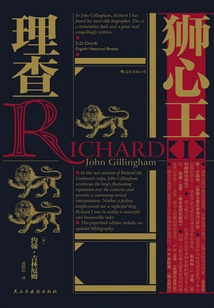
History狮心王理查
(uk) John Gillingham
Unique and unparalleled among the kings of England, Richard I played an active and leading role in many great achievements in world history. No monarch had ever faced the formidable challenges he faced in the Third Crusade. For centuries, Richard was regarded as one of the greatest kings for his crusading exploits. However, historians in modern times have begun to criticize Richard harshly, believing that he neglected to manage domestic affairs and regarded him as a reckless ruler and an unfit husband. In this authoritative work, Professor John Gillingham examines in detail the reasons for the mixed reviews of Richard and discusses Richard's governance of the country, proposing compelling new perspectives. The book also comes with an updated reference list for the reader's convenience.
Unique and unparalleled among the kings of England, Richard I played an active and leading role in many great achievements in world history. No monarch had ever faced the formidable challenges he faced in the Third Crusade. For centuries, Richard was regarded as one of the greatest kings for his crusading exploits. However, historians in modern times have begun to criticize Richard harshly, believing that he neglected to manage domestic affairs and regarded him as a reckless ruler and an unfit husband. In this authoritative work, Professor John Gillingham examines in detail the reasons for the mixed reviews of Richard and discusses Richard's governance of the country, proposing compelling new perspectives. The book also comes with an updated reference list for the reader's convenience.
Follow the accounts of English, French and Muslim chroniclers as they relive the Plantagenet king - Richard I the Lionheart!
 7
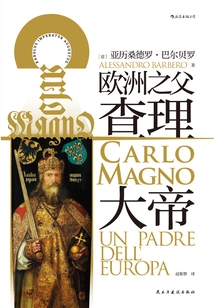
7查理大帝:欧洲之父
(italian) Alessandro Barbero
On Christmas Day 800, King Charles of the Franks was crowned Emperor of the Romans. This was an emperor who shaped Europe. Barbero vividly depicts Charlemagne's appearance, tastes, habits, family life, thoughts and behavior. The author also unfolds the overall history of the Frankish Kingdom and the Carolingian Empire, showing Charlemagne's method of ruling the empire, how to ensure justice, and how to organize wars; he also describes the daily life, economic activities, and religious concepts at that time. He analyzes the development of feudalism in the Carolingian Empire and the changing concepts of slavery and freedom, thereby explaining the dramatic changes that the emperor's wars brought to the political and social structure of the empire.
On Christmas Day 800, King Charles of the Franks was crowned Emperor of the Romans. This was an emperor who shaped Europe. Barbero vividly depicts Charlemagne's appearance, tastes, habits, family life, thoughts and behavior. The author also unfolds the overall history of the Frankish Kingdom and the Carolingian Empire, showing Charlemagne's method of ruling the empire, how to ensure justice, and how to organize wars; he also describes the daily life, economic activities, and religious concepts at that time. He analyzes the development of feudalism in the Carolingian Empire and the changing concepts of slavery and freedom, thereby explaining the dramatic changes that the emperor's wars brought to the political and social structure of the empire.
The "Father of Europe" who laid the foundation for modern Europe gets close to a flesh-and-blood Charlemagne and explores the overall history of Carolingian society.
 8
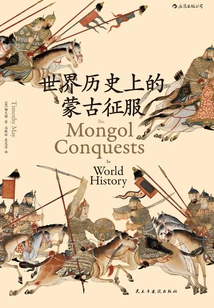
8世界历史上的蒙古征服
(us) Mei Tianmu
This book is a new heavyweight work in the field of research on the history of the Mongolian Empire in recent years. From the perspective of world history and global history, the author focuses on describing the Eurasian cultural exchanges promoted by Genghis Khan and the emergence of a new Eurasian world after the successive disintegration of the Mongolian khanates. Under the forcible promotion of the Mongol rulers, the East and the West began a process of mutual exchange, and a new Eurasian culture was born under the "Mongol rule." This, to a certain extent, corrected the image of Mongolia as a barbarian who destroyed the civilized world.
This book is a new heavyweight work in the field of research on the history of the Mongolian Empire in recent years. From the perspective of world history and global history, the author focuses on describing the Eurasian cultural exchanges promoted by Genghis Khan and the emergence of a new Eurasian world after the successive disintegration of the Mongolian khanates. Under the forcible promotion of the Mongol rulers, the East and the West began a process of mutual exchange, and a new Eurasian culture was born under the "Mongol rule." This, to a certain extent, corrected the image of Mongolia as a barbarian who destroyed the civilized world.
A new heavyweight work in the field of research on the history of the Mongolian Empire, it depicts the Eurasian cultural exchanges promoted by Genghis Khan from the perspective of global history.
 9
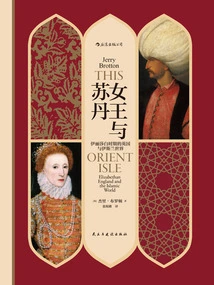
9女王与苏丹:伊丽莎白时期的英国与伊斯兰世界
Q
In 1570, Queen Elizabeth I of England was excommunicated by the Pope. In order to get rid of being surrounded by mainland Catholic countries, England started a period of alliance with the Islamic forces fighting in the Mediterranean and Catholic Spain, and had in-depth cultural, economic and political exchanges with the Islamic world. It was a remarkable period, with England signing treaties with the Ottoman Empire, accepting ambassadors from the King of Morocco, and sending arms to Marrakech. By the late 1680s, hundreds of merchants, diplomats, sailors, craftsmen, and privateer captains were regularly traveling from Morocco to Persia. Among them was the resourceful merchant Anthony Jenkinson, who met Suleiman the Magnificent and Shah Tahmasp of Persia in the 1560s. The Norfolk merchant William Haban became the first ambassador to the Ottoman court in 1582, while the adventurer Antoninus Sherry remained at the court of Shah Abbas the Great for much of the 1600s. The news these people brought back about the Islamic world was of great interest to the British and was expressed in many great literary works, such as Marlowe's Tamburlaine and Shakespeare's Titus Andronicus and The Merchant of Venice. The creation of "Othello" is probably related to the visit of the Moroccan ambassador Anouli to Britain. This book demonstrates the extensive, often friendly, connections between Elizabethan England and the Islamic world. In today's era of globalization, this history of exchanges between heterogeneous cultures can still bring us great inspiration.
In 1570, Queen Elizabeth I of England was excommunicated by the Pope. In order to get rid of being surrounded by mainland Catholic countries, England started a period of alliance with the Islamic forces fighting in the Mediterranean and Catholic Spain, and had in-depth cultural, economic and political exchanges with the Islamic world. It was a remarkable period, with England signing treaties with the Ottoman Empire, accepting ambassadors from the King of Morocco, and sending arms to Marrakech. By the late 1680s, hundreds of merchants, diplomats, sailors, craftsmen, and privateer captains were regularly traveling from Morocco to Persia. Among them was the resourceful merchant Anthony Jenkinson, who met Suleiman the Magnificent and Shah Tahmasp of Persia in the 1560s. The Norfolk merchant William Haban became the first ambassador to the Ottoman court in 1582, while the adventurer Antoninus Sherry remained at the court of Shah Abbas the Great for much of the 1600s. The news these people brought back about the Islamic world was of great interest to the British and was expressed in many great literary works, such as Marlowe's Tamburlaine and Shakespeare's Titus Andronicus and The Merchant of Venice. The creation of "Othello" is probably related to the visit of the Moroccan ambassador Anouli to Britain. This book demonstrates the extensive, often friendly, connections between Elizabethan England and the Islamic world. In today's era of globalization, this history of exchanges between heterogeneous cultures can still bring us great inspiration.
A new work by the author of "History of the World in Twelve Maps", a legendary epic of exchanges between the East and the West, a hidden story between Queen Elizabeth, Shakespeare, the Moroccan monarch, the Ottoman Sultan, and the Shah of Persia.
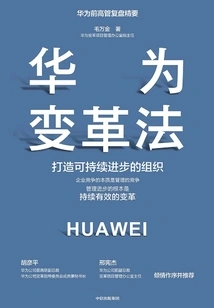
The former director of Huawei's Project Management Office disclosed the essence of Huawei's transformation for the first time, including methods, cases, and practices. This book understands the concept, essence, and executable methods and paths of Huawei's transformation;