The World's Sandbox-the History of Material Civilization
撬动世界的沙盘——物质的文明史
When a bag of tea determines the outcome of a war, when a grain of pepper rewrites the trade map - this book list reveals the most tantalizing hidden thread in the history of civilization. From the white gold hegemony in "Cotton Empire" to how taste buds were used to leverage geographical discoveries in "The Spice Merchant"; from how the empire domesticated food customs in "Food and Civilization" to the conquests and exchanges carried by saltwater channels in "Ocean and Civilization". These books use the colonial history in the coffee cup, the flowing dialogue of civilizations on the Silk Road, and the turbulent power changes in the Indian Ocean monsoon to tell the truth: mankind's pursuit of material has always been the most secret driver of changing the world.
 1
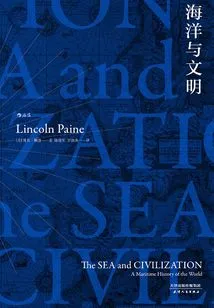
1Ocean and Civilization
History海洋与文明
(us)lincoln Payne
This book retells world history from the perspective of the ocean, revealing how people communicate and interact through oceans, rivers and lakes, as well as exchange and spread goods, products and culture. It aims to reveal that various groups, nations, countries and civilizations shape their own civilizations and history through waterways around the world. The author shows the connection between the rise and fall of civilization and the ocean, narrates the development of human navigation in a fascinating way, and composes an epic about the voyagers.
This book retells world history from the perspective of the ocean, revealing how people communicate and interact through oceans, rivers and lakes, as well as exchange and spread goods, products and culture. It aims to reveal that various groups, nations, countries and civilizations shape their own civilizations and history through waterways around the world. The author shows the connection between the rise and fall of civilization and the ocean, narrates the development of human navigation in a fascinating way, and composes an epic about the voyagers.
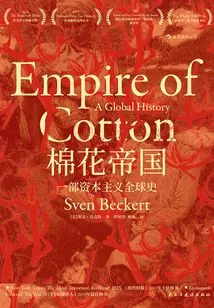
Use the history of the cotton industry to describe the process of capitalist globalization, and use the concept of "war capitalism" to subvert the myth of "free capitalism".
 2
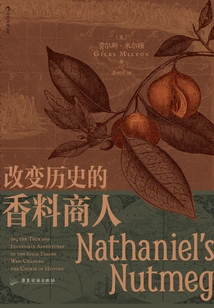
2改变历史的香料商人
(english) Giles Milton
At the beginning of the 17th century, the nutmeg produced on an unknown island in the Pacific became the focus of competition among European countries in the spice competition. This triggered a fierce and bloody struggle between the Dutch East India Company and a small group of British spice merchants led by Nathaniel Courtop. This struggle eventually ended with the Netherlands and Britain reaching a deal with a far-reaching impact in history. The British ceded control of Lanyu Island to the Dutch, and in return received Manhattan. This book tells a wonderful adventure story. The author selects several representative spice merchants and vividly reproduces a legendary history for readers through their stories.
At the beginning of the 17th century, the nutmeg produced on an unknown island in the Pacific became the focus of competition among European countries in the spice competition. This triggered a fierce and bloody struggle between the Dutch East India Company and a small group of British spice merchants led by Nathaniel Courtop. This struggle eventually ended with the Netherlands and Britain reaching a deal with a far-reaching impact in history. The British ceded control of Lanyu Island to the Dutch, and in return received Manhattan. This book tells a wonderful adventure story. The author selects several representative spice merchants and vividly reproduces a legendary history for readers through their stories.
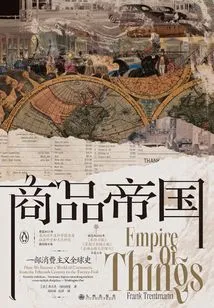
How consumption is shaped, observing 600 years of modern material civilization, jumping out of the moral debate of material desires, and justifying consumption.
Global history is written with tea as the core. Tea built an empire on which the sun never sets and carries the grand narrative of hundreds of years of globalized trade in the modern world.
Food documentary director Chen Xiaoqing and economist Xue Zhaofeng jointly recommend, 5000 Moveable Feasts, a history of global exchanges!
 5
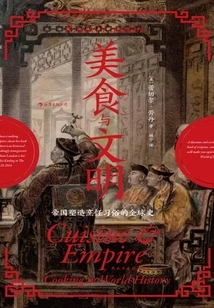
5美食与文明:帝国塑造烹饪习俗的全球史
(us) Rachel Laudan
The author tells the story of the rise and fall of the world's major diets, from the mastery of grain cooking some 20,000 years ago to the present. Through the apparent jumble of diverse diets, the author reveals the underlying simplicity of a culinary genealogy, illustrating how cyclical changes in culinary philosophy about health, economics, politics, society, and belief in the gods drove the creation of new diets, some of which were chosen as imperial diets and came to dominate the world. The authors also illustrate how traders, missionaries, and armies moved diets across mountains, oceans, deserts, and political borders. This book's innovative narrative considers cooking, like language, clothing, or architecture, as a human creation. By emphasizing how cooking transforms produce into food and using the global rather than a specific country as the stage, it challenges the agrarian and romantic myths that underpin the contemporary food movement.
The author tells the story of the rise and fall of the world's major diets, from the mastery of grain cooking some 20,000 years ago to the present. Through the apparent jumble of diverse diets, the author reveals the underlying simplicity of a culinary genealogy, illustrating how cyclical changes in culinary philosophy about health, economics, politics, society, and belief in the gods drove the creation of new diets, some of which were chosen as imperial diets and came to dominate the world. The authors also illustrate how traders, missionaries, and armies moved diets across mountains, oceans, deserts, and political borders. This book's innovative narrative considers cooking, like language, clothing, or architecture, as a human creation. By emphasizing how cooking transforms produce into food and using the global rather than a specific country as the stage, it challenges the agrarian and romantic myths that underpin the contemporary food movement.
Recommended by the famous sinologist Bu Zhengmin, the ten ancient artifacts tell the story of their own ups and downs in "life" and connect the Silk Road network across Europe, Asia and Africa!
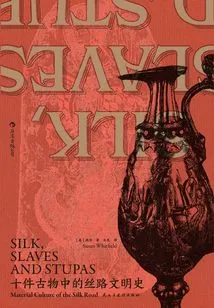 6
6十件古物中的丝路文明史
(english) Wei Hong
The historical Silk Road spanned the three continents of Europe, Asia and Africa, passing through deserts, grasslands, mountains, rivers and lakes, where countless materials and cultures were born, forming the splendid Silk Road civilization. The author selected ten ancient objects and narrated their stories, which not only showed the craftsmanship and shape, theme and decoration of the material, but also told the intricate connection between people and objects: Who created the material? Who carries them across mountains and rivers? Who regards them as treasures and sacred objects? Who abandoned them, and who unearthed them from the layers of loess... Materials and the people and society behind them interact with each other, different cultures collide and blend with each other, and economies, systems, technologies, and ideas continue to develop and evolve in the process of communication. All of this is integrated into a vivid and tangible history of Silk Road civilization.
The historical Silk Road spanned the three continents of Europe, Asia and Africa, passing through deserts, grasslands, mountains, rivers and lakes, where countless materials and cultures were born, forming the splendid Silk Road civilization. The author selected ten ancient objects and narrated their stories, which not only showed the craftsmanship and shape, theme and decoration of the material, but also told the intricate connection between people and objects: Who created the material? Who carries them across mountains and rivers? Who regards them as treasures and sacred objects? Who abandoned them, and who unearthed them from the layers of loess... Materials and the people and society behind them interact with each other, different cultures collide and blend with each other, and economies, systems, technologies, and ideas continue to develop and evolve in the process of communication. All of this is integrated into a vivid and tangible history of Silk Road civilization.
How is the world-famous Manhattan, New York, connected to an unknown island across the ocean? Little people leverage big history, vividly describing and recreating legendary sailing adventures!
An Indian Ocean version of "Game of Thrones" tells the history of the invasion and development of Indian Ocean civilization that cannot be read in mainstream historical works.
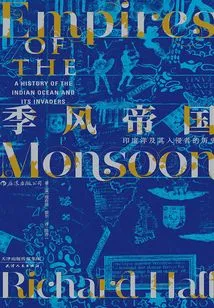 8
8季风帝国:印度洋及其入侵者的历史
(uk) Richard Hall
This book reconstructs the civilization of the Indian Ocean and its gradual decline under the control of Western invaders. Through extraordinary narrative ability and keen analysis, author Richard Hall shows how the emergence of Europeans from the 16th century onwards irreversibly changed life along the Indian Ocean coast: prosperous kingdoms were conquered, former religious and ethnic relations were thrown into chaos; and, with the emergence of Western capitalism, ancient trade patterns soon became extinct. However, although European guns could create new empires in the East, their vast populations made it impossible for Westerners to suppress the East for long. In the thousands of years of changes in the Indian Ocean, African giants have formed the long western flank of the Indian Ocean and have played almost no role other than acting as silent bystanders. But after the mid-19th century, the potential of the various peoples in sub-Saharan Africa was fully tested, and the monsoon of history blew again. This book reproduces the author's understanding of foreign cultures from a subtle and unobstructed perspective. This epic work is sure to inspire and inspire reading.
This book reconstructs the civilization of the Indian Ocean and its gradual decline under the control of Western invaders. Through extraordinary narrative ability and keen analysis, author Richard Hall shows how the emergence of Europeans from the 16th century onwards irreversibly changed life along the Indian Ocean coast: prosperous kingdoms were conquered, former religious and ethnic relations were thrown into chaos; and, with the emergence of Western capitalism, ancient trade patterns soon became extinct. However, although European guns could create new empires in the East, their vast populations made it impossible for Westerners to suppress the East for long. In the thousands of years of changes in the Indian Ocean, African giants have formed the long western flank of the Indian Ocean and have played almost no role other than acting as silent bystanders. But after the mid-19th century, the potential of the various peoples in sub-Saharan Africa was fully tested, and the monsoon of history blew again. This book reproduces the author's understanding of foreign cultures from a subtle and unobstructed perspective. This epic work is sure to inspire and inspire reading.
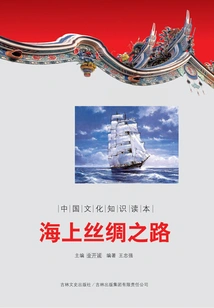
A history of Asia from a maritime perspective, recreating the rise and fall of civilizations along the "Maritime Silk Road"!
Energy is the only universal currency. To achieve any goal, energy is essential. Introduced for the first time in the Chinese-speaking world, it is a blockbuster work on energy research by Canadian historian and scientist Vaclav Smil.