The Boundaries of Cognition: a Journey of Exploration from the Origin of Life to Human Civilization
认知的边界:从生命起源到人类文明的探索之旅
From the birth of the universe to the evolution of complex life, from the inheritance of knowledge to the mystery of memory, from ancient fossil hunters to the energy cornerstone of modern civilization, this book list spans science, history and philosophy, exploring the grand propositions of human cognition. Together, these works outline a magnificent picture of human pursuit of knowledge and self-discovery, leading you to re-understand the true meaning of life, knowledge and civilization.
 1
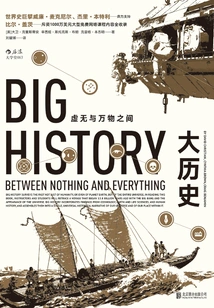
1大历史:虚无与万物之间
(u. S.) David Christian Et Al.
"Big History" examines not only the past of mankind, but also the past of the earth and even the past of the universe. By reading this book, readers will trace a history that began 13.8 Billion years ago, beginning with the Big Bang and the emergence of the universe. Big history encompasses research results in the fields of cosmology, earth and life sciences, and humanistic history, and integrates them into a single, universal historical narrative that provides the most scientific and comprehensive introduction possible to the universe and our place in it. The book summarizes eight major breakthroughs in the evolution of history. Each breakthrough means the emergence of something brand new. From the universe to the earth, from the first life to human beings, from agricultural civilization to modern revolution, the author outlines the emergence and development of all things in the world in the order from "nothing" to "existence", using eight breakthroughs as clues. Ultimately, this book makes predictions about our near and distant future from a big historical perspective.
"Big History" examines not only the past of mankind, but also the past of the earth and even the past of the universe. By reading this book, readers will trace a history that began 13.8 Billion years ago, beginning with the Big Bang and the emergence of the universe. Big history encompasses research results in the fields of cosmology, earth and life sciences, and humanistic history, and integrates them into a single, universal historical narrative that provides the most scientific and comprehensive introduction possible to the universe and our place in it. The book summarizes eight major breakthroughs in the evolution of history. Each breakthrough means the emergence of something brand new. From the universe to the earth, from the first life to human beings, from agricultural civilization to modern revolution, the author outlines the emergence and development of all things in the world in the order from "nothing" to "existence", using eight breakthroughs as clues. Ultimately, this book makes predictions about our near and distant future from a big historical perspective.
The 8 thresholds show 13.8 Billion years of history, break geographical and racial boundaries, and change Bill Gates' thinking and learning model!
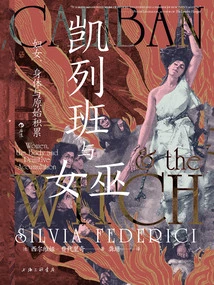
This book revolves around a core question: How to explain the execution of hundreds of thousands of "witches" in Europe in the early modern period? Why did the rise of capitalism coincide with the war on women? A Marxist feminist classic that completes the missing female perspective in Capital.
The new masterpiece from the winner of the Royal Society Science Book Award and the Biochemical Society Award asks why life has evolved like this over 4 billion years!
Professor Lane examined the evolution of writing, the emergence of science in the ancient world, the scientific revolution in early modern times, the globalization of knowledge, industrialization and other major historical events, and ultimately reconstructed the history of science and technology within the broader history of knowledge. An alternative to "The Structure of Scientific Revolutions", an intellectual outlet for the "Anthropocene".
 5
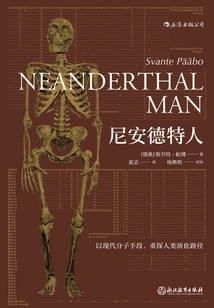
5Neanderthal
History尼安德特人
(sweden) Svante Paabo
In 1856, three years before Darwin published "The Origin of Species," workers cleaning a quarry in the Neander Valley, about 10 kilometers east of Dusseldorf, Germany, discovered a skull and some bones. A few years later, the remains were identified as belonging to an extinct ancient human species called Neanderthals. Who are they? Did they, who disappeared about 30,000 years ago, mix with modern humans? Do we still have ancient Neanderthal genes in our bodies? The author of this book, Svante Paabo, boldly and rigorously explores the above issues through ancient DNA technology. "Neanderthal" is not only his first-hand industry record of the field of ancient DNA from its rise to its increasing maturity, but it is also intertwined with a scientific researcher's sincere experience of confusion, failure, doubt, success and more unknowns. From ancient Egyptian mummies to obtaining the first Neanderthal mitochondrial DNA sequence, to publishing the first Neanderthal genome draft; from conducting experiments without telling the mentor, to traveling to the Democratic Republic of Germany to obtain samples during the Cold War, to anecdotes of exchanges in the context of global scientific research collaboration - Paabo More than 30 years of exploration in the field of ancient DNA, between the debates between the "Out of Africa" and "Multiple Origins" theories, kicked off the study of how ancient genetic variation affects the physiology of modern humans. It also witnessed the growth of a medical student curious about ancient Egyptology to the organizer of a scientific research project on human evolution. Please follow this book to trace our origins and discover how we became human beings and what makes us human.
In 1856, three years before Darwin published "The Origin of Species," workers cleaning a quarry in the Neander Valley, about 10 kilometers east of Dusseldorf, Germany, discovered a skull and some bones. A few years later, the remains were identified as belonging to an extinct ancient human species called Neanderthals. Who are they? Did they, who disappeared about 30,000 years ago, mix with modern humans? Do we still have ancient Neanderthal genes in our bodies? The author of this book, Svante Paabo, boldly and rigorously explores the above issues through ancient DNA technology. "Neanderthal" is not only his first-hand industry record of the field of ancient DNA from its rise to its increasing maturity, but it is also intertwined with a scientific researcher's sincere experience of confusion, failure, doubt, success and more unknowns. From ancient Egyptian mummies to obtaining the first Neanderthal mitochondrial DNA sequence, to publishing the first Neanderthal genome draft; from conducting experiments without telling the mentor, to traveling to the Democratic Republic of Germany to obtain samples during the Cold War, to anecdotes of exchanges in the context of global scientific research collaboration - Paabo More than 30 years of exploration in the field of ancient DNA, between the debates between the "Out of Africa" and "Multiple Origins" theories, kicked off the study of how ancient genetic variation affects the physiology of modern humans. It also witnessed the growth of a medical student curious about ancient Egyptology to the organizer of a scientific research project on human evolution. Please follow this book to trace our origins and discover how we became human beings and what makes us human.
A fighting nation in ancient times, the strongest enemy of human ancestors, and the founder of the field of ancient DNA, he takes you to re-explore the unusual journey of tracing your ancestors.
The second annual international work of the China Nature Book Award, a new history of nature that Zuckerberg and Bill Gates can't put down, and a picture of life from the perspective of microorganisms.
Shortlisted for the 2021 Wolfson History Prize, the Director of the Oxford University Library recounts the bitter history of burning and saving books over thousands of years.
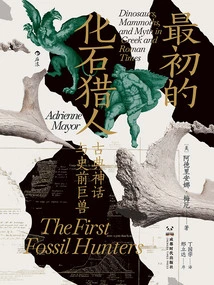
An interesting collision of mythology and paleontology, a classic that breaks the boundaries of disciplines, and a detective exploration of folklore and science in the classical era.