Folds of Civilization and Hidden Lines of History: a Different Eye on China and the World
文明褶皱与历史暗线:另眼解读中国与世界
There are some historical issues that you may have never considered because they are so interesting and trivial that you may not have thought of them at all! From dietary codes, plague narratives to power textures, this book list will take you to re-explore the neglected progress of civilization.
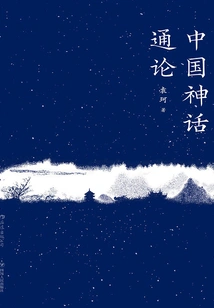
From ancient times to the Qin Dynasty, "The Classic of Mountains and Seas" has spread to various schools of thought. Yuan Ke, the master of mythology, will lead you to explore the origin and evolution of Chinese general mythology.
Shortlisted for the 2021 Wolfson History Prize, the director of the Oxford University Library spoke passionately about the bitter history of burning and saving books over thousands of years.
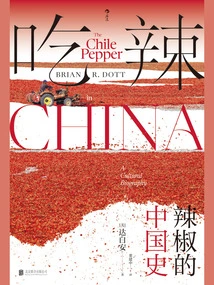
Can you imagine Chinese food without chili peppers? From obscurity to the top, how did the little exotic chili pepper become ubiquitous in China?
Fermentation has a long history and can give food a unique flavor. The "sour food" of the Buyi people in Guizhou is one of the most representative fermented foods. Taking Guizhou sour food as a starting point, we explore the various possibilities given by fermentation.
 6
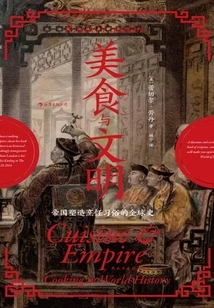
6美食与文明:帝国塑造烹饪习俗的全球史
(us) Rachel Laudan
The author tells the story of the rise and fall of the world's major diets, from the mastery of grain cooking some 20,000 years ago to the present. Through the apparent jumble of diverse diets, the author reveals the underlying simplicity of a culinary genealogy, illustrating how cyclical changes in culinary philosophy about health, economics, politics, society, and belief in the gods drove the creation of new diets, some of which were chosen as imperial diets and came to dominate the world. The authors also illustrate how traders, missionaries, and armies moved diets across mountains, oceans, deserts, and political borders. This book's innovative narrative considers cooking, like language, clothing, or architecture, as a human creation. By emphasizing how cooking transforms produce into food and using the global rather than a specific country as the stage, it challenges the agrarian and romantic myths that underpin the contemporary food movement.
The author tells the story of the rise and fall of the world's major diets, from the mastery of grain cooking some 20,000 years ago to the present. Through the apparent jumble of diverse diets, the author reveals the underlying simplicity of a culinary genealogy, illustrating how cyclical changes in culinary philosophy about health, economics, politics, society, and belief in the gods drove the creation of new diets, some of which were chosen as imperial diets and came to dominate the world. The authors also illustrate how traders, missionaries, and armies moved diets across mountains, oceans, deserts, and political borders. This book's innovative narrative considers cooking, like language, clothing, or architecture, as a human creation. By emphasizing how cooking transforms produce into food and using the global rather than a specific country as the stage, it challenges the agrarian and romantic myths that underpin the contemporary food movement.
Food documentary director Chen Xiaoqing and economist Xue Zhaofeng jointly recommend, 5000 Moveable Feasts, a history of global exchanges!
 7
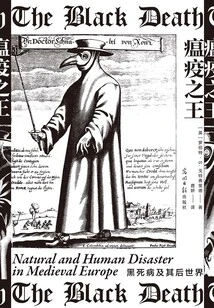
7瘟疫之王:黑死病及其后世界
(uk) Robert S. Gottfried
This is a fascinating detective history that traces the causes and far-reaching consequences of the infamous plague outbreak that spread across the European continent from 1347 to 1351. Using sources as diverse as monastic manuscripts and dendrochronological studies (the method of measuring tree rings), historians have shown the ecological horrors wrought by the rodent-, flea-borne bacilli, killing at least one in three Europeans, wiping out countless villages and towns, and shaking the foundations of medieval society and civilization.
This is a fascinating detective history that traces the causes and far-reaching consequences of the infamous plague outbreak that spread across the European continent from 1347 to 1351. Using sources as diverse as monastic manuscripts and dendrochronological studies (the method of measuring tree rings), historians have shown the ecological horrors wrought by the rodent-, flea-borne bacilli, killing at least one in three Europeans, wiping out countless villages and towns, and shaking the foundations of medieval society and civilization.
Did we defeat the virus, or did the virus let us go? Revealing the deadly horror of the Black Death and surviving in desperate situations, the fire of modern civilization's transformation has been ignited.
 8
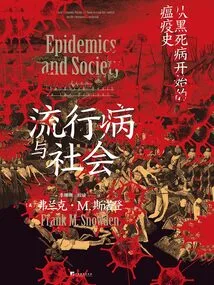
8流行病与社会:从黑死病开始的瘟疫史
(u. S.) Frank M. Snowden
"Epidemics and Society" tells the terrifying and shocking history of plagues over the millennium. Deadly threats from microorganisms have approached mankind countless times: plague; smallpox; yellow fever; dysentery; typhus; cholera; tuberculosis; malaria; polio; AIDS; SARS; Ebola virus... In response to these epidemics that have profoundly affected human history, Snowden blended professional and authoritative medical knowledge with magnificent historical narratives. The scope of this book is extremely wide, spanning ancient and modern times, and all over the world. It conducts in-depth multidisciplinary comparative research between medicine and social history, revealing to us the interactive impact of epidemics and society: on the one hand, how diseases promote the development of medical science and public health, and how they shape art, religion, intellectual history, and war patterns; on the other hand, how social factors allow diseases to obtain a suitable environment, spread rapidly, and wreak havoc on mankind.
"Epidemics and Society" tells the terrifying and shocking history of plagues over the millennium. Deadly threats from microorganisms have approached mankind countless times: plague; smallpox; yellow fever; dysentery; typhus; cholera; tuberculosis; malaria; polio; AIDS; SARS; Ebola virus... In response to these epidemics that have profoundly affected human history, Snowden blended professional and authoritative medical knowledge with magnificent historical narratives. The scope of this book is extremely wide, spanning ancient and modern times, and all over the world. It conducts in-depth multidisciplinary comparative research between medicine and social history, revealing to us the interactive impact of epidemics and society: on the one hand, how diseases promote the development of medical science and public health, and how they shape art, religion, intellectual history, and war patterns; on the other hand, how social factors allow diseases to obtain a suitable environment, spread rapidly, and wreak havoc on mankind.
"Guns; Germs and Steel" tells the terrifying and shocking history of plagues over the millennium, a classic plague history, and a book to understand public health.
 9
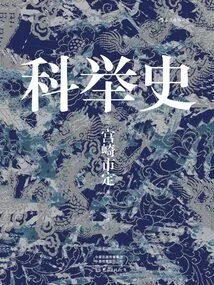
9科举史
(japan) Miyazaki City
This book is the culmination of Miyazaki City's research on imperial examinations. The author combs through the talent selection system in ancient China, from the Xiaolian Ke in the Eastern Han Dynasty to the Nine-Rank Officials' Law in the Wei and Jin Dynasties, and finally developed into the imperial examination system. Taking the imperial examination in the Qing Dynasty as an example, the author introduces in detail the procedures and details of the imperial examination, as well as the use of other official appointments other than the imperial examination. It elaborates on the profound impact of the imperial examination system on Chinese society since the Ming and Qing Dynasties.
This book is the culmination of Miyazaki City's research on imperial examinations. The author combs through the talent selection system in ancient China, from the Xiaolian Ke in the Eastern Han Dynasty to the Nine-Rank Officials' Law in the Wei and Jin Dynasties, and finally developed into the imperial examination system. Taking the imperial examination in the Qing Dynasty as an example, the author introduces in detail the procedures and details of the imperial examination, as well as the use of other official appointments other than the imperial examination. It elaborates on the profound impact of the imperial examination system on Chinese society since the Ming and Qing Dynasties.
This book is the culmination of Miyazaki City's research on imperial examinations. The author combs through the talent selection system in ancient China, from the Xiaolian Ke in the Eastern Han Dynasty to the Nine-Rank Officials' Law in the Wei and Jin Dynasties, and finally developed into the imperial examination system. Taking the imperial examination in the Qing Dynasty as an example, the author introduces in detail the procedures and details of the imperial examination, as well as the use of other official appointments other than the imperial examination. It elaborates on the profound impact of the imperial examination system on Chinese society since the Ming and Qing Dynasties.
 10
10Jinyiwei
History锦衣卫
Populus Euphratica
If you choose keywords in the history of the Ming Dynasty, "Jinyiwei" is a must-select. This is the earliest spy agency in China, from the beginning. Its tentacles spread to every corner of the dynasty. They are not imperial envoys, but they have more terrifying power than imperial envoys. They are the emperor's exclusive supervisory agency, reconnaissance agency, and the most effective action team. In the 276-year history of the Ming Dynasty, Jinyiwei became synonymous with secret censorship and special operations, and the power struggle between it and the East and West factories was even more shocking...
If you choose keywords in the history of the Ming Dynasty, "Jinyiwei" is a must-select. This is the earliest spy agency in China, from the beginning. Its tentacles spread to every corner of the dynasty. They are not imperial envoys, but they have more terrifying power than imperial envoys. They are the emperor's exclusive supervisory agency, reconnaissance agency, and the most effective action team. In the 276-year history of the Ming Dynasty, Jinyiwei became synonymous with secret censorship and special operations, and the power struggle between it and the East and West factories was even more shocking...
Comprehensively reveal the intricate power relationship between the emperor, Jinyiwei and the East-West Factory, and unveil the mystery of Jinyiwei in the Ming Dynasty!
 11
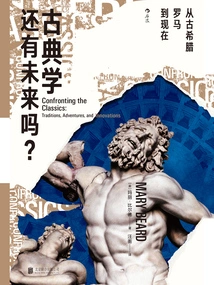
11古典学还有未来吗?:从古希腊罗马到现在
I
The original title of this book is Confronting the Classics: Traditions, Adventures, and Innovations, which is literally translated as "Confronting the Classics: Traditions, Adventures and Innovations". The Chinese title comes from her preface "Does Classics Have a Future?" >>. The book includes 31 reviews of works on the study of ancient Greece and Rome. Author Mary Beard believes that although many people believe that classics is in decline, each generation of scholars has put forward its own new views on ancient Greece and Rome. She has always been concerned with these discussions and debates, and in this book she presents to us the academic tradition of classics and its recent reinterpretations and new theories. Throughout the book, she always claims that classics is not only about the ancient Greeks and Romans more than 2,000 years ago, but also about ourselves, as well as the generations of classical scholars, writers, artists, filmmakers, and politicians who quoted or even appropriated ancient Greek and Roman culture. We need to confront this subject head on and join the discussion. The subject remains a site of intense debate, rather than one that has settled and can be consigned to the dustbin.
The original title of this book is Confronting the Classics: Traditions, Adventures, and Innovations, which is literally translated as "Confronting the Classics: Traditions, Adventures and Innovations". The Chinese title comes from her preface "Does Classics Have a Future?" >>. The book includes 31 reviews of works on the study of ancient Greece and Rome. Author Mary Beard believes that although many people believe that classics is in decline, each generation of scholars has put forward its own new views on ancient Greece and Rome. She has always been concerned with these discussions and debates, and in this book she presents to us the academic tradition of classics and its recent reinterpretations and new theories. Throughout the book, she always claims that classics is not only about the ancient Greeks and Romans more than 2,000 years ago, but also about ourselves, as well as the generations of classical scholars, writers, artists, filmmakers, and politicians who quoted or even appropriated ancient Greek and Roman culture. We need to confront this subject head on and join the discussion. The subject remains a site of intense debate, rather than one that has settled and can be consigned to the dustbin.
Mary Beard takes you face to face with the tradition and innovation of classics. 31 Spicy book reviews to take you on an adventure in the world of ancient Greece and Rome.
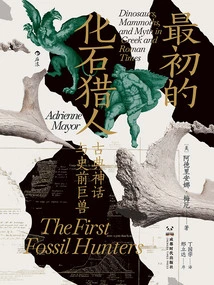
An interesting collision of mythology and paleontology, a classic that breaks the boundaries of disciplines, and a detective exploration of folklore and science in the classical era.
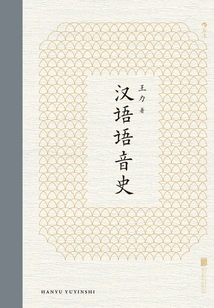 13
13History of Chinese Phonetics
History汉语语音史
Wang Li
This book provides a detailed overview of the development history of Chinese phonetics and introduces some basic knowledge of the history of Chinese phonetics. The whole book is divided into three parts: introduction, phonology through the ages, and the development rules of phonetics. In the introduction, the author discusses the four basic aspects of knowledge required to study the history of Chinese phonetics. In the phonology of past dynasties, the development and changes of phonology from pre-Qin to modern times are sorted out, and a phonetic development table of past dynasties is provided. Finally, in the law of speech development, four main ways of speech development are summarized.
This book provides a detailed overview of the development history of Chinese phonetics and introduces some basic knowledge of the history of Chinese phonetics. The whole book is divided into three parts: introduction, phonology through the ages, and the development rules of phonetics. In the introduction, the author discusses the four basic aspects of knowledge required to study the history of Chinese phonetics. In the phonology of past dynasties, the development and changes of phonology from pre-Qin to modern times are sorted out, and a phonetic development table of past dynasties is provided. Finally, in the law of speech development, four main ways of speech development are summarized.
Recommended by famous writers such as Ji Xianlin, Guo Shaoyu, and Tang Zuofan, this is the representative work of Mr. Wang Li, the founder of modern Chinese linguistics, and a classic book for studying the history of Chinese phonetics!