Houlang · Hall of History-wars in the Middle Ages
后浪 · 汗青堂——中世纪的战争
History has regressed and wars have continued, and the majestic epics and heroic legends surge under the absolute "darkness".
 1
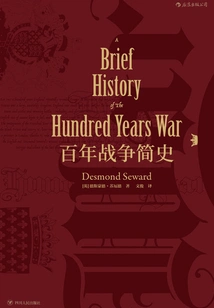
1百年战争简史
(uk) Desmond Seward
The author uses concise and concise language to sort out the complex and wide-ranging historical events of the Hundred Years' War between England and France. He traces the changes that ultimately led to France's victory during the war, and vividly reproduces the intrigue and interest in medieval European epics, painting a fascinating picture of medieval war for readers.
The author uses concise and concise language to sort out the complex and wide-ranging historical events of the Hundred Years' War between England and France. He traces the changes that ultimately led to France's victory during the war, and vividly reproduces the intrigue and interest in medieval European epics, painting a fascinating picture of medieval war for readers.
The author uses concise and concise language to sort out the complex and widely involved historical events in the Hundred Years' War between England and France. He traces the changes that ultimately led to France's victory during the war, and vividly reproduces the intrigue and interest in medieval European epics.
 2
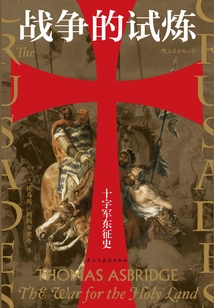
2战争的试炼:十字军东征史
Q
In the 11th century, at the call of the Pope, a large Christian army broke into the Islamic world in the eastern Mediterranean and occupied Jerusalem, which is regarded as a holy city by both faiths. For more than 200 years after the First Crusade, the Islamic world and the West fought for control of the Holy Land, with both sides convinced that they were serving their gods. The book not only describes the numerous military details of each Crusade, the author Thomas Asbridge also comprehensively analyzes this conflict that spanned more than two centuries from the perspective of political, social, and religious motivations and characters. In particular, for the first time in any history of the Crusades, he tells the story of this epic struggle from the perspectives of both Christians and Muslims. Under the author's passionate narration, we are brought into a world full of legendary heroes, but he also does not forget to expose the horrifying violent killings that filled that era, and inventory the misuse and abuse of this past event by later generations.
In the 11th century, at the call of the Pope, a large Christian army broke into the Islamic world in the eastern Mediterranean and occupied Jerusalem, which is regarded as a holy city by both faiths. For more than 200 years after the First Crusade, the Islamic world and the West fought for control of the Holy Land, with both sides convinced that they were serving their gods. The book not only describes the numerous military details of each Crusade, the author Thomas Asbridge also comprehensively analyzes this conflict that spanned more than two centuries from the perspective of political, social, and religious motivations and characters. In particular, for the first time in any history of the Crusades, he tells the story of this epic struggle from the perspectives of both Christians and Muslims. Under the author's passionate narration, we are brought into a world full of legendary heroes, but he also does not forget to expose the horrifying violent killings that filled that era, and inventory the misuse and abuse of this past event by later generations.
This one-volume authoritative work on the history of the Crusades in the English-speaking world today clarifies the many fogs shrouded in the 200-year-long war between the East and the West in the Middle Ages.
 3
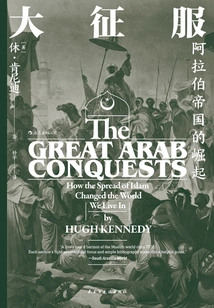
3大征服:阿拉伯帝国的崛起
(uk) Hugh Kennedy
After Islam emerged in the Arabian Peninsula in the early 7th century, it took only a very short time for the Arabs to sweep across the Middle East, defeating powerful enemies such as the Byzantine Empire and the Persian Empire, and changing the structure of the world. This book focuses on the Arab conquests from the 7th to the mid-8th century, narrates important battles such as the Battle of Qadisiya, the Battle of Yarmouk, and the Battle of Damascus, and depicts the offensive actions of the Arab army. Not only that, along with the settlement and settlement, records and memories of the conquest activities, this book also contains a lot of ink. The author of this book pays attention to the screening and selection of historical materials. He uses vivid language and academic narrative methods to show readers a magnificent picture of the times, and provides a reasonable explanation for why the Arabs were so successful.
After Islam emerged in the Arabian Peninsula in the early 7th century, it took only a very short time for the Arabs to sweep across the Middle East, defeating powerful enemies such as the Byzantine Empire and the Persian Empire, and changing the structure of the world. This book focuses on the Arab conquests from the 7th to the mid-8th century, narrates important battles such as the Battle of Qadisiya, the Battle of Yarmouk, and the Battle of Damascus, and depicts the offensive actions of the Arab army. Not only that, along with the settlement and settlement, records and memories of the conquest activities, this book also contains a lot of ink. The author of this book pays attention to the screening and selection of historical materials. He uses vivid language and academic narrative methods to show readers a magnificent picture of the times, and provides a reasonable explanation for why the Arabs were so successful.
This book focuses on the Arab conquests from the 7th to the mid-8th century, depicting the offensive actions of the Arab army to unearth the deep reasons buried under sword and fire, and decipher the rapid rise of the Arab Empire!
 4
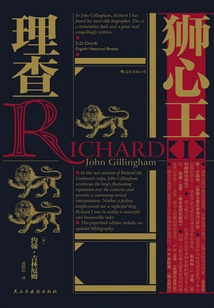
4Richard the Lionheart
History狮心王理查
(uk) John Gillingham
Unique and unparalleled among the kings of England, Richard I played an active and leading role in many great achievements in world history. No monarch had ever faced the formidable challenges he faced in the Third Crusade. For centuries, Richard was regarded as one of the greatest kings for his crusading exploits. However, historians in modern times have begun to criticize Richard harshly, believing that he neglected to manage domestic affairs and regarded him as a reckless ruler and an unfit husband. In this authoritative work, Professor John Gillingham examines in detail the reasons for the mixed reviews of Richard and discusses Richard's governance of the country, proposing compelling new perspectives. The book also comes with an updated reference list for the reader's convenience.
Unique and unparalleled among the kings of England, Richard I played an active and leading role in many great achievements in world history. No monarch had ever faced the formidable challenges he faced in the Third Crusade. For centuries, Richard was regarded as one of the greatest kings for his crusading exploits. However, historians in modern times have begun to criticize Richard harshly, believing that he neglected to manage domestic affairs and regarded him as a reckless ruler and an unfit husband. In this authoritative work, Professor John Gillingham examines in detail the reasons for the mixed reviews of Richard and discusses Richard's governance of the country, proposing compelling new perspectives. The book also comes with an updated reference list for the reader's convenience.
Highly recommended by Douban! Follow the accounts of English, French and Muslim chroniclers as they relive the Plantagenet king - Richard I the Lionheart!
 5
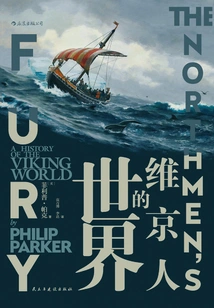
5Viking World
History维京人的世界
(uk) Philip Parker
"The World of the Vikings" is a historical book for the public, telling the story of the activities of the Vikings from the 8th to the 15th century. The Vikings have always been known as Vikings. They were also travelers. They set out from Northern Europe and reached Western Europe, Eastern Europe, the Mediterranean Sea, and even crossed the North Atlantic to the distant Americas. Their influence was profound. The author of this book sets his sights on all the places where the Vikings traveled. He comprehensively uses historical documents and archaeological records, and uses vivid language to tell the story of the Vikings' living conditions and the trajectory of historical evolution. He comprehensively displays every corner of the Vikings' world from the aspects of culture, economy, military, and political activities.
"The World of the Vikings" is a historical book for the public, telling the story of the activities of the Vikings from the 8th to the 15th century. The Vikings have always been known as Vikings. They were also travelers. They set out from Northern Europe and reached Western Europe, Eastern Europe, the Mediterranean Sea, and even crossed the North Atlantic to the distant Americas. Their influence was profound. The author of this book sets his sights on all the places where the Vikings traveled. He comprehensively uses historical documents and archaeological records, and uses vivid language to tell the story of the Vikings' living conditions and the trajectory of historical evolution. He comprehensively displays every corner of the Vikings' world from the aspects of culture, economy, military, and political activities.
This is a historical book for the general public, telling the story of the Vikings' activities from the 8th to the 15th century. The Vikings have always been known as Vikings. Comprehensively display the vicissitudes of the Vikings' 700 years of history!
 6
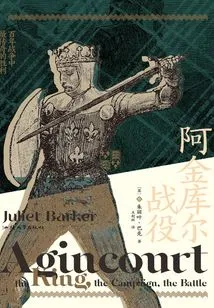
6阿金库尔战役:百年战争中最传奇的胜利
(uk) Juliet Barker
The Battle of Agincourt was a famous battle in the Hundred Years' War between England and France in which a small number defeated a large number. It plays an important role in the world's military history. The English soldiers who had traveled long distances and suffered from diseases did not expect that the battle that broke out in Normandy on October 25, 1415 would end with their victory. A large number of French armored soldiers fell to the arrows of English longbowmen, including many nobles. Since this battle, the British army's advantage has further expanded, while the French army has been retreating steadily. It was not until the appearance of Joan of Arc that France's decline came to an end. The author Juliet Barker opposed the narrative tradition of detailed description of the war itself, expanded the scope of the narrative before and after the outbreak of the Battle of Agincourt, and described the impact of the Battle of Agincourt from the perspective of ordinary people. Since then, the Battle of Agincourt is no longer a legend written by Shakespeare, but a historical reality that ordinary readers can touch.
The Battle of Agincourt was a famous battle in the Hundred Years' War between England and France in which a small number defeated a large number. It plays an important role in the world's military history. The English soldiers who had traveled long distances and suffered from diseases did not expect that the battle that broke out in Normandy on October 25, 1415 would end with their victory. A large number of French armored soldiers fell to the arrows of English longbowmen, including many nobles. Since this battle, the British army's advantage has further expanded, while the French army has been retreating steadily. It was not until the appearance of Joan of Arc that France's decline came to an end. The author Juliet Barker opposed the narrative tradition of detailed description of the war itself, expanded the scope of the narrative before and after the outbreak of the Battle of Agincourt, and described the impact of the Battle of Agincourt from the perspective of ordinary people. Since then, the Battle of Agincourt is no longer a legend written by Shakespeare, but a historical reality that ordinary readers can touch.
The iconic battle of the Hundred Years' War, the background of Shakespeare's "Henry V" drama, decoding the war and society of medieval Western Europe!
 7
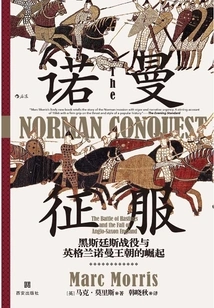
7诺曼征服:黑斯廷斯战役与英格兰诺曼王朝的崛起
(uk) Mark Morris
The Norman Conquest was probably one of the most important military and cultural events in English history. With the arrival of the Normans in England, England, an ancient and new country, took on new vitality. Whether it was language, architecture, military or law, there were sweeping changes within England. So how did the Normans change all that? Why is this change so radical? Mark Morris combs through the historical events before and after the Norman Conquest in extremely detailed strokes, and outlines a new picture of the Norman Conquest. After comparing various evidences, he uses vivid and fluent language to tell readers how England has been integrated into European cultural traditions, and how this has affected the historical process of England.
The Norman Conquest was probably one of the most important military and cultural events in English history. With the arrival of the Normans in England, England, an ancient and new country, took on new vitality. Whether it was language, architecture, military or law, there were sweeping changes within England. So how did the Normans change all that? Why is this change so radical? Mark Morris combs through the historical events before and after the Norman Conquest in extremely detailed strokes, and outlines a new picture of the Norman Conquest. After comparing various evidences, he uses vivid and fluent language to tell readers how England has been integrated into European cultural traditions, and how this has affected the historical process of England.
A must-read to understand the Norman conquest of England and uncover the mystery of the Norman dynasty in England! Whether it was language, architecture, military or law, there were sweeping changes within England
 8
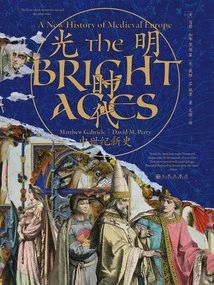
8光明时代:中世纪新史
(u. S.) Matthew Gabriele (u. S.) David M. Perry
For a long time, the "Middle Ages" has been a symbol of Western historical narrative, a "dark age" of ignorance and stagnation before modern times. "Age of Light" looks back at the thousand-year history of the Middle Ages from a new perspective, starting from the chapel of Ravenna and ending with the poet Dante, re-examining the fall of Rome, the rise of Byzantium, the rule of Charlemagne, the migration of the Vikings, the expansion of the Arabs, the legend of miracles, and the Black Death Disease, as well as the impact of the Mongols, show us the continuation of Roman culture in the Middle Ages, the flow of people, materials, and culture between different ethnic groups and regions, the coexistence and conflict of different traditions, and rediscover the history of non-centered groups such as women, Arabs, and Jews. This book points out that historical narratives centered on white Western men serve real politics and obscure the true face of the Middle Ages. In fact, the Middle Ages were a "bright age" where material and spirituality continued to flow, and all kinds of beauty and terror coexisted.
For a long time, the "Middle Ages" has been a symbol of Western historical narrative, a "dark age" of ignorance and stagnation before modern times. "Age of Light" looks back at the thousand-year history of the Middle Ages from a new perspective, starting from the chapel of Ravenna and ending with the poet Dante, re-examining the fall of Rome, the rise of Byzantium, the rule of Charlemagne, the migration of the Vikings, the expansion of the Arabs, the legend of miracles, and the Black Death Disease, as well as the impact of the Mongols, show us the continuation of Roman culture in the Middle Ages, the flow of people, materials, and culture between different ethnic groups and regions, the coexistence and conflict of different traditions, and rediscover the history of non-centered groups such as women, Arabs, and Jews. This book points out that historical narratives centered on white Western men serve real politics and obscure the true face of the Middle Ages. In fact, the Middle Ages were a "bright age" where material and spirituality continued to flow, and all kinds of beauty and terror coexisted.
A fluid and bright Middle Ages, exploring history from a new perspective. It is a symbol of Western historical narrative, the "dark age" of ignorance and stagnation before modern times.
 9
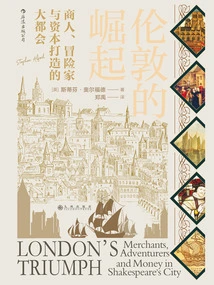
9伦敦的崛起:商人、冒险家与资本打造的大都会
(uk) Stephen Alford
At the beginning of the 16th century, England had not yet integrated into the wider world, and London was just a gloomy and closed medieval city. However, the discovery of the New World and direct sea routes to Asia changed the economic landscape of England during the Tudor Dynasty. These changes made London a new trade center and changed London's status and role in the world from then on. Stephen Alford's engrossing book brings to life London's merchants, dreamers, con men, and sailors who formed a network that changed London forever. England's ships sailed around the world, establishing trade with Russia and the Levant, and exploring Virginia, the Arctic, and the Indian Ocean. And the efforts and ambitions of the people who made it possible-those families, guild members, and speculators who were willing to take huge risks and even sacrifice their lives in pursuit of the rare and exotic-bred a new worldview, ushering in an era of long-term trade and an empire, the results of which are felt today.
At the beginning of the 16th century, England had not yet integrated into the wider world, and London was just a gloomy and closed medieval city. However, the discovery of the New World and direct sea routes to Asia changed the economic landscape of England during the Tudor Dynasty. These changes made London a new trade center and changed London's status and role in the world from then on. Stephen Alford's engrossing book brings to life London's merchants, dreamers, con men, and sailors who formed a network that changed London forever. England's ships sailed around the world, establishing trade with Russia and the Levant, and exploring Virginia, the Arctic, and the Indian Ocean. And the efforts and ambitions of the people who made it possible-those families, guild members, and speculators who were willing to take huge risks and even sacrifice their lives in pursuit of the rare and exotic-bred a new worldview, ushering in an era of long-term trade and an empire, the results of which are felt today.
From the edge of the world to a new trade center, how did London rise in the 16th century thanks to the efforts of merchants, adventurers and capitalists?
 10
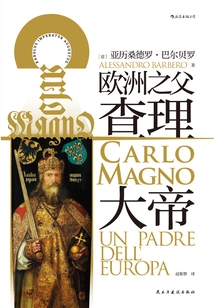
10查理大帝:欧洲之父
(italian) Alessandro Barbero
On Christmas Day 800, King Charles of the Franks was crowned Emperor of the Romans. This was an emperor who shaped Europe. Barbero vividly depicts Charlemagne's appearance, tastes, habits, family life, thoughts and behavior. The author also unfolds the overall history of the Frankish Kingdom and the Carolingian Empire, showing Charlemagne's method of ruling the empire, how to ensure justice, and how to organize wars; he also describes the daily life, economic activities, and religious concepts at that time. He analyzes the development of feudalism in the Carolingian Empire and the changing concepts of slavery and freedom, thereby explaining the dramatic changes that the emperor's wars brought to the political and social structure of the empire.
On Christmas Day 800, King Charles of the Franks was crowned Emperor of the Romans. This was an emperor who shaped Europe. Barbero vividly depicts Charlemagne's appearance, tastes, habits, family life, thoughts and behavior. The author also unfolds the overall history of the Frankish Kingdom and the Carolingian Empire, showing Charlemagne's method of ruling the empire, how to ensure justice, and how to organize wars; he also describes the daily life, economic activities, and religious concepts at that time. He analyzes the development of feudalism in the Carolingian Empire and the changing concepts of slavery and freedom, thereby explaining the dramatic changes that the emperor's wars brought to the political and social structure of the empire.
The "Father of Europe" who laid the foundation for modern Europe gets close to a flesh-and-blood Charlemagne and explores the overall history of Carolingian society.