Longitude and Latitude Book List
经纬度书单
Use longitude to span the world, and use latitude to connect ancient and modern times.
 1
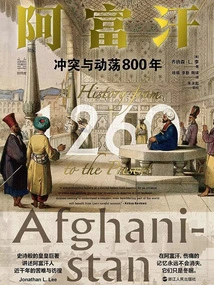
1阿富汗:冲突与动荡800年
(english) Jonathan L. Lee
One book can understand the root causes of all conflicts and turmoil in Afghanistan over the past 800 years, completely tell the history of Afghanistan since its founding, and explain all the problems in Afghanistan at once. Through the narration of 800 years of Afghan history, it accurately predicts the chaos that Afghanistan will face after the US withdrawal, and you must read this book to understand the ins and outs of the Taliban and the past and present of the Imperial Cemetery. Located at the intersection of Asia and the Middle East, Afghanistan has been of strategic importance for thousands of years. Modern Afghanistan is a culturally and ethnically diverse country but divided by conflict, political instability and mass displacement of its people. In this authoritative illustrated history, Jonathan L. Lee tells the story of how a small confederation of tribes in a politically and culturally important but volatile region became the modern nation-state. Drawing on more than four decades of painstaking research, Lee places the current conflict facing Afghanistan in its historical context and challenges Western preconceptions about the country. Lee chronicles the region's monarchy and Durrani dynasty, focusing on each of the region's rulers and their efforts to balance tribal, ethnic, regional, and religious factions, examining the struggles for social and constitutional reform and the rise of Islamic and communist factions. He offers new insights into culture and politics by examining Polish history, memoirs of Afghan government officials, British government and Indian office archival documents, newly released CIA reports and WikiLeaks documents. Lee also sheds new light on the country's foreign relations, internal power struggles, and foreign military intervention similar to the "war on terror."
One book can understand the root causes of all conflicts and turmoil in Afghanistan over the past 800 years, completely tell the history of Afghanistan since its founding, and explain all the problems in Afghanistan at once. Through the narration of 800 years of Afghan history, it accurately predicts the chaos that Afghanistan will face after the US withdrawal, and you must read this book to understand the ins and outs of the Taliban and the past and present of the Imperial Cemetery. Located at the intersection of Asia and the Middle East, Afghanistan has been of strategic importance for thousands of years. Modern Afghanistan is a culturally and ethnically diverse country but divided by conflict, political instability and mass displacement of its people. In this authoritative illustrated history, Jonathan L. Lee tells the story of how a small confederation of tribes in a politically and culturally important but volatile region became the modern nation-state. Drawing on more than four decades of painstaking research, Lee places the current conflict facing Afghanistan in its historical context and challenges Western preconceptions about the country. Lee chronicles the region's monarchy and Durrani dynasty, focusing on each of the region's rulers and their efforts to balance tribal, ethnic, regional, and religious factions, examining the struggles for social and constitutional reform and the rise of Islamic and communist factions. He offers new insights into culture and politics by examining Polish history, memoirs of Afghan government officials, British government and Indian office archival documents, newly released CIA reports and WikiLeaks documents. Lee also sheds new light on the country's foreign relations, internal power struggles, and foreign military intervention similar to the "war on terror."
Located at the intersection of Asia and the Middle East, Afghanistan has been of strategic importance for thousands of years. One book understands the root causes of all conflicts and turbulence in Afghanistan over the past 800 years, and completely tells the history of Afghanistan since its founding.
 2
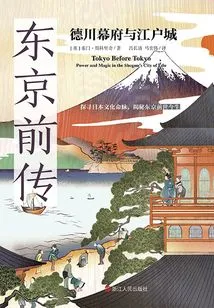
2东京前传:德川幕府与江户城
(uk) Timon Skoric
The winning entry of the 27th "Mountain Film and Peach Award". This book tells the story of Tokyo before it became the capital of modern Japan. Before 1868, it was not called Tokyo. At that time, the city was always called Edo. Edo Castle was founded in 1590, and Tokugawa Ieyasu established the Tokugawa Shogunate here, thus beginning its prosperous period. As the center of Japan's trade, economy, and urban civilization, Edo did not evolve into Tokyo until 1868, becoming Japan's modern capital. Why did the Tokugawa Shogunate choose Edo Castle as the center of political power, and what kind of urban layout and planning did it have for Edo Castle? How did Edo establish its status as the capital step by step, and how were those famous landmarks and buildings built? What cultural heritage did the Tokugawa Shogunate have under its jurisdiction over Edo Castle for more than two hundred years? What cultural heritage did it leave to today's Tokyo? This book selects more than a hundred exquisite illustrations and combines diaries, travel guides, woodblock prints and other materials to vividly and in detail tell the origin and growth history of Edo in order to explore the historical genes of Tokyo, a charming city.
The winning entry of the 27th "Mountain Film and Peach Award". This book tells the story of Tokyo before it became the capital of modern Japan. Before 1868, it was not called Tokyo. At that time, the city was always called Edo. Edo Castle was founded in 1590, and Tokugawa Ieyasu established the Tokugawa Shogunate here, thus beginning its prosperous period. As the center of Japan's trade, economy, and urban civilization, Edo did not evolve into Tokyo until 1868, becoming Japan's modern capital. Why did the Tokugawa Shogunate choose Edo Castle as the center of political power, and what kind of urban layout and planning did it have for Edo Castle? How did Edo establish its status as the capital step by step, and how were those famous landmarks and buildings built? What cultural heritage did the Tokugawa Shogunate have under its jurisdiction over Edo Castle for more than two hundred years? What cultural heritage did it leave to today's Tokyo? This book selects more than a hundred exquisite illustrations and combines diaries, travel guides, woodblock prints and other materials to vividly and in detail tell the origin and growth history of Edo in order to explore the historical genes of Tokyo, a charming city.
The winner of the 27th "Yamagata Peach Award", this book tells the story of Tokyo before it became the capital of modern Japan.
 3
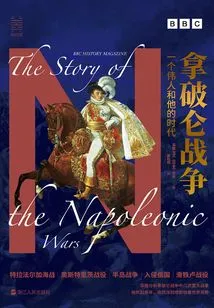
3拿破仑战争:一个伟人和他的时代
Bbc History Magazine
The Napoleonic Wars refer to the wars between France under Napoleon's rule and the anti-French allies from 1799 to 1815. The French Revolution broke out in 1789. Faced with the rapid development of the revolutionary situation, the monarchs of various European countries were panicked. In order to contain France, European countries organized seven anti-French alliances from 1793 to 1815, and fought to the death with Napoleon on multiple battlefields. The war prompted major changes in Europe's military system. The scale of the Napoleonic Wars was unprecedented and unprecedented. As a great historical figure, there are many biographies of Napoleon, including many classics. This book takes a different approach, no longer giving a complete account of Napoleon's ups and downs, but starting from the war, focusing on analyzing Napoleon's military career, especially major battles such as the Battle of Trafalgar, the Peninsular War, the invasion of Russia, and Waterloo. These wars had a profound impact on Europe and the world as a whole. Therefore, this book not only focuses on the war itself, but also deeply explores related matters outside the battlefield and how the war affected the world situation. This book was written by a number of experts organized by BBC History Magazine. It includes relevant articles previously published in BBC History Magazine and its sister publication BBC History Revealed Magazine, and also adds some new content.
The Napoleonic Wars refer to the wars between France under Napoleon's rule and the anti-French allies from 1799 to 1815. The French Revolution broke out in 1789. Faced with the rapid development of the revolutionary situation, the monarchs of various European countries were panicked. In order to contain France, European countries organized seven anti-French alliances from 1793 to 1815, and fought to the death with Napoleon on multiple battlefields. The war prompted major changes in Europe's military system. The scale of the Napoleonic Wars was unprecedented and unprecedented. As a great historical figure, there are many biographies of Napoleon, including many classics. This book takes a different approach, no longer giving a complete account of Napoleon's ups and downs, but starting from the war, focusing on analyzing Napoleon's military career, especially major battles such as the Battle of Trafalgar, the Peninsular War, the invasion of Russia, and Waterloo. These wars had a profound impact on Europe and the world as a whole. Therefore, this book not only focuses on the war itself, but also deeply explores related matters outside the battlefield and how the war affected the world situation. This book was written by a number of experts organized by BBC History Magazine. It includes relevant articles previously published in BBC History Magazine and its sister publication BBC History Revealed Magazine, and also adds some new content.
As a great historical figure, there are many biographies of Napoleon, including many classics. This book starts from the war and focuses on analyzing Napoleon's military career.
 4
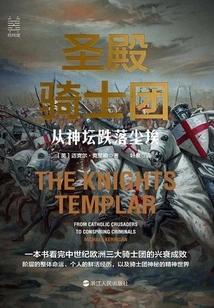
4圣殿骑士团:从神坛跌落尘埃
(uk) Michael Kerrigan
There were three major knightly orders in Europe during the Middle Ages: the Knights Templar, the Knights Hospitaller, and the Teutonic Knights. As a religious military organization, knights must not only safeguard their own beliefs, but also be deeply involved in secular affairs. They are a unique existence in human history. This book mainly introduces the history of the rise and fall of the three major knights. The titles of each chapter are connected to show the development trajectory of the knights. The first knights embarked on a journey and fought fiercely in the Middle East. They possessed great strength and mysterious charm with their outstanding qualities; then, the storm came, and the knights suffered heavy losses and retreated to Rhodes Island, experiencing a siege and heart-breaking battle; finally, the old era faded away, and the knights gradually retreated with difficulty, but after almost disappearing, they became legends and attracted endless fascination from future generations. The book contains vivid and detailed descriptions of the knights' daily life, emotions, careers, etc., And also explains the final destination of the knights and the status of the knights that still exist today.
There were three major knightly orders in Europe during the Middle Ages: the Knights Templar, the Knights Hospitaller, and the Teutonic Knights. As a religious military organization, knights must not only safeguard their own beliefs, but also be deeply involved in secular affairs. They are a unique existence in human history. This book mainly introduces the history of the rise and fall of the three major knights. The titles of each chapter are connected to show the development trajectory of the knights. The first knights embarked on a journey and fought fiercely in the Middle East. They possessed great strength and mysterious charm with their outstanding qualities; then, the storm came, and the knights suffered heavy losses and retreated to Rhodes Island, experiencing a siege and heart-breaking battle; finally, the old era faded away, and the knights gradually retreated with difficulty, but after almost disappearing, they became legends and attracted endless fascination from future generations. The book contains vivid and detailed descriptions of the knights' daily life, emotions, careers, etc., And also explains the final destination of the knights and the status of the knights that still exist today.
As a religious military organization, knights must not only safeguard their own beliefs, but also be deeply involved in secular affairs. They are a unique existence in human history.
 5
5东京大学日本史
(japan) Yamamoto Hirobumi
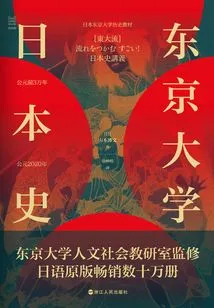
Yamamoto Hirobumi, a professor of history at the University of Tokyo and a front-line teacher, used a question-and-answer format to carefully sort out important and typical issues in Japanese history, and told the entire history of Japan in 57 questions. It is a very excellent Japanese history textbook that integrates the test points, key points, and difficulties of Japanese history. The book consists of 4 parts and 9 chapters, respectively telling the ancient history, medieval history, modern history and modern history of Japan. The first part starts from primitive society to the end of the Heian period; the second part tells the history of the Kamakura and Muromachi shogunate periods; the third part focuses on the Warring States and Edo shogunate periods of Japan; and the fourth part covers the history from the Meiji Restoration to modern times. In addition, there are many reference documents attached for those who are interested in Japanese history to continue their study.
Yamamoto Hirobumi, a professor of history at the University of Tokyo and a front-line teacher, used a question-and-answer format to carefully sort out important and typical issues in Japanese history, and told the entire history of Japan in 57 questions. It is a very excellent Japanese history textbook that integrates the test points, key points, and difficulties of Japanese history. The book consists of 4 parts and 9 chapters, respectively telling the ancient history, medieval history, modern history and modern history of Japan. The first part starts from primitive society to the end of the Heian period; the second part tells the history of the Kamakura and Muromachi shogunate periods; the third part focuses on the Warring States and Edo shogunate periods of Japan; and the fourth part covers the history from the Meiji Restoration to modern times. In addition, there are many reference documents attached for those who are interested in Japanese history to continue their study.
Yamamoto Hirobumi, a professor of history at the University of Tokyo and a front-line teacher, used a question-and-answer format to carefully sort out important and typical issues in Japanese history, and told the entire history of Japan in 57 questions.
 6
6史诗大陆:欧洲历史的血与火
(uk)nicholas Zuber
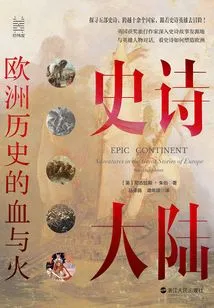
This book mainly tells the story of the author following in the footsteps of epic heroes and traveling and exploring on the European continent. In European history, heroic epics have a special status. They play an important role in the identity of nation-states and the connection between history and reality. In the book, the author explores five great epics, namely: "The Odyssey", "Song of Roland", "Song of the Nibelungs", "Beowulf" and "Nyarsaka". These epics are classic stories about human nature and a window through which we can see through European history and culture. The author starts from the warm Greek islands and travels all the way to the cold Iceland, covering the entire European continent. He went deep into the place where the epic story took place, and deeply felt the local natural environment and human history. Through this book, we can understand how the times shape the epic, and how the epic affects the times.
This book mainly tells the story of the author following in the footsteps of epic heroes and traveling and exploring on the European continent. In European history, heroic epics have a special status. They play an important role in the identity of nation-states and the connection between history and reality. In the book, the author explores five great epics, namely: "The Odyssey", "Song of Roland", "Song of the Nibelungs", "Beowulf" and "Nyarsaka". These epics are classic stories about human nature and a window through which we can see through European history and culture. The author starts from the warm Greek islands and travels all the way to the cold Iceland, covering the entire European continent. He went deep into the place where the epic story took place, and deeply felt the local natural environment and human history. Through this book, we can understand how the times shape the epic, and how the epic affects the times.
This book mainly tells the story of the author following in the footsteps of epic heroes and traveling and exploring on the European continent. , Through this book, we can understand how the times shape epics, and how epics affect the times.
 7
7不让岁月空流逝:雷颐读史笔记
Lei Yi
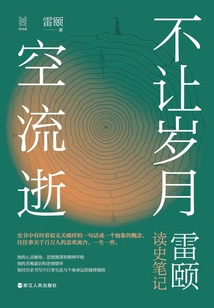
This book is a collection of well-known historian Lei Yi's reading notes over more than 20 years. For Lei Yi, reading is a personal hobby and an intrinsic need. The books he reads are mainly history books, including not only Chinese history, but also world history. Because of his wide interest in reading, he also dabbles in other types of books. The book is divided into five parts according to its content, namely Part One: "Worrying about the World and Exploring Changes in the World", Part Two: "Through the Cracks of History", Part Three: "Don't Let Time Pass by in Empty", Part Four: "Rings of the Spirit", and Part Five: "Thinking Deeply in World History". The selected articles in this book include "The Generation of the "Legend" of Southwest Associated University", "Rereading in the Year of Jiashen", "Centennial Spiritual Genealogy of France", "The Philosophy of Architecture", "Harvard's Openness and Order", etc. In Lei Yi's view, telling history to the public is a mission of historical researchers.
This book is a collection of well-known historian Lei Yi's reading notes over more than 20 years. For Lei Yi, reading is a personal hobby and an intrinsic need. The books he reads are mainly history books, including not only Chinese history, but also world history. Because of his wide interest in reading, he also dabbles in other types of books. The book is divided into five parts according to its content, namely Part One: "Worrying about the World and Exploring Changes in the World", Part Two: "Through the Cracks of History", Part Three: "Don't Let Time Pass by in Empty", Part Four: "Rings of the Spirit", and Part Five: "Thinking Deeply in World History". The selected articles in this book include "The Generation of the "Legend" of Southwest Associated University", "Rereading in the Year of Jiashen", "Centennial Spiritual Genealogy of France", "The Philosophy of Architecture", "Harvard's Openness and Order", etc. In Lei Yi's view, telling history to the public is a mission of historical researchers.
According to the content, it is divided into five parts, namely: "Worrying about the world and exploring the changes in the world", Part 2 "Through the cracks of history", Part 3 "Don't let the years pass by in vain", Part 4 "The annual rings of the spirit", and Part 5 "Think deeply in world history".
 8
8帝国经济风暴:大清帝国最后70年
Zhang Xinran
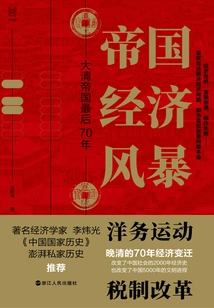
The financial economy is the lifeblood of a country and has a huge impact on the direction of history. The economy is also related to everyone's food, clothing, housing and transportation. The public has needs and desires to understand economic relationships. However, the current economic books are mainly academic monographs, which are difficult to attract readers, or they are unofficial historical legends, making it difficult for readers to distinguish between true and false. As a feudal dynasty closest to us today, the late Qing Dynasty was especially the hardest hit area for misunderstandings. The market lacks systematic, in-depth and interesting works, so the author does not make superficial assumptions and hopes to write a popular book that is both rigorous and interesting. The 70 years from 1840 to 1911 were a period of great change in Chinese history. This book takes the financial economy of this period as the starting point for research, looks at the changes in the financial economy of the late Qing Dynasty from many aspects, and shows the various attempts and changes made by an ancient feudal dynasty when faced with the impact of new economic factors.
The financial economy is the lifeblood of a country and has a huge impact on the direction of history. The economy is also related to everyone's food, clothing, housing and transportation. The public has needs and desires to understand economic relationships. However, the current economic books are mainly academic monographs, which are difficult to attract readers, or they are unofficial historical legends, making it difficult for readers to distinguish between true and false. As a feudal dynasty closest to us today, the late Qing Dynasty was especially the hardest hit area for misunderstandings. The market lacks systematic, in-depth and interesting works, so the author does not make superficial assumptions and hopes to write a popular book that is both rigorous and interesting. The 70 years from 1840 to 1911 were a period of great change in Chinese history. This book takes the financial economy of this period as the starting point for research, looks at the changes in the financial economy of the late Qing Dynasty from many aspects, and shows the various attempts and changes made by an ancient feudal dynasty when faced with the impact of new economic factors.
The 70 years from 1840 to 1911 were a period of great change in Chinese history. This book takes the financial economy of this period as the starting point for research, looks at the changes in the financial economy of the late Qing Dynasty from many aspects, and shows the various attempts and changes made by an ancient feudal dynasty when faced with the impact of new economic factors. A book that explains how economic problems can bring down an empire.
 9
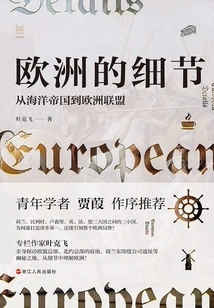
9欧洲的细节:从海洋帝国到欧洲联盟
Ye Kefei
This book mainly starts from five aspects: historical details, urban details, cultural details, economic details and educational details. It explains how the three small countries of the Netherlands, Belgium and Luxembourg, surrounded by Britain, France and Germany, discovered their potential, became unique, became the vanguard of the European Union and even the whole of Europe, and led the world's trend with culture, economy and education.
This book mainly starts from five aspects: historical details, urban details, cultural details, economic details and educational details. It explains how the three small countries of the Netherlands, Belgium and Luxembourg, surrounded by Britain, France and Germany, discovered their potential, became unique, became the vanguard of the European Union and even the whole of Europe, and led the world's trend with culture, economy and education.
How did the three small countries of the Netherlands, Belgium and Luxembourg discover their potential, become unique, and become the vanguard of the European Union and even Europe as a whole?
 10
10Longitude and Latitude Series·two Thousand Years of Qin System: the Power Rules of Feudal Emperors
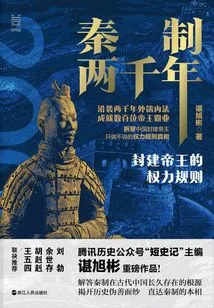
History经纬度丛书·秦制两千年:封建帝王的权力规则
Chen Xubin
This book is a masterpiece about the history of ancient Chinese political systems. It selects 16 historical cross-sections and focuses on exploring the historical truth of people's lives behind the prosperity of each feudal dynasty. The author directly points to the core concept of the feudal dynasty "Confucianism on the outside and law on the inside", normalizes and regularizes the complex history of the Qin Empire, explores the inner logic of the empire's operation, and reveals the secrets that lasted for more than two thousand years. He goes deep into every intersection, interprets historical documents, and uses strict logic to lift the veil of dynasty governance, which also subverts many of the world's taken-for-granted perceptions. These historical cross-sections are correlated to reproduce the entire process of the Qin system from its inception to maturity to evolution over the past two thousand years, providing readers with another perspective on the rise and fall of the dynasty.
This book is a masterpiece about the history of ancient Chinese political systems. It selects 16 historical cross-sections and focuses on exploring the historical truth of people's lives behind the prosperity of each feudal dynasty. The author directly points to the core concept of the feudal dynasty "Confucianism on the outside and law on the inside", normalizes and regularizes the complex history of the Qin Empire, explores the inner logic of the empire's operation, and reveals the secrets that lasted for more than two thousand years. He goes deep into every intersection, interprets historical documents, and uses strict logic to lift the veil of dynasty governance, which also subverts many of the world's taken-for-granted perceptions. These historical cross-sections are correlated to reproduce the entire process of the Qin system from its inception to maturity to evolution over the past two thousand years, providing readers with another perspective on the rise and fall of the dynasty.
This book is a masterpiece about the history of ancient Chinese political systems. It selects 16 historical cross-sections and focuses on exploring the historical truth of people's lives behind the prosperity of each feudal dynasty.
 11
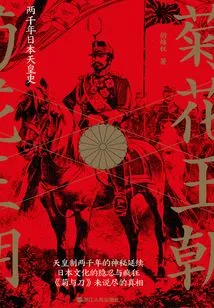
11菊花王朝:两千年日本天皇史
Hu Weiquan
Japan's emperor system is the longest-lasting monarchy in the world, with a history of more than 2,000 years, stretching from Japan's mythical age to the present day. As one of the representatives of Japanese culture, the Emperor's Order is a mysterious existence. Most people cannot see through or understand the emperor system. This book sorts out 70 issues related to the emperor and the emperor system. It is divided into 10 chapters to explain in detail to readers various mysteries about the emperor and the emperor system. The first four chapters mainly elaborate on some issues related to the history of the emperor, and outline the history of the emperor and the development of the emperor system; the last six chapters answer people's questions about the daily life of the Japanese emperor from various aspects such as the emperor's religion and rituals, thoughts, arts and knowledge, daily life, image, and family. The author of this book uses profound academic skills, uses easy-to-understand language, and combines the latest academic research results to explain the history and daily life of the emperor in detail, providing public readers with the opportunity to rethink the emperor and the emperor system. Readers who want to learn more about Japanese history and culture, or are simply curious about the Japanese emperor system, can get new clues and gains from this book.
Japan's emperor system is the longest-lasting monarchy in the world, with a history of more than 2,000 years, stretching from Japan's mythical age to the present day. As one of the representatives of Japanese culture, the Emperor's Order is a mysterious existence. Most people cannot see through or understand the emperor system. This book sorts out 70 issues related to the emperor and the emperor system. It is divided into 10 chapters to explain in detail to readers various mysteries about the emperor and the emperor system. The first four chapters mainly elaborate on some issues related to the history of the emperor, and outline the history of the emperor and the development of the emperor system; the last six chapters answer people's questions about the daily life of the Japanese emperor from various aspects such as the emperor's religion and rituals, thoughts, arts and knowledge, daily life, image, and family. The author of this book uses profound academic skills, uses easy-to-understand language, and combines the latest academic research results to explain the history and daily life of the emperor in detail, providing public readers with the opportunity to rethink the emperor and the emperor system. Readers who want to learn more about Japanese history and culture, or are simply curious about the Japanese emperor system, can get new clues and gains from this book.
As one of the representatives of Japanese culture, the Emperor's Order is a mysterious existence. Provides general readers with an opportunity to rethink the emperor and the imperial system. Want to learn more about Japanese history and culture?
 12
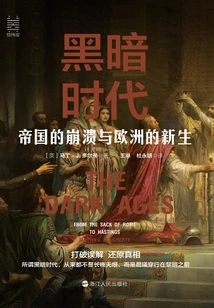
12黑暗时代:帝国的崩溃与欧洲的新生
I
The so-called Dark Ages are the transitional period from the collapse of the Roman Empire to the emergence of new feudal Europe. It began with the demise of the Western Roman Empire in 476 and ended with the Norman Conquest in 1066. This name is full of people's understanding of that period of history. The traditional view is that this period was a violent, cruel and retrogressive "Dark Middle Ages", and the light of civilization seemed to disappear without a trace. But this makes it difficult to explain the rise of the Renaissance. After all, if there is no foundation, how can a tall building stand? Moreover, the Dark Ages is also a narrow interpretation of history, because history is diverse and continuous. This book is dedicated to breaking misunderstandings, restoring the truth, and letting readers understand a real "dark age"! The book is divided into six chapters, including the decline and demise of the Roman Empire, the development of barbarian kingdoms, the British Isles involved in European affairs, European religions, sea raiders from Northern Europe and the European kingdoms that emerged at the end of the Dark Ages.
The so-called Dark Ages are the transitional period from the collapse of the Roman Empire to the emergence of new feudal Europe. It began with the demise of the Western Roman Empire in 476 and ended with the Norman Conquest in 1066. This name is full of people's understanding of that period of history. The traditional view is that this period was a violent, cruel and retrogressive "Dark Middle Ages", and the light of civilization seemed to disappear without a trace. But this makes it difficult to explain the rise of the Renaissance. After all, if there is no foundation, how can a tall building stand? Moreover, the Dark Ages is also a narrow interpretation of history, because history is diverse and continuous. This book is dedicated to breaking misunderstandings, restoring the truth, and letting readers understand a real "dark age"! The book is divided into six chapters, including the decline and demise of the Roman Empire, the development of barbarian kingdoms, the British Isles involved in European affairs, European religions, sea raiders from Northern Europe and the European kingdoms that emerged at the end of the Dark Ages.
It produces light in darkness and creates order in chaos - this is a great era! The book includes the decline and fall of the Roman Empire, the development of barbarian kingdoms, the British Isles involved in European affairs, European religions, sea raiders from Northern Europe and the European kingdoms that emerged at the end of the Dark Ages.