Auxiliary Historical Literature (Civilians and Military Generals)
辅佐流历史文(文臣武将)
I have read all the texts in the book list and have basically ordered them all. I prefer to read stories about kings and subjects reciprocating each other (not the kind of romantic dramas on female channels). It's a personal hobby. I checked the starting point and it seems there is no similar single recommendation, so I made a book list. The books here are all non-hegemony supporting novels. Until the end, there are no stories about the protagonist and his descendants rebelling. I also welcome book friends who have fairy grass and food to recommend such articles to me😄
 1
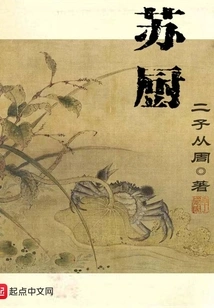
1Su Chu
History苏厨
Second Son From Zhou
Governing a big country is like cooking small delicacies, so this is a story about a foodie governing a country, starting from the fourth year of Huangyou in the Northern Song Dynasty... Communication group number: 658021624
Governing a big country is like cooking small delicacies, so this is a story about a foodie governing a country, starting from the fourth year of Huangyou in the Northern Song Dynasty... Communication group number: 658021624
The protagonist travels to the period of Song Renzong Let's talk about a few points: 1. The overall rhythm of the novel is good, and the protagonist's career experience is very "rich". It not only describes the protagonist's official career in detail, but also describes in detail the protagonist's ideological changes from childhood to old age, policy agenda, interaction with the environment at that time, the protagonist's specific theory of "The Six Classics Annotated Me", how the protagonist integrated his theory with the characteristics of the times and gradually became a prominent scholar, etc. There is no situation where you write 80% of the exam and become a small official in the end. The protagonist is a Jinshi in about 16% of the full text, and the follow-up is Beijing official-local-local-local-Jingguan-local-local... The author has written every official career of the protagonist very carefully. The protagonist's governance methods, the reactions caused, the reasons for choosing this governance method, and the confrontation and cooperation with contemporary figures, some are compatible, some are incompatible, these are all written in depth. 2. The protagonist's poems, strategies, memorials, and even books containing ancient texts are all original by the author, and they are also well written. The author himself is very resistant to copying official plots. 3. Talk about the shortcomings: ① There is a problem with the rhythm at the beginning (it becomes normal later on). I understand the author's theory that "inventions and creations need to be matched", but the rhythm of invention at the beginning is a bit like a dog chasing; ②Prodigy flow, although I think the author said that in this era everyone is hyping up prodigies, and it is correct to sneak in the protagonist and actually follow the hype without anyone noticing, but the protagonist is indeed too young at the beginning, which I can accept, but some readers seem to be not good at it; ③ There are too many popular science literatures (science, engineering and history), too much classical Chinese content, and it is not very friendly to readers who are not majoring in ancient literature. Originally, textual research is an advantage, but this author went a little too far and caused dyslexia. For people like me who can't understand and will subconsciously skip it, this is a bit "watery"; ④ There is a big retardation plot around Chapter 180-190. It has nothing to do with the three views or anything, it is just a simple retardation. However, it is not recommended to skip directly to this plot without reading the previous part. If you can see this normally, you can probably ignore this plot, because there will be no such intellectual retardation plot in the future. This article is also a 1v1 with a single heroine. My personal reading experience is 4.5 Stars.
 2
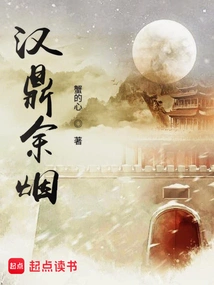
2汉鼎余烟
Crab Heart
The great Han Dynasty gradually came to an end. In the past few decades, the human world has been reduced to a ghost land, with bones covering the plains, and dragons and snakes rising up all over the world, vying for the top spot. Amid the mountain of corpses and the sea of blood, a young warrior stood up with a sword in hand. He looked around blankly, but saw that the majestic hero was still there; and the smoke of the Han cauldron was not exhausted, who could continue?
The great Han Dynasty gradually came to an end. In the past few decades, the human world has been reduced to a ghost land, with bones covering the plains, and dragons and snakes rising up all over the world, vying for the top spot. Amid the mountain of corpses and the sea of blood, a young warrior stood up with a sword in hand. He looked around blankly, but saw that the majestic hero was still there; and the smoke of the Han cauldron was not exhausted, who could continue?
The protagonist was reincarnated as the son of a wealthy family during the Three Kingdoms period, but his memory was restored at the beginning of the story. The protagonist takes the route of a military general, but his own strength is about second or third rate, he can rush into battle, and he is mostly resourceful. Personally think the advantages: 1. The author very much restores the setting of historical characters. The characters of these characters in the book continue their characteristics in history. The choices made and the promotion of the plot are traceable, rather than random OOC. 2. The author is very research-oriented, and the literature review is basically correct. The logic in the book is very rigorous, because it is a starting point book. There are many book friends in the paragraphs and reviews that have put maps for verification. Occasionally, any omissions will be pointed out and corrected by readers. 3. The author has great literary talent and a lot of knowledge. What's a bit embarrassing is that I have never seen many idioms in the book, and I don't know some words. But it cannot be said that the author is intentionally unconventional, because after searching and searching, I found that the author's writing is in line with the writing and wording habits of the era in the book. If you don't ask for a deep understanding of the book, it won't affect your reading. Basically, the brain can automatically understand it based on the context. The author writes the war scenes very well, as well as some scenery transitions, which are very well written and can give people a sense of pictures through the words. 4. Returning to the issue of rigor, there is nothing intellectually subdued in this book. As mentioned above, the behavior of the characters in the book is an extension of their historical personalities. There will be no deliberate attempts to write trashy characters to praise the protagonist. This is very important to me. The outstanding characters in the book are outstanding characters, not the ones who claim to be "many wise and almost demonic" but only come up with bad ideas. The protagonist can win by thinking more and being more cautious than these masters. At least when the plot is revealed in the book, the readers can be amazed and surprised by the reversal, rather than scolding for being smart. Of course, this does not mean that these characters have not made low-level mistakes, but these mistakes can fit in with their experience, background, and historical characters, and they do not appear to be out of the ordinary. Then let's talk about the points you may be interested in: It is recommended that genuine readers not read the comments before entering V. There is a lot of quarrel, and the same thing can be criticized by two sides. A scolds the protagonist for being too cruel, b scolds the protagonist for being too holy... This article is also a 1v1 with a single heroine, and my personal reading experience is 4.5 Stars.
 3
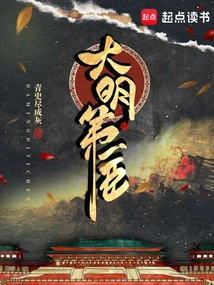
3大明第一臣
History Turns To Ashes
At the end of the Yuan Dynasty, Zhu Yuanzhang picked up a young boy outside Haozhou City. From then on, Emperor Hongwu had an extra arm. Anti-Yuan soldiers crossed the Yangtze River, killed Chen Youliang, and defeated Zhang Shicheng. Founded the Ming Dynasty and restored Yanyun. I'm everywhere. From then on, Hongwu established the country and had no regrets. The foundation of Ming Dynasty is as solid as gold. Regarding King Xiao Ming's matter, we need to adopt a four-stage strategy. First, we claim that nothing happens. Second, we say maybe something happened, but we don't have to do anything. Again, we said maybe something should be done, but unfortunately nothing could be done. Finally, we are very sorry that King Xiao Ming died for his country. It would have been better if we had done something. ... Someone asked: As Taizu's most trusted minister, how could he easily avoid ups and downs and enjoy his life in peace? Zhang Ximeng said modestly: "The servant is just a humble social instrument of the Ming Dynasty, used to hold the fruits of Emperor Taizu's thoughtful consideration!"
At the end of the Yuan Dynasty, Zhu Yuanzhang picked up a young boy outside Haozhou City. From then on, Emperor Hongwu had an extra arm. Anti-Yuan soldiers crossed the Yangtze River, killed Chen Youliang, and defeated Zhang Shicheng. Founded the Ming Dynasty and restored Yanyun. I'm everywhere. From then on, Hongwu established the country and had no regrets. The foundation of Ming Dynasty is as solid as gold. Regarding King Xiao Ming's matter, we need to adopt a four-stage strategy. First, we claim that nothing happens. Second, we say maybe something happened, but we don't have to do anything. Again, we said maybe something should be done, but unfortunately nothing could be done. Finally, we are very sorry that King Xiao Ming died for his country. It would have been better if we had done something. ... Someone asked: As Taizu's most trusted minister, how could he easily avoid ups and downs and enjoy his life in peace? Zhang Ximeng said modestly: "The servant is just a humble social instrument of the Ming Dynasty, used to hold the fruits of Emperor Taizu's thoughtful consideration!"
To sum up the plot, the protagonist is originally a modern college student who is about to take the public examination. He travels to the end of the Yuan Dynasty, and happens to encounter the Yuan army chasing his family. He quickly enters the process of parents' sacrifice to heaven. Finally, the protagonist is picked up by Zhu Yuanzhang who has not yet made a fortune when he is dying, and then Lao Zhu gets a counselor. Later, Lao Zhu conquered the country faster with the help of the protagonist, and under the subtle influence of the protagonist, some changes in his thinking occurred. The proportion of the plot is probably that the first half is about conquering the country, and the second half is about management. Under the fluttering of the protagonist's butterfly wings, many historical regrets have been changed. Let's talk about the advantages first: 1. The author's historical knowledge is quite good. There are basically no common sense errors in the whole text (but it is not completely correct), and the study of historical figures is still in place. 2. The author's understanding of the changes in ancient social civilizations, the changes in political systems of the past dynasties, especially the analysis in the book of the changes in the status of ancient women (why the status is getting lower and lower, and etiquette is becoming more and more strict), and the explanation from the perspective of another class's interests still sounds very penetrating. 3. The author's writing style is relatively rigorous and he has rich experience. There are basically no "childish mistakes" when writing the book. Although the novel is an idealized product, the author tried his best to make the plot as rational as possible, at least on the surface it seems that the logic can withstand scrutiny. In the early stage of this book, there are some routines when it comes to conquering the world (at least in my opinion), but in the later period, when it comes to governance, it is written very well, especially the description of the relationship between the protagonist and Lao Zhu, the king and his ministers. Disadvantages: 1. The author is good at analyzing problems but not at solving them. When he writes about analyzing the disadvantages, he is clear and logical, but when writing about solving problems, he is a bit vain. Although the article seems to be logically closed, I always feel that something is missing and it is not convincing enough. 2. Although the character creation is not considered to be intellectual, it is not very three-dimensional. Sometimes it has a bit of an NPC feel. Readers who are particularly demanding in this article will not be able to read it. However, it is not a pure white text, and it is acceptable to readers with more compatible tastes. This article is also a 1v1 with a single female protagonist, and the author is probably more friendly to female readers. The reading experience is 3.5-4 Stars.
 4
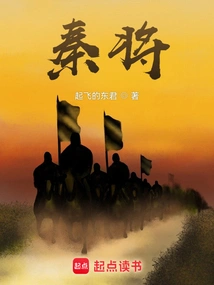
4Qin General
History秦将
Dongjun Taking Off
The king of Qin swept Liuhe, what a majestic sight! At the end of the Warring States Period, the troubled times were coming to an end. After his rebirth, he became a member of Jingke's motorcade. The wind rustles and the water becomes cold, and the strong man will never return once he is gone! Personally participating in the eternal drama of Jing Ke's assassination of Qin, how will he choose?
The king of Qin swept Liuhe, what a majestic sight! At the end of the Warring States Period, the troubled times were coming to an end. After his rebirth, he became a member of Jingke's motorcade. The wind rustles and the water becomes cold, and the strong man will never return once he is gone! Personally participating in the eternal drama of Jing Ke's assassination of Qin, how will he choose?
Briefly introduce the plot. In the early stage, the protagonist traveled to the end of the Warring States Period, and during the process of the Qin Dynasty's unification of the world, he went from a small soldier to an official to a general, and was awarded the title of Chehou. (First Emperor Stage) The later period is the story of the Prime Minister of Qin, who governs the country and assists the government (after the death of the First Emperor), and finally saves the Second Emperor of Qin from death. In the early stage, the content of battlefield conquests accounts for the majority, while in the later stages, the plot of auxiliary affairs is relatively fast-forwarded and accounts for less. Let's talk about the advantages: 1. The author's battlefield expeditions are very well written, at least from my perspective. Although the protagonist also has some super-era technology, he still uses military tactics most of the time. The author describes these in detail. The plot of the confrontation between the protagonist and the enemy can make readers feel that the protagonist's ability in combat and military is worthy of the name. The protagonist's ability to use soldiers like a god can also be reflected in some details of the plot (the protagonist's ability gradually increases as his identity changes). 2. The author is very research-oriented and checks the information very carefully. I love browsing the comment area. The author can basically handle all the criticisms in the comment area calmly (History Channel readers are actually quite difficult). The author basically ensures that every point involving historical matters has reliable documentary evidence. 3. This is my hobby. I like to read auxiliary historical articles about kings and ministers getting along with each other. This article runs through the point of kings and ministers getting along with each other. Although I was a little frightened by the author towards the end, fortunately, the author's ending was unexpected, logical and self-consistent, and it ended perfectly. Let's talk about possible surprises: The protagonist has a deep admiration for Qin Shihuang (of course the author does not shy away from describing the shortcomings of the First Emperor), and the protagonist is deeply integrated into the times. Except for his occasional cheating or idiosyncratic ideas, you can't tell that he is a modern person. And it is not recommended for those who have strict moral requirements on the protagonist (I accept these points quite well) The female protagonist in this article is 1v1, and the female protagonist is the daughter of Qin Shihuang. My personal reading experience is 5 stars.
 5
5Brother Zhu Youxiao
History家兄朱由校
North City Two Thousand
[The new book "Gui Yi Fei Tang" has been released, please appreciate it] In 1620, the Ming Dynasty changed three emperors, and the iron-headed boy Nurhachi was still fighting against Xiong Tingbi in Shenyang. The most elite Baigan soldiers and Qi Jiajun in the East Asian battlefield have just set off northward, and the situation is good. Lu Xiangsheng immersed himself in studying, while Sun Chuanting was still a small county magistrate. Cao and Cao are unknown, and the Donglin Party has not yet deteriorated. It's just that the internal partisanship has resumed, and the southwestern chieftains in the external North Korea will rebel. His father Zhu Changluo ascended the throne for the first time, and his elder brother Zhu Youxiao had no intention of becoming emperor. With a cry, the emperor passed away and the woman was vicious. If we want to change the fate of the world, we should start with the palace transfer case... Huang Taiji: "My Qing Dynasty is far better than Ming Dynasty!" Zhu Youjian: "Are you done? Come on, let's fire off the cannons!"
[The new book "Gui Yi Fei Tang" has been released, please appreciate it] In 1620, the Ming Dynasty changed three emperors, and the iron-headed boy Nurhachi was still fighting against Xiong Tingbi in Shenyang. The most elite Baigan soldiers and Qi Jiajun in the East Asian battlefield have just set off northward, and the situation is good. Lu Xiangsheng immersed himself in studying, while Sun Chuanting was still a small county magistrate. Cao and Cao are unknown, and the Donglin Party has not yet deteriorated. It's just that the internal partisanship has resumed, and the southwestern chieftains in the external North Korea will rebel. His father Zhu Changluo ascended the throne for the first time, and his elder brother Zhu Youxiao had no intention of becoming emperor. With a cry, the emperor passed away and the woman was vicious. If we want to change the fate of the world, we should start with the palace transfer case... Huang Taiji: "My Qing Dynasty is far better than Ming Dynasty!" Zhu Youjian: "Are you done? Come on, let's fire off the cannons!"
The protagonist travels through Chongzhen in history. Before his brother Tianqi ascended the throne, Tianqi was renewed and his heirs grew up safely. The protagonist did not ascend the throne and has been assisting the government as a prince. He also established the Ming Dynasty vassal system and sealed all the clans abroad. Later, he himself became a vassal. Personally, I think the highlights of this book are: 1. Brothers, friends, and brothers respect each other, and the king and his ministers get along well with each other, which is also one of the core of the whole text; (Book friends who are familiar with me know my hobbies) 2. The plot of governing the country is very detailed. Less than 50% of the whole text is about various government infrastructure. The implementation responses of various policies are very detailed from beginning to end. Although it is a novel, you can really see that the author is carefully "calculating" a set of policies to save the late Ming Dynasty. I think this is an advantage because many historical novels now only have the struggle of the protagonist Xiao Xiami. When the real power comes, they fast forward crazily or even pass it by in one stroke. This article takes advantage of his status. Once he travels back in time, he becomes a prince, and the subsequent detailed political plot is quite interesting. In other words, the author seems to present a real timeline of different time and space in front of the readers. 3. The data is detailed and the author's literature is very solid. This is also the basis of the second advantage. Because the data is detailed and reliable, it makes the article very realistic. Things readers may find annoying: 1. It's still a data problem. Some readers think there is too much data, and this is indeed a bit too much; 2. There are typos throughout the text. The author may have typed in Wubi, and some typos were corrected later but not before; 3. Regarding the character of the protagonist, from a modern perspective, he is considered a racist. Basically half of the rise of the Ming Dynasty in the book was based on the flesh and blood of other races. The protagonist is very kind to the people of the Ming Dynasty, and he is considered to be very considerate. For foreigners... It's barely better than other countries in real history, but it's limited. The protagonist's image is different for different people. For readers who pay attention to humanistic care, he injured many innocent people in the process of governing. During the war, he even wiped out the enemy's entire race. During the internal rectification, he killed more officials and gentry than Zhu Yuanzhang. This aspect of the image is very bloody. 4. It is not recommended for Manchu compatriots to watch (...) 5. The protagonist's work status is tiring to watch, and he is a 007 madman. The protagonist's mentality in this aspect is based on Zhuge Liang (...). This also leads to the fact that the article is basically all kinds of government affairs and military affairs, with less life-related content, and the overall atmosphere of the article is heavy and depressing. 6. Female readers should be careful, the author may occasionally be a bit "daddy". There are many female protagonists, but there is no emotional line. The protagonist is not flirting with girls, nor is she filthy and greasy. Except for a maid in the backyard who has been with him for many years, the rest are all assigned in one go through regular channels. 7. It may be a bit child prodigy style, as the protagonist's journey begins when he is eleven or twelve years old, but I accept it well. Overall, I give this article four stars. The less star is because as a female reader, I don't like the part about women in the author's article. Although there are other parts that do not support the author's point of view, I can accept it when reading the novel. There are some parts that really poke my liking.
 6
6梦回大明春
Wang Zijun
Traveling back in time to the Ming Dynasty, it was a black job to take the imperial examination. If you wanted to study, you had no teachers. Fortunately, next door is the Longchang Station where Wang Yangming was exiled, but we still have to wait a few years, so let's grab a teacher and go home to make do with it.
Traveling back in time to the Ming Dynasty, it was a black job to take the imperial examination. If you wanted to study, you had no teachers. Fortunately, next door is the Longchang Station where Wang Yangming was exiled, but we still have to wait a few years, so let's grab a teacher and go home to make do with it.
The protagonist is both civilized and military, and the author has added a bit of strength to the character, making him a bit extraordinary, but he is following the route of a literary scholar. On the whole, the logic is okay. Occasionally there will be some small moments that make people speechless, but they can be ignored for the sake of overall quality. The author's writing is more humorous, the writing style is good, and the degree of research is relatively high. I can't say it is 100% rigorous, but at least it is not blind writing. I think it is 95% rigorous. What I can't accept is that there are too many female protagonists, I can't even remember the names of the protagonist's group of cubs, and the author's emotional line is poorly written but he insists on writing it. There are also extra chapters that I don't like very much. Reading experience fluctuates between 3.5-4 Stars
 7
7三国:我马谡只想作死
Swordsman In Shu
He traveled through time and became Ma Su during the Three Kingdoms period, but he didn't want to help the Han Dynasty. He just wanted to defraud the insurance and go home. So Ma Su started his road to death from the street pavilion, but soon Ma Su discovered that things were not that simple. Zhang He: This son is brave in battle. He will charge personally in every battle. He is a god in using troops! Sima Yi: Ma Su has learned the true story of Zhuge villagers, and his way of marching and using troops is comparable to that of ghosts and gods. It is difficult for me to defeat him! Zhuge Liang: The late emperor had a unique vision but also had some missteps. It was the Han Dynasty's good fortune that he was so young! Ma Su: Is it so difficult to die justly?
He traveled through time and became Ma Su during the Three Kingdoms period, but he didn't want to help the Han Dynasty. He just wanted to defraud the insurance and go home. So Ma Su started his road to death from the street pavilion, but soon Ma Su discovered that things were not that simple. Zhang He: This son is brave in battle. He will charge personally in every battle. He is a god in using troops! Sima Yi: Ma Su has learned the true story of Zhuge villagers, and his way of marching and using troops is comparable to that of ghosts and gods. It is difficult for me to defeat him! Zhuge Liang: The late emperor had a unique vision but also had some missteps. It was the Han Dynasty's good fortune that he was so young! Ma Su: Is it so difficult to die justly?
The author is very good at exploiting his strengths and avoiding weaknesses. The plot of the book is set in the Liu Chan period. The protagonist travels back to Ma Su. Because he wants to "die reasonably" to defraud the insurance premiums from heaven and return home, he resorts to various "reasonable deaths" and ends up becoming a god of war. The protagonist's mentality has changed. At first, he just wanted to die and go home, and be an NPC to the people around him. Later, he integrated into the era and wanted to die while arranging the aftermath (the mentality change in the early stage was a bit stiff). By the end, he felt uneasy and no longer wanted to die. The advantage is that the author writes it very well and is very good at avoiding controversial points. Although there is no eye-catching plot of intelligence, you will not feel too intellectual after reading it, and the protagonist's ability will increase as the plot progresses. At the beginning, it will be a pure character and the protagonist's aura. Later, the protagonist's true strength will also be able to bear the reputation. The shortcomings, apart from the few chapters at the beginning where the protagonist's mentality changes abruptly, are that this is a pure novel. Although there is no overt wisdom, it is not suitable for readers who are particularly pursuing rigor and resourcefulness. The original author has a wife, but has no interaction with the protagonist. The protagonist has no emotional line, so it is considered a no-CP novel. 4 Stars for reading experience.
 8
8神话版三国
Grave Soil And Grass
Chen Xi looked at the soldiers who were throwing away a huge stone weighing hundreds of kilograms, and looked at the sky speechlessly. Is this really the end of the Eastern Han Dynasty? Lu Bu single-handedly penetrated an army of ten thousand people. This is not scientific at all. Zhao Zilong is really possessed by the dragon soul and can break mountains with one sword. Is this really a human being? Dian Wei single-handedly protected Cao Cao and fought his way out of the enemy camp, easily killing thousands of cavalry on the opposite side. This fighting power was off the charts! Is there something wrong? Chen Xi touched a goose feather fan and waved it. The strong wind blew up and he sighed, "This is a myth, I am not normal anymore." Ps: Actually this is a serious farming article... QQ group: 476971307 (the old group exploded, this is a new one) Full booking verification group: 949176942 Soy sauce group: 397441818 (almost full) Group 2: 418928396 (almost full) Group Three: 188981452 (This one also exploded before, so I got a new one) Five groups: 850567843 (the previous one exploded, replaced with a new one)
Chen Xi looked at the soldiers who were throwing away a huge stone weighing hundreds of kilograms, and looked at the sky speechlessly. Is this really the end of the Eastern Han Dynasty? Lu Bu single-handedly penetrated an army of ten thousand people. This is not scientific at all. Zhao Zilong is really possessed by the dragon soul and can break mountains with one sword. Is this really a human being? Dian Wei single-handedly protected Cao Cao and fought his way out of the enemy camp, easily killing thousands of cavalry on the opposite side. This fighting power was off the charts! Is there something wrong? Chen Xi touched a goose feather fan and waved it. The strong wind blew up and he sighed, "This is a myth, I am not normal anymore." Ps: Actually this is a serious farming article... QQ group: 476971307 (the old group exploded, this is a new one) Full booking verification group: 949176942 Soy sauce group: 397441818 (almost full) Group 2: 418928396 (almost full) Group Three: 188981452 (This one also exploded before, so I got a new one) Five groups: 850567843 (the previous one exploded, replaced with a new one)
This article was written very early, and the writing style in the early stage was average and there were some mistakes in historical common sense. However, in the middle and later stages, the pattern expanded and it became more and more rigorous. The characteristics and advantages are that it perfectly combines the theme of spiritual energy recovery and the Three Kingdoms, and gives highlights to each camp such as Wei, Shu, Wu and the early Yuan family. Basically, no matter which camp you like, you can feel... Beautiful in this book? Anyway, the trend is more towards Liu Bei being the only strong one and finally subduing the others without fighting (the protagonist enters the game very early, Liu Bei strengthens too much, and the final strength gap is too big and peace becomes excessive). A very beautiful story about the dream of the Three Kingdoms. The shortcomings, in addition to those mentioned at the beginning, are that it is too watery, the ocean is vast, and there are stallions (this is not a shortcoming for some readers) It was too long and I didn't finish it, and it was still being serialized, so I couldn't finish it. The reading experience fluctuates between 3.5-4.5 Stars