This book is the first volume of the four-volume series of novels "Li Shimin". The volume is titled "Chang'an Under the Autumn Wind". It is a "novel about historical figures" and most of the content is based on historical facts.
Sometimes it's hard to believe that we ever really had a time like that.
At that time, Chinese civilization deservedly stood at the pinnacle of the entire world. The light it spread spread across thousands of years of time and space and still shines on the hearts of every Chinese. At that time, the Chinese Empire was the largest and most populous civilized country in the world, with a territory of more than 10 million square kilometers at its peak. Chang'an, the capital, is the world's first international metropolis with a population of more than one million. At least one-fifth of its residents are "foreigners" and have contacts with more than 300 countries and regions in the world. The size of Chang'an was three times that of the capital of the Eastern Roman Empire at that time, and 1.4 Times that of Beijing in the Ming and Qing Dynasties. The Daming Palace in Chang'an can fit four and a half of the Forbidden City in Beijing.
At that time, the Chinese people embraced the world with an unparalleled self-confidence. The music and dance of the Central Asian peoples floated in the palaces and residences all night long. Hu clothes with narrow lapels and narrow sleeves and women's clothes with open breasts and backs walked side by side on the streets. Christianity, Islam, and Manichaeism (the Mingjiao in Jin Yong's works) all built their own churches and temples in the city of Chang'an in a grand manner. The dark-skinned Kunlun slaves and the Silla maids from the Korean Peninsula are common sights in the noble mansions. The fair-skinned Orchid sells wine as a slave, and was written into an immortal poem by the great poet Li Bai. Nowadays, the Japanese who have forgotten their ancestors and repeatedly committed crimes once traveled thousands of miles and braved the wind and waves to send batches of people to China to worship and learn from their masters. They even respectfully called Chang'an the "Capital of the Universe".
At that time, Chinese men mounted their horses to kill enemies with swords and dismounted from their horses to recite poems and compose poems. Scholar-officials and aristocratic children were ashamed to search for chapters and excerpts and read scriptures while they were proud to serve in the army and open up territories. Their martial spirit directly followed ancient Rome and the military aristocrats of later generations during the rise of Britain and Germany. "The general set the Tianshan Mountains with three arrows, and the strong men entered the Han Pass with a long song." "Who knows the pain of facing the side court? Even if you die, you can still smell the fragrance of the chivalrous bones." These were the main themes and strongest voices of that era.
At that time, Chinese women were gorgeous and unrestrained. There were female marshals who led the three armies to victory on the battlefield, and female emperors who ascended the throne and were crowned to look down on the world. Aristocratic women could gallop on horseback in men's clothing, or swagger through the streets with their breasts bare and their backs bare. Even ordinary women in the common people enjoyed freedom of marriage and property to a certain extent. Women in later generations who struggled to breathe under the constraints of small feet and the oppression of ethics and ethics could not imagine this.
At that time, the ministers could reject the emperor's decrees, the prime ministers could sit in the court and discuss matters, and a single envoy could destroy the country in a foreign land, capture the king, and recruit more than 500 city-states. The emperor applauded the article that scolded him, and the result of writing poems that angered his favorite concubine was just "giving money back to the emperor." Because he was strong, he was confident, so he was tolerant, so he was prosperous. Looking back at those poems that were soaked in majesty and pride in a thousand years, no one can imitate them anymore, because they can't go back to the era that raised all these things.
The founders of that era had the same blood flowing in their bodies as ours, they had looked up at the same sky, stepped on the same land as us, and truly lived on the east coast of the ocean on our water-blue planet.
At the age of 18, he joined the army with his father. At the age of 22, he defeated the two most powerful opponents in the world in one fell swoop. At the age of 27, he killed his brother and forced his father to kill his brother and nephew. The ferocious nomads even captured their Khans and came to Chang'an to perform dances. At the same time, the world was under great rule and the whole country was at peace. He was honored as the "Khan of Heaven" by a group of Western races and elected as the "International Leader". That year, he was just over thirty years old.
He has a naive ideal and a pragmatic style, is energetic, curious, and cheerful, but he is also extremely ruthless at critical moments. He is a talented general and a wise king who has been trained hard. He is strong, tolerant and sober, sharp in eloquence and has a sense of humor. However, he is also willful and impulsive, greedy for fame, lustful and has many stains. He can make the heroes of the world fall in love with him, and he can make the people from all over the world surrender to him, but he cannot live in harmony with his closest family members. His strengths and weaknesses are equally distinct and unique, and cannot be deliberately beautified.
 Denke
Denke
 The Beauty of the Prosperous Age
 Traveling Through the Business Woman's Counterattack
 Dress up as a Farmer's Sister and Raise Three Cubs at the Beginning!
 In Famine Years, the Whole Family Doesn't Have Enough to Eat, and the Vicious Stepmother Eats Alone
 Terror Invasion: My Villains All Came True
 Look at Me
 Traveling Through Ancient Times with Supernatural Powers, Zaizai Grew a Warehouse Full of Grain
 Second-Grade Daughter
 Pretending to Be an NPC, I Lead the Players to Revive the Sect.
 If You Go Crazy, the System Will Give You Cash Back, and I Will Be the Richest Man in 80
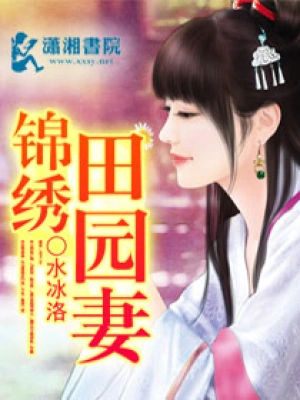 Splendid Pastoral Wife
Book from thirteen years ago, oh my god