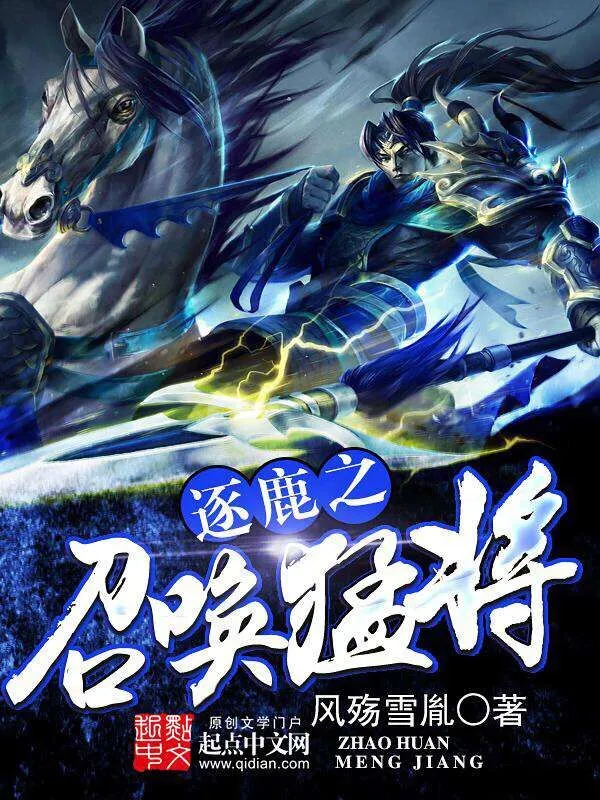
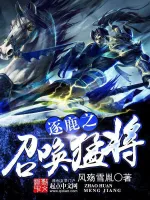
Chasing the Deer Summoning the General
逐鹿之召唤猛将
- Status
- Completed
- Length
- 1.5M Words
- Genre
- Historical
- Audience
- Male
- Subgenre
- Alternate History
- Updated
- 8y ago
- Source
- Qidian
Stats
0Monthly votes
8.9kRecommends
22.1kFans
598Chapters
Tags
Synopsis
Reader comments
In booklists 6
Emperor's Hegemony
When autumn comes on September 8th, I will kill all the flowers after they bloom. Thousands of miles of mountains and rivers are picturesque, and there are so many heroes at one time. The throne is withered bones, the imperial road is yellow sand, but it is just a sketch in the history book. "Three Kingdoms: World Hegemony" Little Vest No. 1 "Xianwu Three Kingdoms" Silver Dragon Horse
60Books4.1kFollows5moUpdated
My Favorite Books of All Types
The books that have accompanied me during my ten years of reading are Infinite Literature/Xianxian Literature/Fantasy Ancient Style/Fantasy Wilderness Style/Infinite Style/Apocalyptic Style/Online Games.
14Books24Follows8yUpdated
Tianjie Library
The recommended books are all very good! Mainly fantasy, urban, fairy tale, fantasy, games.
19Books14Follows6yUpdated
What I Like Is Considered a Hodgepodge.
All they like
80Books4Follows5yUpdated
Like
Good looking
12Books0Follows9yUpdated
Unlimited Streaming, System Streaming, Comes with Cheats
A ten-year old bookworm chased me
6Books0Follows8yUpdated
Readers also read
 In the Red Mansion: Escort Daiyu to Beijing at the Beginning
 1914 Begins with the Rejection of the Schlieffen Plan
 Please Call Me Your Majesty the Tsar
 Talker in the Song Dynasty
 The Reborn Fashion King
 Emperor Summoning System
 Summoning Civil Servants and Generals from Another World
 Tokyo: Starting from Pretending to Be a Boyfriend
 Fusion of Wolf Spider Genes, Killing Like Crazy on the Russian-Ukrainian Battlefield
 The Most Powerful Emperor in All Worlds
 War of the Three Kingdoms
 The Most Powerful Imperial System: Summoning the Gods
 Online Game Three Kingdoms: Iron-Blooded Journey
Knowing that Guo Chongtao was rebelling, he still sent someone there. Don't you know how to remind him? It totally feels like the author tortured his own people just to fight the war. Lu Bu wakes up and misses Diao Chan, doesn't Xiang Yu wake up? Doesn't he miss Yu Ji? How awesome was the previous generation? I feel like the author thinks that people of the previous generation are invincible, and even if they are powerful, they have to have a number. About Zhang Fei, who had his whole family killed by Liu Bei, and finally woke up and still recognized him as his eldest brother. He was really like brothers, and his children were like clothes, rubbish, like Guan Yu. Even after he woke up, he already worshiped Liu Yu as his eldest brother, but then he fell out and stopped recognizing him. The awakening is really rubbish. Like this, the development of science and technology in each dynasty is different. Hey, it's hard to describe in one sentence.
Let's be clear, this is a gift for a female, both Yu Ji and Diao Chan are gifted.
Even Wu Qin Xi was written by Zhang Ji, the author is so awesome
Final evaluation: 3 characters collapsed
1. These people, Bai Qi, are the commanders described by the author. When faced with a big battle, he actually had no idea. He had to ask Guo Jia and Zhuge Liang to know "how to fight the battle." . . How does this reflect your talents as a commander-in-chief? By the way, from time to time, colleagues call Bai Qi "Gongsun", without even a reason? As for Li Cunxiao being called "Jingsi", are you going to call him his original name "An Jingsi" or the "Li Cunxiao" he was given? 2. Guo Chongtao was an unjustly killed person in history, so you can write about someone who had nothing to do with him in history and persuaded him to rebel. What the author writes like this can only reflect that the protagonist is not qualified as a monarch and does not care enough about his veterans. If it was Lan Yu who wrote it backwards, it would probably be reluctant. At any rate, he was suspected of treason in history.
After reading a little bit, well, how should I put it, really, I doubted whether the author was a child. The organization gave me the impression that a 7-8 year old child does not look like a modern person who has traveled through the past. I hope the author can go back and revise it. It really gave me the feeling that it was too naive for me to watch at the beginning.
The author estimates that he has a primary school education, no historical knowledge at all, and his writing is sloppy.
The protagonist really looks like a psychopath, everything is written on his face and actions, regardless of the occasion! Jumping!
I didn't watch all of it, but I jumped directly to the end. The protagonist had sex with Yu Ji, the Green Overlord, and gave birth to a child, and asked the Overlord to raise it for you. I'm sorry that I was so poisonous that I withdrew it. As a Xiang fan, I can't bear it anymore.
The author wrote the book without thinking at all
Final rating 2 The plot is confusing
1. Guo Chongtao's rebellion. He was obviously aware that the other party would react, but he didn't even warn Wu and Song who were going forward? 2. Li Shimin's life experience was exposed, but he didn't have any plans, but he didn't make it public? 3. Yu Ji incident. No worthy king would ever allow such a cuckold. Even Wei Linggong, who is like a faint king, shares Nanzi with others. King Chuzhuang Jueying also asked Tang Qiao because the mistake he committed was sexual harassment, which was not too serious. But by doing this, the protagonist disappoints the readers. In addition, Yu Ji did not have much force, so she actually escaped from the heavily guarded palace alone and fled all the way to Xizhou. Unless the protagonist did it on purpose, how could it be possible?
[Comments] Recommended talents
Xie Ai (301-353), a native of Dunhuang, Liangzhou, was a general of the former Liang Dynasty during the Sixteen Kingdoms period. Born as a Confucian scholar, he rose to the rank of Governor of Jiuquan and Marquis of Fulu County. History records that he was both civil and military, and was appreciated by Zhang Chonghua, the king of Qianliang. He defeated more with less on three occasions and defeated Ma Qiu, a famous general from Later Zhao, forcing Shi Hu to give up his attempt to destroy Qian Liang. In the ninth year of Yonghe (353), Zhang Chonghua died of illness, and Xie Ai was executed by Zhang Zuo who had usurped the throne. Author of "Xie Ai Collection". Wei Rui (AD 442-520), courtesy name Huaiwen, was a famous general during the reign of Emperor Wu of Liang in the Southern Dynasties. Han nationality, originally from Duling, Jingzhao (now southeast of Xi'an, Shaanxi Province), moved to Xiangyang (now part of Hubei) when his grandfather was here. His family is a famous family name in the Sanfu area. It did not perform prominently in the Song and Qi Dynasties. In his early years, Wei Rui was appointed as the prefect of Shangyong. At the end of the Qi Dynasty, he followed Xiao Yan and launched an army. In the fourth year of Tianjian (505), he supervised the Northern Expedition and captured Xiaoxian City (east of today's Hefei) in the Northern Wei Dynasty, and then marched into Hefei. At this time, Wei general Yang Lingyin led 50,000 people to come to the rescue. Wei Rui diverted fertilizer and water into the city, defeated the Wei army and captured more than 10,000 people. In the fifth year of Tianjian (506), he solved the siege of Zhongli (Linhuaiguan, northeast of Fengyang County, Anhui Province), was promoted to marquis for his meritorious service, and was appointed as the right guard general. According to historical records, Wei Rui was benevolent to the people and loved things. "The soldiers were unwilling to leave the camp before they were established. They did not eat before the wells and stoves were completed." People in the Northern Wei Dynasty were afraid of him and called him "Wei Hu". He was honest throughout his life and his family had no money left. Wei Xiaokuan (AD 509-AD 580), named Shuyu and given the courtesy name Xiaokuan, lived in the world by his alias. A native of Jingzhao Duling (South of Xi'an, Shaanxi), he was an outstanding military strategist and strategist in the Western Wei and Northern Zhou Dynasties during the Southern and Northern Dynasties. Throughout his life, he fought in the south and north, and made outstanding achievements. He was worshiped as the Great Sikong, Shangzhu Kingdom, and was granted the title of Duke of Yun Kingdom. In November of the second year of the Elephant Year of the Northern Zhou Dynasty (580), Wei Xiaokuan passed away at the age of seventy-two. He was given the posthumous title of Xiang as a gift to the Taifu, the military officers of the twelve states, and the shepherd of Yongzhou. Changsun Sheng (551-609), courtesy name Ji Sheng, was born in Luoyang, Henan (today's Luoyang, Henan Province). He was the great-grandson of Changsun Zhi, the Taishi of the Northern Wei Dynasty and King Wenxuan of Shangdang, and the second son of Sun Si, the third director of Yitong in Kaifu of the Northern Zhou Dynasty. The younger brother of Sun Chi, the Minister of Household Affairs of the Sui Dynasty and the general of Zuohou Wei, the father of Sun Wuji, the famous Prime Minister of the Tang Dynasty, and Sun Shi, the empress of Wende, and a famous general of the Sui Dynasty. [1] Changsun Sheng has a sensitive nature, has a little knowledge of secretarial work, is good at playing and shooting, and is extremely agile. In the Northern Zhou Dynasty, martial arts was advocated, and the children of the nobles praised and respected each other for their martial arts. Every time they shot together, their peers were all inferior to Changsun Sheng. When Changsun Sheng was eighteen years old, he was appointed as a sergeant in the Siwei department. At first, he was not famous, and no one else knew about his talent. Only Yang Jian deeply praised his talent when he saw it. After the establishment of the Sui Dynasty, Changsun Sheng was reused by Yang Jian and sent many envoys to the Turks. He was promoted to the governor of Huaiyang and the general of You Xiaowei. In the fifth year of Daye (609), Changsun Sheng passed away at the age of fifty-eight. Emperor Yang of the Sui Dynasty expressed his deep condolences and gave him generous gifts. During the Zhenguan period of the Tang Dynasty, Emperor Taizong of the Tang Dynasty posthumously awarded Changsun Sheng the title of Sikong, Shangzhuguo, and Duke of Qi, with the posthumous title Xian. His title was inherited by his son Changsun Wuji. Luo Shixin (about 600-622), a native of Licheng, Qizhou (now Jinan, Shandong), was a fierce general in the late Sui and early Tang Dynasties. Luo Shixin was originally a general under Zhang Xutuo, the general guarding Qijun in the Sui Dynasty. He followed him to conquer the peasant uprising army. He later returned to the Wagang Army and was given the post of general manager. He was seriously injured in a battle with Wang Shichong and was captured. Later, because he was not ashamed of Wang Shichong, he led his troops to surrender to the Tang Dynasty. He was worshiped as the military commander of Shaanzhou Road. He assassinated Wang Xuanying and outsmarted Qianjinbao. He followed Li Shimin to pacify Luoyang and was granted the title of commander-in-chief of Jiangzhou and Duke of Yan. In the fifth year of Wude (622), Luo Shixin was captured during the Battle of Mingshui and was killed by Liu Heitai. He was given the posthumous title of Yong and was buried in Beimang Mountain. Shi Wansui (549-November 20, 600), a native of Duling, Jingzhao (now Xi'an, Shaanxi), was a famous general in the Sui Dynasty. He is good at riding and shooting, and is good at reading military books. At the age of 15, he joined the army with his father. During the reign of Emperor Wu of the Northern Zhou Dynasty, his father died in battle. As a loyal minister, he was awarded the title of Kaifu Yitong Sansi and took the title of Taiping County Duke. During the Northern Weekend, Liang Shiyan of the Shangzhu Kingdom attacked Yuchi Jiong, the general manager of Xiangzhou. He ascended first in every battle and worshiped the general for his merit. In the early Sui Dynasty, General Er Zhuji was implicated in his rebellion and was killed, so he was sent to Dunhuang as a garrison soldier. In the third year of Emperor Kaihuang's reign in the Sui Dynasty, Dou Rong, the general manager of Qinzhou, attacked the Turks and went to Yuanmen to ask for help. He was ordered to compete with the Turks alone to determine the outcome, and killed one of the warriors, so that the Turks did not dare to fight anymore and retreated. Every time he marches and fights, he takes the lead, cares for his subordinates well, and the generals are happy to serve. Because of his many military exploits during his campaigns in the north and south, he was framed by Yang Su due to jealousy and was unjustly killed by Emperor Wen of the Sui Dynasty. Wang Yanzhang (863-923), whose courtesy name was Xianming (his first name was Ziming), was born in Shouzhang, Yunzhou (now Liangshan, Shandong).
It's well written before, but once a balance rule comes out, I can't read it. What's the point of finding a few opponents for you when you say you have a problem, and you also claim to end the chaos as soon as possible. I think you don't have enough time to be chaotic. Goodbye, you are really poisonous {"NickName":"Author","UserId":90646}
Summon the generals. Conquer yourself. Summon the generals. I'm so embarrassed that I slipped away like a ghost...
If someone surrenders, he will be killed immediately. Who will dare to surrender after this? They have no brains at all.
Final evaluation 1 The setting is confusing
1. First-class generals and first-class counselors actually have different values? The setting should be as simple as possible, so that readers can focus on the plot as quickly as possible. For example, "peerless generals" and "peerless generals" should also be simplified to just "peerless". But what this book does is surprising. I simply ignored it completely and only looked at the numerical values, but it turned out to have no effect. 2. If there is no existing map like the Three Kingdoms, and when making an original "map", the author usually develops it slowly and does not talk about what is outside the territory if possible, to avoid inappropriate details. If you have to write a group drama, especially if there are many forces, then the map must be released as soon as possible. And it's not a text description version, it has to be a two-dimensional plan view. But the author didn't do this, and the result was: before I was attracted by the story, I was already confused by the multi-line description. It feels like it was skipped. After a big battle is over, there are probably three or four general impressions in my mind, but I can't remember or think about the specifics.
It poisoned me to death. I'll say goodbye after three chapters. I can't hold on anymore.
I just watched it and didn't want to watch it anymore. Isn't Lu Bu's most powerful general Zhang Liao?
As the saying goes, there are three golden chapters. I quit before reading the first chapter and said goodbye.
[Comment] Famous counselor Cui Hao of the Northern Wei Dynasty and Jingxiang of the Five Dynasties
Cui Hao of the Northern Wei Dynasty (? - 450 Years), whose courtesy name was Boyuan and whose nickname was Tao Jian, was born in Dongwucheng, Qinghe County (now Wucheng County, Shandong Province). It is said that he was born in Wucheng, Qinghe County (now Qinghe County, Hebei Province). After Cui Lin, Sikong of the Cao Wei Dynasty, he was the eldest son of Cui Xuanbo, Sikong of the Northern Wei Dynasty. His mother Lu was the granddaughter of Lu Chen. He is a cousin to Lu Xuan of Fan Yang Gaomen. Even the marriages are from noble families. Cui Hao looks like a beautiful woman, compared to Zhang Liang. She served in the Northern Wei Dynasty for the three emperors Daowu, Mingyuan and Taiwu. She was as high as Situ. She was one of the most important advisers of Emperor Taiwu and contributed to the unification of the north in the Northern Wei Dynasty. Cui Hao repeatedly defied public opinion and judged the timing based on astrology and personnel, allowing Emperor Taiwu to successfully defeat Hu Xia, Beiliang, and attack Rouran. These military actions enabled the Northern Wei to eliminate threats from the north and northwest. Especially the demise of Northern Liang opened up the trade route to the Western Regions in the Northern Wei Dynasty. He later died in the National History Prison and was conquered by the Nine Barbarians in the eleventh year of Taiping Zhenjun (450). Jingxiang (? - 923), Named Zizhen, was born in Feng Yi, Tongzhou. After Jinghui, the minister of the Tang Dynasty, he was the minister of the Later Liang Dynasty in the Five Dynasties. He is good at reading, especially sharp in writing and sharp in application. Known as a young talent. He rushed to Chang'an to take the Jinshi examination, but failed. Huang Chao entered Chang'an, while Jingxiang fled to Bianzhou and took refuge with his fellow countryman Wang Fa. Later, he met Zhu Wen. Jingxiang followed Zhu Wen for more than thirty years. Zhu Wen obeyed his advice. Jingxiang himself also "worked hard and stayed up day and night, saying that he could only rest soon." Emperor Zhaozong of the Tang Dynasty named Jingxiang the right servant of the school inspector and the minister of Taifu, and was given the title "Yingluan Ye Zan's Meritorious Minister". After Zhu Wen became emperor, he changed the name of the Privy Council to Chongzheng Yuan and appointed Jingxiang as a minister of the Privy Council. He was a doctor of Guanglu, Shangshu of the Ministry of War, a bachelor of Jinluandian, and was granted the title of Marquis of Pingyang. In June of the second year of Qianhua, Zhu Wen was seriously ill, so he summoned Jingxiang to his bed to accept his orders. When Zhu Youzhen came to power, Zhao Yan and his wife's family, Zhang Handing, Zhang Hanjie and others, were used to make trouble, and Jingxiang and Li Zhen were excluded. Li Cunxu captured the capital of Houliang, and Jingxiang's family committed suicide. He is the author of "Daliang Collection".
Why are almost all summoning systems so explosive?
Elementary school essay, typos, terrible
I just want to ask, why can Meng Huo be crowned king, but my Wei Wu heroes are so miserable?
? ? ? A time traveler is still an otaku. The system doesn't know anything. Then why did you travel across time? Chapter 1 was made for me, I don't want to read it. . . . . .
This great guy's article is a masterpiece! Beautiful writing and smooth sentences! A real masterpiece! (quietly underestimating) But I'm here to promote myself!
Is yelling all the time a mental problem?
Although a lot of nonsense after a hundred chapters is also a plot, what you are writing is a novel, not a history book. With so many supporting roles, you can write a history book.
His father doesn't know whether he's dead or alive yet. You're still here watching the system.