Jiashen is in national crisis, and the land of China is sinking. The shaving order led to a bloodbath in the southeast, and half of the Ming Dynasty was in turmoil.
Zheng Quji, a righteous soldier of Qi and Lu, inherited Cheng Zongyou's eight poles, long sword skills, long spear, heavy bow and double skills. He sharpened Qi and Lu to fight against the northern captives and save the people in half of Shandong from the war. Xia Wanchun, a young celebrity, won The hermit of Wudang is the true successor of ancient Tai Chi. He is proficient in rapid-fire archery. He is both civil and military, and has unparalleled wisdom and scheming. He followed his father in Taihu, where he fought guerrillas against the Qing Dynasty. He traveled through lakes and mountains and was bathed in blood. He defended the Han Dynasty in the south of the Yangtze River with his youthful loyalty.
The two formed a life-and-death alliance in troubled times, joined the Taihu Volunteer Brigade, lurked in the tiger's den of Jinling, risked their lives to stab the traitor Hong Chengchou three times, and ignited the revival of Jiangnan.
At a time when ministers from both the government and the public are everywhere, and the hearts of the whole country are sinking, there are still Mingjun, lonely ministers and pillars in the Southern Ming Dynasty!
Longwu Emperor Zhu Yujian was forbearing and resolute, with a universal mind. He was an aspiring emperor who was bent on reviving the world in troubled times;
Du Yinxi was brave and iron-blooded, and worked hard to integrate the remaining Ming soldiers and horses from all walks of life, and carried the banner of Fuhan against the current.
The brave and loyal man with the national surname—Zhu Chenggong!
The wise emperor and loyal ministers are still there, and the Han family's confidence is still intact!
The assassination is just the prologue! The Tianqi Guzhai in Sishui, Shandong Province protects the fire, the secret valley of Changfeng hides the spark of revival; Li Dingguo in the southwest fights bloody battles, the Rakshasa in northern Xinjiang looks at the border, and the Solon Wasteland hides the fire of revival.
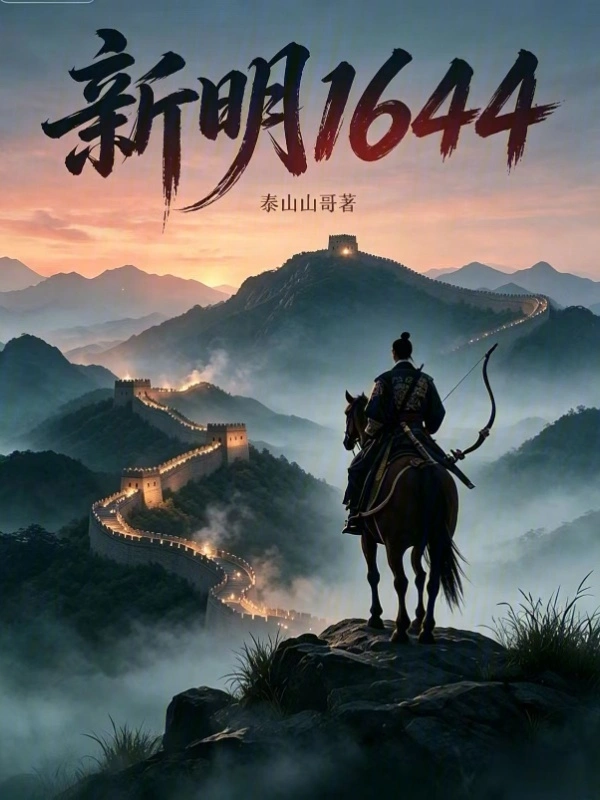
This book is based on the official history of "History of the Southern Ming Dynasty" and features realistic ancient martial arts fights, without time-travel cheats or fantasy powers.
The two heroes rushed to the north and south, assisted Longwu, followed Du Yinxi, gathered the remaining brigades, united with the border troops, rejected foreign invaders, and wiped out traitors.
In the desperate situation of the apocalypse, when the mountains and rivers are shattered and the world is in ruins, he uses his loyalty and iron blood to overcome the situation and regain the Ming Dynasty step by step!
Reader comments
You actually want to give up military power. If you have military power, Nanming and the gang won't dare to touch you. Without military power, you are nothing. You can't expect them to succeed in terms of their internal fighting in history, and it's disgusting to me to lick Kong's house.
It is easy to write the history of the Ming Dynasty into some parts of the braided drama of the Qing Dynasty❗
"Slaves": Eunuchs in the Ming Dynasty called themselves "slaves".
"Emperor": The Ming Dynasty rarely called the emperor this way, but it was commonly used in the Qing Dynasty.
"son": The Ming Dynasty princes did not call themselves this in front of the emperor.
"Aiqing": Before the Qing Dynasty, emperors rarely called officials this way.
"Memorial, Zhezi": This only appeared in the Qing Dynasty. Although it is the same document as the memorial, the difference is huge.
"Futai, Fantai, Niantai": These are the names of the Qing Dynasty. Those with "Tai" were all commonly used in the Qing Dynasty, and were rarely used in the Ming Dynasty.
"Master": In the Ming Dynasty, only top nobles and first- and second-rank officials were allowed. State and county officials were not called "Master".
"Sir": In the Ming Dynasty, it was only used for first- and second-rank officials, nobles, and elders of the father's generation. Prefecture and county officials below the third or fourth rank are not called adults.
"Prince": In the Ming Dynasty, people rarely addressed princes as "Prince". This was commonly used in the Qing Dynasty.
"My King": This was also a self-proclaimed name only in the Qing Dynasty.
"Bank Notes": Only available in the mid-Qing Dynasty. At the end of the Ming Dynasty, only money orders circulated among local acquaintances.
"Greetings": Etiquette among officials and bannermen in the Qing Dynasty. This etiquette did not exist in the Ming Dynasty.
"Eunuch": In the Ming Dynasty, only senior eunuchs had official positions, and ordinary eunuchs were called chamberlains. Only in the Qing Dynasty did all eunuchs be collectively called eunuchs.
"Our family": Eunuchs in the Ming Dynasty called themselves "I" to their subordinates, not our family.
"Military Gate": the name used in the Qing Dynasty to address generals such as admirals. In the Ming Dynasty, civil officials such as governors and governors were called governors.
"Kneeling Ceremony": Ming Dynasty officials temporarily knelt down when presenting to the emperor and stood up immediately after the ceremony. Subordinates do not easily bow down to superior officials. In the Qing Dynasty, emperors often knelt down to listen for a long time, and subordinates also generally knelt down and knelt down when meeting their superiors.
There are also many words commonly used by banner people after the Qing Dynasty:
Leave here, leave, errand, be on errand, return errand, master, reward some future, dare to love, grace,... Come,... Get Panic, master, encourage, weigh, send, dilly-dally, get rid of, we, laoshizi, fragrant pastry, hutong, see the sky, noon, baba, scold, wait to see, place, spread, in vain, scorn, chill, To estimate, to be boring, to be nimble, to protect one's shortcomings, to have no idea, to be wilted and bad, to be accurate, to be blind, to be coincidental, to be ordinary, today, tomorrow, yesterday, the sun, to show oneself, to follow, to scold, to have fun, toss, to make do, to worry. Remember, talk about, see, hit a wall......
{"NickName":"Supervision and Restriction","UserId":406440657}
The grass-roots team in Nanming, with military power, I can advance and retreat freely. Those without military power are just salted fish and lick the Confucius family. If I have a chance, it would be weird if I don't pretend to be bandits and Tatars and kill all the Confucius family. From now on, the imperial court will send commissioners to worship Saint Kong and respect Confucius, but not support the Confucius family.
The late Ming Dynasty is an era that makes countless people sigh. We look forward to a different future blooming after integrating ancient martial arts, so that the sun and moon can regain their brightness.
Let's talk about "Why is it difficult to calm down over the national crisis in Jiashen!""
The most disappointing thing about reading history is never the change of dynasties, but the fact that China was supposed to be moving forward brilliantly, but instead it was suppressed and stagnated for three hundred years.
Throughout the dynasties, China's political power has changed countless times, and no one has ever been dissatisfied.
Because the Han Dynasty ruled Kyushu, it was always inclusive and open to all rivers.
You can wear Hanfu, Miao clothes, Mongolian robes, or Dai ornaments as you like. Customs will not be abolished, cultural context will not be extinguished, ethnic groups will not be restricted, and tolerance and symbiosis will exist. This is the confidence and vision that China has remained standing for thousands of years.
But after Jiashen, everything changed.
Many people mistakenly believe that unwillingness means rejecting national integration.
Absolutely not.
The real unwillingness is that the Manchus entered the customs, which is not integration but isolation; not co-governance but captivity; not inheritance but annihilation of generations.
First, ethnic segregation and top-down oppression of privilege.
The Manchus had a sparse population, but they always harbored extreme suspicion towards the hundreds of millions of Han people.
So the city was built, the superiors and inferiors were distinguished, barriers were drawn up, and privileges were determined. The Eight Banners are high above all the people. They do not work or produce. They are supported by the people of the world from generation to generation.
The so-called national integration has disappeared.
Instead, there is the alienation from the superior, the wariness of never trusting, and the suppression of the hierarchy.
Treat hundreds of millions of people as sheep that need to be tamed, imprisoned, and guarded.
Second, it strangled the sprouts of the late Ming Dynasty and cut off China's modern way out.
In the last hundred years of the Ming Dynasty, the handicraft industry in Jiangnan flourished, commerce flourished, factories were numerous, and markets flourished.
Capitalism sprouts from the ground, and science and technology, craftsmanship, commerce, and citizen culture are fully awakened.
That was the best window period for China to enter modern civilization.
The Qing Dynasty entered the customs and in order to consolidate the imperial power, all civilian vitality was blocked across the board.
Industry and commerce are restricted, technology is suppressed, innovation is prohibited, and capital is suppressed.
Any new business format, advanced technology, or ideological breakthrough among the people will be regarded as a hidden danger and suppressed.
Third, the people are kept ignorant and trapped, deliberately creating ignorance for generations.
The most terrifying thing about the Qing court was not its tyranny, but its systematic ignorance of the people.
Consolidate stereotypes, lock down scientific research, castrate thoughts, and prohibit the study of objects to gain knowledge.
Don't let the common people study, don't let the scholars seek truth, don't let the people explore the truth of all things.
The rulers know very well:
As soon as the people's wisdom is opened, the privileges will be in danger; once the people's awareness is awakened, the imprisonment will be broken.
Thus, for three hundred years, ideas stagnated, science and technology went dormant, and cultural context died.
Scholars have spent their whole lives devoted to stereotypes, while ordinary people have been ignorant and numb for generations, completely losing the possibility of breaking through class, exploring the world, and innovating civilization.
Looking through the photos of the late Qing Dynasty, we can see that the Chinese people have haggard faces, scattered expressions, stooped bodies, and disfigured faces.
This is not genetic degeneration, this is the scar of the times left by three hundred years of high-pressure confinement, nutritional deficiencies, mental depression, and loss of vitality.
Today's people live a prosperous life, are well-nourished, and have broad cognition. Only then have their height, body shape, appearance, and temperament slowly returned to the handsomeness and elegance of the Qin and Han Dynasties.
This is the revival of civilization and the rejuvenation of luck.
Fourth, locking down technology and selfishness ruin the entire modern national destiny.
The most chilling thing is that the Qing royal family did not understand Western learning, but they understood it but deliberately did not let the common people understand it.
Qianlong was familiar with Western physics, versed in mechanical principles, and connected with the European royal family.
But he regards advanced technology as the emperor's private play, sealing it deep in the palace and never releasing it to the outside world.
With the Enlightenment, the Industrial Revolution, and the explosion of science and technology, Europe is entering modern civilization at full speed.
The Qing Dynasty went in the opposite direction: suppressing the investigation of things, blocking new knowledge, resisting railways, rejecting machinery, and resisting change.
The upper class is a bird in a cage, drunk and dreaming, and is stubborn;
The lower class is ignorant, hardworking, and trapped for generations.
The ruling class is extremely selfish and narrow-minded:
It would rather stagnate the country than allow the people to awaken their wisdom; they would rather regress civilization than shake the privileged rule.
As a result, China completely missed the entire golden age of the modern industrial revolution.
What we got in the end was the decline of national power, backward civilization, opening of the country's gates, invasion by coalition forces, broken mountains and rivers, a century of national humiliation, and thousands of unequal treaties.
This is the deepest, most painful, and most difficult reluctance in everyone's hearts after Jiashen.
We are not afraid of changes in government.
We are not afraid of ethnic integration.
We are not afraid of the ups and downs of time.
What hurts us the most is:
China originally had light, but it was artificially extinguished;
Civilization originally had a way forward, but it was artificially blocked;
The people originally had vitality, but it was artificially imprisoned;
The era originally had a leap, but it was artificially ruined.
Three hundred years of destruction is not destiny, but a man-made disaster.
It's not reincarnation, it's narrow-mindedness.
It's not fate, it's selfishness.
Reading Jiashen again today, I feel unwilling to accept it, but it is never hatred.
It is regretful, sad, respectful of civilization, and courageous after knowing shame.
Only by knowing the pain of stagnation in the past can we understand the value of openness today.
Only when you know the pain of being imprisoned can you know the importance of freedom and new knowledge.
The mountains and rivers are still there, and the cultural context is shining brightly.
Today, China finally holds its head high and returns to its peak.
The historical genre is quite a test of writing skills and literary attainments. So far, it seems to be okay. The plot is progressing steadily and has a lot of details. I look forward to the subsequent plots being more exciting and interesting.
From the introduction, you can see the torrent of history, the vividness of the characters, the tragedy of troubled times, etc., Which directly attracted me to read. I look forward to more updates.
The writing is very historical and realistic. He tried his best to change the outcome of Lu Chen in China. It is full of family and country feelings and is very contagious.
There are a lot of fictional historical novels about the Ming Dynasty on this website recently, but this book is very historical and story-telling. The author must have consulted a lot of information during the creation process, and the writing is very solid.
The author has a strong historical background. Through the author's description, I learned a lot about the historical facts of the late Ming Dynasty that I had never known before. This is the first time I have seen such a rigorous novel about the late Ming Dynasty. It is worth reading carefully.
There are very few novels in the late Ming Dynasty that are so realistic. This book is very innovative and has opened up a new path for Qidian novels in the late Ming Dynasty. I look forward to the author's subsequent thoughts. The focus is still on the issue of soldiers.
The elegies of the late Ming Dynasty made countless people sigh and gave them endless imagination. That sad era turned the tide.
The author's choice of words and sentences is quite ancient, and it immediately brings people back to the era of Luchen in China, which makes people feel very immersed in it.
When the land of China is sinking, we will rebuild the Ming Dynasty and change the outcome of the 300 years of subjugation to the world, so that China will no longer miss the opportunity of modernization and no longer suffer the history of modern humiliation.
The content is sophisticated, and the story unfolds very logically. There are no hang-ups at the end, how to regain the old mountains and rivers in Nanming's dilapidated ship.
It can be seen that the author's writing style is good, his feelings about his family and country are very strong, and his writing is brilliant. It is worth reading.
Chinese martial arts has a long history, is broad and profound!
The ancient Chinese martial arts have a long history and are not just a gimmick for later generations to perform martial arts. Most of them were born in the army on the battlefield and were skills tempered in life and death battles.
Bajiquan came from the hands of the northern rural garrison soldiers. It has strong and powerful fists, short blows and hard attacks, and close close contact. It pays attention to hard blows and hard blows. It is suitable for close combat in the chaos of the army. The fists, elbows, shoulders, and hips can all be used as killing weapons. Many military sergeants practice it.
The big gun was the king of the army in the Cold War era, and it was a must for military officers and soldiers. The long pole can be used to break formations. It can be used to poke and fend off enemies from a distance. It can be used to block and sweep at close range. It can be used both on foot and on horseback. Border officers and soldiers of all ages have used big guns as the foundation for their battle. They emphasize skill and proportion. Every move is a matter of life and death.
The Miao Dao originated from the battlefield against Japanese invaders in the Ming Dynasty. The long knife was controlled with both hands, cutting, stabbing, and thrusting. It took into account both distance and lethality. It was specially designed to deal with Japanese pirates with long swords. The sword technique was concise and sharp, not too fancy, and the key was to defeat the enemy quickly.
These martial arts are rooted in thousands of years of war and folk inheritance. The routine is the outer shell, and the core is the accumulation of experience in actual combat. We don't pursue a good-looking posture, but strive to defeat the enemy with one blow. We have taught it orally and personally from generation to generation, and it has been passed down to this day.
It's extraordinary to read the introduction. It's really interesting to click on it and read it with your heart. The atmosphere is great. The writing is good and creates a lot of pictures that you can relate to. I'm looking forward to the follow-up plot.
The characters are well created, without facial makeup, and the group portraits are vivid and each has its own personality. A lonely soldier in troubled times, a spark that started a prairie fire, changed the tragedy of Lu Shen in China at the end of the Ming Dynasty, and changed the sad history of the Southern Ming Dynasty.
Come on
It's rare to find a history book that is readable. The writing is solid and sophisticated. I look forward to the future development and ending this damn troubled world step by step!
It's a very nice historical novel. The beginning is quite interesting. The author's writing is good and the plot is smooth. The portrayal of Zheng Quji is even more vivid. I found it quite enjoyable to read, but the number of words is a little too short.
No collection on Ming Dynasty: Special Forces of the Ming Dynasty
Core equipment: Mainly "dark armor"
As elites who perform secret missions such as reconnaissance and infiltration, "Ye Bu Shu" prefers "dark armor" that is easy to hide, rather than "clear armor" with exposed and shining armor.
Dark armor (cloth armor): This is the mainstream military uniform of the Ming Dynasty. It is characterized by armor pieces (which may be metal or hard materials) sewn inside the cloth coat. It looks like an ordinary cotton armor or cloth robe. It can provide protection without visually revealing the identity, making it convenient to perform secret missions.
Cover Armor: In addition to the dark armor, sometimes a pure textile "hood armor" is worn. It has no armor pieces and its main function is to further camouflage and protect the inner dark armor.
Head Equipment: Practicality First
The selection of helmets also focuses on practicality to adapt to wild and covert operations.
: A traditional military clothing of the Ming Dynasty.
Dunxiu hat: This kind of helmet also appears in some restoration pictures, and it also has good protection and concealment.
Weapon configuration: light and close combat
In order to facilitate sneaking and quick action, the weapon configuration of "Night Refuse" is biased towards light and close combat.
Short-hand combat: Since they cannot carry large weapons, their training focuses more on the use of short weapons, such as swords, which are suitable for close-range raids and fighting.
Firearms: Some "Ye Bu Sheng" will also be equipped with firearms. In some overhead settings, they even used flintlock guns , which were more advanced than matchlocks , to reduce the risk of fire exposure during night operations.
The last years of the dynasty should be the most difficult time for the people. It depends on how the protagonist fights to create a pure land in troubled times and restore peace to China. A good novel.
Jiashen's country is in crisis, and China's land is sinking! With a mortal body and a tiny spark of fire, he continues the Ming Dynasty and the country, and passes on the immortal soul of the Han Dynasty through the ages!
Jiashen was in national calamity, the sky collapsed and the earth shattered, and the land of China sank.
Chongzhen hanged himself, the country was overthrown, and the iron hoofs of the Eight Banners crushed thousands of miles of rivers and mountains in the Central Plains. The clothes and hats of the north are covered with dust, the remaining dynasties in the south of the Yangtze River are fighting endlessly, rogue bandits roam the prefectures and counties, and the people are wandering through the ravines. Thousands of years of Han family rituals and music have collapsed, the homeland of Yao and Shun has been covered with dust, and the three-hundred-year-old foundation of the Ming Dynasty has collapsed in one day, and all living beings around the world have fallen into the purgatory of troubled times.
Everyone knows that the remnants of the Southern Ming Dynasty are swaying, and that the mountains and rivers are broken in the last days, but they don't know that when the building is about to collapse, there are still countless loyal people throughout the country, regardless of success or failure, fearless of life and death, using flesh and blood as a salary, and loyalty as a torch, in the boundless darkness, struggling to prop up the Han family's everlasting hope of rejuvenation.
This is an epic of the Ming Dynasty and the resurgence of the Ming Dynasty, which fully describes the character of the loyal soul in the late Ming Dynasty and the restoration of the world in troubled times.
At the beginning of the overthrow of mountains and rivers, the land of Qilu was filled with smoke and bones. Zheng Quji, a descendant of the Zheng family in Xingyang, was a man of both civil and military skills and a master of strategy. He rose against the odds in the desperate situation of Si River.
He gathered the common people among the refugees in troubled times, rescued the remnants of hundreds of battles in the nine sides under the yoke of slaves, relied on the five natural peaks of Changfeng Mountain, thousands of hectares of living water in Longwan Lake, and tens of thousands of acres of fertile soil in Changfeng Valley, and took advantage of the natural desperation of Yimeng Daigu to build the first secret foundation for the restoration of the Ming Dynasty in the north. Together with Zheng Yuqiao, the uncle of the same clan and a loyal minister of Jining, and the martyrs of the Jeju clan, they destroyed their homes and donated their land, poured money into aiding the army, sealed off the valley, secretly built strongholds, cultivated fields to support the people, smelted ordnance, and secretly stockpiled armored soldiers.
With Jining's Thousand Cannons Fortress as the bright barrier and the Changfeng Valley Tianxuan Ancient Village as the hinterland of sparks, one light and one dark, one city and one village, civil and military cooperation, uncles and nephews working together, firmly planted the first immortal fire of the restoration of the north, guarded the thousand-year cultural heritage of Zhusini Mountain, and forcibly carved out a pure land for the Han family to live in peace and contentment in the northern land where barbarians were ravaged.
The sparks in the North are just beginning to burn, and the righteous people all over the world respond with one voice and pray for each other.
Above the court, Emperor Longwu was determined to forge ahead and wanted to restore the country. He wanted to reorganize the mountains and rivers of Nanming, but he was trapped in the separatist rule of vassal towns and the corruption of the court. He had no ambition to rejuvenate and could not show his power to mend the sky;
>In the land of Jingchu, Du Yinxi single-handedly supported the overall situation of resisting the Qing Dynasty in southern Xinjiang. He pacified the refugees, reorganized the remnants of the army, and united with the rebel army. He single-handedly maintained the offensive and defensive momentum of half of the Southern Ming Dynasty. He was loyal and indomitable;
East Zheng Chenggong defended the sea and territory, crisscrossed the blue waves, controlled thousands of ships and tens of thousands of navy, and guarded the country's gates, becoming the strongest maritime barrier in the Southern Ming Dynasty;
Jiangnan Wengu, Xia Wanchunnian A young hero with unparalleled civil and military skills. He inherited his unique knowledge at a young age and cared about his family and country. He guarded the gentle spirit with his youthful loyalty and resisted Hu Chen with his iron-blooded pride. He wrote history and defended the people with his sword. He was the most dazzling young man's loyal backbone in the last days.
Zhongliang in the north and south face each other across the mountains and echo each other from a distance.
The grand structure of the book's 1,300 chapters has slowly unfolded since then:
Starting from Sishui and Jining in southern Shandong, he consolidated his base and trained troops, gathered refugees, built military forts in secret, opened up the canal trade and arms network, and firmly defended the foundation of the north's resistance to the Qing Dynasty;
Then he joined forces with Yinxi and Jingchu's troops, followed Longwu's intention to rejuvenate, united with Zheng Chenggong's maritime division, continued Xia Shu and Chunsi's cultural loyalties, and integrated all the remaining Ming forces in the world;
Allied with the volunteers outside the Great Wall in the north, recruited the frontier cavalry, quelled the chaos in the south of the Yangtze River, wiped out the arrogant soldiers and feudal vassals, conquered the coastal areas in the east, recovered the Central Plains in the west, and expedition to Youyan in the north.
Along the way, there are no auras of the protagonist but unfavorable tricks, only real difficulties in troubled times.
There is the sincerity of the nobles who destroyed their families to help the people in trouble, there is the tragedy of the veterans returning to the Han Dynasty after fighting to the death;
There is the passion of the monarch and his ministers working together, there is the helplessness of the suspicion in the court;
There is the tragedy of defending the city with blood, there is the hardship of traveling thousands of miles;
There is the heartbreak of life and death, and there is the majesty of a spark that starts a prairie fire.
In the Jiashen disaster, the Ming Dynasty was destroyed, and the prosperity and peace were destroyed, but the loyalty and character engraved in the bones of the children of the Han family were never lost.
A group of lonely ministers in troubled times, a commoner boy, a group of loyal gentry, countless veterans of wars, and thousands of homeless people,
established their destiny when the land of China was sinking, stood up when the mountains and rivers were broken, and rose again in the face of all difficulties and despair!
With a mortal body, I can bear the overthrow of the world;
With a tiny spark, I can restore the rivers and mountains of Kyushu.
Continuing the Ming Dynasty's unbroken Sheji, passing down the immortal soul of the Han Dynasty through the ages.
This is "The Ming Dynasty's Resurgence"!
A brief personal discussion on "Why I feel unwilling to accept the national calamity of Jiashen and the sinking of China and Lu"
Reading Gu Cheng's "History of the Southern Ming Dynasty", the most heartbreaking thing is never the defeat of the army, but the endless regret of the national disaster of Jiashen and the sinking of China.
The end of Ming Dynasty is by no means the death of Ming Dynasty. In terms of military strength, people's support, financial resources, and geographical advantages, Ming Dynasty had countless opportunities to make a comeback and stay in China. But in the end, the mountains and rivers collapsed and the clothes were overturned. The root cause was not the strength of foreign enemies, but the collapse of China's internal system.
Cliques in the court are constantly fighting, and Donglin is more private than public; the family cherishes wealth, and the bureaucrats cherish life. Everyone only cares about wealth and wealth, abandoning national justice, abandoning the world, and abandoning thousands of miles of rivers and mountains. The thousand-year cultural heritage of the Han people and the glorious Chinese orthodoxy were defeated by internal strife, selfishness, and the collapse of people's hearts.
What is even more frustrating is the gap in the situation after the barbarians took over.
The Chinese dynasties governed the world with an inclusive and open-minded attitude. They ruled the world and respected the customs of all ethnic groups, and did not destroy their clothes and culture. However, the Manchu Qing Dynasty had a shallow foundation and unmatched morals. Once they seized the Central Plains, they cut off their hair and changed their clothes, separated the cultural context, and destroyed ethics and education. He governed a vast country with a narrow mind, and used barbarian customs to disrupt China for thousands of years. It caused a fault in civilization and the loss of integrity, and made future generations regret it for thousands of years.
I wrote this book not to seek novelty, but to express the injustice of the ages and vent the grief and anger of the past century.
I want to rewrite the situation of national subjugation that could have been saved but was ruined by people's hearts.
I want to recreate the iron-blooded character of the loyal ministers and righteous men in the late Ming Dynasty, and awaken the loyal souls buried in history books.
I want to make the selfish party members and those who indulge in the powerful pay the price; let the people with lofty ideals who stick to their homeland and fight against the invaders with blood and blood gain their achievements and achieve their aspirations.
Use pen and ink as a sword to restore the mountains and rivers of the Han Dynasty; use articles as fire to burn the embers of the Ming Dynasty.
Continuing to write a story about the resurgence of the Han Dynasty that should have survived, comforting the souls of Jiashen, and making up for China's eternal regrets!
A brief discussion on "Why are we unwilling to accept the national crisis in Jiashen and Lu Shen in China?"
Reading Gu Cheng's "History of the Southern Ming Dynasty", the most heartbreaking thing is never the defeat of the army, but the endless regret of the national disaster of Jiashen and the sinking of China.
The end of Ming Dynasty is by no means the death of Ming Dynasty. In terms of military strength, people's support, financial resources, and geographical advantages, Ming Dynasty had countless opportunities to make a comeback and stay in China. But in the end, the mountains and rivers collapsed and the clothes were overturned. The root cause was not the strength of foreign enemies, but the collapse of China's internal system.
Cliques in the court are constantly fighting, and Donglin is more private than public; the family cherishes wealth, and the bureaucrats cherish life. Everyone only cares about wealth and wealth, abandoning national justice, abandoning the world, and abandoning thousands of miles of rivers and mountains. The thousand-year cultural heritage of the Han people and the glorious Chinese orthodoxy were defeated by internal strife, selfishness, and the collapse of people's hearts.
What is even more frustrating is the gap in the situation after the barbarians took over.
The Chinese dynasties governed the world with an inclusive and inclusive attitude. They ruled the world and respected the customs of all ethnic groups, never destroying their clothes and culture. However, the Manchu Qing Dynasty had a shallow foundation and unmatched morals. Once they seized the Central Plains, they cut off their hair and changed their clothes, separated the cultural context, and destroyed ethics and education. He governed a vast country with a narrow mind, and used barbarian customs to disrupt China for thousands of years. It caused a fault in civilization and the loss of integrity, and made future generations regret it for thousands of years.
I wrote this book not to seek novelty, but to express the injustice of the ages and vent the grief and anger of the past century.
I want to rewrite the situation of national subjugation that could have been saved but was ruined by people's hearts.
I want to recreate the iron-blooded character of the loyal ministers and righteous men in the late Ming Dynasty, and awaken the loyal souls buried in history books.
I want to make the selfish party members and those who indulge in the powerful pay the price; let the people with lofty ideals who stick to their homeland and fight against the invaders with blood and blood gain their achievements and achieve their aspirations.
Use pen and ink as a sword to restore the mountains and rivers of the Han Dynasty; use articles as fire to burn the embers of the Ming Dynasty.
Continuing to write a story about the resurgence of the Han Dynasty that should have survived, comforting the souls of Jiashen, and making up for China's eternal regrets!
The Ming Dynasty was also in a period of declining dynasty, and factors such as natural disasters, powerful factions, and blood-sucking soldiers gave Boar Skin a chance, and in the end it suffered for the people.
Gu Long is here!
Gu Long is here!
I don't think this chapter was written by the author. It should be written by the gunman Gu Long.
This book should be the best about martial arts among history books; among the martial arts novels, it is the best about history.
I really want to practice riding and shooting now, it's so cool!
 This Liu Bei Is Different
 My Father, Wen Tianxiang, Won the Battle of Yashan at the Beginning
 Three Kingdoms: Can Zhuge Zhan Command an Army?
 Ming Dynasty Great Talent
 No One Knows How to Destroy America Better Than Me
 Comprehensive Comics: Beyond Dimensions
 Just After the College Entrance Examination, Is the Divorce System Coming?
 Super Power Love Academy
 System, I Am Really Not a Top Student in the Soviet Union.
 Daily Life Starting with Wealth and Freedom
 The Republic of China: from Porter to Great Sage
 Know the Immortal by Smell the Fragrance
You actually want to give up military power. If you have military power, Nanming and the gang won't dare to touch you. Without military power, you are nothing. You can't expect them to succeed in terms of their internal fighting in history, and it's disgusting to me to lick Kong's house.
It is easy to write the history of the Ming Dynasty into some parts of the braided drama of the Qing Dynasty❗
"Slaves": Eunuchs in the Ming Dynasty called themselves "slaves". "Emperor": The Ming Dynasty rarely called the emperor this way, but it was commonly used in the Qing Dynasty. "son": The Ming Dynasty princes did not call themselves this in front of the emperor. "Aiqing": Before the Qing Dynasty, emperors rarely called officials this way. "Memorial, Zhezi": This only appeared in the Qing Dynasty. Although it is the same document as the memorial, the difference is huge. "Futai, Fantai, Niantai": These are the names of the Qing Dynasty. Those with "Tai" were all commonly used in the Qing Dynasty, and were rarely used in the Ming Dynasty. "Master": In the Ming Dynasty, only top nobles and first- and second-rank officials were allowed. State and county officials were not called "Master". "Sir": In the Ming Dynasty, it was only used for first- and second-rank officials, nobles, and elders of the father's generation. Prefecture and county officials below the third or fourth rank are not called adults. "Prince": In the Ming Dynasty, people rarely addressed princes as "Prince". This was commonly used in the Qing Dynasty. "My King": This was also a self-proclaimed name only in the Qing Dynasty. "Bank Notes": Only available in the mid-Qing Dynasty. At the end of the Ming Dynasty, only money orders circulated among local acquaintances. "Greetings": Etiquette among officials and bannermen in the Qing Dynasty. This etiquette did not exist in the Ming Dynasty. "Eunuch": In the Ming Dynasty, only senior eunuchs had official positions, and ordinary eunuchs were called chamberlains. Only in the Qing Dynasty did all eunuchs be collectively called eunuchs. "Our family": Eunuchs in the Ming Dynasty called themselves "I" to their subordinates, not our family. "Military Gate": the name used in the Qing Dynasty to address generals such as admirals. In the Ming Dynasty, civil officials such as governors and governors were called governors. "Kneeling Ceremony": Ming Dynasty officials temporarily knelt down when presenting to the emperor and stood up immediately after the ceremony. Subordinates do not easily bow down to superior officials. In the Qing Dynasty, emperors often knelt down to listen for a long time, and subordinates also generally knelt down and knelt down when meeting their superiors. There are also many words commonly used by banner people after the Qing Dynasty: Leave here, leave, errand, be on errand, return errand, master, reward some future, dare to love, grace,... Come,... Get Panic, master, encourage, weigh, send, dilly-dally, get rid of, we, laoshizi, fragrant pastry, hutong, see the sky, noon, baba, scold, wait to see, place, spread, in vain, scorn, chill, To estimate, to be boring, to be nimble, to protect one's shortcomings, to have no idea, to be wilted and bad, to be accurate, to be blind, to be coincidental, to be ordinary, today, tomorrow, yesterday, the sun, to show oneself, to follow, to scold, to have fun, toss, to make do, to worry. Remember, talk about, see, hit a wall...... {"NickName":"Supervision and Restriction","UserId":406440657}
The grass-roots team in Nanming, with military power, I can advance and retreat freely. Those without military power are just salted fish and lick the Confucius family. If I have a chance, it would be weird if I don't pretend to be bandits and Tatars and kill all the Confucius family. From now on, the imperial court will send commissioners to worship Saint Kong and respect Confucius, but not support the Confucius family.
The late Ming Dynasty is an era that makes countless people sigh. We look forward to a different future blooming after integrating ancient martial arts, so that the sun and moon can regain their brightness.
Let's talk about "Why is it difficult to calm down over the national crisis in Jiashen!""
The most disappointing thing about reading history is never the change of dynasties, but the fact that China was supposed to be moving forward brilliantly, but instead it was suppressed and stagnated for three hundred years. Throughout the dynasties, China's political power has changed countless times, and no one has ever been dissatisfied. Because the Han Dynasty ruled Kyushu, it was always inclusive and open to all rivers. You can wear Hanfu, Miao clothes, Mongolian robes, or Dai ornaments as you like. Customs will not be abolished, cultural context will not be extinguished, ethnic groups will not be restricted, and tolerance and symbiosis will exist. This is the confidence and vision that China has remained standing for thousands of years. But after Jiashen, everything changed. Many people mistakenly believe that unwillingness means rejecting national integration. Absolutely not. The real unwillingness is that the Manchus entered the customs, which is not integration but isolation; not co-governance but captivity; not inheritance but annihilation of generations. First, ethnic segregation and top-down oppression of privilege. The Manchus had a sparse population, but they always harbored extreme suspicion towards the hundreds of millions of Han people. So the city was built, the superiors and inferiors were distinguished, barriers were drawn up, and privileges were determined. The Eight Banners are high above all the people. They do not work or produce. They are supported by the people of the world from generation to generation. The so-called national integration has disappeared. Instead, there is the alienation from the superior, the wariness of never trusting, and the suppression of the hierarchy. Treat hundreds of millions of people as sheep that need to be tamed, imprisoned, and guarded. Second, it strangled the sprouts of the late Ming Dynasty and cut off China's modern way out. In the last hundred years of the Ming Dynasty, the handicraft industry in Jiangnan flourished, commerce flourished, factories were numerous, and markets flourished. Capitalism sprouts from the ground, and science and technology, craftsmanship, commerce, and citizen culture are fully awakened. That was the best window period for China to enter modern civilization. The Qing Dynasty entered the customs and in order to consolidate the imperial power, all civilian vitality was blocked across the board. Industry and commerce are restricted, technology is suppressed, innovation is prohibited, and capital is suppressed. Any new business format, advanced technology, or ideological breakthrough among the people will be regarded as a hidden danger and suppressed. Third, the people are kept ignorant and trapped, deliberately creating ignorance for generations. The most terrifying thing about the Qing court was not its tyranny, but its systematic ignorance of the people. Consolidate stereotypes, lock down scientific research, castrate thoughts, and prohibit the study of objects to gain knowledge. Don't let the common people study, don't let the scholars seek truth, don't let the people explore the truth of all things. The rulers know very well: As soon as the people's wisdom is opened, the privileges will be in danger; once the people's awareness is awakened, the imprisonment will be broken. Thus, for three hundred years, ideas stagnated, science and technology went dormant, and cultural context died. Scholars have spent their whole lives devoted to stereotypes, while ordinary people have been ignorant and numb for generations, completely losing the possibility of breaking through class, exploring the world, and innovating civilization. Looking through the photos of the late Qing Dynasty, we can see that the Chinese people have haggard faces, scattered expressions, stooped bodies, and disfigured faces. This is not genetic degeneration, this is the scar of the times left by three hundred years of high-pressure confinement, nutritional deficiencies, mental depression, and loss of vitality. Today's people live a prosperous life, are well-nourished, and have broad cognition. Only then have their height, body shape, appearance, and temperament slowly returned to the handsomeness and elegance of the Qin and Han Dynasties. This is the revival of civilization and the rejuvenation of luck. Fourth, locking down technology and selfishness ruin the entire modern national destiny. The most chilling thing is that the Qing royal family did not understand Western learning, but they understood it but deliberately did not let the common people understand it. Qianlong was familiar with Western physics, versed in mechanical principles, and connected with the European royal family. But he regards advanced technology as the emperor's private play, sealing it deep in the palace and never releasing it to the outside world. With the Enlightenment, the Industrial Revolution, and the explosion of science and technology, Europe is entering modern civilization at full speed. The Qing Dynasty went in the opposite direction: suppressing the investigation of things, blocking new knowledge, resisting railways, rejecting machinery, and resisting change. The upper class is a bird in a cage, drunk and dreaming, and is stubborn; The lower class is ignorant, hardworking, and trapped for generations. The ruling class is extremely selfish and narrow-minded: It would rather stagnate the country than allow the people to awaken their wisdom; they would rather regress civilization than shake the privileged rule. As a result, China completely missed the entire golden age of the modern industrial revolution. What we got in the end was the decline of national power, backward civilization, opening of the country's gates, invasion by coalition forces, broken mountains and rivers, a century of national humiliation, and thousands of unequal treaties. This is the deepest, most painful, and most difficult reluctance in everyone's hearts after Jiashen. We are not afraid of changes in government. We are not afraid of ethnic integration. We are not afraid of the ups and downs of time. What hurts us the most is: China originally had light, but it was artificially extinguished; Civilization originally had a way forward, but it was artificially blocked; The people originally had vitality, but it was artificially imprisoned; The era originally had a leap, but it was artificially ruined. Three hundred years of destruction is not destiny, but a man-made disaster. It's not reincarnation, it's narrow-mindedness. It's not fate, it's selfishness. Reading Jiashen again today, I feel unwilling to accept it, but it is never hatred. It is regretful, sad, respectful of civilization, and courageous after knowing shame. Only by knowing the pain of stagnation in the past can we understand the value of openness today. Only when you know the pain of being imprisoned can you know the importance of freedom and new knowledge. The mountains and rivers are still there, and the cultural context is shining brightly. Today, China finally holds its head high and returns to its peak.
The historical genre is quite a test of writing skills and literary attainments. So far, it seems to be okay. The plot is progressing steadily and has a lot of details. I look forward to the subsequent plots being more exciting and interesting.
From the introduction, you can see the torrent of history, the vividness of the characters, the tragedy of troubled times, etc., Which directly attracted me to read. I look forward to more updates.
The writing is very historical and realistic. He tried his best to change the outcome of Lu Chen in China. It is full of family and country feelings and is very contagious.
There are a lot of fictional historical novels about the Ming Dynasty on this website recently, but this book is very historical and story-telling. The author must have consulted a lot of information during the creation process, and the writing is very solid.
The author has a strong historical background. Through the author's description, I learned a lot about the historical facts of the late Ming Dynasty that I had never known before. This is the first time I have seen such a rigorous novel about the late Ming Dynasty. It is worth reading carefully.
There are very few novels in the late Ming Dynasty that are so realistic. This book is very innovative and has opened up a new path for Qidian novels in the late Ming Dynasty. I look forward to the author's subsequent thoughts. The focus is still on the issue of soldiers.
The elegies of the late Ming Dynasty made countless people sigh and gave them endless imagination. That sad era turned the tide.
The author's choice of words and sentences is quite ancient, and it immediately brings people back to the era of Luchen in China, which makes people feel very immersed in it.
When the land of China is sinking, we will rebuild the Ming Dynasty and change the outcome of the 300 years of subjugation to the world, so that China will no longer miss the opportunity of modernization and no longer suffer the history of modern humiliation.
The content is sophisticated, and the story unfolds very logically. There are no hang-ups at the end, how to regain the old mountains and rivers in Nanming's dilapidated ship.
It can be seen that the author's writing style is good, his feelings about his family and country are very strong, and his writing is brilliant. It is worth reading.
Chinese martial arts has a long history, is broad and profound!
The ancient Chinese martial arts have a long history and are not just a gimmick for later generations to perform martial arts. Most of them were born in the army on the battlefield and were skills tempered in life and death battles. Bajiquan came from the hands of the northern rural garrison soldiers. It has strong and powerful fists, short blows and hard attacks, and close close contact. It pays attention to hard blows and hard blows. It is suitable for close combat in the chaos of the army. The fists, elbows, shoulders, and hips can all be used as killing weapons. Many military sergeants practice it. The big gun was the king of the army in the Cold War era, and it was a must for military officers and soldiers. The long pole can be used to break formations. It can be used to poke and fend off enemies from a distance. It can be used to block and sweep at close range. It can be used both on foot and on horseback. Border officers and soldiers of all ages have used big guns as the foundation for their battle. They emphasize skill and proportion. Every move is a matter of life and death. The Miao Dao originated from the battlefield against Japanese invaders in the Ming Dynasty. The long knife was controlled with both hands, cutting, stabbing, and thrusting. It took into account both distance and lethality. It was specially designed to deal with Japanese pirates with long swords. The sword technique was concise and sharp, not too fancy, and the key was to defeat the enemy quickly. These martial arts are rooted in thousands of years of war and folk inheritance. The routine is the outer shell, and the core is the accumulation of experience in actual combat. We don't pursue a good-looking posture, but strive to defeat the enemy with one blow. We have taught it orally and personally from generation to generation, and it has been passed down to this day.
It's extraordinary to read the introduction. It's really interesting to click on it and read it with your heart. The atmosphere is great. The writing is good and creates a lot of pictures that you can relate to. I'm looking forward to the follow-up plot.
The characters are well created, without facial makeup, and the group portraits are vivid and each has its own personality. A lonely soldier in troubled times, a spark that started a prairie fire, changed the tragedy of Lu Shen in China at the end of the Ming Dynasty, and changed the sad history of the Southern Ming Dynasty.
Come on
It's rare to find a history book that is readable. The writing is solid and sophisticated. I look forward to the future development and ending this damn troubled world step by step!
It's a very nice historical novel. The beginning is quite interesting. The author's writing is good and the plot is smooth. The portrayal of Zheng Quji is even more vivid. I found it quite enjoyable to read, but the number of words is a little too short.
No collection on Ming Dynasty: Special Forces of the Ming Dynasty
Core equipment: Mainly "dark armor" As elites who perform secret missions such as reconnaissance and infiltration, "Ye Bu Shu" prefers "dark armor" that is easy to hide, rather than "clear armor" with exposed and shining armor. Dark armor (cloth armor): This is the mainstream military uniform of the Ming Dynasty. It is characterized by armor pieces (which may be metal or hard materials) sewn inside the cloth coat. It looks like an ordinary cotton armor or cloth robe. It can provide protection without visually revealing the identity, making it convenient to perform secret missions. Cover Armor: In addition to the dark armor, sometimes a pure textile "hood armor" is worn. It has no armor pieces and its main function is to further camouflage and protect the inner dark armor. Head Equipment: Practicality First The selection of helmets also focuses on practicality to adapt to wild and covert operations. : A traditional military clothing of the Ming Dynasty. Dunxiu hat: This kind of helmet also appears in some restoration pictures, and it also has good protection and concealment. Weapon configuration: light and close combat In order to facilitate sneaking and quick action, the weapon configuration of "Night Refuse" is biased towards light and close combat. Short-hand combat: Since they cannot carry large weapons, their training focuses more on the use of short weapons, such as swords, which are suitable for close-range raids and fighting. Firearms: Some "Ye Bu Sheng" will also be equipped with firearms. In some overhead settings, they even used flintlock guns , which were more advanced than matchlocks , to reduce the risk of fire exposure during night operations.
The last years of the dynasty should be the most difficult time for the people. It depends on how the protagonist fights to create a pure land in troubled times and restore peace to China. A good novel.
Jiashen's country is in crisis, and China's land is sinking! With a mortal body and a tiny spark of fire, he continues the Ming Dynasty and the country, and passes on the immortal soul of the Han Dynasty through the ages!
Jiashen was in national calamity, the sky collapsed and the earth shattered, and the land of China sank. Chongzhen hanged himself, the country was overthrown, and the iron hoofs of the Eight Banners crushed thousands of miles of rivers and mountains in the Central Plains. The clothes and hats of the north are covered with dust, the remaining dynasties in the south of the Yangtze River are fighting endlessly, rogue bandits roam the prefectures and counties, and the people are wandering through the ravines. Thousands of years of Han family rituals and music have collapsed, the homeland of Yao and Shun has been covered with dust, and the three-hundred-year-old foundation of the Ming Dynasty has collapsed in one day, and all living beings around the world have fallen into the purgatory of troubled times. Everyone knows that the remnants of the Southern Ming Dynasty are swaying, and that the mountains and rivers are broken in the last days, but they don't know that when the building is about to collapse, there are still countless loyal people throughout the country, regardless of success or failure, fearless of life and death, using flesh and blood as a salary, and loyalty as a torch, in the boundless darkness, struggling to prop up the Han family's everlasting hope of rejuvenation. This is an epic of the Ming Dynasty and the resurgence of the Ming Dynasty, which fully describes the character of the loyal soul in the late Ming Dynasty and the restoration of the world in troubled times. At the beginning of the overthrow of mountains and rivers, the land of Qilu was filled with smoke and bones. Zheng Quji, a descendant of the Zheng family in Xingyang, was a man of both civil and military skills and a master of strategy. He rose against the odds in the desperate situation of Si River. He gathered the common people among the refugees in troubled times, rescued the remnants of hundreds of battles in the nine sides under the yoke of slaves, relied on the five natural peaks of Changfeng Mountain, thousands of hectares of living water in Longwan Lake, and tens of thousands of acres of fertile soil in Changfeng Valley, and took advantage of the natural desperation of Yimeng Daigu to build the first secret foundation for the restoration of the Ming Dynasty in the north. Together with Zheng Yuqiao, the uncle of the same clan and a loyal minister of Jining, and the martyrs of the Jeju clan, they destroyed their homes and donated their land, poured money into aiding the army, sealed off the valley, secretly built strongholds, cultivated fields to support the people, smelted ordnance, and secretly stockpiled armored soldiers. With Jining's Thousand Cannons Fortress as the bright barrier and the Changfeng Valley Tianxuan Ancient Village as the hinterland of sparks, one light and one dark, one city and one village, civil and military cooperation, uncles and nephews working together, firmly planted the first immortal fire of the restoration of the north, guarded the thousand-year cultural heritage of Zhusini Mountain, and forcibly carved out a pure land for the Han family to live in peace and contentment in the northern land where barbarians were ravaged. The sparks in the North are just beginning to burn, and the righteous people all over the world respond with one voice and pray for each other. Above the court, Emperor Longwu was determined to forge ahead and wanted to restore the country. He wanted to reorganize the mountains and rivers of Nanming, but he was trapped in the separatist rule of vassal towns and the corruption of the court. He had no ambition to rejuvenate and could not show his power to mend the sky; >In the land of Jingchu, Du Yinxi single-handedly supported the overall situation of resisting the Qing Dynasty in southern Xinjiang. He pacified the refugees, reorganized the remnants of the army, and united with the rebel army. He single-handedly maintained the offensive and defensive momentum of half of the Southern Ming Dynasty. He was loyal and indomitable; East Zheng Chenggong defended the sea and territory, crisscrossed the blue waves, controlled thousands of ships and tens of thousands of navy, and guarded the country's gates, becoming the strongest maritime barrier in the Southern Ming Dynasty; Jiangnan Wengu, Xia Wanchunnian A young hero with unparalleled civil and military skills. He inherited his unique knowledge at a young age and cared about his family and country. He guarded the gentle spirit with his youthful loyalty and resisted Hu Chen with his iron-blooded pride. He wrote history and defended the people with his sword. He was the most dazzling young man's loyal backbone in the last days. Zhongliang in the north and south face each other across the mountains and echo each other from a distance. The grand structure of the book's 1,300 chapters has slowly unfolded since then: Starting from Sishui and Jining in southern Shandong, he consolidated his base and trained troops, gathered refugees, built military forts in secret, opened up the canal trade and arms network, and firmly defended the foundation of the north's resistance to the Qing Dynasty; Then he joined forces with Yinxi and Jingchu's troops, followed Longwu's intention to rejuvenate, united with Zheng Chenggong's maritime division, continued Xia Shu and Chunsi's cultural loyalties, and integrated all the remaining Ming forces in the world; Allied with the volunteers outside the Great Wall in the north, recruited the frontier cavalry, quelled the chaos in the south of the Yangtze River, wiped out the arrogant soldiers and feudal vassals, conquered the coastal areas in the east, recovered the Central Plains in the west, and expedition to Youyan in the north. Along the way, there are no auras of the protagonist but unfavorable tricks, only real difficulties in troubled times. There is the sincerity of the nobles who destroyed their families to help the people in trouble, there is the tragedy of the veterans returning to the Han Dynasty after fighting to the death; There is the passion of the monarch and his ministers working together, there is the helplessness of the suspicion in the court; There is the tragedy of defending the city with blood, there is the hardship of traveling thousands of miles; There is the heartbreak of life and death, and there is the majesty of a spark that starts a prairie fire. In the Jiashen disaster, the Ming Dynasty was destroyed, and the prosperity and peace were destroyed, but the loyalty and character engraved in the bones of the children of the Han family were never lost. A group of lonely ministers in troubled times, a commoner boy, a group of loyal gentry, countless veterans of wars, and thousands of homeless people, established their destiny when the land of China was sinking, stood up when the mountains and rivers were broken, and rose again in the face of all difficulties and despair! With a mortal body, I can bear the overthrow of the world; With a tiny spark, I can restore the rivers and mountains of Kyushu. Continuing the Ming Dynasty's unbroken Sheji, passing down the immortal soul of the Han Dynasty through the ages. This is "The Ming Dynasty's Resurgence"!
A brief personal discussion on "Why I feel unwilling to accept the national calamity of Jiashen and the sinking of China and Lu"
Reading Gu Cheng's "History of the Southern Ming Dynasty", the most heartbreaking thing is never the defeat of the army, but the endless regret of the national disaster of Jiashen and the sinking of China. The end of Ming Dynasty is by no means the death of Ming Dynasty. In terms of military strength, people's support, financial resources, and geographical advantages, Ming Dynasty had countless opportunities to make a comeback and stay in China. But in the end, the mountains and rivers collapsed and the clothes were overturned. The root cause was not the strength of foreign enemies, but the collapse of China's internal system. Cliques in the court are constantly fighting, and Donglin is more private than public; the family cherishes wealth, and the bureaucrats cherish life. Everyone only cares about wealth and wealth, abandoning national justice, abandoning the world, and abandoning thousands of miles of rivers and mountains. The thousand-year cultural heritage of the Han people and the glorious Chinese orthodoxy were defeated by internal strife, selfishness, and the collapse of people's hearts. What is even more frustrating is the gap in the situation after the barbarians took over. The Chinese dynasties governed the world with an inclusive and open-minded attitude. They ruled the world and respected the customs of all ethnic groups, and did not destroy their clothes and culture. However, the Manchu Qing Dynasty had a shallow foundation and unmatched morals. Once they seized the Central Plains, they cut off their hair and changed their clothes, separated the cultural context, and destroyed ethics and education. He governed a vast country with a narrow mind, and used barbarian customs to disrupt China for thousands of years. It caused a fault in civilization and the loss of integrity, and made future generations regret it for thousands of years. I wrote this book not to seek novelty, but to express the injustice of the ages and vent the grief and anger of the past century. I want to rewrite the situation of national subjugation that could have been saved but was ruined by people's hearts. I want to recreate the iron-blooded character of the loyal ministers and righteous men in the late Ming Dynasty, and awaken the loyal souls buried in history books. I want to make the selfish party members and those who indulge in the powerful pay the price; let the people with lofty ideals who stick to their homeland and fight against the invaders with blood and blood gain their achievements and achieve their aspirations. Use pen and ink as a sword to restore the mountains and rivers of the Han Dynasty; use articles as fire to burn the embers of the Ming Dynasty. Continuing to write a story about the resurgence of the Han Dynasty that should have survived, comforting the souls of Jiashen, and making up for China's eternal regrets!
A brief discussion on "Why are we unwilling to accept the national crisis in Jiashen and Lu Shen in China?"
Reading Gu Cheng's "History of the Southern Ming Dynasty", the most heartbreaking thing is never the defeat of the army, but the endless regret of the national disaster of Jiashen and the sinking of China. The end of Ming Dynasty is by no means the death of Ming Dynasty. In terms of military strength, people's support, financial resources, and geographical advantages, Ming Dynasty had countless opportunities to make a comeback and stay in China. But in the end, the mountains and rivers collapsed and the clothes were overturned. The root cause was not the strength of foreign enemies, but the collapse of China's internal system. Cliques in the court are constantly fighting, and Donglin is more private than public; the family cherishes wealth, and the bureaucrats cherish life. Everyone only cares about wealth and wealth, abandoning national justice, abandoning the world, and abandoning thousands of miles of rivers and mountains. The thousand-year cultural heritage of the Han people and the glorious Chinese orthodoxy were defeated by internal strife, selfishness, and the collapse of people's hearts. What is even more frustrating is the gap in the situation after the barbarians took over. The Chinese dynasties governed the world with an inclusive and inclusive attitude. They ruled the world and respected the customs of all ethnic groups, never destroying their clothes and culture. However, the Manchu Qing Dynasty had a shallow foundation and unmatched morals. Once they seized the Central Plains, they cut off their hair and changed their clothes, separated the cultural context, and destroyed ethics and education. He governed a vast country with a narrow mind, and used barbarian customs to disrupt China for thousands of years. It caused a fault in civilization and the loss of integrity, and made future generations regret it for thousands of years. I wrote this book not to seek novelty, but to express the injustice of the ages and vent the grief and anger of the past century. I want to rewrite the situation of national subjugation that could have been saved but was ruined by people's hearts. I want to recreate the iron-blooded character of the loyal ministers and righteous men in the late Ming Dynasty, and awaken the loyal souls buried in history books. I want to make the selfish party members and those who indulge in the powerful pay the price; let the people with lofty ideals who stick to their homeland and fight against the invaders with blood and blood gain their achievements and achieve their aspirations. Use pen and ink as a sword to restore the mountains and rivers of the Han Dynasty; use articles as fire to burn the embers of the Ming Dynasty. Continuing to write a story about the resurgence of the Han Dynasty that should have survived, comforting the souls of Jiashen, and making up for China's eternal regrets!
The Ming Dynasty was also in a period of declining dynasty, and factors such as natural disasters, powerful factions, and blood-sucking soldiers gave Boar Skin a chance, and in the end it suffered for the people.
Gu Long is here!
Gu Long is here! I don't think this chapter was written by the author. It should be written by the gunman Gu Long.
This book should be the best about martial arts among history books; among the martial arts novels, it is the best about history.
I really want to practice riding and shooting now, it's so cool!