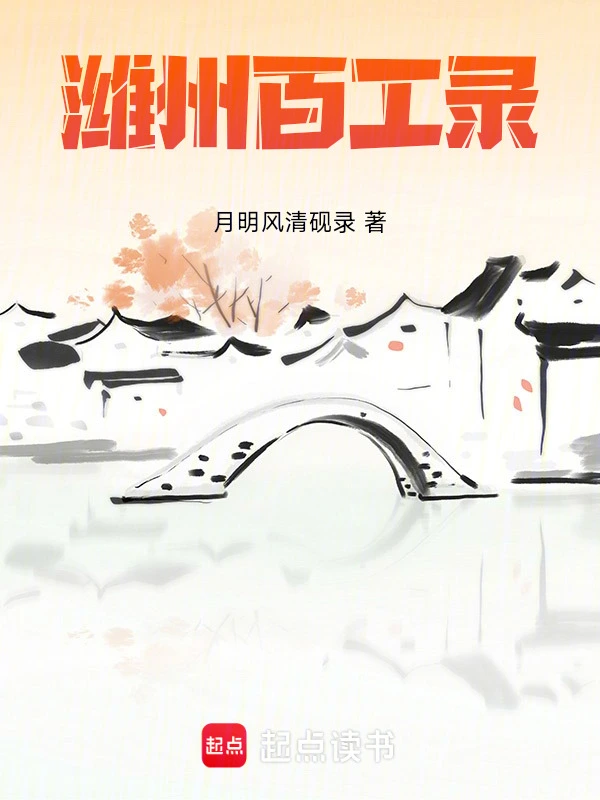
In the last years of Longqing's reign, there was a constant flow of canoes and sails on the Bailang River in Weixian County, and Baigong Lane gathered various crafts from Qilu. Wen Jingheng guards the increasingly declining New Year painting workshop, and the pear wood carvings are filled with Dongyue folk prayers. His father and brother have been ill for a long time, and the family's livelihood is stretched. New prints from the south of the Yangtze River flooded into the market, and businessman Zhou Maohe came to her door to persuade her to change the popular prints to make a profit. She touched the ancient genealogy handed down from her ancestors and replied calmly: "The patterns can be changed, but the roots cannot be broken."
Su Lingyi, who lives in Weixian County, lives in an embroidery workshop, and her Lu embroidery skills are the best in the streets. However, she is repeatedly challenged by Liu Yutiao, and her fingertips are often pricked by silver needles. When a storm broke out at the Dongyue Temple Fair, Wen Jingheng stepped forward to protect him, and the two met under a tea shed. Su Lingyi took out the embroidery card he carried and gave it to him, and sighed in a low voice: "Needle and thread can be adapted to suit the heart, but the true heart cannot be lost."
One holds a carving knife to protect the cultural heritage of his hometown, the other twists silk thread to comfort the world, and the two lonely women become close friends. All living beings are ups and downs in the alley: the Gu family and his son argue over the style of the kite, the Nie family's ancestors and grandchildren have a dispute over the improvement of clay sculptures, tribute collection, exorbitant taxes, and floods take turns to weigh on the shoulders of the craftsmen. Some people are seeking profit and tampering with ancient laws, while others are stuck in the old mold and trapped in survival.
This book uses Weizhou New Year pictures, Shandong embroidery, kites, and clay sculptures as intangible cultural heritage as its skeleton. It depicts the choices and reconciliations of craftsmen with few bloody conflicts. The flood destroyed the stereotyped clay molds, and the craftsmen repainted the patterns from memory. They realized that inheritance is not about sealing old things, but about placing craftsmanship in the world of fireworks.
The general outline of this book has been certified as a blockchain copyright certificate
This article will be updated to four chapters daily starting from August 20th, and will be revised until it is completed.
 A Powerful Man Enters the Crematorium After Divorcing His Wife
 Xiuhua
 Ran Deng Bao Chao
 Phoenix Tower
 Beast Control Starts from Zero Points
 Zheng Loves a Person with One Heart
 Abandoned Wives Are at Ease
 Quickly Wear It: I Just Want to Farm
 Northern Song Life Consultant
 Fight Between Famous Girls
 Houfu
Houfu
 Abandoned Wife's Beautiful Era
 River and Sea Ferryman