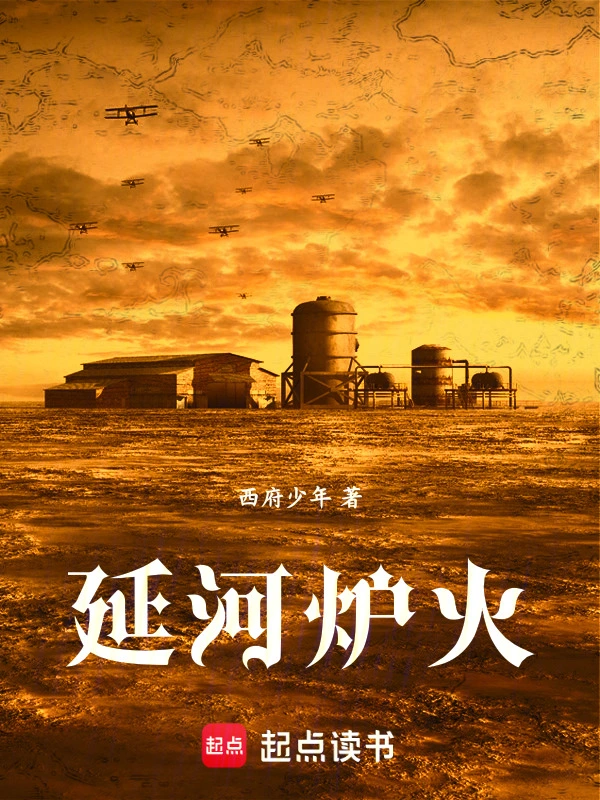
Yanhe Fire
延河炉火
- Status
- Ongoing
- Length
- 183k Words
- Genre
- Military
- Audience
- Male
- Subgenre
- War of Resistance
- Updated
- 1mo ago
- Source
- Qidian
Stats
0Monthly votes
18Recommends
0Fans
58Chapters
Synopsis
Reader comments
Readers also read
 I Traveled Through Liangjian and Copied Equipment at Changjin Lake
 Bright Sword: Play the Entire Game Starting from Northwest Shanxi
 War of Resistance: the Roar of the King of War
 What the Hell Is a Bloody Battle at Hacksaw Ridge When Someone Is in the Special Forces?
 Criminal Investigation Notes 2: Buried Corpse in Songhu
 Chang Sheng: If God Can't Reward Those Who Work Hard, I'll Just Do It
 China Entertainment: Starting from a Young Age
 Leader
 The Black Witch's Journey to Another World
 China Entertainment: Starting from Looking for Qin Ji
 With a Daily Payment of 10 Million, I Will Build a Special Zone in Dashan
 It's Just a Matter of Stocking up on Graphics Cards, Why Are All the Top Players Coming in the Future?
 Dreams and Drunkenness
Technical war flow
"Fenghuo Volcano River: Black Gold Bloodline" is an anti-Japanese war military online novel written by the author Xifu Boy. It is set in 1937. The protagonist Shen Yan (descendant of Shen Kuo) travels from Shanghai to Yan'an and takes over the Yanzhou Fire Kiln Factory that is on the verge of bankruptcy. He uses industrial technology to support the military industry in the border area - digging oil, making refractory bricks, building arsenals, and following the route of "technical resistance + industrial salvation". 📖 Comprehensive Book Review ✅ Highlights - The subject matter is rare and innovative: it avoids the common frontal battlefield fighting, focuses on "rear industrial infrastructure + technical resistance", and writes kilns, oil refining, and military industry supporting facilities into the narrative of the Anti-Japanese War, with a unique perspective. - The historical quality is acceptable: it incorporates elements such as "Mengxi Bi Tan", the customs of northern Shaanxi, and the border blockade, and has a certain historical atmosphere and feelings of home and country. - The protagonist is a technical literati: he does not rely on system cheats, but relies on modern industrial knowledge to transform border industries. The setting of "knowledge is power" is more comfortable. ⚠️ Disadvantages - Small size and slow updates: Currently there are only more than ten chapters and more than a thousand recommendations. It is still a new work by a newcomer. The length is too short to judge the subsequent level. - The pace is slow: There are many detailed descriptions of heavy industry, and readers who prefer refreshing writing may find it boring. - The plot conflict is relatively mild: there is no intensive slap in the face or high-frequency reversal, and it is mainly driven by atmosphere and idealism. 🎯 Suitable for readers Readers who like the industrial stream of the Anti-Japanese War/Industrial Salvation of the Nation stream, prefer a strong historical texture, and do not pursue high-frequency cool points. If you go for the traditional anti-Japanese war novels, you may feel that it is too weak.
The novel successfully portrays Shen Yan, a heroic figure with both intellectual sentiment and practical spirit. He is not a high-minded theorist, but a technical practitioner who goes deep into the front line. From improving the formula to escaping from death, Shen Yan proved the power of knowledge with his passion. At the same time, the work also portrays a vivid image of a group of old kiln workers. From their initial superstition and conservatism to their later identification and cooperation, the work shows the awakening and growth of ordinary workers in the face of national justice. The interaction between Shen Yan and the old kiln workers is not only the teaching of technology, but also the blending of spirits. He uses loess as his bones and flames as his soul, closely connecting his personal destiny with the survival of the country. This kind of construction of character relationships avoids facial expressions and gives the characters profound human brilliance and historical thickness.
The core theme of "Fire in Yanhe" is to praise the Yan'an spirit of self-reliance and hard work. The book mentions that every refractory brick and every grain of ceramsite fired by Shen Yan is the heart support of Yanhe Petroleum Plant and the gun base of the arsenal. These seemingly small industrial products are actually invisible fortresses that support the lifeline of military industry in the border areas. The novel emphasizes the importance of the industrial base for national independence and liberation through the symbolic image of "the fire in the kiln never goes out, and the blood of black gold continues." In the desperate situation of Japanese bombing and blockade, the rebirth of Yanzhou Fire Kiln Factory was not only the revival of a factory, but also the epitome of the perseverance and self-improvement spirit of the Chinese nation. It conveys a profound truth to readers: the real war of resistance involves not only bloodshed and sacrifice on the battlefield, but also silent dedication on the production line; real heroes include not only warriors who charge into battle, but also craftsmen who stick to their original aspirations in ordinary positions. From the perspective of artistic style: the combination of realism and romantic feelings In terms of writing style, "Fire in Yanhe" has both the roughness of realism and the lyricism of romance. The author's detailed description of the Loess Plateau's landscape and kiln operations is extremely solid, creating a rich historical atmosphere. At the same time, the expression of feelings about family and country and the persistence of idealism interspersed in the work give the text a poetic beauty. Chapter titles such as "The ashes in Shanghai shed tears, and I traveled thousands of miles to serve the country" and "The loess silently forged a shield", etc., Which are both classical and elegant, and closely follow the plot, enhancing the literary appeal of the work. "Fire in Yanhe" is a masterpiece that pays tribute to ordinary workers and promotes the spirit of patriotism. It reconstructs the memory of the Anti-Japanese War from a unique industrial perspective, demonstrates the brilliance of human nature with delicate characterization, and responds to the proposition of the times with profound thematic thinking. Revisiting this period of history in the present is not only to remember the past, but also to draw strength to move forward. When the fire of the kiln illuminates the way forward, the original intention and belief in rejuvenating the country through industry still inspires every Chinese to work tirelessly to realize the great rejuvenation of the Chinese nation.