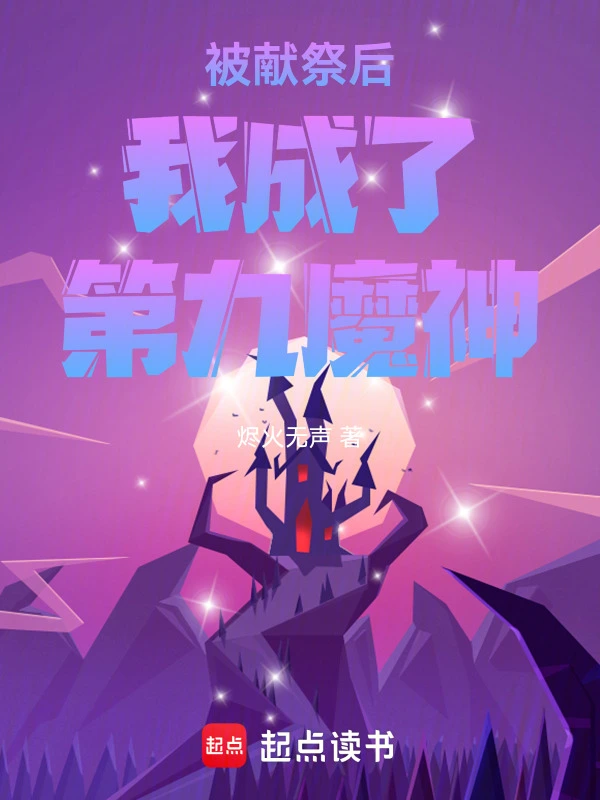
After Being Sacrificed, I Became the Ninth Demon God
被献祭后我成了第九魔神
- Status
- Ongoing
- Length
- 605k Words
- Genre
- Fantasy Romance
- Audience
- Female
- Subgenre
- Otherworld Continent
- Updated
- 9d ago
- Source
- Qidian
Stats
0Monthly votes
80Recommends
0Fans
194Chapters
Synopsis
Reader comments
Readers also read
 Peasant Girls Do Not Cultivate Immortality
 Wife Hunting Rules
 Cultivation Is Too Difficult, and People Will Die If They Do the Tasks.
 All Beasts Return to Zhao
 The Silver Silk Flowers Are Just Right and Live up to Jincheng Spring
 Apocalyptic Exotic Plants
 Yao Jing Secret Records
 Your Highness, It Is Important to Investigate the Case
 Tisi Jiangui Lu
 After Entering the Game, I Became the Richest Man
 The Largest Palace in Time Travel
 In Spring
 Baigong Catalog
Good looking, please read "Chen Shang Sword Journey"!
Writing a book is not easy, so stay with me!
How did "I became the Ninth Demon God after being sacrificed" come about.
1. Where does this story come from The prototype of "I Became the Ninth Demon God after I Was Sacrificially Sacrificial" was born late one night. At that time, I had just finished reading a "sweet pet novel" - the male and female protagonists sprinkled sweets from meeting each other to staying together. The readers were happy to read it, and the author wrote it easily. But I always feel like something is missing. What is the end of sweetness? Is it sweeter? If it is extremely sweet but has no weight, then will this sweetness be too "light"? So I thought: What if sweetness comes at a price? What if every sweet moment accumulates a knife? This thought is the starting point of "I became the ninth demon god after being sacrificed". 2. Why is forbidden love Forbidden love is not a gimmick, it is inevitable. I want to write a story about "we shouldn't be together, but we fall in love with each other". Because the more forbidden feelings are, the more it proves how difficult it is for "I choose you". Luo Chen is an elf priest, and protecting the common people is his belief. Shuang Jiang was a sacrifice from the demon clan, the object he was supposed to "purify". What separates them is: Racial opposition Conflict of faith Identity gap These barriers are not "misunderstandings" - they are real and cannot be easily overcome. So when they choose to be together, this choice has weight. It's not "can we be together", but "even if I shouldn't be, I will choose you." 3. What do you think about "Black Lotus Heroine" To be honest, I am tired of writing "Silly Baitian" and tired of watching "Silly Baitian". The heroine is weak, kind, and waiting to be saved. Of course there is an audience for this kind of character, but it is not what I want to write most. What I want to write is: a person who pulls himself out of the abyss. Shuangjiang is not without her fragile moments. She was sixteen years old when she was sacrificed by her father. She is in a cage in the abyss, not knowing whether she will be swallowed tomorrow. But she didn't collapse. She keeps a diary. She observes the enemy. She waits for her chance. She knew she couldn't die, because if she died, there would be nothing left. "I am not anyone's sacrifice, nor anyone's chess piece." This sentence is not a heroic statement, but a reason to live. For a character to say this, he needs to experience enough despair first. All the depression in the first 40 chapters of "I Became the Ninth Demon God after Being Sacrificially Exposed" is all because of this sentence. 5. What does this story want to say "After being sacrificed, I became the Ninth Demon God" is a story of "forbidden love + heroine's counterattack" on the surface. But there is only one sentence at the core of what I want to write: "People can be chosen by fate, but they cannot be defined by fate." Shuang Jiang has been wrapped up in fate since birth: her mother died early, her father sacrificed, she was sacrificed in the abyss, and she became an exception. But she never gave up the struggle. She spent her life proving: I can choose who I want to be. Luo Chen also faces a choice: faith or love? He chose love. But the way he chose was to sacrifice himself. He lost his memory to save her, not because he didn't love her anymore, but because he loved her too much. "After I Was Sacrificed, I Became the Ninth Demon God" is not about "lovers eventually get married", but "even if we can't stay together, love still exists". 6. Written to you who are chasing the article If you are chasing "I became the Ninth Demon God after being sacrificed": Thank you for coming to accompany Shuang Jiang through this journey. If you are hit by a knife - it means the knife is written in place. If you think it's "too cruel" - please remember that the sweetest candy is in Chapters 211-221 (Returning to the Pastoral). I suggest you prepare tissues first. If you decide to continue chasing - Please believe me: After the knife, there is the aftertaste. After the aftertaste, there is relief. And this journey itself is what I want to give you. "You are my calamity, and I am willing to save you." ——This is the core of "I Became the Ninth Demon God after Being Sacrificed" and the reason why I wrote this story. ——Jinhuo, June 19, 2026
The eight demon gods each have their own agenda - the design logic of the villain portraits
1. Detailed explanation of each demon Gluttony·Maw: The most primitive evil Why write about him first? Because gluttony is the most instinctive desire. A baby cries when it is hungry and cannot think about good and evil. The Maw is the extreme extreme of this instinct - he devours everything, not because of evil, but because of hunger. This kind of evil is the most terrifying and the simplest. Design details: He has no fixed form and can transform into any creature he has swallowed. The metaphor of this setting is: the devourer will become the one who is devoured. The Maw swallowed up so many things that in the end he didn't know what he was. In Shuang Jiang's story line, Yan Yuan is her "first shackles". But I devised a twist—in the end, Maw chose to fulfill it. Gluttony comes true? This is not a whitewash. But when Shuang Jiang was powerful enough and she was no longer something he could devour, he chose another way to coexist with her. Greed·Bone Erosion: The Abyss of the Calculator Why is Bone Erosion designed to be an old man? Because greed takes time to accumulate. Young people are easy to be impulsive, but the greed of old foxes has been polished over time. Design details: The creed of Bone Erosion is "equivalent exchange". This is interesting - greedy people are often the most "fair" because they are afraid of losing money. Every "transaction" he makes is carefully calculated. He helped Shuang Jiang not because of good intentions, but because the deal was beneficial to him. Later in the story, when Shuangjiang's value exceeds his expectations, his "fair trade" becomes a new trap. Arrogance·Lingtian: The Disguise of Fear Lingtian is the most "positive" among the eight demon gods. He has a sense of order, the dignity of the strong, and even a twisted "sense of responsibility" for the weak - the strong should protect the weak, provided that the weak must obey. Why is he the most arrogant? Because the essence of arrogance is fear. He is afraid of being surpassed, afraid of being denied, and afraid that one day he will no longer be "perfect". So he armed himself with arrogance to keep everyone away from him. Key scene design: Ling Tian looked Shuang Jiang in the face for the first time and said, "You are the first person who dares to look directly into my eyes." At that moment, a crack opened in his arrogance - he began to care about this woman. Sloth·Eternal Sleep: Another Kind of Struggle Eternal Sleep may be the most easily ignored demon. He has no ambition, no desire, he just wants to sleep. But this is precisely the most "dangerous" thing - a person who doesn't want anything cannot be bribed. Design details: Yongmian actually knows everything, but he chooses to sleep. Does this look like passive resistance? When the world is too chaotic, when people are too greedy, when everything is meaningless - some people choose to close their eyes and pretend not to see. Yongmian is not a bad person, he is just tired. Lust·Huoxin: longing for love but not understanding love Huoxin is the most "human" of the eight demon gods. He has emotions, desires, and vulnerability. He pursues the satisfaction of desires because he longs to be loved, but he doesn't know what true love is. Key settings: Huoxin is most jealous of the relationship between Luo Chen and Shuang Jiang. Because in his opinion, emotions can be manipulated. But the relationship between Luo Chen and Shuang Jiang was beyond his understanding. He didn't understand, so he wanted to destroy it. Knife design: Huoxin was finally defeated by Shuangjiang because he finally "felt" something. He truly experienced the feeling of being "loved" for the first time - and then he died. This kind of "awakening death" is worse than simple failure. Rage·Burning: The Last Weapon of the Weak Burning may be the "simplest" of the Eight Demon Gods. He is simple-minded, has a bad temper, and gets angry when he doesn't like things. But I designed a detail: What he hates most is betrayal. Why? Because he has been betrayed. Before becoming the Demon God, he once trusted others and was betrayed. Anger is his protective shell. When everything is an enemy, there will be no betrayal. Battle scene design: The stronger Burning Ember's anger, the stronger the power. This is both a combat system and a psychological metaphor: the angrier the person, the more vulnerable they are. Jealousy·Heart-eating: A projection of inferiority Heart-eating is the most "miserable" among the eight demon gods. She is jealous of all the good things - because she feels she doesn't deserve them. Key settings: The face of Heart Eater will change according to the jealous person in the viewer's heart. This setting is cruel - she has no face of her own. All her "beauty" is the projection of other people's shadows. Knife design: Heartbiter was finally defeated because of Shuangjiang's words. "You don't even have the right to be jealous, because you have never had it." This is not a shame, it is the truth. Heartbiter spent her entire life envious of everything others had, but never created anything herself. Hypocrisy·Xi Ming: The Mask of Nothingness Xi Ming is the most "interesting" among the Eight Demon Gods. He is cynical and takes everything as a show. But because of this, he is also the most dangerous - when the world is just a drama, all sacrifices are meaningless. Design details: You will be laughing until the end of the play. He watched Shuang Jiang overthrow the old order, watched Luo Chen lose his memory, watched everyone suffer - he thought this play was really exciting. But at the end, I designed a twist: Xi Ming asked Shuangjiang: "Do you still remember me?" At that moment, he took off his mask. He is not really nihilistic, he is just afraid of being serious. If you take it seriously, you will get hurt, so it's better to just watch it as a show. 3. Words to Readers Writing about the Eight Demonic Gods is actually writing about the eight possibilities of human nature. Each of us may "become" one of them at some point: Like a pit when hungry Like bone erosion when caring Like Lingtian when protecting oneself Like eternal sleep when wanting to escape Like confusion when longing for recognition Like burning embers when unable to resist Like heart-gnawing when seeing other people's good intentions Like playing with fate when pretending not to care The eight demon gods are the eight mirrors of the human heart. "Every villain was once a wounded child. This is what the Eight Demon Gods taught me, and it is what I want to write into the story."
Luo Chen: For you, I am willing to betray the whole world, including myself
1. Luo Chen's three-layered shackles The first layer: the shackles of identity The elf priest must not be emotional. This is an iron rule. Luo Chen was taught since childhood: You are the guardian, and your love should be given to the common people, not to a certain person. So he learned to treat everyone as "objects that need to be protected" rather than "living people". The first thing Luo Chen said to Shuang Jiang was: "Are you okay?" He may have said this to countless people. But when he told Shuang Jiang, he cared about the other person's answer for the first time. This detail is a watershed in my design - from that moment on, she is no longer "one of the living beings who need to be protected", but "she". Second Level: The Shackles of Mission Luo Chen's mission is to protect the common people. But Shuangjiang is a demon, a sacrifice to the devil, and "darkness that needs to be purified." From the perspective of the Elf Holy See, he should eliminate her. This conflict has been foreshadowed since Chapter 10: He decided to go south to track down the demon's strange movements. On the surface, it was a mission, but in fact, he wanted to see her again. Readers may not see it at first. But when he looks back, he will find that the moment he saw those eyes in the sea of stars, he was already shaken. The third level: the shackles of self This is the core level. Luo Chen's biggest enemy is not the Elf Church or the eight demon gods, but himself. There was a voice deep in his heart: You shouldn't love her. You betrayed your faith. You are a traitor. This kind of self-denial is more painful than any external punishment. On the eve of Chapter 88 Forbidden Confession, Luo Chen prayed alone in the Xinghui Temple: "God, please tell me what I should do." He asked God for guidance, but God did not answer. Because only he knows the answer - he has made his choice a long time ago, but he just doesn't dare to admit it. 2. Logo feature design analysis Amber gold eyes Why amber gold? The design is inspired by the morning light - the elves worship the stars, and the morning light is the first ray of light that shines into the darkness. Luo Chen's eyes represent his essence: he is light. But this "light" is not holy and ungrounded - amber is warm and temperature-based. This means that his feelings for Shuang Jiang are human, not divine. There is a detail: every time Luo Chen's mood fluctuates, the color of his eyes will become darker. This corresponds to Shuang Jiang's hair color gradient - they are both losing control, but they are all trying to restrain themselves. Silver-white long hair + star pattern Silver hair represents the purity of the elves' blood. The star pattern represents the priest's cultivation achievements. But I designed a key detail: Luo Chen's star pattern began to fade after awakening. This is a metaphor that he is losing his power and identity as a priest. It's not that he has become weaker, but that he no longer needs the shell of "priest" to define himself. The final star pattern disappeared completely at the moment when he broke with the Elf Holy See. At that moment, he was no longer the priest Luo Chen, but just a person who loved Shuang Jiang. "May the stars guide your path" This is Luo Chen's classic line and also his farewell message. Original design intention: Priests of the elves are accustomed to using "stars" to express their wishes, because for them, starlight is the language of God. But when Luo Chen said this, the context was often contradictory: While guarding Shuang Jiang, he said, "May the stars guide you." He himself is her star, but he cannot admit it. This conflict will break out later - when he says ""May the stars guide you"", he is choosing to leave her. Because he cannot say "I love you". 3. Luo Chen's emotional line design Start: Restraint (Chapter 1-55) Luo Chen at this stage is depressed. He knows He said that he should not have feelings for Shuang Jiang, so he packaged all his care as a "mission". He taught her Elvish to "better integrate into the world." The reader can see that he just wants to spend more time with her. This feeling of "clearly caring, but pretending not to care" is the sweetest part in the early stage. Br>Inheritance: Struggle (Chapter 56-95) At this stage, Luo Chen began to waver. He knew that he wanted to stay with her. But he also knew that he should leave. The belief of the elves, and his own identity... Are all collapsing. He was "pushed" by Shuang Jiang, but it was himself who collapsed first Transformation: Breakup (Chapter 96-140) This is one of the most important turning points in the whole story. Luo Chen chose to betray the Elf Church and said: "For you, I am willing to become a demon. " The weight of this sentence is: he is really willing. He gave up the identity, status, and beliefs accumulated over one hundred and eighty years, just to stay with her. This is not an impulse-this is a carefully considered choice. Precisely because he is a rational person, this choice is more touching. Combined: Sacrifice (141-24) Chapter 0) Luo Chen's ending line is a hidden line. What the reader sees is a return to the countryside, a proposal and marriage - a perfect outcome on the surface. But the hidden line is advancing quietly: he discovers the price of "eternal sleep", and he makes a decision. The metaphor of this choice is: He loves her too much. Deep, so deep that I am willing to forget this love itself, but also to let her live. This is the gentlest knife in the whole story - not forgetting because you don't love it anymore, but choosing to forget because you love it too much. 4. Words to readers Luo Chen is the most "distressed" male protagonist I have ever written. It's not that he's not strong enough, it's not that he's not brave enough - he is exactly that. It was too sober, so it was too painful. He knew that if he chose her, he would lose everything. He knew that his final outcome would be to forget. Because in his heart, her life was more important than his memory. "For you, I would betray the whole world. " But the last person he betrayed was himself. "May the stars guide your path, my Shuangjiang. Even if you don't know who I am, I will be by your side." ——This is Luo Chen's oath, and it is also the deep feeling I want to write into this character. ——Jinhuo, June 19, 2026
Sacrifice → Chess Piece → Awakened → Demon God: Shuang Jiang's four-stage character evolution
1. Why "Black Lotus" Before writing Shuang Jiang, I thought about one thing clearly: The traditional "silly white sweet" heroine cannot survive more than three chapters in this story. She was put on the altar by her biological father and dedicated to a demon whose instinct was to devour. If she is naive, kind, and disillusioned with the world - she will either die or become someone else's pawn. So Shuangjiang must be "black". It's not bad, it's sober. She knew that the world would not be kind to her, so she learned to be kind to herself. She knew no one would save her, so she learned to save herself. She knows that feelings can be a weakness, so she learns to weigh the cost before trusting. Only such a heroine deserves the ending of "The Ninth Demon God". Two and four stages of transformation design Phase 1: Sacrifice (Chapter 1 to 40) Core keywords: forbearance, depression, glimmer of despair Shuang Jiang at this stage is passive. She was sacrificed by her father, marked by the Maw, and imprisoned in the Abyss. Her destiny is completely in the hands of others. But I designed one detail: She kept a diary in the cage. Each chapter of the diary is her silent resistance to the world. Outsiders cannot see it, but readers can. That was proof that she was still alive and proof that she was unwilling to give in. This design laid the psychological foreshadowing for subsequent awakening - she never really accepted her fate. Phase 2: Chess Pieces (Chapter 41 to 95) Core Keywords: Struggle, Resistance, Active Choice Luo Chen appeared. But this does not mean that Shuangjiang is "saved". Her feelings for Luo Chen are complicated: Initial stage: use. Use his power to escape the Maw. Mid-term: test. Why did he help me? What does he want? Later period: wavering. His sincerity was melting her defenses. At this stage, I designed a key scene - Shuang Jiang actively chooses to believe Luo Chen for the first time. Not because of how powerful he was, but because she saw an uncalculated light in those amber-gold eyes. At that moment, she decided to take a gamble. Stage Three: The Awakened (Chapter 96 to 140) Core keywords: breaking out of the cocoon, control, price Awakening is not "suddenly becoming stronger", but a painful choice. I designed a scene: Shuang Jiang takes the initiative to activate the "odd seeds" in her body and accepts the awakening. The price is: The body suffers the pain of bone erosion The Maw will sense her position She will officially become the "prey" of the Eight Demon Gods But she still chooses to awaken. Because passive waiting can only lead to death, and taking the initiative can only make it possible to survive. This is the core of Black Lotus: I don't feel pain, I choose to bear the pain. Stage 4: Demon God (Chapter 141 to 240) Core Keywords: Power, Responsibility, Sacrifice After becoming the Demon God, what Shuang Jiang faced was not "a cool article about killing monsters and upgrading", but a heavier proposition: The greater the power, the greater the responsibility. She overturned the old order, but what new order can she establish for this world? I designed a core contradiction: Shuang Jiang can choose to become a "real demon" - like the other eight, driven by desire, to rule the world. But she chose another path: becoming a guardian, not a ruler. This choice transformed her from "the prey of the villain" to "the new order". It was this choice that gave the final knife more weight - she protected everyone, but she could not protect her and Luo Chen's memory. 3. Design analysis of logo features Tear mole on the left corner of the eye Design source: In Eastern aesthetics, the "tear mole" has a metaphor of "being trapped by love". This tear mole has been there since the first chapter, but it was not a tear mole at the beginning, but a scar - left behind when the demon was out of control when he was young. Later I changed it into a tear mole. The reason is: this character's ultimate fate is to be "trapped by love", and this mole is the projection of her fate on her face. The "bite mark" on the side of the neck The mark planted by the abyss on her neck - a dark purple thorn pattern. Design logic: The thorns represent bondage The dark purple represents the dark power of the demon As the plot develops, this mark will spread, implying that her bond with the demon is getting deeper and deeper After the final awakening, the bite mark will be devoured by her and become part of her power This design is a visual symbol for readers: her body is marked, but her soul has never been conquered. Silver long hair with lavender gradient Design source: Silver represents frost and snow, which equals coldness; lavender represents abyss and mystery. This is the external manifestation of her demonic bloodline and ninth strange power. One detail: every time she gets emotional, the purple color of her hair becomes darker. This is an Easter egg I buried for readers - on the surface it says "She is in a good mood today and her hair color is beautiful", but in fact it implies "her power is awakening". 4. Classic line design "I am neither anyone's sacrifice nor anyone's chess piece. I am Shuang Jiang and belong only to me." This is Shuang Jiang's core line in the awakening stage. Original design intention: The first half of the sentence is a denial of the past - she is no longer a sacrifice, no longer a chess piece The second half of the sentence is a declaration of the future - she finally controls her own destiny This sentence is also the first time in the whole text that she calls herself "Shuang Jiang". She used to use "I" before, but never said "I am Shuang Jiang". Because saying your name is to confirm your identity. To confirm identity is to confirm existence. 5. A message to readers For the character Shuang Jiang, what I want to write is not a "female protagonist who is saved by the male protagonist", but a "female protagonist who saves herself." Luo Chen is her light, but she found that light by herself. If you like this character, it means you understand: true strength is not invulnerability, but choosing to stand up even after being bruised and bruised. Preview of the next chapter's in-depth notes: The eight demon gods each have their own agenda - the design logic of the villain portraits "You are no one's pawn. This is what Shuang Jiang taught me, and this is what I want to tell you through this role." ——Jin Huo, June 19, 2026
📖 New book preview | "Illustrated Book of Hundreds of Works"
In an unnoticed corner, they guard craftsmanship passed down for thousands of years ) "Paper must be returned to living hands." An urban girl who returned to Jing County because her grandfather fell ill, an ancient rice paper workshop that is about to disappear, and a incomplete catalog recording sixty-eight kinds of crafts. When the industrial wave washes away tradition, and when young people leave their homeland one after another, what can those old craftsmen who bury themselves in their huts, kilns, and dye vats hold on to? This is not a popular science article about intangible cultural heritage. This is the story of a girl who re-recognizes the world and herself in the pile of old papers 🔍 Suspense line: Who is the "Mr. Baigong" behind the broken pages? What is the connection between the stolen cultural relics from the Forbidden City and Jingxian County? 💔 Knife Line: The death of craftsmanship is often quieter than the death of people. 🌿 Healing Line: Some things can only be seen if you slow down. The Qidian Girl Network is being serialized. If you like it, you can add it to your favorites.
DeepSeek strongly recommended this book to me, I came over to take a look 😏