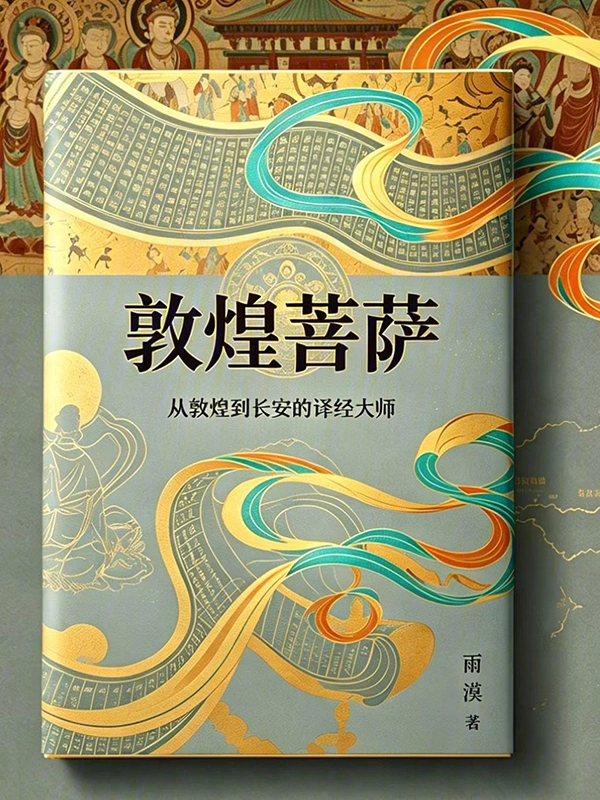
Dunhuang Bodhisattva
敦煌菩萨
- Status
- Ongoing
- Length
- 179k Words
- Genre
- Historical
- Audience
- Male
- Subgenre
- Jin-Sui-Tang Dynasties
- Updated
- 3mo ago
- Source
- Qidian
Stats
0Monthly votes
6Recommends
0Fans
98Chapters
Synopsis
Reader comments
Readers also read
 Red Mansion: Start Escaping and Farming from the Equipment Bar
 After Lying in Bed for Three Years, He Was Forced to Help the Han Dynasty
 Fu Ming 1627
 Northern Qi, Sage Khan
 Criminal Investigation Notes 2: Buried Corpse in Songhu
 Huang Ming
 Republic of China: Ace Pilot
 Leader
 The Black Witch's Journey to Another World
 The Man of Nanming
 King of Power
 Born in Chinatown
Promote the Dharma in the wind and sand, leave a light in the troubled times
In the vast historical galaxy of Dunhuang, there are always some figures who bear faith with flesh and blood and hold up the fire of civilization in the war of troubled times. The book "Dunhuang Bodhisattva" focuses on the eminent monk Zhu Dharma Protector of the Eastern Jin Dynasty. With calm and thick brushwork, it restores the ups and downs and splendid life of this "Dunhuang Bodhisattva" for us, and also unfolds a magnificent picture of the spread of Buddhism in Hexi during the Wei and Jin Dynasties. Opening the pages of the book, we can get a glimpse of the sincerity and courage of a man who traveled to the west to seek Dharma. Born in the troubled times of the Wei and Jin Dynasties, when Buddhism was in decline in the Central Plains, Zhu Fahu had the ambition to spread Buddhism. He was not afraid of the dangers of the desert and the Gobi desert, and traveled to various countries in the Western Regions to search for Sanskrit scriptures. The long journey to the west was a test of wind and sand, loneliness, but also the persistence of faith and original intention. He measured his faith with his steps and brought volumes of precious Buddhist scriptures back to the Central Plains, opening up the path for the spread of Buddhism between the Western Regions and the Central Plains. After returning to China for more than forty years, he devoted half his life to translating scriptures and spreading good deeds. The translation of one hundred and fifty-four Buddhist scriptures is a labor of love. The translation is simple and transparent, which not only retains the true nature of Buddhism, but also allows the profound principles to enter the hearts of ordinary people. He traveled around the land of Hexi, recruiting disciples, teaching Dharma everywhere, benevolently helping the world, and educating all living beings. He made the seeds of Buddhism deeply rooted in the soil of Dunhuang, and allowed the flowers of civilization and faith to bloom on this Gobi. The most touching thing about this book is not only in restoring history and tracing characters, but also in allowing us to understand the weight of faith. In the Wei and Jin Dynasties when wars were raging and the people were in dire straits, Zhu Fahu single-handedly inherited Buddhism from the Western Regions and initiated Buddhism from the Central Plains, becoming the founder of Hexi Buddhism. He did not seek fame and fame, but only wanted Buddhism to spread widely; he did not care about the prosperity of temples, and only watched the fireworks in Hexi. He spent his life practicing his original intention of compassion and spreading Dharma, and was eventually honored as the "Dunhuang Bodhisattva" by later generations. In Dunhuang, a land steeped in history and faith, "Dunhuang Bodhisattva" allows us to see that the inheritance of civilization is never a miracle that happens overnight, but is the persistence of countless people who stick to a promise throughout their lives. Zhu Fahu's life is a life of faith and a life of dedication. If you deeply love Dunhuang culture, revere history and faith, want to understand the origin and prosperity of Dunhuang Buddhism, and want to touch the sincere original intention of the eminent monks thousands of years ago, then this book is definitely not to be missed. It will take you through thousands of years of wind and sand, meet the Dunhuang Bodhisattva walking on the land of Hexi, feel the power of faith between the lines, and understand the heat and tenderness of civilization inheritance.
In the quicksand of the desert, I met a generation of Buddhist masters - my thoughts after reading "Dunhuang Bodhisattva"
When I opened "Dunhuang Bodhisattva", I followed the text into the desert of Hexi in the troubled times of Wei and Jin Dynasties, and got a glimpse of Fahu Zhu's life that was obscured by time. This master translator, who was revered as the "Dunhuang Bodhisattva" by later generations, did not have the illustrious military exploits of an emperor or general, but he spent half his life walking and writing in the years of yellow sand, building a bridge of Buddhism between the Central Plains and the Western Regions, allowing compassion and wisdom to take root in troubled times. The whole book connects Zhu Fahu's ups and downs but firm life trajectory with concise and affectionate writing. Born in troubled times and raised in Hexi Province, he had the ambition to spread Buddhism and was not afraid of the wind and dangers of the Gobi Desert. He traveled west to various countries in the Western Regions to obtain Sanskrit scriptures. After returning to China, he spent more than forty years translating scriptures and giving lectures. He filled the gaps in Chinese Buddhist classics with 154 translations. He spent his life benevolently helping the world, educating the people, and cultivating the foundation of Dunhuang Buddhism. The book not only restores the spiritual path of an eminent monk, but also outlines the vicissitudes of Hexi at that time. Zhu Fahu inherited Buddhism from the Western Regions and initiated Buddhism from the Central Plains. He was not only the founder of Buddhism in Wei, Jin and Hexi, but also an indispensable spiritual beacon in the long history of Dunhuang culture. The writing is simple but powerful. It is not deliberately sensationalistic, but it allows people to understand the persistence and sincerity of a practitioner and the vitality of Buddhism across regions and troubled times. After reading the whole book, I truly understand the weight of the four words "Dunhuang Bodhisattva". As a mortal, he followed the path of the Bodhisattva, kept his original intention in the turbulent years, and spread light in the quicksand of the desert. This book is not only a personal biography of Fahu Zhu, but also an affectionate review of Dunhuang culture and Hexi Buddhism. It allows us to see that despite the thousands of years of wind and sand, there is always faith that will never die, and there will always be light that will last forever.
"Dunhuang Bodhisattva"
This is not only a biography of a character, but also a hymn to the inheritance of civilization. If you love the Dunhuang context, revere your faith and original intention, you may wish to open this book, travel through thousands of years of wind and sand, and understand the spiritual power behind the "Dunhuang Bodhisattva" that spans time and space and is shocking.
Zhu Dharma Protector: The Buddha's light rises from Hexi, and the Bodhisattva settles in Dunhuang
The desert wind carries thousands of years of wind and sand, passing over the cliffs of Sanwei Mountain and the barren hills of Dunhuang Gobi. Thousands of years ago, a cassock-wearing practitioner broke through the wars of troubled times, and with an original intention to spread Buddhism, blended the Sanskrit sounds of the Western Regions with the cultural context of the Central Plains, allowing the glimmer of Buddhism to take root in the land of Dunhuang. He was Dharma protector Zhu who was revered as "Dunhuang Bodhisattva" by later generations. In the troubled times of the Wei and Jin Dynasties, wars raged in the Central Plains, rituals collapsed, and music collapsed, making it difficult for the spread of Buddhism to spread. Zhu Fahu, who was born in Hexi and whose ancestral home is Yuezhi, has been immersed in Buddhism since childhood. He made a great wish at a young age: to search for the true scriptures and save all sentient beings. At that time, the Buddhist scriptures were incomplete and scattered, and the authentic Sanskrit texts in the Western Regions were scattered in various countries. He was not afraid of the dangerous roads in the Gobi Desert, wind and frost, and swordsmanship. He traveled westward alone, crossing the vast desert and visiting the city-states of the Western Regions, searching for the fire of faith in the quicksand and desperate situation. He walked across the desert deserts of the Gobi Desert, crossed the frozen snow-capped mountains, carefully collected volumes of Sanskrit Buddhist scriptures, and returned eastward from the Western Regions with a bag full of scriptures, returning to his hometown in Hexi. Dunhuang is the starting point of his practice and the root of his propagation of Dharma. After returning to China, Zhu Fahu stopped in Dunhuang and devoted more than forty years to translating scriptures. He transformed the obscure and profound Sanskrit original scriptures into simple and transparent Chinese maxims. He presided over the translation of 154 scriptures in his life, covering many Dharma schools such as Prajna, Lotus, and Pure Land. The Buddhist wisdom that traveled across mountains and seas, through his pen and ink, opened up the path of faith in the Western Regions and the Central Plains, making Buddhism no longer a mystery in a distant foreign land, but a gentle power that can soothe people's hearts in troubled times. Not only did he bury his head in writing, but he also immersed himself in the world. Traveling around the land of Hexi all the year round, he recruited many disciples, opened forums to preach, and spread compassion in the countryside and markets without shying away from the rich and the poor. He helped the world with compassion and educated the homeless people. In the suffering of troubled times, he used Buddhism to calm people's hearts and laid a solid foundation for faith in the turbulent land of Hexi. He did not seek fame or a high position in the temple, but walked in the wind and sand of Dunhuang with a cassock and a Buddhist heart, practicing the compassion and responsibility of a "Bodhisattva" throughout his life. As far as Dunhuang is concerned, Zhu Dharma protector is the pioneer of Buddha's light, and also the founder of civilization.
"Dunhuang Bodhisattva"
Opening "Dunhuang Bodhisattva" is like opening a door to the wind and sand in the Wei, Jin and Hexi. In that troubled time of regime changes and continuous wars, all living beings were ups and downs in suffering, but Dharma protector Zhu, with a cassock and a Buddha heart, blazed a path to spread the Dharma among the yellow sands of the Gobi and became a gentle light that illuminated the land of Hexi.
Zhu Dharma Protector: The Buddha's light rises from Hexi, and the Bodhisattva settles in Dunhuang
The desert wind carries thousands of years of wind and sand, passing over the cliffs of Sanwei Mountain and the barren hills of Dunhuang Gobi. Thousands of years ago, a cassock-wearing practitioner broke through the wars of troubled times, and with an original intention to spread Buddhism, blended the Sanskrit sounds of the Western Regions with the cultural context of the Central Plains, allowing the glimmer of Buddhism to take root in the land of Dunhuang. He was Dharma protector Zhu who was revered as "Dunhuang Bodhisattva" by later generations. In the troubled times of the Wei and Jin Dynasties, wars raged in the Central Plains, rituals collapsed, and music collapsed, making it difficult for the spread of Buddhism to spread. Zhu Fahu, who was born in Hexi and whose ancestral home is Yuezhi, has been immersed in Buddhism since childhood. He made a great wish at a young age: to search for the true scriptures and save all sentient beings. At that time, the Buddhist scriptures were incomplete and scattered, and the authentic Sanskrit texts in the Western Regions were scattered in various countries. He was not afraid of the dangerous roads in the Gobi Desert, wind and frost, and swordsmanship. He traveled westward alone, crossing the vast desert and visiting the city-states of the Western Regions, searching for the fire of faith in the quicksand and desperate situation. He walked across the desert deserts of the Gobi Desert, crossed the frozen snow-capped mountains, carefully collected volumes of Sanskrit Buddhist scriptures, and returned eastward from the Western Regions with a bag full of scriptures, returning to his hometown in Hexi. Dunhuang is the starting point of his practice and the root of his propagation of Dharma. After returning to China, Zhu Fahu stopped in Dunhuang and devoted more than forty years to translating scriptures. He transformed the obscure and profound Sanskrit original scriptures into simple and transparent Chinese maxims. He presided over the translation of 154 scriptures in his life, covering many Dharma schools such as Prajna, Lotus, and Pure Land. The Buddhist wisdom that traveled across mountains and seas, through his pen and ink, opened up the path of faith in the Western Regions and the Central Plains, making Buddhism no longer a mystery in a distant foreign land, but a gentle power that can soothe people's hearts in troubled times. Not only did he bury his head in writing, but he also immersed himself in the world. Traveling around the land of Hexi all the year round, he recruited many disciples, opened forums to preach, and spread compassion in the countryside and markets without shying away from the rich and the poor. He helped the world with compassion and educated the homeless people. In the suffering of troubled times, he used Buddhism to calm people's hearts and laid a solid foundation for faith in the turbulent land of Hexi. He did not seek fame or a high position in the temple, but walked in the wind and sand of Dunhuang with a cassock and a Buddhist heart, practicing the compassion and responsibility of a "Bodhisattva" throughout his life. For Dunhuang, Fahu Zhu was the pioneer of Buddha's light and the ferryman of civilization. He inherited the origin of Buddhism from the Western Regions and the lineage of Buddhism from the Central Plains. He was the founder of Buddhism in the Wei, Jin, and Hexi regions, and he was also an important master in the history of Dunhuang culture. Before him, Dunhuang was just a border fortress in the Hexi Corridor; after him, Buddhism took root and grew in this land, and its incense was endless, laying the most profound foreshadowing for the excavation of the Mogao Grottoes in later generations and the brilliance of the Buddha's light in Dunhuang for thousands of years. The wind and sand will smooth out the edges of the Gobi, and the years will blur the writing in history books, but the power of faith will never fade. Zhu Fahu's life was the bond between a person and a city, and the two-way journey between Buddhism and Dunhuang. He devoted his life to propagating Buddhism, making Dunhuang a hub for the spread of Buddhism to the east; and the sandstorms and cultural context of Dunhuang also remembered the sincerity of this practitioner, and the name of "Dunhuang Bodhisattva" was forever engraved in the long river of Hexi. Thousands of years have passed, but the light of Buddha in Sanwei Mountain remains the same, and the wind never ceases in Mingsha Mountain. Protector Zhu has long since passed away, but the seeds of compassion he planted have long since grown into towering trees. Every ray of Buddha's light and every inch of cultural context in Dunhuang hides the footprints of his journey, his original intention of translating scriptures, and his great wish to spread the Dharma. He kept his true heart in troubled times and spread light in the desert. With his own efforts, he created a legend of faith in a city and left a spiritual echo for future generations that spans thousands of years.
Buddha's light rises from Hexi, Bodhisattva settles in Dunhuang
The desert wind carries thousands of years of wind and sand, passing over the cliffs of Sanwei Mountain and the barren hills of Dunhuang Gobi. Thousands of years ago, a cassock-wearing practitioner broke through the wars of troubled times, and with an original intention to spread Buddhism, blended the Sanskrit sounds of the Western Regions with the cultural context of the Central Plains, allowing the glimmer of Buddhism to take root in the land of Dunhuang. He was Dharma protector Zhu who was revered as "Dunhuang Bodhisattva" by later generations. In the troubled times of the Wei and Jin Dynasties, wars raged in the Central Plains, rituals collapsed, and music collapsed, making it difficult for the spread of Buddhism to spread. Zhu Fahu, who was born in Hexi and whose ancestral home is Yuezhi, has been immersed in Buddhism since childhood. He made a great wish at a young age: to search for the true scriptures and save all sentient beings. At that time, the Buddhist scriptures were incomplete and scattered, and the authentic Sanskrit texts in the Western Regions were scattered in various countries. He was not afraid of the dangerous roads in the Gobi Desert, wind and frost, and swordsmanship. He traveled westward alone, crossing the vast desert and visiting the city-states of the Western Regions, searching for the fire of faith in the quicksand and desperate situation. He walked across the desert deserts of the Gobi Desert, crossed the frozen snow-capped mountains, carefully collected volumes of Sanskrit Buddhist scriptures, and returned eastward from the Western Regions with a bag full of scriptures, returning to his hometown in Hexi. Dunhuang is the starting point of his practice and the root of his propagation of Dharma. After returning to China, Zhu Fahu stopped in Dunhuang and devoted more than forty years to translating scriptures. He transformed the obscure and profound Sanskrit original scriptures into simple and transparent Chinese maxims. He presided over the translation of 154 scriptures in his life, covering many Dharma schools such as Prajna, Lotus, and Pure Land. The Buddhist wisdom that traveled across mountains and seas, through his pen and ink, opened up the path of faith in the Western Regions and the Central Plains, making Buddhism no longer a mystery in a distant foreign land, but a gentle power that can soothe people's hearts in troubled times. Not only did he bury his head in writing, but he also immersed himself in the world. Traveling around the land of Hexi all the year round, he recruited many disciples, opened forums to preach, and spread compassion in the countryside and markets without shying away from the rich and the poor. He helped the world with compassion and educated the homeless people. In the suffering of troubled times, he used Buddhism to calm people's hearts and laid a solid foundation for faith in the turbulent land of Hexi. He did not seek fame or a high position in the temple, but walked in the wind and sand of Dunhuang with a cassock and a Buddhist heart, practicing the compassion and responsibility of a "Bodhisattva" throughout his life. For Dunhuang, Fahu Zhu was the pioneer of Buddha's light and the ferryman of civilization. He inherited the origin of Buddhism from the Western Regions and the lineage of Buddhism from the Central Plains. He was the founder of Buddhism in the Wei, Jin, and Hexi regions, and he was also an important master in the history of Dunhuang culture. Before him, Dunhuang was just a border fortress in the Hexi Corridor; after him, Buddhism took root and grew in this land, and its incense was endless, laying the most profound foreshadowing for the excavation of the Mogao Grottoes in later generations and the brilliance of the Buddha's light in Dunhuang for thousands of years. The wind and sand will smooth out the edges of the Gobi, and the years will blur the writing in history books, but the power of faith will never fade. Zhu Fahu's life was the bond between a person and a city, and the two-way journey between Buddhism and Dunhuang. He devoted his life to propagating Buddhism, making Dunhuang a hub for the spread of Buddhism to the east; and the sandstorms and cultural context of Dunhuang also remembered the sincerity of this practitioner, and the name of "Dunhuang Bodhisattva" was forever engraved in the long river of Hexi. Thousands of years have passed, but the light of Buddha in Sanwei Mountain remains the same, and the wind never ceases in Mingsha Mountain. Protector Zhu has long since passed away, but the seeds of compassion he planted have long since grown into towering trees. Every ray of Buddha's light and every inch of cultural context in Dunhuang hides the footprints of his journey, his original intention of translating scriptures, and his great wish to spread the Dharma. He kept his true heart in troubled times and spread light in the desert. With his own efforts, he created a legend of faith in a city and left a spiritual echo for future generations that spans thousands of years.
Dunhuang Bodhisattva Zhu Dharma Protector Praise
Yue Zhi Huizhong, Hexi spiritual root. When I was born in troubled times, my heart turned to the Dharma. Conquer the vast sea alone, seeking truth thousands of miles away. The Brahma Sutra travels eastward, and the fire of wisdom burns westward. The four ranks of translated scriptures, hundreds of volumes are published. Integrate the Chinese and Brahma to illuminate the dusty atmosphere. Be kind to the world and educate the border people. The sect was established in Dunhuang, and the Buddhist lineage will last forever. Three dangers hang over my shadow, and I will look up to you for thousands of years. The name of Bodhisattva is everlasting.
Dunhuang Bodhisattva Zhu Dharma Protector Praise
Yue Zhi Huizhong, Hexi spiritual root. When I was born in troubled times, my heart turned to the Dharma. Conquer the vast sea alone, seeking truth thousands of miles away. The Brahma Sutra travels eastward, and the fire of wisdom burns westward. The four ranks of translated scriptures, hundreds of volumes are published. Integrate the Chinese and Brahma to illuminate the dusty atmosphere. Be kind to the world and educate the border people. The sect was established in Dunhuang, and the Buddhist lineage will last forever. Three dangers hang over my shadow, and I will look up to you for thousands of years. The name of Bodhisattva is everlasting.