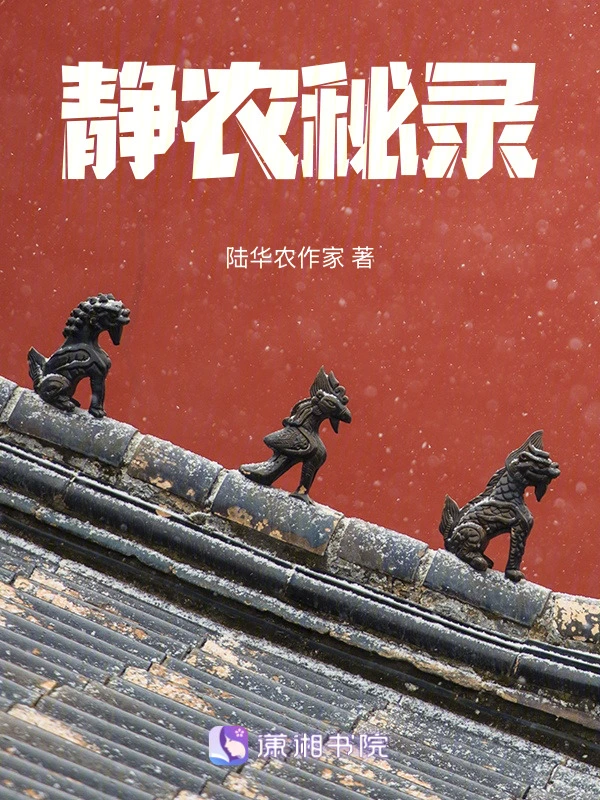
Jing Nong's Secret Records
静农秘录
- Status
- Ongoing
- Length
- 169k Words
- Genre
- Xianxia Romance
- Audience
- Female
- Subgenre
- Modern Cultivation
- Updated
- 3mo ago
- Source
- Qidian
Stats
0Monthly votes
4Recommends
0Fans
77Chapters
Synopsis
Reader comments
Readers also read
 Royal Pet Sweet Fairy Story
 Bow Down for the Gods
 The Road of Cultivating Immortality as a Cannon Fodder Female Supporting Role
 Paint Spring Breeze
 Beast Control Starts from Zero Points
 Zheng Loves a Person with One Heart
 Abandoned Wives Are at Ease
 Quickly Wear It: I Just Want to Farm
 Northern Song Life Consultant
 Fight Between Famous Girls
 Houfu
Houfu
 Abandoned Wife's Beautiful Era
 Three Lives and Three Worlds Kunlun Fate
 Bai Ju Cang Dog
What is "Jing Nong's Secret Record" written about "Jing Nong's Secret Record" is an original historical fantasy novel set in Shanxi, connecting thousands of years of historical figures and metaphysical secrets in Shanxi. The core revolves around Fu Shan, Yang family generals, the royal family of the Song and Ming Dynasties, Taoist martial arts, traditional Chinese medicine secrets, and I Ching divination. It integrates official history, unofficial history, folklore, and metaphysical settings. 1. Core world view and main line • Geographical anchor points: Taking Taiyuan Fushan Garden, Dai County Yang family's hometown, Jinci Temple, and Yanmen Pass as the core, a three-layered world of "Jindi Dragon Veins - Taoist Inheritance - Jianghu Secrets" is constructed. • Timeline: From the Northern Song Dynasty (Yang Jiajiang, Chen Tuan) → the late Ming and early Qing Dynasty (Fu Shan, Bada Shanren) → modern times (the protagonist searches for his roots), running through the thousands of years of Shanxi cultural context and metaphysical inheritance. • Main plot: The modern protagonist (surnamed Ren, a descendant of Shanxi merchant "Tianjulong") awakens from the family secret volume "Jingnong Secret Record", and explores the secret technique of "Nine Turns of Returning Pills" left by Fu Shan, the "Xuan Iron Order" hidden by the Yang family, and the "Tui Bei Tu" fragment hidden in the Song Dynasty. He is involved in multiple disputes among Taoists, rivers and lakes, and the antique world, and uncovers the ultimate secret of "the dragon vein of Jin that locks the destiny of the country." 2. Core Characters (History + Original) 1. Fu Shan (Fu Qingzhu): An "encyclopedic" strange man in the late Ming and early Qing dynasties, a Taoist master, a medical master, a master of calligraphy, and an anti-Qing righteous man. The book sets him as the leader of the Taoist "Jingnong Sect", mastering the secrets of "Xuanhuang Zhenqi" and "Bazhen Tang (Mind)" medical and martial arts, leaving the "Jingnong Secret Record" as the inheritance of the sect, secretly protecting the dragon veins of Jin. 2. The generals of the Yang family (Yang Ye, Yang Yanzhao, Mu Guiying): the "military-civilian-merchant-spy" border defense family of the Northern Song Dynasty. The book is given a metaphysical color - the Yang family's marksmanship is derived from the "Xuanwu True Secret", guarding Yanmen Pass is actually to protect the Dragon Vein Pass, and the "Xuantie Order" left behind can mobilize the hidden forces of Jin. 3. Ancestor Chen Tuan: a Taoist hidden immortal in the Northern Song Dynasty, who "discussed Taoism on Mount Huashan" with Taizu of the Song Dynasty. The book sets him as the founder of the Jinnong Sect. He passed down the fragments of "Tui Bei Tu" and the secret technique of "Sleeping Kung Fu", which influenced the national destiny of the Song and Ming dynasties. 4. Protagonist (Jingnong): A descendant of modern Shanxi merchants, Fu Shan is a "successor from another generation". He is proficient in traditional Chinese medicine, the Book of Changes, and antique appraisal. He has a calm personality and shoulders the mission of "reviving the Jinnong sect and guarding the dragon vein". He wanders between the black and white paths and solves the thousand-year-old mystery. 3. Core elements (metaphysics + history + culture) • Taoist secrets: Xuanhuang Zhenqi, Nine Turns of Returning Pills, Sleeping Kung Fu, Qimen Dunjia, Feng Shui Kanyu, Talisman Spell. • The unique knowledge of traditional Chinese medicine: Fu Shan's women's and men's prescriptions, Bazhen Decoction (mind), secret techniques of acupuncture, medicine and food come from the same source, and the combination of medicine and martial arts can heal injuries and defeat enemies. • Historical secrets: The sound of candle shadow and ax (the mystery of Song Taizong's succession), Fu Shan's secret activities to fight against the Qing Dynasty and restore the Ming Dynasty, the truth about the "seven sons left and six sons back" of the Yang family, and the secret technique of "Tian Julong" of Shanxi merchants to make a fortune. • I Ching divination: eight-character numerology, six-yao prediction, plum blossom counting, and interpretation of push-back diagrams, used to deduce the fate of the country, the fate of characters, and the direction of events. 4. Story structure (three acts) 1. Volume 1: The Mystery of Jin Land (Modern Line): The protagonist accidentally obtains "Jing Nong's Secret Record", triggers secret realms in Fushan Garden, Jin Temple, Yang Family Ancestral Hall and other places, encounters the pursuit of mysterious organizations, awakens some secret skills, and initially understands his mission. 2. Volume 2: Song and Ming Dynasties (Historical Line): With Fu Shan, Yang Jiajiang, and Chen Tuan as the protagonists, it looks back at the border wars of the Northern Song Dynasty, the troubled times of the late Ming and early Qing dynasties, and the internal power struggles of the Taoist sect. 3. Volume Three: The Awakening of the Dragon Vein (the intersection of ancient and modern times): The protagonist combines ancient and modern memories, collects the fragments of the secret volume, and fights the final villain at the core of the Dragon Vein at Yanmen Pass to solve the ultimate mystery of "Dragon Vein Locks the Destiny of the Country", revive the Jinnong Sect, and protect the cultural heritage of Jin and the fate of China. 5. Core Theme • Cultural inheritance: the inheritance and protection of the thousand-year cultural heritage of Shanxi (Fu Shan, Yang Jiajiang, Shanxi merchants). • Feelings of family and country: From the generals of the Yang family defending the country to Fu Shan rebelling against the Qing Dynasty and restoring the Ming Dynasty, the spirit of "loyalty" runs through it. • Metaphysical philosophy: Tao follows nature, the balance of yin and yang, the cycle of cause and effect, and explores the relationship between man, nature, and destiny. • Identity: The protagonist transforms from a modern ordinary person to a successor of metaphysics, searching for the roots of himself and his family. 6. Style Characteristics • Hard-core metaphysics: All occult techniques, divination, and Chinese medicine theories are based on real classics (such as "Fu Qingzhu Nv Ke", "Book of Changes", and "Tui Bei Tu"), with rigorous details and self-consistent logic. • Historical restoration: Major events and the lives of historical figures are consistent with official history, supplemented by unofficial history and legends, combining virtual and real, with a strong sense of substitution. • The rhythm is tight: modern suspense puzzles, historical bloody wars, ancient and modern interweaving, climaxes and reversals.