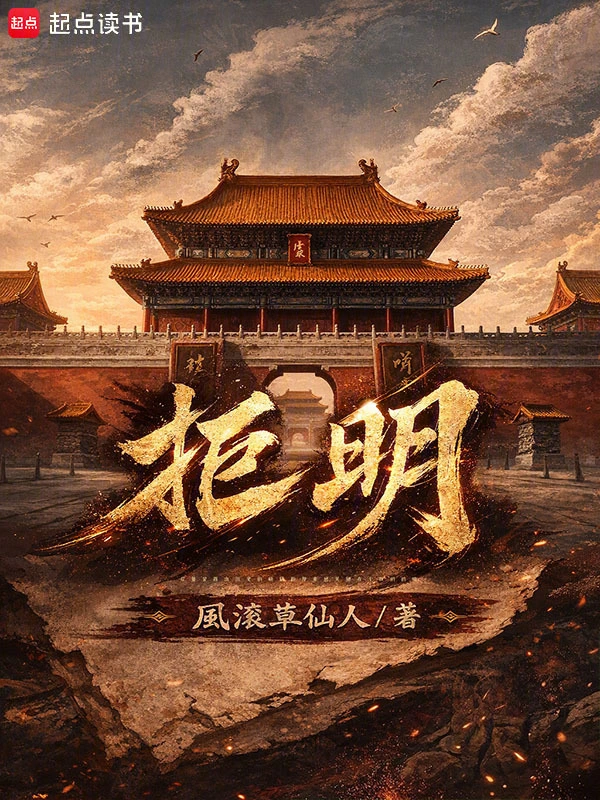
Refusal to Understand
拒明
- Status
- Completed
- Length
- 805k Words
- Genre
- Historical
- Audience
- Male
- Subgenre
- Song-Yuan-Ming Dynasties
- Updated
- 20d ago
- Source
- Qidian
Stats
12Monthly votes
135Recommends
2Fans
258Chapters
Tags
Synopsis
Reader comments
Readers also read
 Red Mansion: Start Escaping and Farming from the Equipment Bar
 After Lying in Bed for Three Years, He Was Forced to Help the Han Dynasty
 Fu Ming 1627
 Northern Qi, Sage Khan
 Historical Regrets: Starting from Meeting Lu Pheasant
 The Founding of the Country Overseas, the New Ming Dynasty in America
 China Entertainment, as a Patriotic Person, I Am Fully Open to Capital.
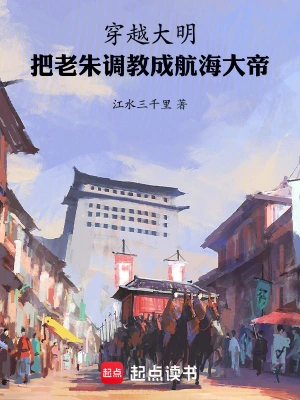 Travel Through the Ming Dynasty and Train Lao Zhu to Become a Sailing Emperor
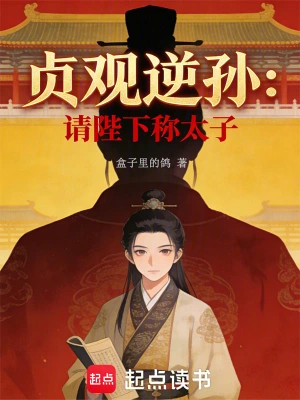 The Grandson of Zhenguan of the Tang Dynasty: Please Call Your Majesty the Crown Prince!
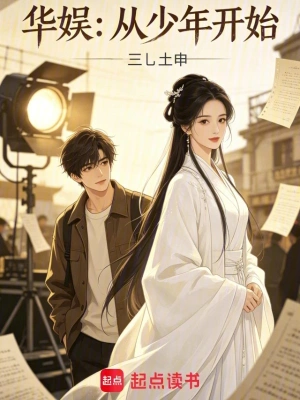 China Entertainment: Starting from a Young Age
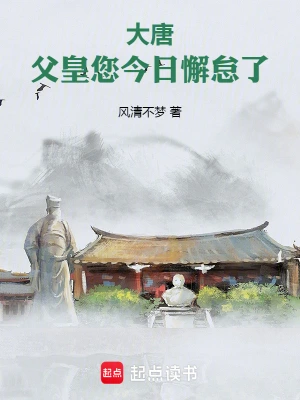 Datang: Father, You Are Slacking Off Today
 I Open a Supermarket in Zhenguan
Copy poetry
When you copy poems, don't you look at the year? A poem by Du Mu in the Tang Dynasty, you wrote it in the Ming Dynasty, and some people still praise you
The protagonist is portrayed as the all-powerful Long Aotian, who is omnipotent in politics, economy, military, medical skills and even all kinds of strange skills. He has met core figures such as Zhu Yuanzhang and Zhu Biao, and possesses unparalleled abilities. He should be doing grand and important things, but he is trapped in meaningless officialdom and trivial internal strife all day long, and his abilities are completely disconnected from the logic of his behavior. What's even more fatal is that the Hongwu Dynasty was a historically established era of highly centralized imperial power, strict laws, and extremely strict civil control. This is a realistic rule that cannot be violated, but the author insists on forcibly inserting Jianghu forces such as the Three Mountains, Five Mountains, and Wudang Mountain. Once you insist on writing about these forces, the follow-up will inevitably lead to two disastrous endings: either the Jianghu people will forcefully interfere in big and small matters, completely breaking the original power operation logic of the Hongwu Dynasty; or the author cannot justify himself at all, and can only deliberately downplay and write down these forces, making the early settings useless nonsense. The author clearly relies on the real historical rules of Hongwu, but insists on forcing in imaginary martial arts elements. He not only wants to borrow the background of the real dynasty, but also wants to create novels as he pleases, completely ignoring the actual logic. In the end, it will only make the story inconsistent, completely collapsed, and nondescript.
In fact, when writing historical novels, it is better to use some kind of system, plug-in, or golden finger. It is better to directly write about the protagonist being able to travel between modern and ancient times through time and space channels. "The Modernization of the Ming Dynasty" is very well written.
Answers to some questions from book friends who are confused about the contents of the book
Some book friends mentioned that the protagonist, the all-powerful Long Aotian, is not quite right. Except for politics, economy, military, and even the machine drawings, which he obtained from his previous life's politics and hobbies, other systems provided him with cement, medical skills, cooking skills, national arts, firearms modification, etc., And he was unable to master most of them. After all, it was not a framework for cultivating immortals, and his lifespan was limited. He could only pick out three improvements by referring to the national arts, and the others could only be regarded as theoretical knowledge to deal with the enemy. In other words, the protagonist will only choose to learn the things that can be of greatest use to him, and will teach others the rest, such as machine drawings. Without modern tools and no time to study, he can only rely on Zhang Shuhen to put it into practice in the contemporary context, such as cement, delivery For the political purpose of gaining favor with Zhu Di, cooking and medical skills also need time to accumulate, so both were handed over to Wan'er, who was more suitable. The latter only selected the parts that could relieve muscle fatigue to learn. It was still under Wan'er's supervision and using companions to increase clinical experience, so he could barely get started. So talent is not about being able to grasp ideas as soon as they come up, and being able to grow in martial arts is only possible through sparring with Aman. The modification of firearms is not yet needed, so it is a foreshadowing. As for why the protagonist is trapped in Yingtian Mansion and does not help Lao Zhu's family to do important business, I can only say that ordinary people in the Hongwu Dynasty did not hold any official position. Even if they were blessed by Lao Zhu's family, if they wanted to implement these policies in the Chaotang Group headed by Hu Weiyong, it could be said to be a recipe for death. Moreover, the protagonist was forced into the Zhang Qian case and had an unending conflict with Hu Weiyong. Whenever he dared to leave Yingtian Mansion, he would die outside without knowing how far he ran out. The protagonist also tried to vaguely mention whether Hu Weiyong could be dealt with. He could certainly do it, but he should be clear about the consequences of rashly taking action without a suitable excuse. The old Zhu family would not be so stupid. In this case, the protagonist can only participate in political intrigue and internal strife, while improving his value in the heart of the old Zhu family, while using the momentum of the old Zhu family to develop his own power before the Jin Yiwei spread. If he wants Ying Tianfu Yin's assets, he wants to set up his own intelligence agency, and the same reason is true for sending Zhang Shuhen to the court. I want to start the Shilin Talks, but also want to improve my reputation in the literary world. I am learning martial arts just to not rely on others for everything and to protect myself in critical moments. Everything I do is to allow myself to stand safely on the side of the court without being an official, not to enter the killing line of Lao Zhu, and not to be easily crushed by the Huaixi nobles and a group of high-ranking officials. There is no disconnect between ability and behavioral logic. The rivers and lakes forces also appear as an aid to the protagonist, which can be regarded as an introduction. They really come into play when the time is ripe. After the protagonist leaves Yingtian Mansion, there are not many of them. Before that, they mostly stood in line as the swords of the two major forces of the Hongwu Dynasty. The appearance of the protagonist can make the Five Mountains Alliance no longer just a 'useful object', while Wudang Mountain covers the three mountains and appears as a hostile force. But no matter what, the rivers and lakes are the rivers and lakes, and they cannot fight against a large-scale regular army. No matter how high your martial arts skills are, you still have to lie on the ground for a round of salvos, so there will be no possibility of overestimating the enemy or even leading to collapse. If you still have any questions, you are welcome to continue raising them. If there are any questions, I will correct them. If there are no questions, I will answer them.
Hello readers, I am Tumbleweed (author
I write this just in case someone doesn't understand what the word 'Shu Jun' in the title of the book means. Of course, I know that people who read books are very smart people. If you have different opinions, please use your own ideas. My explanation here is only based on my understanding of these two words. Without further ado, we must first understand that the word "Shu Jun" needs to be taken apart and understood. What is meant by "Chu" is derived from "Chu Chen Rixuan", which represents a senior official in charge of the country's military and government affairs. He is a person directly subordinate to the emperor. He is a powerful official with less than ten thousand people. It also represents Li Huaiyi who is not an official (he really wanted to be, but couldn't), but as a commoner, he has a core hub position in the fields of business, court, technology, military aircraft, martial arts, etc. What does 'jun' mean? The literal meaning is that you are respected. It implies that Li Huaiyi wanted to achieve the great goal of having an influence beyond ordinary civilians and taking charge of the overall situation even though he was not an official. Essentially, these are all for the purpose of dying under Zhu Yuanzhang's nose... Of course, the word "Shujun" has another meaning. That's right, another expression of "Zheng Jun" refers specifically to people who are talented and virtuous but unwilling to serve as officials, and those who are recruited by the court but fail to do so. The reason why I didn't choose Zheng Jun is because the word 'Zheng' is a bit unfamiliar. It's okay if I recognize it, but if I don't recognize it, I'm afraid someone will scold me... I can't help it. Although the author has a big heart, being scolded by others will still make him feel uncomfortable, and it may also affect the quality of the writing, etc. Okay, that's it. Here, the author would like to wish you all a happy old age! Happy New Year! (Hey
Author
Do all the novels you open have multiple female protagonists?
Author
Will you start reading novels about the Three Kingdoms and Water Margin in the future?
Author
If you open a novel about the Three Kingdoms in the future, and take a screenshot of the girl Mrs. Du and the girl Mrs. Zou + the girl Mrs. Yin and the girl Mrs. Bian, it will easily attract the interest of reading the novel.