Sea King Zheng
海王郑
- Status
- Completed
- Length
- 369k Words
- Genre
- Historical
- Audience
- Male
- Subgenre
- Historical Biography
- Updated
- 4mo ago
- Source
- Qidian
Stats
0Monthly votes
131Recommends
68Fans
131Chapters
Tags
Synopsis
Reader comments
Readers also read
 Fu Ming 1627
 I Am a Tyrant in Nanming
 Red Mansion Xiaoke
 At the Beginning, Please Ask Chongzhen to Abdicate!
 Martial Arts: Obtain the Skills of Thirteen Dragons and Thirteen Elephants at the Beginning
 America Is Reborn, Am I a Witcher?
 Sword and Sorcery: I Really Don't Want to Be Reborn
 Everything About Chen Mo
 Ming Dynasty Endgame 1645
 The Lord of the Esoteric Cult of the Mysterious World
 I Asked You to Find a Bodyguard. What the Hell Are You from the Motherland?
 Is Martial Arts Too Difficult? but I Have a Clone!
 Dragon Roaring Tiger Roaring Cross
 The Folding Mirror: the Ballad of Macau's Fifty Years
 Liuli Qizhengyi
Starting from the ocean, another kind of China
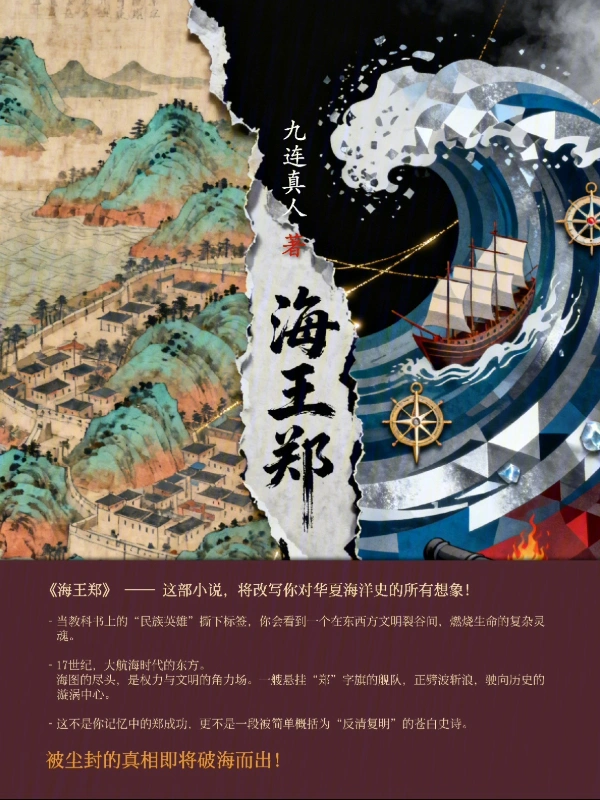
When I saw the name and introduction of "Sea King Zheng", I actually thought a little bit: "In a biographical historical novel, Zheng Chenggong, who is still firmly labeled as a "national hero," can say anything new. But not long after reading the first few chapters, this doubt was dispelled. The author did not intend to tell the heroic legend again, and his narrative perspective is very unique. He moved the narrative fulcrum of the entire book from land to sea. This What does it mean? It means that Zheng Zhilong is no longer the "sea pirate who surrendered to the Qing Dynasty" who was mentioned briefly in the official history, and Zheng Chenggong is no longer the "national hero" depicted in the temple narrative. They are first and foremost a pair of merchants from South Fujian who made a living in the monsoon. He once built an order of his own in the sea where Eastern and Western forces intertwined, and then watched it fall apart. The most touching part of the book is its narration of history. It's not a didactic one, it's not a popular science commentary that comes out every now and then. Instead, you follow the young man Zheng Zhilong and he is bullied on the streets of Macau, and you naturally feel the humiliation of the Portuguese extraterritoriality; you watch him learn Portuguese, work as a general manager, and go around in the business store. After spinning around, he gradually understood what transoceanic trade was all about; and then watching him being blackmailed by the soldiers of the Inspection Department, he understood how much real presence and how much vacuum the Ming government had in the coastal areas. These details are not intentional. What comes out is buried in the plot and characters. When you read it, you don't feel like a teacher is talking about it on the podium, which makes people sleepy. Instead, you are really dragged into that era, an era of chaos and an era of opportunities. Although it is not a textbook, the research work is very solid. The Chongzhen Sea Ban, the colonial ecology of Macau, the entanglement of the Jesuits and the commercial network... Every key historical fact node is well documented, and nothing is made up for the sake of appearance. Bizarre passage. I can feel that the author is very serious about re-presenting this maritime narrative that has been ignored by most people with profound historical literacy and vivid words. This writing method also creates some thresholds. Unlike the beginning of the common crisis narratives in the market, the early stage does not give people a sense of pressure that they will die if they do not do this; the whole article does not elaborate on some bizarre events. It uses the foundation of relevant historical knowledge to describe the era in a plain way. If you have accumulated relevant historical knowledge, you may be able to better understand the various choices of the characters in the book. Of course, despite its flaws, this is still a marine-oriented novel worth watching. The attraction of serious historical novels may be the solid research and the ups and downs of the plot, but the most attractive thing is that the ending is locked in a framework that allows readers to read. I am still willing to follow the characters, and I will still be heartbroken by their struggles, resonate with the people of that era, and be moved by the hopes that are destined to fail. "Sea King Zheng" did this for me. Everyone knows the ending of the story, but there are still so many unknown ways of life hidden in the cracks of official history. Those southern Fujian shipowners, generals, godfathers, and sailors, those civil order and ambitions that once really existed at sea, have finally been eliminated. I wrote it down solemnly. When I finished reading the book, I was thinking that this is probably what historical novels should be like. Not to be a ridiculous historical inventor, nor to crawl at the feet of historical "tyrants", but to stand at the feet of historical "tyrants". In places that are ignored by official historical narratives, look at the flesh-and-blood characters in history and see how they lived and achieved in the context of that time. This book may be perfect, but it is real enough and weighty enough.
It was the first time I read a novel that was on the shelves after Chapter 15. What does it mean?
This is an outstanding historical novel. Its extremely exquisite literary conception and vivid description, its extremely profound examination of historical facts and excellent historical perspective make this work a rare and shocking cultural masterpiece! 👍🌹