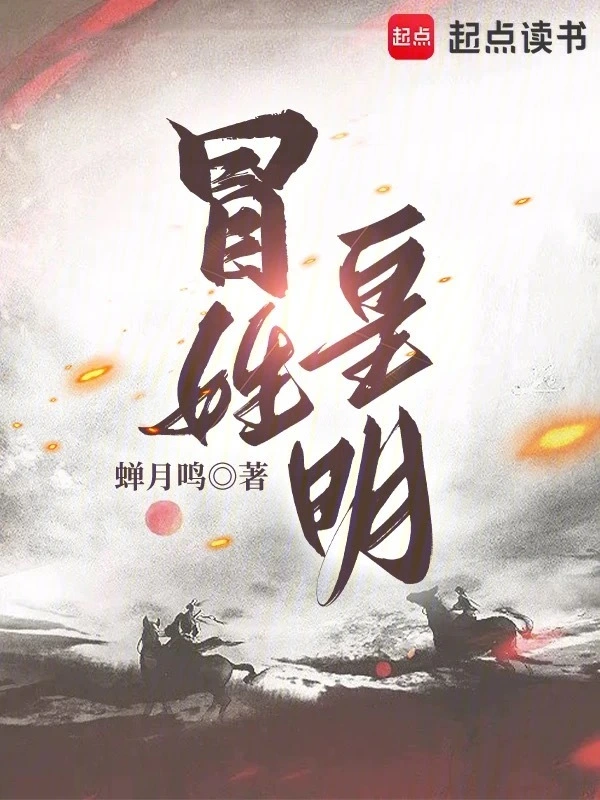
Pretending to Be Surnamed Huangming
冒姓皇明
- Status
- Ongoing
- Length
- 116k Words
- Genre
- Historical
- Audience
- Male
- Subgenre
- Song-Yuan-Ming Dynasties
- Updated
- 7mo ago
- Source
- Qidian
Stats
0Monthly votes
978Recommends
47Fans
44Chapters
Tags
Synopsis
Reader comments
Readers also read
 After Lying in Bed for Three Years, He Was Forced to Help the Han Dynasty
 Northern Qi, Sage Khan
 Red Mansion: Start Escaping and Farming from the Equipment Bar
 Fu Ming 1627
 Criminal Investigation Notes 2: Buried Corpse in Songhu
 I Am a Tyrant in Nanming
 Leader
 The Black Witch's Journey to Another World
 At the Beginning, Please Ask Chongzhen to Abdicate!
 I Want to Revive the Tang Dynasty!
 Daming: Emperor Chenghua Is Here to Ascend the Throne First!
What mistakes are easy to make in historical novels❓
Before the Ming Dynasty, the emperor was not called "Emperor". In the Song Dynasty, he was mostly called "Guanjia", and in other dynasties, he was called "Your Majesty". In the Ming Dynasty, the emperor was occasionally called "Emperor", and in most cases he was called "Your Majesty". After Kangxi of the Qing Dynasty, people began to be generally called "Emperor". Princes and princes call themselves: Princes in the pre-Qin and Han Dynasties can be called "Gu", and a few can be called "Ignores". After the Wei, Jin, Southern and Northern Dynasties, the title of "Ignores" gradually became exclusive to the emperor, and princes, princes and princes can only be called "Gu" or "I". Song, Yuan and Ming called themselves "I" or "I". Before the Qing Dynasty, princes and princes rarely called themselves "this king". Starting from the Kangxi year of the Qing Dynasty, princes generally called themselves "this king". In ancient times, women called themselves: "nujia" was a modest name for women after the Song Dynasty. Women in the Han and Tang Dynasties more often called themselves "concubine", and noble women could call themselves "I" and "I". Before the mid-Ming Dynasty, most dynasties used copper coins for daily transactions, with very little gold and silver. It was only in the mid-to-late Ming Dynasty that silver became the mainstream currency. In the late Ming Dynasty, "meeting votes/deposit checks" appeared among the people. There were no unified rules. Most of them were deposits and withdrawals/exchange receipts from acquaintances or local circulation, and were not legal currency. In the early years of Daoguang in the Qing Dynasty (1823): Rishengchang Bank was established, and private banks began to issue standardized banknotes, focusing on cross-regional exchange. They were only circulated in Shanxi merchant trade circles and major commercial ports, and were not yet popular. In the third year of Xianfeng in the Qing Dynasty (1853): the official issued the Ministry of Revenue official banknotes (official banknotes), which were forced to circulate nationwide. At the same time, the network of private banknotes expanded to the whole country, and official and private banknotes ran parallel. The use of banknotes entered an explosive period and became the "starting point of popularization." High-leg tables and chairs only completely replaced the low tables for sitting on the floor in the Song Dynasty. During the Han and Tang dynasties, people knelt and sat on the tables to eat and discuss matters. The furniture was mainly low tables and couches. The memorial system was only established during the Kangxi period of the Qing Dynasty. Officials in the Tang and Song Dynasties used "memorials", "tables" and "statements" when submitting memorials, while in the Ming Dynasty they used "memorials" and "memorials". There is no such thing as "memo" or "zhezi". In ancient formal occasions, the hand-over gesture was performed with the left hand outside and the right hand inside. The right hand outside was a special "unlucky gift" for funerals. "Better greetings" is a unique etiquette of the Qing Dynasty. It was mostly used by subordinates to superiors and juniors to elders. During the Tang and Song dynasties, people often performed cross-hand salutes and bows to greet greetings when they met, and there was no such thing as "sending greetings". {"NickName":"Restriction and Supervision","UserId":417773267} Before the Yuan Dynasty, subordinate officials rarely called superior officials "adult". In some dynasties, subordinates called eunuchs "adult", and in some dynasties, they called their parents and elders "adult". Beginning in the Yuan Dynasty, lower-level officials would occasionally call officials of second-rank and above "sir". From the middle and late Ming Dynasty, only officials of third-rank and above would be called "sir" by their subordinates. Officials with lower ranks could not be called "sir". However, in the late Ming Dynasty, there began to appear a few cases where officials above the fourth rank were called "adult". Before the mid-Qing Dynasty, following the rules of the Ming Dynasty, only officials of third rank or above would be called "adult". Starting from the mid-Qing Dynasty, calling officials "adult" gradually became common for lower-level officials. Attention! ! ! What is mentioned above is that lower-level officials refer to higher-level officials. No matter which dynasty, it is absolutely impossible for higher-level officials to call lower-level officials "sir". Some novels even write about emperors or nobles calling other officials "sir". This is simply contrary to Tiangang! ! ! Finally, let's talk about the problem of civilians calling officials Before the middle and late Qing Dynasty, civilians in various dynasties and generations called officials differently, and most of them called them "officials" and "masters". From the middle to late Qing Dynasty, civilians also called officials "adult".
Sometimes I really don't know what the brain circuit of the author who writes about the history of the Ming Dynasty is like. Why don't you check the scores of similar articles before writing? Can't you see that readers of historical novels hate the Qing Dynasty but also hate the Ming Dynasty? Both are shit, do you have to choose one or the other? Wouldn't it build a brand new dynasty?
Come on, well written
Come on, it's well written. I hope to see the author's deep understanding of today's rough and dusty world.
Well written!
I was originally searching for the person with the surname Langya 😜 and accidentally came across this book. It's very well written! It's a pity that it was discovered too early. The author continues to work hard and hopes to persevere✊
If the name is not right, the words will not be smooth, and if the words are not smooth, the things will not be accomplished. There were tens of thousands of clan men in the Ming Dynasty, from all walks of life. You could just pick any one to start, so why bother to fake it?
The writing is beautiful, keep it up🙂🙂
Isn't this a newbie's writing style? The writing is also very interesting.
Still hiding in Tianjin after dozens of chapters, Nan Ming had already quarreled and elected the emperor
Very nice, don't stop updating
It's okay, but it's just too little.
😭😭Don't be a eunuch, it looks good
I saw that Zhen Xing had already voted for the monthly vote
The writing is quite good, the rhythm is compact and very good 🙂
It's so uncomfortable, there is no "online emotion" when listening to books
Strong protest! ! ! ! ! !
Quick update
The writing is very good, especially the part about the two ministers, which is selfish and vicious. In addition, it is best to fix the update time to facilitate reading.
Why not update? It's well written,
There is no "online emotion" in the reading tone
Why treat them differently? Other books have online emotions
The new book is still out of date, it's a pity that I voted for it