Jail
流狱
- Status
- Completed
- Length
- 431k Words
- Audience
- Male
- Subgenre
- Detective Fiction
- Updated
- 6mo ago
- Source
- Qidian
Stats
0Monthly votes
135Recommends
0Fans
90Chapters
Synopsis
Reader comments
Readers also read
 Am I the Only Living Person Among This Group of Writers?
 I, Weird, Join the Human Chat Group
 Thirty Years of Tomb Robbing
 Tomb Robbery: Li Cu Is Reborn and Conquers Nine Gates in This Life
 When I Turned Thirty, My Mother Started Introducing Me to Widows.
 Food Banquet Fairy
 From Being a Prisoner in the Underground to Becoming a Current Martial Arts Saint
 Become a God from a Dungeon Fighter
 American Comics, My Left Hand Insists That It Is Batman
 When Nao's Flowers Fall
 Lord of Words
 At the End of My Sixteenth Life, I Enter the Immortal Gate to Ask About Immortality
 Lost History of Time
This novel is obviously based on reality
The deepest impression of this novel is that it becomes more real the more you read it, as if everyone in the novel has appeared around you or heard about it, and sometimes even resembles you and can resonate with it. I don't think it should be labeled as suspense detective, because the two cases that have appeared so far seem to be simple, no blood, no thugs. The crime-solving work of the criminal police is really like that of the police friends around them, conscientious but calm. Think about it, in today's peaceful and prosperous age, with clear eyes and advanced technology, how can there be so many bizarre criminal cases? However, the more I read, the more I discovered that the case was actually not simple. Just like the introduction to medicine, it brought out a series of social phenomena and issues worth thinking about. Around the people behind the case, every face, every performance, and every comment was very real. It seemed like it was really like a public event that had been posted online. Everyone discussed it with different attitudes, but they also occasionally thought about it. The author uses a large amount of space to describe the workplace ecology of the media and marketing departments, as well as the workplace rules of major Internet companies. Although I don't know much about it, it seems realistic, and I probably understand why these industries are so complicated now. In fact, what impressed me most was the supporting characters that kept emerging. To be honest, it's a bit much, but even if it doesn't have much plot, even if it has a few simple lines of dialogue, it still has some intimacy. Because these people always feel like they are familiar to each other around them. They meet them all the time. A few simple jokes or a few complaints always feel like they have been heard in every scene. Maybe it has something to do with me being middle-aged myself. Some scenes and dialogues feel no different from real-life scenes, or they really come from reality. It shows that the author may be just like what the middle school teacher said about Maupassant. A writer should be good at observing every character and every detail around him and in life, in order to write works that make people immersed in the scene. I also feel that only truth can resonate. Of course, children may not understand it, because there is no time travel, no rebirth, and no superpowers, so they will definitely be unhappy. The author should be of the same age group as me, at the age when he realizes that life is most likely to be unsatisfactory. However, the author clearly wrote down some real attitudes towards life. This is not solving a case, but solving a situation. I feel very much that reading this novel is like chatting with a friend, commenting on the various aspects of the current society. It is very cordial and insightful.
It started with a boring look and fell into wonderful ideas.
This hoarding of medicine reminds people of special periods such as SARS and COVID-19. These things seem to have happened yesterday. I clicked on this book casually to read it, and I read it in one breath without realizing it. I guess the author may be a reporter or engaged in media-related work. I feel that hot facts and events with characteristics of the times have taken their course in the work, and naturally formed this real story world.
A must-read for PR and brand public relations circles!
After reading the first two volumes of this work, I originally thought that the author was leading the readers to explore the case, but I found that the case was just a background and he was teaching people to write news and do public relations. The common feature of the two cases that have come out so far is that the protagonists are both beautiful women, and both cases have triggered a tsunami of public opinion. So far, the investigation has encountered bottlenecks, and the public opinion war between the pros and cons has raged. Through "marketing means", several public opinion reversals are extremely exciting, and everyone understands it. This is almost a realistic textbook for big factory public relations. You can't learn it in college, and it's impossible for senior colleagues to teach it. I didn't expect that you can understand the mystery in novels, which is a bit interesting. In addition, the current situation of the media circle is also very realistic, including workplace ecology, thinking about bread and ideals, the paradox between news and advertising, etc. However, the author should be from a traditional media. The master taught the male protagonist to write news, and part-time is the author personally recruiting apprentices. A piece of fake news about an apprentice who almost got into trouble can be successfully resurrected and become a hot search. It seems very vague. This is just the basic skills of journalism. It's pretty good, like an encyclopedia or case manual of media public relations. The plot is told step by step, with phenomena, depth and thinking, and is suitable for thinking readers. And it feels like the author may still be holding back his big move. It is worth reading slowly and wait and see. I hope the author will continue to update.
The story of the hammer
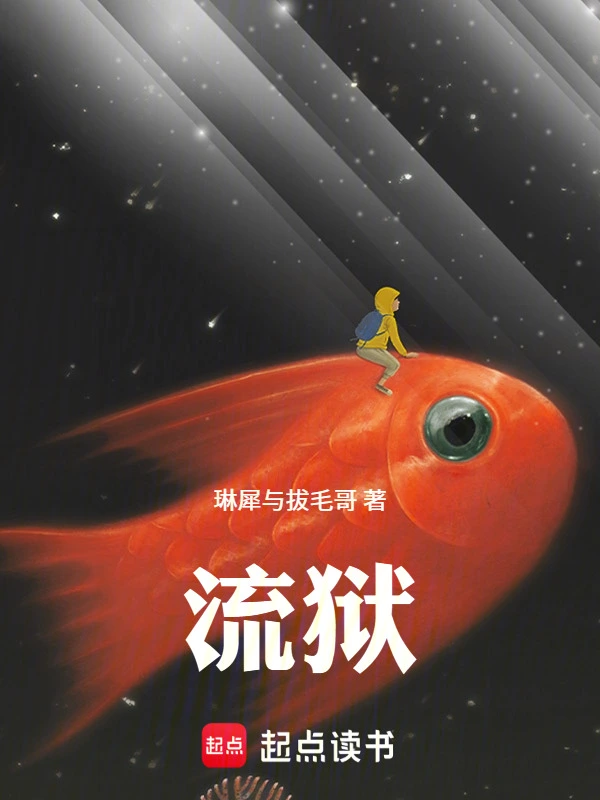
This story is happening in the current ubiquitous virtual "closed loop". Patterns form high walls, and flows form a grid. This "closed loop" is called "Prison". Everything in the "closed loop" is data, and they are all humanoid. Why? Because they are all collected from desire by traffic, the algorithm captures the human heart, turns human nature into code, locks it in a closed loop, and imprisons it in the scene. They wear various clothes, are distinguished by numerical differences and attributes, and play different roles in this virtual world. The first set of data is collected from media people walking on the edge of ideals and survival, divided into those who persist and those who transform. Those who persevere are always looking for a balance between bread and ideals; those who transform are faced with the choice between conscience and desire every day. The second set of data is collected from middle-aged people who once dominated society. They have reached a turning point in their lives in their twilight years in the workplace. They either fight, adapt, or lie down. They make their own choices between "reminiscing about the past" and "embracing the future." The third set of data is collected from young people who enjoy the dividends of the times. They are immersed in the "closed-loop" experience, are willing to be captives of the "model", and thrive under the water of traffic. Only a few understand the password and become the sickle that harvests the same kind. The fourth set of data is collected from the guardians of the "Floating Prison". They walk on thin ice with different mentality, holding on to the wall and walking on the edge of the closed loop. While proudly peeping at others, while moving carefully, lest they themselves be involved in the whirlpool... The "Closed Loop" is round, while the "Floating Prison" is more like a fish pond that holds water - the flow is water, and the humanoid data is the fish. The founder of "closed loop", riding the trend of the times to complete capital accumulation, wiping stains on his clothes, standing at the top of the closed loop ecological chain, overlooking the large fish, small fish, shrimps and crabs in the pond, watching them swim within the rules and swallow according to the pattern. What they were thinking about at this time was how to make the pool bigger, the fish schools denser, the chains under their feet longer, and how to make the purifying "living prison" more invulnerable. However, just as artificial intelligence can be fed, humanoid data can also evolve. The fifth set of data comes from those active thinkers who gradually awakened to their humanity due to the human form. They become law enforcers, investigators and avengers. They are no longer addicted to "flow" feeding and "mode" acting. They have become catfish in the pond, muddying the water and causing ripples. Through thinking, they gained insight into the gaps in the walls of the flow pool where original sin was hidden. Their uneasiness infects more of their kind. Under the catfish effect, the fish, shrimps and crabs began to break away from the rules and converged to hit the gap. With the determination or a bit of luck, they condensed into this wall-breaking hammer made of humanoid data. The embankment of a thousand miles collapsed in an ant nest. Although the earthworm is small, it can shake giant trees. No matter how strong the "jail" wall is, it is still afraid of a hammer! What you have finished reading is the story of this hammer. It is related to every humanoid data in the "flow prison", because in this flow prison, what is imprisoned is always human nature.
Writing a book is not easy, so stay with me!