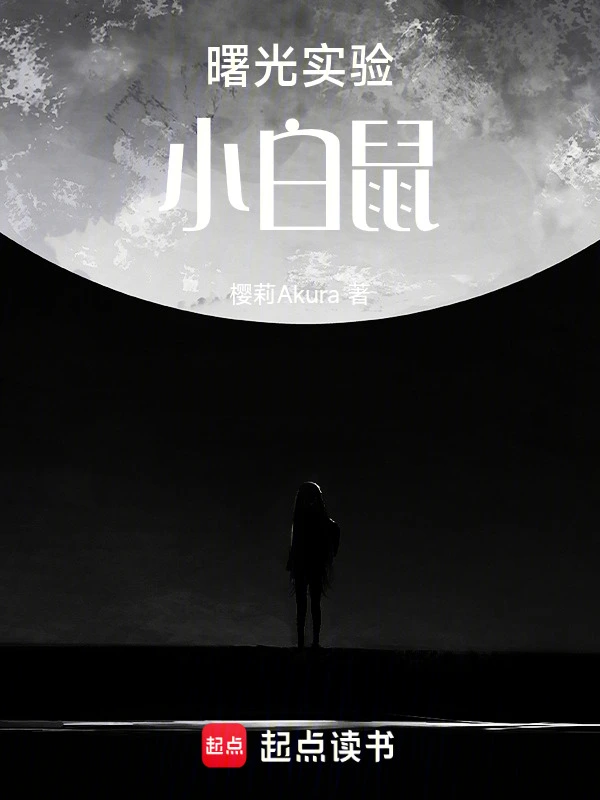
Dawn Experiment: White Rat
曙光实验:小白鼠
- Status
- Completed
- Length
- 110k Words
- Genre
- Real Life
- Audience
- Female
- Subgenre
- Humanities
- Updated
- 9mo ago
- Source
- Qidian
Stats
0Monthly votes
5Recommends
0Fans
43Chapters
Synopsis
Reader comments
Readers also read
 Changqing Driller
 Ten Million Inheritance
 Our Generation
 False Love Trick
 Beast Control Starts from Zero Points
 Song Tan's Notes
 Zheng Loves a Person with One Heart
 Abandoned Wives Are at Ease
 Quickly Wear It: I Just Want to Farm
 Northern Song Life Consultant
 Fight Between Famous Girls
 Houfu
Houfu
 Gods Series: Angel Realm
 Teacher Xiaora
 Li Lu Lu in the Mirror
 Gods Series: Season of Return
 Gods Series: Ji Fei Ji
 Gods Series: Interstellar Voyage to Doomsday Salvation
 Gods Series: Fallen God Envoy Gong Lianzhi
 Lies Build Love
1. Core theme and story outline · Core theme: Under the "dawn" of pursuing scientific breakthroughs and the mysteries of the human spirit, the distortion of human nature, the coldness of capital, individual sacrifice, and the illusion and possibility of redemption. · Story summary: Genius brain scientist Ling Yue and psychology expert Fu Xingyu, with the support of capital tycoon Ding Han, conduct a cutting-edge spiritual experiment called "Dawn" in "Prometheus Tower". They recruited a number of "samples" suffering from extreme mental illnesses: Si Yu, who suffers from sunshine depression and advanced gastric cancer, Guang Yile, who suffers from persecutory delusions and complex PTSD, and Fang Caocao, who develops bipolar disorder due to drugs. The experiment gradually went out of control. Ling Yue's own anxiety disorder, Fu Xingyu's dissociative personality disorder, and Ding Han's desire for manipulation were intertwined with the pain of all the subjects, and finally collapsed completely in Guang Yile's sacrifice at the cost of his life. Ling Yue completed her revenge on Ding Han, but she also reached the end of rationality and the dusk of human nature. 2. Character arcs and relationship networks This is the most dazzling part of this outline. Each character is complex, three-dimensional and full of tragedy. 1. Ling Yue (Observer/Sacrifice/Avenger): · Core contradiction: absolute rationality vs. Hidden guilt and emotion. The pursuit of "great love" that benefits mankind vs. The "disaster" physique that invisibly harms all those close to us. · Character arc: from a calm scientist -> to a participant burdened with sin -> to an avenger with murderous intentions -> in the end, humanity collapses and breaks with the past self. Her "dawn" went from a hope illuminating the human spirit to a hellfire that burned herself and others. 2. Fu Xingyu (Guardian/Hypocrite/Out-of-Control): · Core conflict: external elite doctor vs. Internal "shadow" personality. The twisted desire to protect Ling Yue vs. The extreme disregard for other people's lives. · Character arc: from a seemingly perfect partner -> a hypocrite who exposes his manipulation and calculation -> struggling with loss of control and depression -> finally being completely exiled by Ling Yue, losing all meaning. 3. Ding Han (Manipulator/Collector): · Core contradiction: the ruthless logic of capital vs. The morbid appreciation and desire to conquer "perfect specimens" like Ling Yue. · Character arc: from being a high-ranking trader -> feeling excited in the intellectual game with Ling Yue -> planning to go bankrupt and suffering heavy losses (especially the foreshadowing of blood drug addiction). He is a typical person who "plays with fire and burns himself". 4. Siu Yu (sacrifice/empty container): · Core conflict: gentle and sunny on the surface vs. Hollow on the inside, feeding on pain. · Character arc: from a participant seeking redemption -> completely sinking into the twisted relationship with Ding Han and self-destruction -> becoming a tool for Ling Yue's revenge, and finally reaching the end as predicted. She is tragedy in its purest form, and her very existence is the dissolution of the word "redemption." 5. Guang Yile (Mirror/Sacrifice): · Core conflict: extreme humility and self-guilt vs. Pathological, sacrificial love for Ling Yue. · Character arc: From a fragile person who relies on Siyu -> Faces childhood trauma in the experiment -> Recognizes pain as a sacrifice to Ling Yue -> Finally completes the "ritual" in the most tragic way, interrupting everyone's plans with death. He is the trigger that triggers everything and is also the most heartbreaking character. 6. Fang Caocao (substitute/victim): · Core conflict: the innocent "love brain" vs. The madness spurred by drugs and psychological manipulation. ·Character arc: From a fanatical pursuer -> Transformed into an experimental tool -> Complete mental breakdown. She represents the innocent caught up in the storm (albeit with its own "evil"), and the ending is highly cautionary. 3. Narrative structure and rhythm Multiple lines run in parallel and are closely intertwined. Through the perspectives of different characters, the truth about the "Dawn" project and the inner world of the characters are revealed layer by layer. The advancement of scientific experiments is synchronized with the collapse of character relationships, which is full of tension. 4. Discussion of science and ethics (the cornerstone of the work) · Scientificity: The fictional "Minotaur", "Prometheus" and other drugs, as well as the description of brain networks such as DMN, SN, and FPN, provide a solid science fiction core for the story. · Ethical Dilemma: The story constantly asks: Is it reasonable to sacrifice a few individuals for the welfare of the many? Where are the boundaries of science? Where is objectivity when researchers themselves become part of the experiment? These discussions add depth to the work. 5. Directions and Suggestions for Deepening 1. The bigger picture of the "Shuguang" project: Is there a larger force or purpose behind Ding Han? Where do the research results of "Dawn" ultimately go? Is it possible that the military or other countries are involved? This can add a layer of geopolitics or a larger conspiracy dimension to the story. 2. Ling Yue's "Follow-up": The final chapter is open-ended. Ling Yue leaves with the blooming "poppy", what is her future? Should she live in seclusion and endure everything silently, or should she use the knowledge and technology she possesses to become a "sanctioner" wandering around the edges of the world? This leaves endless room for a sequel. 3. The final outcome of Fu Xingyu's "Shadow": After being exiled by Ling Yue, will the "Shadow" personality remain silent, or will it explode in a more extreme way? Will he become a threat to Ling Yue's future, or lead to self-destruction?
In a cutting-edge spiritual experiment project called "Dawn", genius scientists, psychological experts, capital tycoons and multiple spiritual subjects were entangled with each other. While exploring the mysteries of the human brain, they also fell step by step into the abyss of human nature, desire and scientific ethics. In the end, at the cost of life, they gained a false dawn and real destruction. 1. Summary of the story The story takes place in a modern scientific research building called "Prometheus Tower". Brain scientist Ling Yue and psychology expert Fu Xingyu, with the support of capital tycoon Ding Han, lead a cutting-edge spiritual experimental project called "Dawn". They recruited multiple "samples": · Si Yu: a "sunshine type" depressed patient suffering from advanced gastric cancer who feeds on pain and seeks self-destructive salvation. · Guang Yile: A humble young man suffering from severe persecution delusions and complex PTSD, has a morbid attachment and sacrificial mentality to Ling Yue. · Fang Caocao: A volunteer who is fanatical and obsessed with Fu Xingyu, who was gradually developed into bipolar disorder by drugs and manipulation. The experiment advances amid cold data and twisted human nature. In order to fight against Ding Han's humiliation and oppression, Ling Yue secretly used Si Yu's blood containing neurotoxins to poison Ding Han; Fu Xingyu did not hesitate to use and sacrifice other subjects in order to protect Ling Yue. After Guang Yile discovered Ling Yue's self-destruction plan, he committed suicide in a tragic public manner, detonating all conflicts. The project was suspended, capital was withdrawn, and the fate of all participants collapsed. Ling Yue completed her revenge, but her own rationality and human feelings were completely annihilated, like a poisonous poppy in full bloom, heading towards an unknown ending. 2. Overview of Volumes/Parts Part One: Observers and Samples (approximately Chapters 1-6) · Introduction: Showing the grandeur and coldness of the "Dawn" project, Ling Yue's absolute rationality, Fu Xingyu's disguise, and Ding Han's capital manipulation. · Sample entry: Si Yu, Guang Yile, and Fang Caocao appear one after another, revealing their core motivations and spiritual traits respectively. · Experiment started: The preliminary experiment revealed the subjects' abnormal neural reactions, the network of characters began to weave, and the undercurrent surged. Part 2: Abyss Resonance (approximately Chapter 7-20) · The game of human nature: Ding Han uses capital and PUA means to control the overall situation; Fu Xingyu's "shadow" personality begins to emerge; Ling Yue seesaws between rationality and guilt. · The distortion deepens: Guang Yile's "mirror stage" experiment exposed his obsession with sacrifice; Fang Caocao became increasingly mentally unstable under the drug; Si Yu and Ding Han established a distorted physical relationship, and their sinking deepened. · The plan sprouted: Ling Yue discovered the neurotoxicity of Si Yu's blood and began to plan revenge against Ding Han. Part Three: Disintegration and Sacrifice (approximately Chapters 21-38) · Conflict breaks out: Guang Yile mutilates himself, Fu Xingyu's "shadow" personality loses control in public, and internal conflicts within the project become public. · The truth and breakup: Ling Yue discovers the truth about Fu Xingyu's hasty "cultivation" of Fang Fang, and the relationship between the two completely breaks down; Ling Yue confesses her death wish and revenge plan to Guang Yile. · The final sacrifice: In order to prevent Ling Yue's self-destruction and complete the final "sacrifice" with his life, Guang Yile committed suicide by hitting the wall in the data hall. His death directly led to the project being abandoned by capital and abruptly terminated. Part 4: Embers·Final Chapter (about Chapter 39 and Extras) · Respective endings: · Ding Han: The project failed and will suffer from neurodrug addiction after Si Yu's death. · Siu Yu: Died of cancer and multiple drug abuse shortly after the project was terminated. · Fang Caocao: Completely suffered a mental breakdown and was sent to a mental hospital. · Fu Xingyu: Failed to confess to Ling Yue, was completely exiled, and lost all meaning. · Ling Yue: Revenge was successful, but her inner world completely collapsed, turning into an indifferent "poppy" and leaving alone. · Extras: Through the history of each character, a complete outline of how they lead to the tragic fate of "Prometheus Tower" step by step. 3. Introduction of core characters 1. Ling Yue: the protagonist, a genius brain scientist. · Table: Calm, rational, pursuing scientific perfection. · Li: A patient with severe anxiety disorder. Her childhood trauma caused her to turn her pain into fuel for "supernormal cognition". I feel deep guilt for Guang Yile in my heart. The motivation is to dedicate oneself to scientific research and eradicate Ding Han, and eventually transform from the "Redeemer" into the "Avenger" and the "Indifferent". 2. Fu Xingyu: Psychologist, Ling Yue's partner. · Table: Handsome, professional, benevolent and benevolent heir. · Li: Suffering from dissociative identity disorder due to childhood trauma, he has a violent "shadow" personality. His love for Ling Yue was twisted into paranoid protective desire. The motive is to "protect Ling Yue", and he does not hesitate to trample all ethics for this. He is a typical "hypocrite". 3. Ding Han: Capital controller, project investor. · Table: Elegant and shrewd businessman. · Li: He was traumatized by poverty in his childhood and believes that money is everything. Treat human nature as playthings and data. The motivation is to obtain scientific research results and capital returns, and to enjoy the pleasure of controlling and "collecting" human nature. 4. Si Yu: Subject S-07, "The Sacrifice". · Table: Gentleness, kindness, and desire to save others. · Li: The inner emptiness, the perception of existence through pain, is the "empty container" of self-destruction. The motive is to seek the final "value" of life and voluntarily become an experiment and Ling Yue's tool of revenge. 5. Light and Joy: Subject S-04, "Mirror Image". · Symptoms: cowardice, low self-esteem, dependence on others. · In: Due to childhood trauma and Ling Yue's "betrayal", pathological attachment and delusions of sacrifice were formed. The motive is to prove his "worth" to Ling Yue, and his death is the fuse that detonates the whole situation. 6. Fang Caocao: Subject BN-03, "substitute". · Table: Innocent and passionately in love with Fu Xingyu. · Li: A spoiled "little princess" with a performative personality. The motive was to gain Fu Xingyu's love, but he eventually became an "innocent victim" destroyed by drugs and manipulation. 4. Theme · Core theme: Explore the complexity of human nature, the ethical boundaries of scientific research, the ruthlessness of capital, and the illusion and possibility of redemption in extreme environments. · Narrative Highlights: 1. Hard-core science fiction setting: Integrating real neuroscience concepts (such as brain networks, neurotransmitters) and fictional drugs to create a solid science fiction background. 2. Ultimate character arc: Each main character has experienced a subversive transformation, none of them has a happy ending, and the tragedy is intense. 3. Multi-line narrative and psychological description: Through the perspectives of different characters, we deeply analyze their inner world and present a grand psychological group drama. 4. High-concept plot: blood poisoning, personality switching, mirror experiment, self-sacrifice and other plots, which have both intellectual and emotional impact. 5. Profound ethical questioning: Constantly asking "Is it reasonable to sacrifice individuals for a greater goal?", Triggering readers to think deeply.