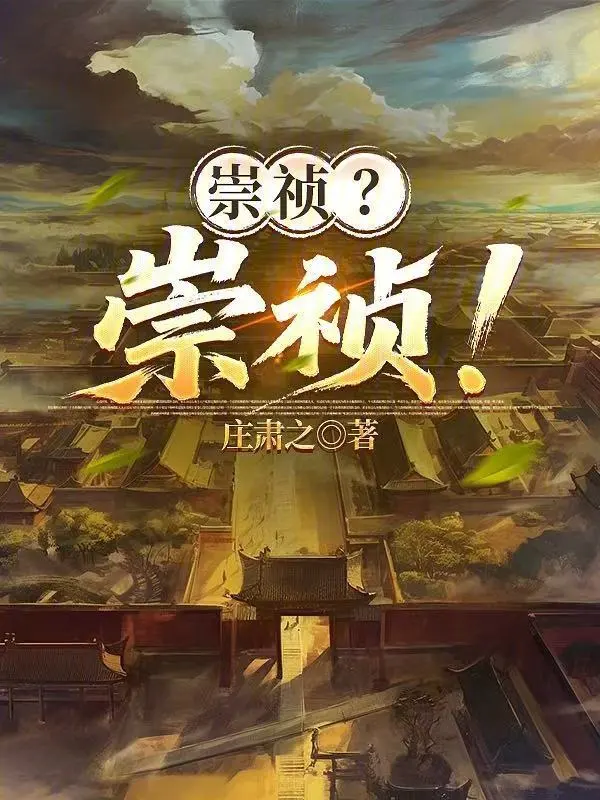
Chongzhen? Chongzhen!
崇祯?崇祯!
- Status
- Ongoing
- Length
- 108k Words
- Genre
- Historical
- Audience
- Male
- Subgenre
- Song-Yuan-Ming Dynasties
- Updated
- 9mo ago
- Source
- Qidian
Stats
0Monthly votes
176Recommends
6Fans
45Chapters
Tags
Synopsis
Reader comments
Readers also read
 Red Mansion: Start Escaping and Farming from the Equipment Bar
 Northern Qi, Sage Khan
 After Lying in Bed for Three Years, He Was Forced to Help the Han Dynasty
 Fu Ming 1627
 Criminal Investigation Notes 2: Buried Corpse in Songhu
 The Ashes of the Southern Ming Dynasty
 I Am a Tyrant in Nanming
 Leader
 The Black Witch's Journey to Another World
 At the Beginning, Please Ask Chongzhen to Abdicate!
 Daming: Emperor Chenghua Is Here to Ascend the Throne First!
 I Want to Revive the Tang Dynasty!
This book is terrible
As a slave of the emperor, the matter of killing a eunuch is a matter of white gloves after all. Killing Wei Zhongxian after 26 chapters? ? What you wrote is really a bit of a pick-me-up. Reading this book makes my eyes dirty.
Cavalry Countdown to the Eight-Year Ping Liao and Little Ice Ages
Due to the extreme climate of the Little Ice Age, once the seven-year natural disasters began from 1637 to 1643, the Ming Dynasty had to face bloodletting on two fronts: internal farmers and Houjin at the same time. Then you can look for the crooked neck tree. Therefore, due to the time limit of the Little Ice Age, it takes ten years to level the Liao Dynasty, and it is best to defeat the main force of the Hou Jin Field War in eight years. This way, two years can be left to recuperate, collect grain, build water conservancy, and continue to immigrate to the Northeast to relieve population pressure. Time is tight, so it is impossible to expect to win. We need offensiveness and strategic initiative. This required the formation of a field cavalry regiment that could conduct field battles with Hou Jin as the main force on the battlefield. (Of course, there is also a certain proportion of sailors, infantry, and vehicle and battalion cooperation.) The functionality of the cavalry cannot be replaced by any other arms. If the cavalry is not trained enough, it will encounter a situation like that in Daling River. Thousands of Wu Xiang were easily driven out of the battlefield by Huang Taiji's 2w superior number of cavalry. 1. Can you afford it? When Jisi entered the pass, Zhao led the army with 3k troops, Yuan Chonghuan's headquarters had 9k troops, and Cao Wenzhao had 4k troops. In addition to the above-mentioned centralized cavalry, there are also cavalry distributed in various ministries. The total should be greater than 2w. This book will clear the land, check taxes and corruption everywhere, and improve finances. The number of cavalry raised should exceed historical data. That is, the concentrated field shock cavalry is greater than or equal to 2w. 2. Combat effectiveness and the time required to form combat effectiveness Also learn from history. Ming army cavalry before training. Refer to the 1628 Wong Ni Wa victory. Zu Dashou led 2-3k cavalry, defeated Houjin's 1k cavalry, beheaded more than 100 people, and captured more than 100 horses. At that time, under Guangqu's command, Yuan Chonghuan's 9k cavalry fought behind the city and defeated Huang Taiji in the field. Concluded that the first-class Guan Ning Army cavalry before training could achieve victory at a 3:1 ratio. Guan Ning's army, which had been trained for one and a half years, could defeat Houjin's cavalry of a similar size under the conditions of fighting behind the city. A further idea is that the Ming Army cavalry, which has been trained for 3 years, can be supported by the fortress group, and the 3-4k people can face the same Houjin cavalry in the field without being defeated, and actively look for fighter opportunities to start redeeming their weapons. He exchanged battle losses with 10-year-old Eight Banners veterans who died one less after Hou Jin died. The Ming cavalry who have been trained for 5 years can win against the Houjin cavalry at the same scale. Regarding the soldiers, there were veterans of the Ning Army cavalry and Mongolian Yiding who had surrendered (such as Mangui, Zu Dashou surrendered to the fourth Yi camp). 3. Combat style Staged in 1-3 years, the cavalry is immature. During the defensive period, refer to the Battle of Ningyuan. The battle of Ningjin was a great victory in Huangniwa. When the main force of Houjin attacked, they relied on the fortress and could not hold on. Avoid encirclement and reinforcements like the Battle of Changshan. After Jin's main force withdraws, he can fight small-scale conflicts with 3-5k people. The purpose is to restore the Jinzhou-Daling River-Xiaoling River-Youtun defense line. The Big and Small Ling Rivers can limit Hou Jin's access to Mongolia, eliminate the possibility of entering the customs, and gain strategic advantages. Youtunwei can be reached by sea. Once restored, cooperation with Lushun and Dalian shipping can greatly reduce the later transportation pressure in western Liaoning. Build a fortress during the 3-5 year stalemate to suppress the activity space of the Later Jin Dynasty. You can try to restore Guangning, attack Yingkou, and restore Gaizhou in Panjin. Take the initiative to seek opportunities to fight with the Houjin Cavalry. After consuming the Jin mobile power, farmland in the suburbs of Shenyang was burned down. Impair logistics. Cavalry is the main force on the battlefield, and the victorious cavalry can seize the initiative on the battlefield. For example, in the Battle of Daling River, after the Hou Jin cavalry drove the Ming army cavalry from the battlefield, they could calmly mobilize infantry and artillery, concentrate their superior forces, and eat away the Ming army car camps and Daling River City that could not escape one by one. This is the importance of battlefield initiative. In 5-8 years, we took the initiative to attack Shenyang with Guangning as the base, looking for opportunities to fight large-scale field battles. {"TopicId":"1183784882674663424","TopicName":"Ming Dynasty 1627"}{"TopicId":"1205988131594960896","TopicName":"Eight Years of Ping Liao"}
The total amount of silver owed by Jiubian from the 38th year of Wanli to the 7th year of Tianqi
Data source: "Analysis of the Nine-border Beijing Movement in the Late Ming Dynasty" - Fan Chuannan
The last year of the Apocalypse is the best opportunity to take action. The rebellion has just emerged this year, and the names of the three civil servants who beat thieves like chopping vegetables have long been known. The second cao is also a loyal general. Yuan Chonghuan and Yuan Keli can be used, as are the few Khans and foreigners who were enlightened by the Westernization Movement. In good condition, the Qiang and Tibetans are also weak and can be exchanged and infiltrated. Foreigners from outside are beginning to fight with each other. New technologies and theories are booming. North Korea also has the possibility of being a subordinate. Mao Wenlong can be replaced in advance to avoid becoming the first warlord or traitor later.
Eight years after Ping Liao
The Northeast Strategy includes the following long-term and short-term goals and plans: 1. Immigration to relieve pressure and survive the Little Ice Age 2. Solidify the border and prevent the emergence of a second post-finance industry 3. As the cradle of the new learning system, Huangquan Village provides sufficient job training to select outstanding new learning talents 4. Develop forestry to provide enough high-quality wood for seagoing ships. 5. Create enough homesteaders with spending power to create markets and sources of raw materials for coastal industrialization. Let's talk in order. 1. Immigration relieves pressure. Why should the pressure be released? There are nearly 30 million people in the North China Plain. If there is enough food to not starve to death, there can be 700,000 to 800,000 newborns every year. Therefore, if only 30-50,000 immigrants are immigrated every year, it will slow down the population growth rate, but will not solve the problem of more people and less land. If you don't consider being a principal, go to urbanization. Then we must find ways to increase the number of immigrants, so that more people can survive the long-term conflict between man and land and the upcoming Little Ice Age. Where did the initial investment in developing Liaodong come from? After defeating Hou Jin, they captured 3 million acres of cultivated land in Liaodong, as well as the horse farm where Hou Jin raised hundreds of thousands of horses, plus the omitted 30-50 thousand Han people (including Koreans). The Liao military expenditure of 5 million taels and related resources can be saved. Instead of investing in the quagmire of unprofitable war every year, it can be invested in the development of Liaodong that will pay back in 5-8 years. How is the environment in Liaodong and how difficult is it to develop? Swamps are everywhere, and mosquitoes and venomous snakes are everywhere. Some water conservancy facilities need to be built first to prevent waterlogging and drain water. -30 Degrees in winter, the cost of keeping warm is high. Development costs are high. After Hou Jin was defeated, the defeated troops turned into bandits and rogues. Black soil is very fertile, with a depth of more than 1m and a humus content of more than 5%. Black soil is everywhere. Remove the grass roots 1m deep to become fertile land. Due to water conservancy facilities, bandit threats and other reasons, small farmers were unable to bear the cost of reclamation. In the first 10 years, the imperial court could only take the lead in organizing reclamation. During the Little Ice Age, the temperature was so low that it was impossible to grow rice with a yield of more than 200 kilograms per mu in a single season. Instead, we could only grow rye and sorghum with a yield of more than 100 kilograms per mu. In the 50 years since later generations invaded Guandong, more than one million people have left, an average of 10,000 or 20,000 per year. It is too slow. Therefore, spontaneous private migration can be regarded as non-existent. 2. Shibian Along the river, restore the old guard post and restore the Nurgandusi command post. The Northeast is not the dowry of Hou Jin Dynasty, but the old land of Ming Dynasty. There are really not too many girls. Hou Jin recruited people from the middle and upper reaches of Heilongjiang, and the number was about 100,000. Generally speaking, the number of people will not exceed 200,000. Han immigrants will inevitably account for the majority 3. New system A blank piece of paper is easy to draw on, which is different from the inland Huangquan County. In the northeast, Huangquanxia Village. Reclamation requires strong organizational and mobilization power, which can only be fully exerted when the village is under political power. With reference to the primitive village communities with extremely backward productivity, there is a certain legacy of the original public ownership of the village communities. Reservations are encouraged across the Kaftin Gorge. Leap forward to the original cooperative village community. Privately owned by individuals, shared by families, retained by villages and communities, retained by counties, prefectures, and provinces, retained by the central government. The first batch of land reclamation The first batch will select the families of soldiers and the liberated Liaodong Han people. Part of the confiscated land was distributed to the families of soldiers as military merit fields. Financial allocations are provided to provide seeds, farm tools, and cattle, and wasteland cooperative village communities are used as units to organize wasteland reclamation and water conservancy construction. The land will be distributed after 3-5 years of reclamation. The second batch of land reclamation The source is landless farmers. After arriving, he first worked as a long-term contract worker for three years and paid back the ship ticket, farm tools, and seed money. Then, just like the first batch, we organized reclamation. During the Little Ice Age, food was in short supply, and farmers would give priority to feeding themselves after being allocated the land. Therefore, more control over the situation for a period of time would ensure that more people could immigrate to the Northeast. A village commune has 100 households in a village. There will be a village chief, a village leader, a post-partum enlightenment teacher, and a number of village maternal nurses. Education: Set up social studies in rural areas to replace the role of junior primary schools. The town inspection department of hundreds of households places senior primary schools. Junior middle schools are placed in county towns and thousands of households to replace county schools. High schools are placed in Fucheng and Acropolis to replace prefectural schools. In the early stage of college, they are not placed in provinces and are directly taken over by the central government. They only serve as modified Imperial Colleges in the north and south Beijing Village maternal nurses. Understand boiling water and alcohol disinfection. Can deliver babies. (There are at least four to five hundred newborns in a village of 100 households in 10 years.) He can smoke mugwort to repel insects (there are many mosquitoes). He has basic nursing knowledge and can bandage wounds. When the political power is removed from the village, a large number of management personnel (1/200 of the total number) are needed. This gives over-trained new graduates the opportunity to find employment and practice. Those who perform well can quickly jump from village chief to township chief in 2-3 years, and to county chief in 5 years. This resulted in the selection of a group of outstanding officials who were different from the old imperial examination system. 4. Forestry Building ships, the shogunate exploded 3kw of silver in the Eastern Expedition and went to the South Seas. At the same time, he defeated Spain and the Netherlands to avoid falling into the rainforest security war with the Tuwang chiefs armed by the sunset people, and captured the treasure island, Luzon, Malacca, Jakarta and other places. 5. Raw materials and markets Long-term goals. The ultimate goal is to realize the first industrial revolution and complete industrialization in coastal southern Jiangsu. This requires immigrants from the Northeast, the 2kw shogunate, the 800w Li Dynasty, and the Nanyang farmer market to barely meet the industrialization needs of the 1kw people in southern Jiangsu, and it may not even be enough to eat. {"TopicId":"1183784882674663424","TopicName":"Ming Dynasty 1627"}{"TopicId":"1205988131594960896","TopicName":"Eight Years of Ping Liao"}
Hey guys, is the comment section crowdfunding to write a novel? The problem is that the ideas are basically taken from other novels. I haven't read this book yet, but if every book has the same routine, what's the point?
Overcorrection must be overcorrected. As a result, Wei Zhongxian was killed and he did not clean up the court properly, especially the later and middle dynasties. He was really a waste.
Breaking point
The breaking point was Lin Dan Khan's western expedition in 1627-1628 and Hou Jin's two western expeditions to Mongolia. After the protagonist takes the throne, he needs to assemble the cavalry to repel Lin Dan Khan. Complete the break and end the risk of post-gold entry. Yuan Chonghuan and his cavalry must follow the route of building an army. Sun Chengzong and other old men can use it temporarily, and they can retire when Yuan Chonghuan comes. Sun Chengzong's wooden cart and small cannon were the wrong route. Qi Jiguang stayed in Jizhen for 16 years, lost two battles in two battles, and won only 60 heads in eight battles. And Li Chengliang, who was mainly cavalry in Liao Town, had 1w5 Manchu and Mongolian head-level military exploits and was awarded the title of Ning Yuanbo. Ji Town and Liao Town have different environments and terrains. The Guan Ning Army fighting in Liao Town should of course learn from Li Chengliang's cavalry-based army building ideas, rather than Qi Jiguang's car camp system route. That is not a field army at all, but a second-rate garrison. From Mao Wenlong's entry into North Korea until the eve of his death, the large and medium-sized wars launched by Hou Jin: The Battle of Guangning, the Battle of Liuhe, the Battle of Ningyuan, and the Battle of Ningjin against the Ming Dynasty; two dozen Inner Khalkhas against Mongolia, one conquest of Lin Dan Khan and small-scale battles against Aohan and other tribes; the Dingmao Rebellion against Korea. In this process. I haven't seen any containment effect played by Mao Wenlong {"TopicId":"1183795537419108352","TopicName":"Mao Wenlong"}{"TopicId":"9419814 18635788288","TopicName":"Qi Jiguang"}{"TopicId":"1193850885072748544","TopicName":"Li Chengliang"}
This book is okay, it's at the level of food and grass, I guess.
The plot doesn't flow smoothly, and some of the language is too difficult to pronounce. How should I put it? It's best not to write those awkward languages and those awkward words.