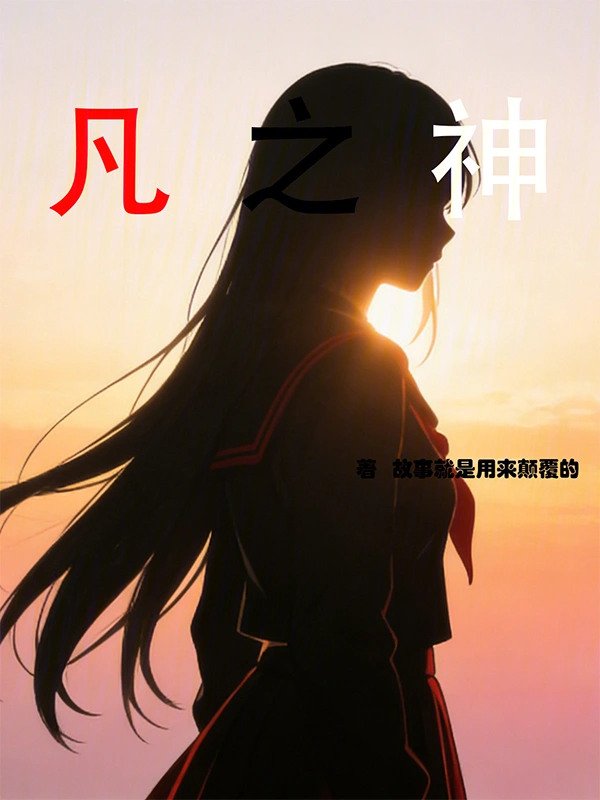
Mortal God
凡之神
- Status
- Ongoing
- Length
- 304k Words
- Genre
- Light Novel
- Audience
- Male
- Subgenre
- Original Fantasy
- Updated
- 1d ago
- Source
- Qidian
Stats
0Monthly votes
110Recommends
0Fans
155Chapters
Synopsis
Reader comments
Readers also read
 Conquer the Comic World Starting from Bone King
 New Age Melancholic Warrior
 Douluo Jueshi: I, the Last Natural Disaster
 Become a Serious Person Starting from Hokage
 The Phantom Thief of Heart! but Conan
 Traveling Through the World of Immortality: They Call Me the Coffin Bearer
 With a Daily Payment of 10 Million, I Will Build a Special Zone in Dashan
 Writer's Manual
 Tao and Carbon-Based Monkey Breeding Rules
 When Nao's Flowers Fall
 Saint Bai Yujing Longs for the Evil God
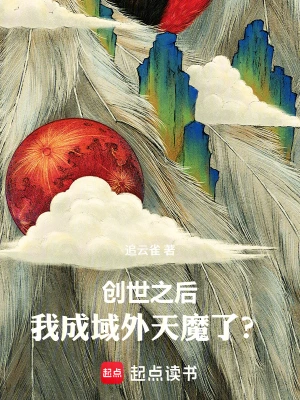 After the Creation of the World, Did I Become an Extraterrestrial Demon?
No one has good works! Should the author consider changing the title of the book to Genshin Impact, which would be more attractive to readers? After all, Genshin Impact has 300 million players, and there are many uncounted people overseas. They will definitely be attracted😎😎😎
{"TopicId":"1258397311228116992","TopicName":"Mortal God"}{"TopicId":"72279895679 4413056","TopicName":"furry"}Has the author considered adding a Furry character? ૮₍ɵ̷ɵ̷̥̥᷅₎ა I really like Furry ૮₍ɵ̷ɵ̷̥̥᷅₎ა
Write a poem to the author😂
He laid mines in piles of old papers Folded linear time into paper airplanes Let the protagonist die in the third chapter The murderer is the punctuation mark All foreshadowing rebelled All fate resigned He made the readers get lost But in The cliffside is full of mirrors - seeing what we have never arrived Another possibility This is the riot of narratology It is democracy in the inkwell When the last page is torn The story finally learns to walk on its own
Why is Livia a god?
Why is Livia a god? Before talking about this issue, I want to first talk about how other characters are different from Livia. The first is Amy who committed the sin of pride. Being born into a well-known family takes it for granted that the halo is attached to you, and everything you do is like "I should be like this". Little did she know that talent was like unforged ore, and her arrogance was like slag, leaving only a hollow echo after it burned out. Livia never announced her arrival, she just surprised everyone afterwards - it turned out that light had stopped here. Then there is the white-haired man who committed the sin of anger. The silver thread is like snow, but it cannot conceal the boiling restlessness in the blood. His magic is like wildfire, burning his enemies and burning through his own sanity. Anger gave him the edge to break the situation, but it also took away the room for maneuver. On the other hand, Livia's anger is like lava buried deep in the core of the earth. All the seasons on the surface are like spring, and the center of the earth has already burned the offenders into the dust of calculation. Then there is Shidao who commits the sin of laziness. There is "Tao" hidden in the name, but there is no trace of a long journey under my feet. The counter of the guild is his throne. Decades of time have been ground into a cup of lukewarm tea. He pays homage to the past and swallows contentment. Livia's footsteps never stop in any corridor. She is her own stagecoach and the tide that never reaches the shore - the lazy collect dust, and the traveler becomes the road itself. Then the guild committed the crime of jealousy. This behemoth is built by countless little people, and every brick is engraved with "Why". They are jealous of Livia's lightness, because she proves that bloat is not a necessity for survival; they are jealous of her sharpness, because the knife is never blunted by power, but sharpened by truth. Jealousy is the mirror of the weak. He sees his own bloatedness but blames the slimness of the person in the mirror. There is also a middle-aged sheriff who committed the crime of greed. His desire is like a Russian matryoshka doll, with one layer opening and another, and the never-ending "not enough." Medals should be gold-plated, wine glasses should be studded with diamonds, and justice should be weighed. Livia also asked for it, but her greed was in another form—she wanted the entire chess game, not the private collection of a certain chess piece. A greedy person looks like a generous person because she never wants your little bit. Finally there is Olson who committed the crime of lust. The lust here is not the pleasure in bed, but the morbid hunger for "power" itself. He longs for strength like dry land longs for heavy rain, but forgets that after the flood there is only mud. His pursuit is one-way, greedy, and insatiable—for more magic power, a higher rank, and a louder honorific. Livia's strength is something that runs deep. She doesn't need to "look strong" because she is already the ruler to measure strength. As for Livia, she only committed one sin— That was divine sin. The divine sin is loneliness, because no one is worthy to stand beside her; The divine sin is transparency, because her calculations are too precise, but seem to be honest; The divine sin is silence, because for her, language is just a medium of delay. When she smiles, it's not an expression, it's a precursor to the weather system switching; When she lowers her eyes, it's not exhaustion, it's a distant conspiracy that has just come to fruition. Others live in stories, but Livia lives in the gaps of all stories - not the protagonist, but the divine blank space that is just cut by the clouds when the protagonist realizes that he needs to look up.
The second creation language conlang૮₍♡♡₎ა I made for the mortal god
Fán-tha - the man-made language of the world view of "Fán-tha" 1. Phonological design Core phonemes (reflecting the simplicity of "Fán" and the loftiness of "God"): Category Phoneme Symbolic meaning Vowels a, e, i, o, u, á, é, í, ó, ú with sharp sounds are "divine vowels", which are rarely used by mortals Consonants f, v, n, th, s, z, r, l, k, g, h f/th/s are "rising sounds" (mortals go to God); v/z/g are "falling sounds" (gods come down to earth) Syllable structure: (C)V(C), the core roots are mostly single syllables, reflecting the simplicity of mortals; divine words often have complex consonants or long vowels. --- 2. Core vocabulary and root system Basic root (mortal level): Root Meaning Example fan mortal, earthly world fan-tha (mortal language/mortal words) tha speaking, naming tha-fan (naming for mortals) veth flesh and blood, material veth-fan (mortal body) nor Limit, end point nor-fan (life limit) sil dust, tiny sil-fan (mortal as dust) Divine root (requires sharp accent mark): Root meaning usage taboo thál divinity, transcendence, mortals need to add the buffer word "eth" nór eternity, boundless only priests can pronounce in full vés create, bestow Mortals can only use "veth" (created things) rí Gaze, know God's "seeing" is different from mortals' "seeing" --- 3. Grammar core: duality system The core grammar of mortal language is "mortal/divine duality" - the same concept is expressed differently according to the user's identity and context. Person system: Personal pronouns Mortals calling themselves God to mortals Mortals to God I fan (I, dust) veth (you, flesh and blood) sil (I, tiny mote) You tha (you, speaker) fan (you, mortal) thál-eth (god-buffer) He/she nor (that, the one who has the end) vés-an (that, the creature) — Double form of verb: ``` Example: verb "to exist" Mortal form: fan-a (I am) - short sound, stating the fact Divine form: fán-á (God is) - double sharp sound, eternal duration Mortal report to God: fan-á-eth (I-am-buffering) - Semi-divine, expressing awe ``` --- 4. Special grammatical phenomena 1. Dust (Sil-tha) When mortals refer to themselves, they add the "sil-" prefix before the verb to express humility. - Normal: Fan tha. (I speak.) - Humility: Sil-fan tha. (I speak as a mote of dust.) 2. Splitting of the divine name (Thál-veth) The divine name cannot be read in its entirety and must be split: - Complete divine name (only the priest speaks silently): Thál-nór-vés - Mortal name: Thá... (Pause)... N-vés-eth 3. Boundary mark (Nor-mark) Mortal words must be added at the end of the sentence "nor" to acknowledge their own limitations: - "I walk nor" = I walk (until the end/boundary) --- 5. Examples and texts Mortal daily life: > Sil-fan veth-a nor. Dust - I walk - within the boundaries. "I, a mortal, walk to the end." Priest prayer: > Thál-eth... Fan-á vés-an... Nor-eth? God-buffer... In-eternity Create-that... Boundary-buffer? "O God... What the Eternal has created... Can there be limits?" Oracle (recited by mortals, broken down): > Vés... (Thunder)... Fán... (Silence)... Tha! "Created... Eternal... Words! " --- 6. Writing system: dual-track system Mortal language uses two sets of characters: - Sil-ka: square-shaped, written horizontally by ordinary people - Divine pattern (Thál-ka): streamlined, only used for the names of gods and sacred scriptures, vertical arrangement, mortals must leave blank spaces between words when copying "breath" Design philosophy: Every grammatical rule of Mortal language repeats the core proposition of "Mortal God" - the eternal tension of boundaries and transcendence. Mortals mark their own limitations through language, and at the same time carefully touch the ineffable divinity through cracking, buffering, and dusting.
I would like to make some sincere suggestions: first, the branch plots in the mid-term can be appropriately wrapped up to avoid distracting the impact of the main plot; second, if the villain can be created with a few more complex motives, it will be more shocking than a facial expression; third, the ending must be stable, and the worst thing in a long story is to miss the mark. I look forward to the author's next book directly becoming a god. True readers will always be on your side.
The update is too slow and I can't get enough of it😭 Why don't you sign a contract for such a good book? I want to reward it😭
Poetry creation in common languages
> Veth-ka sil-fan nor, Tha-an tha-fan thál-á nor, Fan tha-nor-a, Thál-fan veth-an nor, Tha-sil veth-eth nor. > Sil-tha nor fan-á, Sil-nor nor fan-á, Thál-an fan tha-a nor, Sil-veth nor thál-á... ... Tha-fan-eth nor. > Thál-veth-a nor-eth? Vés-fan tha-á nor? Nor-an tha-fan sil-a, Thál-eth... ... Fan thál-á. --- Verse-by-verse comparison Original text Fan Literal translation He buried mines in the pile of old paper Veth-ka sil-fan nor Old paper-middle dust-me limit Fold linear time into paper airplane Tha-an tha-fan thál-á nor Say-will Say-mundic Divinity-eternal limit Let the protagonist die in the third chapter Fan tha-nor-a Fan utterance-boundary-in The murderer is the punctuation mark Thál-fan veth-an nor God-mortal flesh-is boundary All foreshadowing mutiny Sil-tha nor fan-á dust-word boundary mortal-eternal All fate resigns Sil-nor nor fan-á dust-boundary boundary mortal-eternal He lets the reader get lost Thál-an fan tha-a nor God-will all words-on the boundary But the cliff is full of mirrors Sil-veth nor thál-á... Dust-flesh boundary divinity-eternal... Illuminating another possibility that we have never reached... Tha-fan-eth nor... Word-fan-buffer boundary This is the riot of narratology Thál-veth-a nor-eth? God-flesh-on the boundary-buffer? Is democracy in the inkwell Vés-fan tha-á nor? Create-everything-say-eternal limit? When the last page is torn Nor-an tha-fan sil-a boundary-will speak-mundane-in The story finally learns to walk on its own Thál-eth... Fan thál-á god-buffer... Mortal divinity-eternal --- Translation Notes 1. The treatment of "laying mines" Fanyu has no concept of "explosion", and uses "veth-ka" (old paper/dead flesh and blood) to imply that danger lurks - in the world view of Fanyu, the words themselves are living flesh and blood. 2. The folding of "paper airplane" The word "folding" is tha-an (speaking - general), because "folding" in common language means "letting things express another form". The paper airplane is a betrayal of linearity, so the word thál-á (divinity-eternal) is used to mark this transgression. 3. "The murderer is the punctuation mark" The punctuation mark is the "boundary of breathing" in mortal language, so Thál-fan (God-Mortal) is used - the murderer is the rift itself that is both divine and mortal. 4. "Rebellion by foreshadowing" and "resignation by fate" Using sil-tha (dust-word) and sil-nor (dust-boundary) - all presupposed meanings return to dust, and the verb fan-á (fan-eternal) implies that they have gained eternity (i. E. Freedom) that they should not have. 5. "Mirror on the edge of the cliff" The cliff is the limit (nor), and the mirror is sil-veth (dust-flesh) - mortals can only use flesh and blood as a mirror, and what they see is thál-á (divine-eternal), but the end of the sentence must be broken into tha-fan-eth (spoken-mundane-buffer), because "another possibility" cannot be fully expressed. 6. "The Riot of Narratology" Thál-veth-a (god-flesh-being) is a taboo splicing, and adding nor-eth (boundary-buffer) indicates the danger of this kind of riot-it questions the boundary between God and flesh. 7. "Democracy in the Inkwell" Vés-fan (created-mortal) means "mortal creation", and tha-á (spoken-eternal) implies that each letter has gained an eternal say - this is the delegation of creative power. 8. "The last page was torn into pieces" Nor-an (boundary-will) is the active boundary, tha-fan sil-a (speaking-mundane-in) - the story returns to dust, but is still spoken. 9. "The story walks on its own" Thál-eth... (God-buffer...) Is the suspended divinity, fan thál-á (fan divinity-eternal) - mortals finally carry eternity, because the narrative no longer needs the author as an intermediary. --- Reading Tips - Standard Edition: The nor at the end of each sentence should be read lightly, like a sigh - Priest Edition: All thál and á should be doubled, like chanting a curse - Forbidden Edition: Omit all eth and nor - it is said that reading like this will make the story really start to walk on its own, and the reader will never close the book.
I'm too lazy to say anything
The name at the back is just like this, the chapter name, as evidenced by the screenshot The number of words is exactly the same I don't believe that he could have posted it earlier than my name
It's a bit outrageous. Why does it automatically jump to the starting point after clicking on it? So strange? Should I report it, or should I not report it? ? ?
Why is the plot a bit like Arknights? Chapter 6. And Lone Star. Is this what good works have in common?
Suddenly I found a problem, my strength seems to be too much But it seems that this is the only way, otherwise how could I survive before?
My opinion
"Live a good life", so what is a good life? And given your tendency to demonstrate independence (not vassals/employees/civilians), and that disposition to not do evil. There is a plan, get enough power (you decide how much you want, any magic, science, knowledge and connections will count) and bring a few close friends to form a small country and a small community. There are few conditions for war, and minimal demands on the resources of other countries. Within the protagonist's domain, everything satisfies him. At the same time, prevention of future disasters is carried out. Also, it is when great people, such as revolutionaries in history, create unprecedented mechanisms/systems/paths and strive to universalize them. As you said, break the monopoly. But I don't think you would write it like this, because it is too "cool" and there are many such articles (search for political and history articles yourself). (In fact, if you let your protagonist have a failure ending, it will no longer be a cool article, but it will have considerable implications. But considering that he is your self-representation, you will not let yourself fail)
The pen falls in the storm, the chapter becomes weeping ghosts and gods - this is the real dream maker.
Regarding the answer, even AI is stupid. If you want to use AI to know, just give up.
Some of the AI's guesses are completely wrong, and the hints are too few. The hints I wrote are more than that. As for the AI analysis, is it correct? Of course it's not right If you want to ask the AI to know the answer to joining the group, just give up. As expected they only look at the surface and don't know what's behind it Just like the audience I wrote about
The content of the second volume will be centered around at least two subsections, and it is now more than 130,000 words. The minimum is two, and the maximum is five Then this book only has three volumes The name of the volume is one, and the content is one But I don't know if I can see the cruelty of the second volume, but it is indeed much "gentle" compared to those who fight and kill. But human life is not valuable there, and it can be thrown away at any time. What we say here should still be based on maintaining stability I can't guess what the subsequent plot will be. It's more than 10,000 words and I don't know what will happen. I can only make a rough guess, but it can only be a very comprehensive and general guess, rather than specifying a certain trend. If there is one, it may indeed happen, but how many plots will appear later, I have no idea.
Hakimi