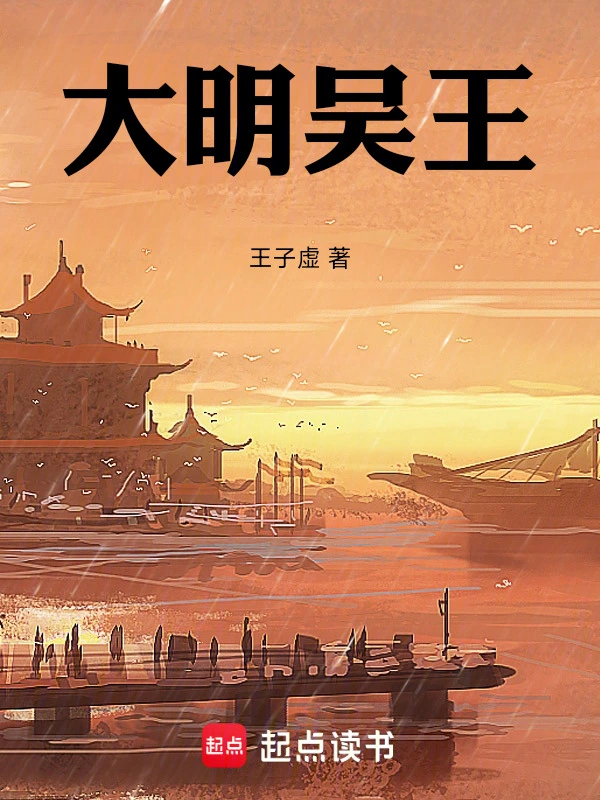
King Wu of Ming Dynasty
大明吴王
- Status
- Completed
- Length
- 1.0M Words
- Genre
- Historical
- Audience
- Male
- Subgenre
- Song-Yuan-Ming Dynasties
- Updated
- 8mo ago
- Source
- Qidian
Stats
0Monthly votes
5.9kRecommends
17.1kFans
310Chapters
Tags
Synopsis
Reader comments
Readers also read
 1914 Begins with the Rejection of the Schlieffen Plan
 Talker in the Song Dynasty
 Please Call Me Your Majesty the Tsar
 In the Red Mansion: Escort Daiyu to Beijing at the Beginning
 Never Walk Alone!
 Northern Song Dynasty: Spoiler of the Future, Zhao Kuangyin Collapsed
 Modern History Class Was Observed by Emperors
 Daming: Have I Become Wanli's Portable Grandfather?
 I Am Drawing a Hot-Blooded Episode in the Zhiyu Episode!
 Daming: the Beginning Takes Lao Zhu Through the Future
 Revealing My Identity, I Was the Deputy Emperor in Jihan
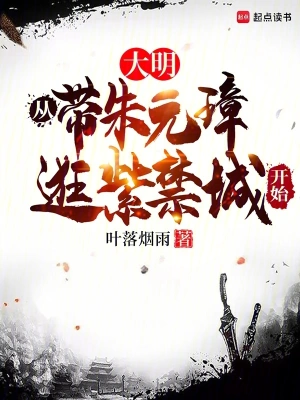 The Ming Dynasty Started with Taking Zhu Yuanzhang to Visit the Forbidden City.
 The Bloodline of the Ship Girl
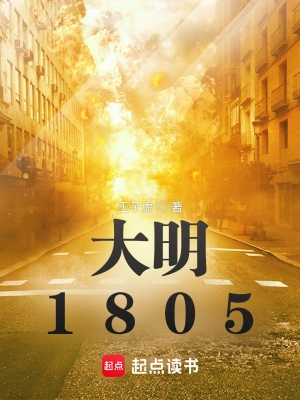 Ming Dynasty 1805
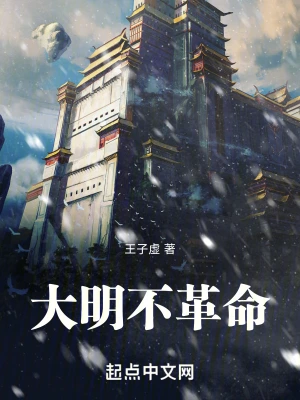 The Ming Dynasty Was Not Revolutionary
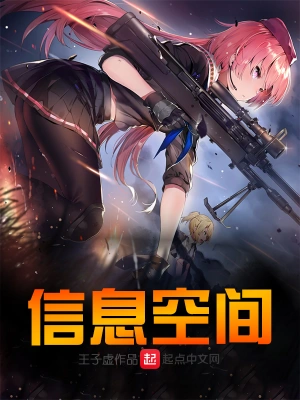 Information Space
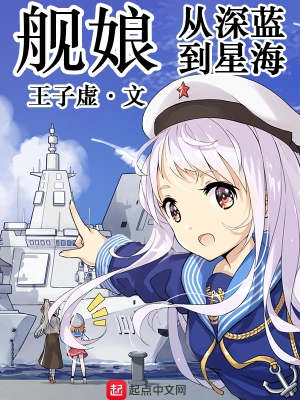 Ship Girl: from Deep Blue to Sea of Stars
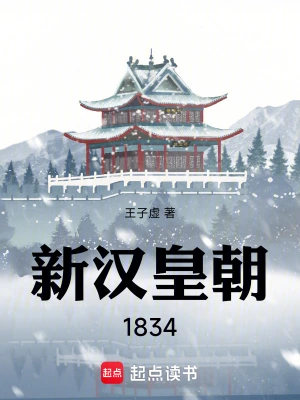 New Han Dynasty 1834
 Transform into a Sickly Tech Girl
Japanese pirates and maritime ban
The purpose of the so-called "sea ban" in ancient times was to restrict and eliminate rebel forces, combat piracy and smuggling, and ensure social stability. The "Sea Ban" was only promulgated when there were Japanese pirates. Rather than "sea ban" first, there will be Japanese pirates. Don't reverse the causal relationship. Sea ban and seclusion are two different things. The direct cause of the Japanese rebellion was the civil strife in Japan. In order to make a living and seek wealth, the feudal lords, samurai and ronin who failed in the war organized into armed gangs and went to China's coastal areas with pirate merchants to carry out armed smuggling and robbery and other criminal acts Ming Dynasty literature is actually quite strict about nouns. Pirates, sea pirates, Japanese pirates and Japanese slaves all refer to completely different groups. Japanese pirates are divided into slave thieves and sub-thieves. The Ming Dynasty called these people differently. If they were pirate merchants, they were called pirates. If they are Japanese, they are called Japanese pirates. There is a clear distinction. For example, the Ming Dynasty court and the local chronicles of Zhejiang Province distinguished between Japanese pirates and pirate merchants who colluded with Japanese pirates. Wang Zhi was the largest pirate merchant on the southeast coast at that time. He raised a large number of Japanese pirates to cause trouble, but the record about him clearly stated that he was a pirate merchant, while the Japanese he raised were recorded as Japanese pirates. They have never been mixed together The Japanese can be divided into two types. One is the pirate group headed by Wang Zhi who has inextricable interests with the Japanese pirates. The other is the pirate group whose wives and children were held hostage by the Japanese pirates and forced to attack the town The Japanese pirates are the Japanese pirates as described in Jixiao's new book Military Training Records. The Japanese pirates are Japanese pirates. Forced Japanese pirates were classified as rescued people, while pirate groups were classified as rebels. They were not confused with each other The main force, logistics, bases, and channels for selling stolen goods were all provided by Japan. And the disappearance of coastal Japanese pirates had a great relationship with the changes in Japan. Since the establishment of the Tokugawa shogunate in 1603, the Warring States Period in Japan ended, and vassal states from all over the country collected troops and put them into the treasury. Ma Fang Nanshan Soon after, the Tokugawa shogunate issued a lock-down order. Japanese citizens were not allowed to run around. They stayed at home, men farmed and women weaved, and the economy was restored. Then look at historical data. Starting from 1603, the Japanese rebellion in the late Ming Dynasty began to slowly decrease. The last Japanese pirates seen in history books invaded the coast of Fujian in July of the fourth year of the Apocalypse (1624). From 1633 to 1639, the Tokugawa shogunate issued five consecutive lock-down orders. The Japanese pirates are completely extinct The direct cause of the Japanese pirate rebellion is the civil strife in Japan. At the end of the Yuan Dynasty, Japan split into the Northern and Southern Dynasties, and wars between the two sides continued. In order to make a living and seek wealth, the feudal lords, samurai and ronin who failed in the war organized into armed gangs and went to the coastal areas of China with pirate merchants to carry out armed smuggling and robbery and other criminal acts. Because the main force came from Japan, they were called Japanese pirates at the time Japanese pirates Ancient name) Japanese pirates (bandits or foreign invaders of national borders) Japanese pirates refer to the Japanese. Chinese people want to be Japanese pirates unless they have Japanese household registration. The Japanese pirates are composed of Japanese samurai ronin, Japanese pirates, and Japanese merchants Sea bans have been in place since the Song Dynasty😲😲 The "Book of Taizong" in "History of the Song Dynasty" records that Zhao Guangyi "banned sea merchants" in September of the second year of Yongxi (985). According to the "History of the Song Dynasty·Shihuo Zhi", Zhao Guangyi stipulated private trade with overseas countries in the early years of Taiping and Xingguo (976) Anyone who trades for more than 100 coins will be sentenced, and those who trade for more than 15 coins will have their faces tattooed and be exiled to the island. In other words, Zhao Guangyi not only completely banned overseas trade, but also completely banned land trade with foreign countries. He did not do it on a whim, but implemented it as a long-term national policy. In the fifth year of Chunhua (994), the ban was specifically reiterated, and the punishment laws were also very harsh. It was a crime to have more than 100 guan, and if the amount exceeded 15 guan, one would be tattooed on the face and sent to an island. Later, it was stipulated that those with more than 4 guan would be sentenced to one year in prison, and 20 guan would be sentenced to local service with tattoos on the face. The "History of Song Dynasty: The Benji of Emperor Gaozong" records that in the seventh month of the fourth year of Jianyan (1130), he "banned shipping merchants from Fujian, Guangzhou, Huaihe and Zhejiang to Shandong, and was considered to be the guide of Jinren Township". Not only that, he also issued an edict in August of the second year of Shaoxing (1132) to confiscate the ships of the coastal people and replace them every year to guard the dangerous sea lanes. In essence, it was not much different from the sea ban. According to the "History of the Song Dynasty·Shi Huo Zhi", Emperor Gaozong of the Song Dynasty established a market in the twelfth year of Shaoxing (1142), so he took wax tea as the basis of the market. All the crotch, cut, piece and collar, regardless of how high or low they were, were scrutinized by the officials, and smuggling into the sea was strictly prohibited." That is to say, the overseas trade of wax tea was prohibited.
Strengthen authority, rule and clan arrangements
Only reducing the benefits of clans has limited effect. If there are more clans in the future, they can arrange to form the "Zhu Family Army" (the lower-level clans in the fifth server have the least risk, and let the clans pay blood tax to reduce some of the population burden). Zhu Yuanzhang had a similar idea. As a result, because of Zhu Di and Zhu Yunwen, the Ming clan cannot be used later. It is a pity that these are all human resources! (Big In Volume 17 of the Ming Huidian, officials and gentry paid taxes as one, and even the vassal kings had to pay taxes. It was illegal to donate and annex land. Once someone reported that the whole family was exiled, the land was distributed to the surrounding people. However, later supervision and restrictions were relaxed, and it was useless to reduce the treatment of the clan in history. The Ming Dynasty finally died of poverty.) The clan could take the imperial examination, which was restored in the Wanli Dynasty. Even if you don't go to war, you can recruit workers in factories🏭, set up the Internal Revenue Service, and let the lower-level clans serve as violent tax collection teams. You can also set up a royal academy for the clans to study astronomy, geography, mathematics, medicine, physics, chemistry, machinery, art... To contribute to human civilization. To make contributions, don't forget to ennoble vassal kings overseas😏 When the clan has more members, you can also find these distant relatives to perform corvee service. The most important thing is that you don't have to pay 💰💰💰 Let the clan make money and respect the emperor😎 It's rare to be an emperor in time travel. If you can't make the capitalists jealous, the emperor will be in vain. The so-called "civilian group" is essentially a group of representatives of interests from different regions competing for power in the court. They are not monolithic. In the middle and later stages, party strife will only occur when the emperor's authority and control declines. If these groups of scholar-bureaucrats are divided, they can use the share dividends of some factories and chambers of commerce to win over them. "We must make many friends and few enemies." It can be improved. The status of the three ancestor gods Xuanyuan Huangdi, Fuxi, and Nuwa enhances the legitimacy of the protagonist's authority (the three ancestors are the protagonist's predecessors😏) and increases the cohesion and assimilation ability, which provides justice and legitimacy for the complete incorporation and assimilation of surrounding ethnic minorities. On the high ground of faith, we not only need local Taoism and other philosophical sects, but also have ancestral beliefs as firewalls😎, and they will not go astray as easily as religions🔥 In China, ancestral beliefs are very important. It is related to the legitimacy of the court, the authority of elders and parents, and the consensus of the people😊 Even if the feudal dynasty, Confucianism, and religion are gone in the future, the people of China can be reunited.
Utopian industrialization🙂
By the way, can Emperor Jianwen still become emperor? He can also carry out his plan to kill the nine tribes
The essence of the Ming Dynasty civil servant group was. Oppose all taxes. Nothing you say will do. When Wanli went to Chongzhen, he abolished commercial taxes three times. How can it be possible for these official and business families to pay taxes honestly if they are all in business? The crooked way of collecting taxes in the United States is feasible 😁😁😁. It is recommended to file your own tax returns. Just let the notification arrive. Paying less than a penny directly sold all the family assets. Making a lot of money is no better than collecting a few taxes. Another song: Corruption is not a crime. Taxes have skyrocketed😁😁It's just the right thing to force the people out to colonize
After reading Chapter 150, I had a strange feeling. It didn't feel so vivid, it felt mechanical, like a bystander. The author's Ming Dynasty 1805 gives people an immersive feeling. Then when the Ming Dynasty did not revolution, it seemed to have a feeling of being outside the story. This feeling is even stronger in this book.
The number of people on the book club has been growing, from over 5,000 to over 8,000, but there have been no comments in the comment section🤔
The foundation of the modern social system is actually logistics. What the protagonist needs to solve should actually be the bearings and the steam engine. The sealing of the steam engine relies on hemp rope in the early stage and the machining accuracy of the alloy kit in the later stage. It has nothing to do with rubber. The most important thing is to solve the material problem, the fastest The only way to make crucible steel is to use wrought iron. Graphite is also easy to handle in Shandong. At most, a preheating chamber can reach sufficient temperature for making coke. Only with a steam engine can the converter steel be made. Only with a steam engine can the machine tool have enough power. Only then can it be possible to create seamless steel pipes.
The protagonist wants to become a vassal. The emperor will put a person who can predict the future outside. If the protagonist is not the emperor and can predict the future, then everyone will definitely go with the person who can predict the future. Who will listen to the emperor and who will reject the person who is always right?
In fact, we can just learn from the Qing Dynasty in many aspects. I have to admit that the Qing Dynasty did take the feudal system to a new level.
Emm looks comfortable
I have read seven or eight novels about time-travelling babies, but this one is the only one that considers the fact that the baby's voice can't be controlled and his eyes can't see after birth. It is also reasonable for the protagonist to go overseas if he does not seize the throne, because if he seizes the throne, the arrogant soldiers of the princelings may not let him live to adulthood.
I still want to read books like the previous two, about competing with the West and colonizing the Ming Dynasty 🙂
Bore explosion problem
Bore blasting was a global problem at the time, especially in Europe, where the metallurgical industry was immature. The gun blasting rate was actually very high, and it also caused serious accidents. In 1574, the Governor of the Spanish Netherlands ordered 300 cast iron cannons from the Liege Cannon Foundry. However, due to the lack of casting iron technical support, although these iron cannons were delivered on time, after testing, all of them exploded and no one was spared. Wathier Godefrin, the director of the cannon foundry and the cannon caster, was also arrested and imprisoned because of the failure of the cannon casting. Source Colin J. M. Martin—"Full fathom five wrecks of the Spanish Armada" The cast iron cannon artifacts from three periods, including the Inmarill Rose that sank in 1545; Gustav's leather cannon, and the Batavia that sank in the Netherlands in 1629, all have obvious traces of splicing. Most of the extant European wrought iron cannons from the late Ming Dynasty have barrels that are level with the barrel, and traces of gaps in the iron bars are clearly visible. This is irrefutable evidence that can be found online. European wrought iron cannons even mentioned in their own documents that they could not be loaded with high-pressure granular gunpowder, and they often exploded and the real King of Scotland was killed on the spot. The ratio of saltpetre to carbon to sulfur was 7.5:1.5:1 In the nineteenth century and 5:1:1 in the sixteenth century. Additionally, powder made in France and Italy at least up to the end of the sixteenth century was not grained.'' Morin "Morphology" Powdered gunpowder burns slowly and produces a lower chamber pressure. The energy of granular gunpowder is 1.5 Times that of powdered gunpowder, and the burning rate is 3 times that of powdered gunpowder. , As a result, Western European wrought iron cannons only used low chamber pressure powder gunpowder, and the chambers repeatedly exploded. It was still possible to replace them with granular gunpowder. During the British expedition to Cadiz in Spain in November 1625, due to the greed and embezzlement of military contractors, and the lack of management experience of state officials, who knew nothing about military logistics support, the British expedition not only lacked food and clothing, but also used shabby weapons. There were even many matchlocks that did not even have fire holes, so they could not be fired at all. The country invested a lot of money, but there were too many moths, which ultimately led to the failure of the war. During the Battle of Oudenaarde on July 31, 1667, 600 French heavy matchlock guns exploded on the battlefield in one day (Source: "Un probl ème opé rationnel du "the prac tife of a rtillerie" In 1621, Spain cast 150 new bronze cannons within two years. Due to the poor skill of the gunsmiths, these cannons were not cast well. Among them, 20 of 36 cannons were damaged when they were tested for the first shot. Although the British cast iron cannons in the 17th century had a temporary monopoly in Europe, unfortunately it was only in the early 17th century that there were records of the British adding limestone to blast furnace smelting, and it was not until the fall of the Ming Dynasty that they began to use coke for smelting. Fortunately, the British's high-quality low-sulfur and low-phosphorus iron ore helped them a lot. Otherwise, with their metallurgical technology, the iron cannons they cast would not be much better than those of Spain. Also, the Hongyi artillery introduced in the early days of Chongzhen exploded in front of all civil and military officials during the first test firing in the capital, and the remaining unexploded parts were sent to the Liaodong battlefield for use. European science and technology has also developed step by step. Some people think that Europe has been advanced for three to five hundred years or even longer because of its advanced science and technology in modern times. How is it possible that real life is not an instant improvement across eras by clicking "Upgrade" in a video game?
Briefly talk about your views on this book
This book is essentially about the Ming Dynasty's version of Japan's war of aggression against China, for the following reasons. First, from a behavioral point of view, Japan, because its population is smaller than ours, implemented the "Three Lights" policy in order to prevent us from resisting. In this book, because of its smaller population in the early Ming Dynasty, it chose to kill all the indigenous people like the Western colonists, by capturing slaves and castrating them. Second, in terms of purpose, it was launched by the upper class to seize land wealth. Third, in terms of harm to civilians, it will cause countless civilians to have their families broken up, their wives to be separated, and a large number of civilians to be massacred and raped. The above is my opinion.
About ballistics
The mathematical basis of external ballistics is Newton's three laws and the law of universal gravitation, first published in 1687. Otherwise, there is no way to calculate ammunition at all. In other words, before Newton's three laws, only empirical formulas could be used for gunfire. The "New Science" published by Tartaglia in 1537 was actually Tartaglia's public advertisement for job hunting. However, his work was kicked out of the textbook in 1590 because it was not accurate enough. ("New Science" laid the foundation of modern ballistics, but the book "New Science" believed that the cannonballs would fall vertically at the highest point. It made me laugh to death😃😃😃hahaha) Tartalia claimed that he had never fired a cannon. The book "New Science" had nothing to do with artillery at the beginning, but it was later practiced by Spanish people in large numbers In fact, it was written by Western ballistics has always been relatively slow to respond to mathematics and physics research. Artillery production and use systems are often inconsistent (for example, the British artillery during the Peninsular War once pulled out a bunch of Spanish Harborg-era cannons for supplementary purposes). The projectiles of muzzle-loading guns often use shrinking bullets, and the people who teach mathematics may not know how to shoot artillery. European artillery-related mathematics education can only cultivate intuition to a large extent (this was even the case in the 20th century. The preface to the US military-related textbooks in the 20th century also emphasized that practitioners who introduced the use of artillery were more capable of training and practicing artillery officers than mathematics professors. Benefits), many of those equipment are simply money-making gadgets - Galileo started to engage in ballistics back then just to promote his own equipment, but if you really plan to use these things that may even be based on Aristotelian mechanics to defeat the enemy, then you can only say good luck. The accurate hit range of traditional general artillery and Western artillery in the Ming Dynasty was actually the same "two hundred steps", and the Ming army had better conditions to spend money on target training. At the same time, those European mercenaries even skipped musket shooting because the economy and wages could not support it: (frontier fortress in the Jiajing period) and could see beyond the trenches. The terrain is vast. If you encounter a large enemy approaching the border and the officers and soldiers unexpectedly fire their weapons and crossbows from far and near, you should consider placing them outside the wall of the enemy's tower. This method is suitable and a mound of six to seven feet should be erected about two hundred paces above the suspected thief. If the thieves come to this pile, use the extremely distant divine cannon to attack. Invincible gunslinger. Use the cannon tip to point out the machine and other weapons to attack it. It's about a hundred and fifty steps up. Another mound of soil five or six feet tall was erected. Like thieves here. Then use weapons such as the Sub-far Divine Spear, the Erlang Machine Seven-Eyed Gun, etc. To attack them. About a hundred steps further. Then set up a mound four to five feet tall. Like thieves here. Then use the long-range arm, crossbow, arrow, rocket, three-eyed gun, Fran machine and other weapons to attack them at the same time. Then every shot will hit the target. No one is safe from harm. You will see thieves running and hiding. Don't dare to spy on my frontier. The 1849 "Supplementary Readings and Records" believes that the range of the open artillery and the foreign artillery in the Opium War are the same, two hundred paces: there is also a test target, the close one can only be one hundred lunges, counting fifty feet; the far one is two hundred lunges, counting one hundred feet; further away, it is vague and subtle, and the inspection is unreal. This is consistent with what Chen said, exactly. The most effective way to use early artillery is to put it close and aim directly. 😊 European science and technology also developed step by step. Some people think that Europe has been advanced for three to five hundred years or even more because of its advanced technology in modern times. How is that possible?
It feels more appropriate to call it The Ming Prince's Travel Guide
I feel that it is more suitable to be called the Ming Prince's Travel Guide. It is really very detailed. Also, when the author uses a side-by-side approach to write it, the look and feel is much better than just talking about a lot. For example, the plot of the slave-catching guys seems quite refreshing. Generally speaking, I will definitely finish this book, just like your first two books. I hope the author can persevere. Come on.
A little suggestion
Can the author post a map of the situation? After all, the text description is not as good as it should be. Now I have no idea how big the land of Lao Zhukuo is and I am completely confused. Write more descriptions of the characters' actions, expressions and psychology. Argumentative writing is boring to read. The main character in the previous book is the same as a machine, but Ming 1805 also has some emotional scenes and driving as embellishments. I will definitely support it once it is put on the shelves. For the time being, I am counting on your addiction to grand strategy. That's right, it's P Club's new work Europa Universalis 5 🤓 that happens to start at 1337. Then try to conquer the world according to the route of this book 😁
I want to read Rivers of Blood. The previous one was a bit dull.
Or tied the male protagonist back to his home country?
This! Why is it like writing a documentary? What's the plot?
11 Monthly votes were given to you because the author killed other races in this book
Should the protagonist engage in animal protection (such as horseshoe crabs)?
Today, when I saw Sai Lei, I learned that the horseshoe crab is a 400-million-year-old creature. Because its blood can coagulate bacteria and endotoxins, it plays an important role in the medical industry. It is almost endangered due to the capture of chickens and eggs. How about arranging some popular science content for the protagonist similar to animal resources, explaining the evolutionary history of the earth's creatures to Lao Zhu side by side, and arranging people to study bionics to build Ming's own scientific research system.
He really is the author who wrote about the bloodline of ship girls and sickly girls.
This wave, this wave is a great success in transformation, come on author 😃
As long as Zhu Biao and Zhu Xiongying don't die, everything will be fine
A little suggestion
For the development of industry and commerce, you can refer to the eunuch "Wan Ming" (Chongzhen) written by the author Fuchun Shanju, but the description of how various industries and commerce developed again in the late Ming Dynasty is impressive Or "The Death of the Qing Dynasty" became Mazi's deposed prince's son, and then While wooing the Han and Manchus at the bottom, it is attacking the Qing Dynasty. It has developed to the point where Mazi is dead, and the imperial power has been completely emptied. The entire Daiqing superstructure with the protagonist as the core is almost entirely Han Chinese, and the republic is being promoted. Only a few royalist remnants try to respect the emperor, and Daiqing is almost destroyed. This person is very good at describing the development of things. The vast majority of people can betray many things, but they cannot betray their interests alone. The protagonist in this author's works is best at drawing pie, and he is very unique in how to make and divide the pie. You can refer to his method, which is still very rigorous. (The only bad thing about this author is that he likes to talk nonsense. He takes the truth or situation that has been said by the protagonist or supporting character in the previous chapter and continues it with another person or chapter. It was not obvious before, but it has become more serious recently, but as long as you ignore this part, his novel will be very impressive)
Support the author
As title
A new name for "tank"
After playing DS for a while recently, I came up with new terms that are more suitable for the direction of this book, specifically used to correspond to the "armored vehicles" and "tanks" in this world. Note: The communication process is a long picture, you need to scroll down to see the complete content. Using the ancient but equally broad word "chariot" to refer to all armored combat vehicles, the completely new word "gangqi" can specifically refer to "tracked armored combat vehicles (tanks)" The author's previous work turned tanks into self-propelled armored shield vehicles. Personally, I feel that it is not concise and clear enough. Even if it is abbreviated as shield vehicle, the word "gang" can better describe the new materials used in the new tank than the word "shield": steel armor and new characteristics: strong and solid