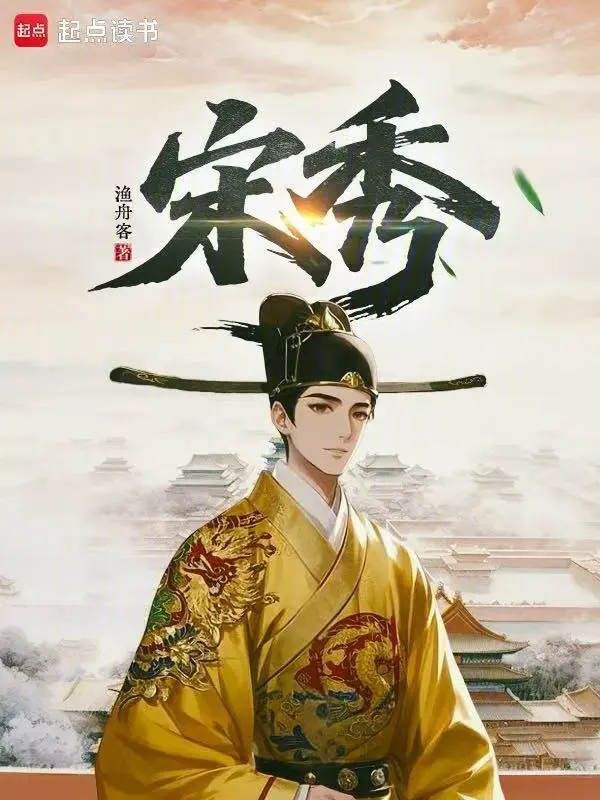
Song Xiu
宋秀
- Status
- Ongoing
- Length
- 489k Words
- Genre
- Historical
- Audience
- Male
- Subgenre
- Song-Yuan-Ming Dynasties
- Updated
- 1y ago
- Source
- Qidian
Stats
0Monthly votes
30.6kRecommends
87kFans
163Chapters
Tags
Synopsis
Reader comments
In booklists 2
Emperor's Hegemony
When autumn comes on September 8th, I will kill all the flowers after they bloom. Thousands of miles of mountains and rivers are picturesque, and there are so many heroes at one time. The throne is withered bones, the imperial road is yellow sand, but it is just a sketch in the history book. "Three Kingdoms: World Hegemony" Little Vest No. 1 "Xianwu Three Kingdoms" Silver Dragon Horse
60Books4.1kFollows5moUpdated
Historical Time Travel Novels of Song, Yuan, Ming and Qing Dynasties
Novels that travel through the Song, Yuan, Ming and Qing dynasties
21Books1.2kFollows12moUpdated
Readers also read
 Fu Ming 1627
 Red Mansion: Start Escaping and Farming from the Equipment Bar
 Northern Qi, Sage Khan
 After Lying in Bed for Three Years, He Was Forced to Help the Han Dynasty
 Siheyuan: Start by Picking up Attributes
 Emperor Ning Has the Guts
 Daming: Brother Emperor, You Have Harmed Me.
 Beastmaster: I Can See the Evolutionary Path
 Immortal Who Seizes the Body
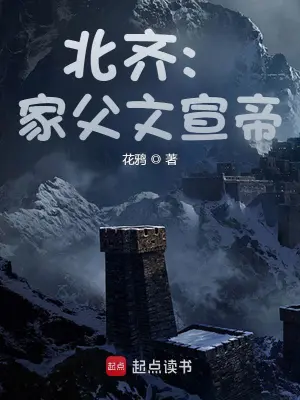 Northern Qi: My Father, Emperor Wenxuan
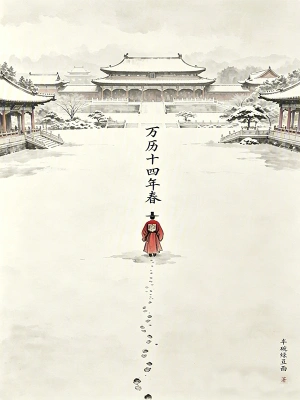 Spring of the 14Th Year of Wanli
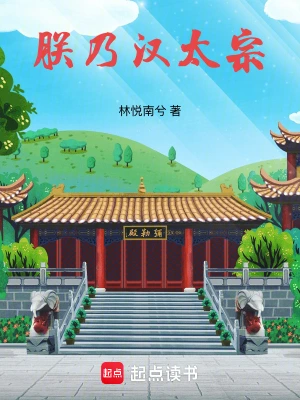 I Am Taizong of the Han Dynasty
It was okay before it was released, but not after I saw the male protagonist leading the army. It was unremarkable and boring. The content was bland and trivial, and I had no desire to read on.
A country that has an unfair country will never be good internally. The Jin Dynasty and the Song Dynasty are both typical representatives of an unfair country. During this period, the alien race will always become bigger.
Looking at Zhao Kuangyin's great talents and strategies from the real "drinking of wine to release military power"
The Five Dynasties and Ten Kingdoms was an extremely turbulent period in Chinese history. The root of the chaos was not simply the chaotic succession of the throne, but a whole set of abnormal power structures and systems. Starting from the middle and late Tang Dynasty, Jieduzhi became the actual controller of the local area. They not only held military power, but also gradually controlled the people and finance, forming a situation where the leader could not lose. The deeper crisis lies in the fact that the power base of these military envoys does not come from the appointment of the imperial court, but relies on the support of soldiers in the army. This is a typical example of "the ruffian will win the hearts of the soldiers." The authority of the Jiedushi envoys came from whether they could win the support of the sergeants. Therefore, "lower and higher" became the norm in the social ecology during the Five Dynasties and Ten Kingdoms period. Soldiers could coerce generals, and generals could coerce troops to stand on their own. The vassal towns were like divided countries, and it was difficult for the central government to effectively control them. The chain reaction brought about by this structure meant that every time the central government tried to weaken local power, it would inevitably lead to fierce resistance from the local military envoys. Once a war broke out, other separatists would stand aside and wait for the opportunity to seize the throne. Dynasty change became an almost expected result. As Liu Zongyuan said: "The failure lies not in the state but in the soldiers. There are always rebel generals but no rebel states." Local states and counties are not uncontrollable. The real source of trouble is the group of proud and capable generals who hold their own troops. At the beginning of Zhao Kuangyin's accession to the throne, it was the product of this systemic disease. He himself was a general in yellow robes during the Chenqiao Mutiny. Because of this, he had a clear understanding of the reality of frequent mutinies and military power overtaking imperial power since the Five Dynasties. He knew that if the problem of decentralized military power and lack of soldiers was fundamentally solved, the fate of the Song Dynasty would be the same as that of the previous dynasty. He was in no rush to reduce power. After he ascended the throne, he sent a group of generals who supported him in the Chenqiao Mutiny to various places and granted them the title of Jiedushi in return for their "contribution to the dragon." In the name of respecting meritorious officials and rewarding loyalty, decentralizing the core of power to local areas not only reduces the possibility of another mutiny within the capital, but also prepares space for subsequent divisions and reductions in power. The Jiuye Ministry had no way to complain, and at the same time it was alienated from its control of the core of central power. Zhao Da used this to obtain a temporary and stable transition period. Stability was just established, and Zhao Kuangyin began to rectify the Central Forbidden Army in the first year of Jianlong. At this time, the two rebellions of Li Jun and Li Chongjin had been put down. It was a good opportunity to start reorganizing the army. The upper army was established. Those who were brave and experienced in combat were selected from the original forbidden army and were incorporated into it. They were given preferential treatment, while those with weak combat ability were classified as remaining members and only retained basic military pay. Zhao did not directly dismantle the army to avoid arousing the resentment of the soldiers, and also prevented the remaining soldiers from taking risks due to hopeless livelihood and staging the tragedy of the past. At the same time, through differences in treatment and status, the original forbidden army was divided into levels, forming an institutional differentiation. Form a new army that is truly capable of fighting and loyal to the imperial court. This essentially resulted in a complete reorganization, and even if the remaining members were dissatisfied, they would not be able to defeat the superior army. After the central government's initial decision, Zhao set his sights on reform at the local level. In the name of promoting the "Shangjun system", he issued an order to order military governors from all regions to follow the central government's practices, sort out the troops, and establish the Shangjun system. In order to determine the standard of payment, the imperial court required local military governors to report the roster of elite soldiers. On the surface, this move was to "bring benefit to the soldiers," but in fact it was Zhao Kuangyin's means to fundamentally control local military information. There was no direct transfer of troops, nor was the loyalty of the Jiedushi envoy questioned. He was only asked to provide military status and rosters on the grounds of improving the system, and the soldier information came into the central field of vision. This method of "cutting flesh with a soft knife" was irrefutable by the local generals, and the soldiers were willing to cooperate when their treatment was improved. With almost no backlash, General Zhao's foundation in Fanzhen and the information of elite soldiers from all over the place were quietly collected. In the third year of Jianlong's reign, it was time to finish Zhao Da's map of the Yan Kingdom. He announced that in order to further strengthen national defense, he decided to form a new Forbidden Army based on the national army, and asked the governors of various regions to send their armies to the capital to be incorporated into the new army according to the rosters reported the previous year. This time the troops were mobilized, it was no longer feasible for the local commanders to show off their skills in the past, because the roster was in hand, and Zhao Da had used the early momentum to build up momentum and promised extremely high treatment, which made the soldiers themselves have a strong desire to go north to join the army, and the local commanders had nothing to do even if they had objections. A characteristic of the Five Dynasties, the power of generals often depends on the collective will of soldiers. If soldiers are willing to go north, generals who block it will lose their prestige. There were also some ruffians who saw the problem, but this time the commander-in-chief was a veteran of Chen Qiao who supported Zhao Da. Elites from all over the country gathered in Beijing, and Zhao Da used this to form a new Forbidden Army to control the country's strongest force, while the original remaining members were demoted to the Xiang Army and completely lost their actual combat functions. This is where the "Strong Cadres and Weak Branches" in the textbooks come from (it has not been abolished, military pay is still there, and rewards will still be given during subsequent holidays, leading to weakness). In addition, the local Jiedu envoys were given high-ranking officials and idle posts, or they were redeemed to ensure that their kind descendants would always receive preferential treatment and could directly become officials without the need for imperial examinations. Various local departments were created to divide the Jiedushi to exercise political power, and institutionally put an end to the separatist regime of vassal towns. Although the pitfalls of the Five Dynasties and Ten Kingdoms were buried, more than 1/2 of the annual expenditure was basically occupied. This is also the reason for the three redundancies and two accumulations in the Song Dynasty. In four steps, the talented and strategic Song Taizu Zhao Kuangyin completed an unprecedented reconstruction of the military system. He successfully accomplished what all emperors had failed to do from the middle and late Tang Dynasty to the Five Dynasties and Ten Kingdoms, and completely eradicated the centuries-old chronic disease left behind. The Forbidden Army was reorganized in the name of institutional reform, and the will of the soldiers was used as a lever to pull away the power base of the Jiedushi. The real "release of military power" lies in the establishment, system, roster, and treatment. What really changes history is Zhao's profound insight into the nature of the system and his precise grasp of the relationship between human nature, power, and military morale. Because of Song Taizu Zhao Kuangyin, the Northern Song Dynasty was able to get out of the chaos of frequent replacements of the Five Dynasties and enter a relatively stable and long-lasting era of centralization. As for the subsequent new pitfalls, I personally think that no one can ask Zhao Kuangyin to do more. When looking at Zhao Kuangyin, also see how many burdens he carries from the previous generation. He was able to set things right and resolve these burdens. In my opinion, he is already a sage, wise, wise and accomplished person, enough to be remembered in history. There is no one-size-fits-all method in this world. Things in this world are just constantly digging new holes and burying old holes. The only reason to blame is that future generations are incapable of burying old holes.
The subject matter is very interesting, but the content turned out to be a mess. Zhao Kuangyin lived for 16 years after usurping the throne. The protagonist was 15 years old when Zhao Kuangyin usurped the throne. Will Zhao Guangyi take the lead in fighting for the throne with you? Why fight? Empress Dowager Du supports her. Then who is the emperor? What kind of mess is written? As long as the protagonist can live safely until Zhao Kuangyin dies, who can touch the protagonist's position?
I'm so tired of you authors pretending to be dead.
No matter what the reason is that you can no longer write, is it difficult to give a formal notice? Everyone doesn't have to read your book. If you don't want to write it, you can do it. It's not that we can't accept it, but why don't we give you a formal notice to stop updating? Is this the most basic respect for us readers who have subscribed to your book? Cut the book without saying a word. It makes me sick to see your book lying on the bookshelf every day. If you directly say that you can't write anymore and cut it, then isn't it good for everyone to scold you and delete the book? You have to deceive yourself into asking for leave and then pretend to be dead. Authors who do not respect readers do not deserve to be respected. I hope your life will end as abruptly as your book, deceiving yourself and others.
I don't really want to see you wearing the yellow robe for Zhao Da with your own hands. Do you want the historian to correct your reputation? ? As the Song Dynasty was most afraid of civil servants, if they were not in the right position, they were still rushing to get the yellow robe approval? Think this is a plus? If you don't do anything, as long as you don't die and inherit the throne according to the legitimate eldest son, why do you go to see Zhao Da if you don't know? I thought it was some kind of words, but I was still drunk when I dripped horse urine on him. Zhao Da knew about it but could only pretend not to know, so that he would not scold him too much if he was not in the right position. You, the unworthy prince, gave Zhao Da Da the robe yourself, didn't you scold the historian? What did the historian remember? Remember that the Zhao family had evil intentions and rebelled and raised troops to seize power. In the Chenqiao mutiny, they were labeled as soldiers instead of generals. Now that they are better, they still want a good reputation. Laugh
If the Xuanwu Gate fights against each other, whoever wins will be the prince; When the Xiangji Temple fights against each other, whoever loses will be the rebel. Those who have achieved great things in ancient times have always served on the battlefield with one sword and one spear to achieve a great cause. If the protagonist wants to inherit Taizu's legacy, he has to fight, fight big and special, wait for the weather to change, and regain Yanyun. Past experience has its own great Confucian debate 😁
Once you see Chapter 5, you can withdraw and leave aside the moral issue and the issue of presentation. Just say, what are the benefits to the protagonist? It seems that he has the merit of following the dragon, but first of all, in the merit of following the dragon, the one who rebelled is the protagonist's father. If he succeeds, his benefits will be indispensable, and if he fails, he will die. He needs the merit of following the dragon, and what he wants is the lack of military merit to prove his ability. Second, when others are trying to persuade him to join, Zhao Kuangyin is asked to show off and show humility. The protagonist's behavior at this time can be done by other generals and relatives, but not by the protagonist. When it comes to filial piety, which son rushes to make decisions for his father, let alone Li Shimin, and don't mention why Li Yuan doesn't want Li Shimin to succeed to the throne later on. Which emperor with such a strong son would not guard against thieves. Don't say that I have a great scholar to debate the scriptures for me. It's just a stupid argument. It has nothing to do with you, but if I force myself to do it, I still have to wipe your ass. Third, because of his father's jealousy, he could have taken over the throne. Did you also say that you should learn from Li Shimin? Don't talk nonsense. Li Shimin launched the Xuanwumen coup because he had no choice. How many people died in the Tang Dynasty royal family because of this trap. To sum up, if you can follow the trend, you will be wise. If you have nothing to do, it is the protagonist who is stupid, or the second author.
Novels about the pseudo-Song Dynasty should not be written! This is a pseudo-dynasty that is ashamed to speak out. It is a historical shame. Even the surname Zhao is a shame.
Such a good historical perspective has been written so poorly by you
In fact, in the early Song Dynasty, they should have gone too far, suppressed the warriors, and reconstructed the three views. During the Five Dynasties and Ten Kingdoms, massacres and cannibalism became the norm. Slaughterhouses were institutions specializing in making human flesh for military rations. Hebei was the worst place. It was recorded that they had been eaten three times and there were almost no people left. There was a military governor who ate sixty-six sets of human livers. Even Zhao Kuangyin's brother-in-law was a cannibal, and he was later killed by Zhao Guangyi.
This book has the best group portraits of characters from various countries in the early Song Dynasty, especially the appearances of Li Yujunchen and Xiao Yan's father and daughter. The characters are established in just a few strokes, which reminds me of what my favorite movie director said: "Before writing movie scripts and drawing movie storyboards, pick up a pen and write a novel first, because novels can include these and do these well." The appearance of Li Yujunchen and Xiao Yan's father and daughter impressed me deeply, just like a good movie. The male protagonist Zhao Dexiu has the demeanor of the Great Demon King of the Warring States Period, King Qin Yingji.
It's really hard to stretch. Another TJ book? Those who wrote about the early Song Dynasty really read one TJ book after another. You authors are really gods.
Good subject.
I read Chapter 16 and I don't like the protagonist. Living two lives is like a minor. Modern information baptism is useless. The protagonist's mind and skills are so poor. What qualifications do you have to compete with his uncle for the throne? It's a bit difficult to survive. Withdrew.
I hope the Qidian platform will establish a system to blacklist authors like this who suddenly stop writing in the middle of writing. Thank you.
No matter what conspiracies modern people play, the ancients lacked the breadth of knowledge rather than the wisdom to play conspiracies! When you have an advantage , you will fly bricks with great strength. Physical transcendence is the truth.
It would be too difficult for Zhao Defang, unless Zhao Defang has been in the army and has huge military achievements and prestige
If the Xuanwu Gate fights against each other, I'm afraid the entire Zhao family will be wiped out, and the fifth generation will become the sixth. The legacy of the Five Generations cannot be easily repaired by changing the system. During Song Zhenzong's alliance with Chanyuan, Zhao Dazhao and Zhao Er continuously repaired it, but Wang Chao watched Song Zhenzong being attacked by the Liao army without sending any troops (although it may be better to send troops based on the results). Even so, Wang Chao still died a good death. Zhao Er destroyed the Northern Han Dynasty, but because he did not pay the reward in time, he was bought by his soldiers (not generals, but soldiers and generals). Even the boss Cao Bin was tricked by his soldiers. Regardless of your general's deployment, it only depends on their (soldiers') mood. By the time of the Southern Song Dynasty, had Wanyan Gou not experienced enough military skills? Maybe Wanyan Gou couldn't do it, but before he completely gave up the Northern Expedition, he was fine with internal affairs, barely able to unify the vassal generals, and also trained his own forbidden army to lead the front army. Han Shizhong, Wang Jun, Liu Guangshi, and the Wu family were powerful, so Wanyan Gou promoted Yue Fei to check and balance, but it was useless. Yue Fei didn't listen to orders, just like Liu Guangshi's army, he surrendered to the Jin army after another army. The internal land annihilation strategy decided by the Privy Council and Wanyan Gou (the Northern Expedition, Henan was a yellow flood area at that time, and there was no point in regaining it), the small Jurchen tribe was adjacent to the big tribe, and the Northern Expedition was only possible by killing the elite field warriors. As a result, Wan Yangou sent more than a dozen letters to Yue Fei to participate in the Battle of Huaixi. Yue Fei refused to fight, and Han Shizhong collapsed at the first touch. Haha, the Northern Expedition is a joke. I dare to teach you a lesson as long as you relax a little. The protagonist is too young and it is too difficult to rise to the top. National justice? Participate in the defense of the country? What the hell is that? If you dare not give a reward, you have to pay it if you win, and you have to pay it if you lose. If you don't pay it, just wait to be tricked, or even worse, the emperor will die and his family will be destroyed. The domineering nature of the Five Dynasties warriors is unimaginable. A small soldier lost money in a bet and mutinied to kill his superior. Finally, he remembered correctly and killed the emperor as well. When the Song Dynasty destroyed Shu, Chengdu surrendered. As a result, the Song army massacred the city, burned, killed and looted. The military discipline was not as good as that of the Manchu Qing Dynasty. I saw a novel about Zhao Dezhao who had no prestige. In the battle of the Song Dynasty to destroy Shu, military discipline must be enforced to avoid being killed by Qiu Ba. He's just an emperor, and it's not like he's never been killed by top soldiers in the Five Dynasties.
How is the protagonist going to solve the problem of warriors? So many years of turmoil have caused social levels other than warriors to be afraid of warriors You have to suppress warriors, and you can't really abolish warriors like Zhao Er If you want to have a grand hegemony, you have to rely on warriors. If you rely on warriors, warriors will give you a surprise
The author must understand the military electoral system
The author does not understand the logic of the ethos of the Five Dynasties and Ten Kingdoms at all, and talks about establishing direct descendants and establishing leaders. It was an era when subordinates and superiors were at the extreme level. The Jiedu envoy of Wei Bo paid money to hire soldiers and horses from other towns to kill his generals. A small soldier lost money in gambling and rebelled, which actually triggered a large-scale mutiny. In that era, rebellion, robbery of women and money was the collective memory and the trend of the times, and the Jiedu envoy had no choice but to borrow money. They paid their subordinates, and the Jiedushi envoys were killed. The generals shouted that whoever could pay rewards would be the Jiedushi. The big-headed soldiers had a strong sense of class. The second and third generations of the big-headed soldiers were married to each other. At the same time, because of their rich material conditions, they were also proficient in writing and practiced the art of killing. They essentially replaced the ecological niche of the gentry. The Jiedushi were representatives of their interests, not their masters.
Is the author Qidian's own son?
This book is recommended every day. Is the author his own son? I can't get rid of any points, so I'm convinced.
The single-player moments are the hardest~
Readers who like it can read more~Please ❤️
How can the protagonist ensure that after his death, China will be the first to enter the technological revolution, instead of being invaded by other countries that are the first to enter the technological revolution? The absolute monarchy forms a fundamental restriction on the independent scientific and technological revolution. The monopoly of power stifles institutional innovation. The monarchy builds social order with imperial power as the core. The world is the absolute rule of the royal land. Under this system, policy formulation relies on the emperor's personal cognition, social innovation is constrained, and the intellectual class is reduced to a vassal of the imperial power. I think the only way is for the protagonist to implement the constitutional monarchy before his death. If the protagonist wants his descendants to have long-term peace and stability, he must implement Britain's early mixed constitutional monarchy. The British constitutional monarchy is an important starting point for modern political civilization. Its core concepts, such as the rule of law, checks and balances of power, and parliamentary sovereignty, have been widely inherited by countries around the world. British institutional innovation has shaped the political landscape of the modern world. From the period after the Glorious Revolution to the 18th century, Britain showed the dual characteristics of separation of powers between the monarch and parliament. This check and balance of power in the transitional stage laid the foundation for the modern parliamentary constitutional monarchy, and finally completed the transformation to parliamentary sovereignty through the establishment of the responsible cabinet system. The protagonist should not implement Britain's late mature constitutional monarchy or other republican systems at the beginning. A phased and gradual strategy should be adopted, and the protagonist must gradually implement a mixed constitutional monarchy within no more than 60 years. History has proven that any reform that cannot complete the restructuring of power within three generations will eventually return to the old order. {"NickName":"Supervision and Restriction","UserId":406440657}
Which picture is correct?
Figure 1
I really don't know how many days of leave I have to take, and how can I take leave until now?
Quickly cum
Monthly ticket +9
The author makes no representations
Why give up when it's already a good product?
As title. Could it be that the number of subscriptions did not meet my expectations? Don't think you have enough money?
Don't you want to write anymore?
Don't you want to write anymore? {"NickName":"Yuzhouke","UserId":337485199}
When will it be updated again? Song Chu wrote very well
Is this the rhythm of a eunuch?