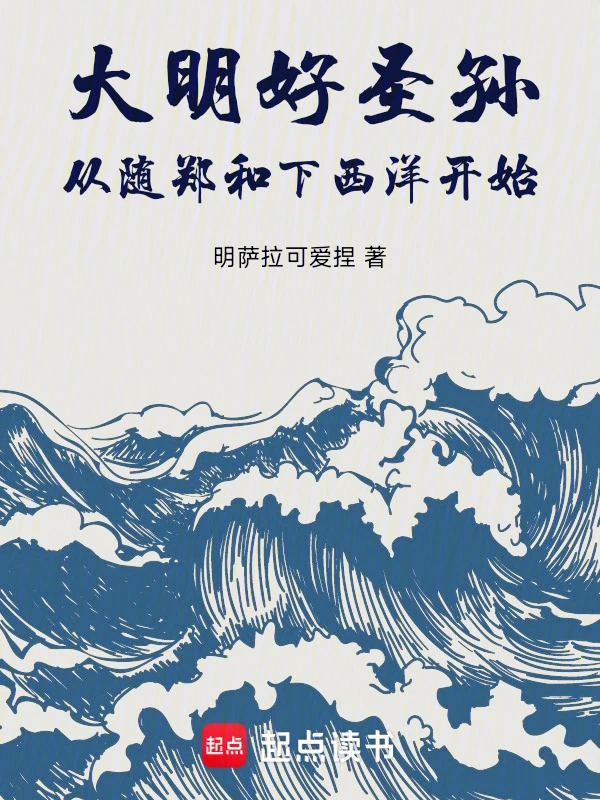
The Ming Dynasty's Great Saints Began with Zheng He's Voyages to the West
大明好圣孙,从随郑和下西洋开始
- Status
- Completed
- Length
- 96k Words
- Genre
- Historical
- Audience
- Male
- Subgenre
- Song-Yuan-Ming Dynasties
- Updated
- 1y ago
- Source
- Qidian
Stats
0Monthly votes
486Recommends
6Fans
38Chapters
Tags
Synopsis
Reader comments
Readers also read
 1914 Begins with the Rejection of the Schlieffen Plan
 In the Red Mansion: Escort Daiyu to Beijing at the Beginning
 Please Call Me Your Majesty the Tsar
 Talker in the Song Dynasty
 Never Walk Alone!
 Ming Dynasty: Giving Lectures to Chongzhen, Wanli Eavesdropping
 I Am Li Chengqian, the Emperor of the Tang Dynasty
 Daming: Have I Become Wanli's Portable Grandfather?
 I Am Drawing a Hot-Blooded Episode in the Zhiyu Episode!
 In the Eighteenth Year of Hongzhi, This Prince Was so Fierce!
 Ming Dynasty: My Sister Queen Ma
 Daming: Emperor Chenghua Is Here to Ascend the Throne First!
Doesn't it make it clear that he wants to seize the legitimate son after he went to the West and came back? The plot is a cliched kneeling lick, except that he is using the skin of a man who went to the West.
Corn and potato production, in the 18th century America, there were no chemical fertilizers, and the yield per mu was only more than 100 kilograms
Common sense issues need to be addressed
First of all, corn and sweet potatoes were cultivated by Europeans around the world for many years before their yields increased significantly. In addition, whether you go to the Americas via the Atlantic Ocean or the Pacific Ocean, different routes determine different harvests. In this era, the natural loss of the fleet from Europe to the Americas will be one-third or even higher.
Send additional information to the author
Educated at school, Earlham College, and the New England Conservatory of Music, he published articles in The Atlantic Monthly and Harper's Weekly, and taught briefly at the Carlisle Indian Industrial School, but soon resigned to write and agitate. Her works American Indian Stories and Oklahoma's Rich and Poor Indians described the horrors of Indian boarding schools and recounted the corruption of the U. S. Government in the operation of the reservation system. In 1924, through Chitkaratha's efforts, Congress passed the Indian Citizenship Act. In 1926, she and her husband founded the National Council of American Indians, and she traveled the country advocating for Native suffrage and self-determination. May 28, 1830: The U. S. Congress passed the Indian Removal Act, forcing all Indians to move to areas west of the Mississippi River. 1835-1842: Second Seminole War, Florida. 1854-1876: The War of the Sioux, fighting to resist immigration and forced relocation and to defend their homeland. June 25, 1876: Battle of Little Bighorn. December 29, 1890: Battle of Undideney: The armed uprising of Indians against immigrants ended. In 1900, there were 230,000 Indians left in reservations in the United States. Las Vegas Cultural Tribes settled in Ecuador 10,000 years ago. Agriculture and pottery began in 7,000 BC and ended in 4,600 BC. The Valdivian culture came out and ended in 1500 BC. The subsequent Machalia culture began to produce pottery figurines. There are sites such as Caral in the Supe Valley in the Xiaobei region of Peru. It is also the first civilization in the South American Andes called the Xiaobei culture (also known as the Caral era). It was from 3000 to 1500 BC (the Xia Dynasty of East Asia was at the same time). There was no war. Archaeological discoveries unearthed very few weapons and no war-damaged remains. There are solid pyramids and ceremonial centers around which are used to control the cotton trade for religion and food. Cotton is woven into fishing nets to exchange seafood products with coastal fishermen, which also complements fishery and agriculture at the same time. In the Xiaobei Cultural Era (Karal Cultural Era), Karar was just a centralized trade of specialties from various places, and it was regarded as a trading market and religious ceremony center. Era of Kubisnik Culture, Era of Chavin Culture (war began in the Andes Civilization Circle). The gold necklace unearthed in Lake Titicaca two thousand years ago proves that gold, silver and copper began to be smelted, and agriculture began to grow quinoa, potatoes and grazing alpacas. It is the birthplace of Wari, the birthplace of the Incas. The Tiahuanaco culture near Lake Titicaca is named after its main site, Tiahuanaco. (Bolivia has large iron mines) Distributed in Bolivia and Peru, and expanded to Ecuador, Chile and northern Argentina. It dates from approximately the 5th to 10th centuries. The ruins of Tiahuanaco contain magnificent stone buildings. There is a foyer, square and altar built in front of the pyramid-style temple. Some of the stones weigh more than 100 tons. The metal processing industry of the Tiahuanaco Culture was relatively developed, and the gold, silver, copper and bronze products were very exquisite. It is generally believed that it inherited the Chawen culture and the Inca civilization, and played a role in the ancient Indian civilization of South America. The four countries in western South America from the 7th century to the 11th century! These four countries are already the bronze civilization circle in the Andes Mountains. They all have bronze swords, axes and spears, as well as bronze tools and agricultural tools. There are alpaca caravans of different sizes coming and going, and alpacas can carry up to 120 kilograms of stuff (goods). Sikan Kingdom in the north, Moche Kingdom in the central and northern parts, Wari Empire in the central and southern parts! The country of Diahuanaco is adjacent to the Amazon in the east. Around 750 AD, the environment in the area where the Moche people lived changed drastically. After the great flood, they encountered a severe drought with no rain for 30 years. Sandstorms caused a devastating blow to urban infrastructure, and canals and farmland were swallowed up by yellow sand. Coupled with rising seawater temperatures, fisheries are also affected. Natural disasters not only ruined the lives of the Moche people, but also destroyed their faith. A large number of people died, and the remaining people were forced to abandon their habitats. The Moche culture, which was flourishing for a while, also declined. The Kingdom of Huanca, from 1000 to 1450, north of Cusco, in the upper part of the Mantaro Valley, was actually just a loose alliance of chiefs. In 1450, the Incas destroyed Vanka. From 1200 to 1250, the Kingdom of Cusco in the center began to move to the Inca Empire. At the same time, the Kingdom of Chimu in the north began to destroy the Sican Kingdom in 1375, and was later destroyed by the Incas in 1470. (In the 11th century, the Indians established the "Kingdom of Quito" here. At the end of the 15th century AD, it became the political, economic and cultural center of the Inca Empire) In Colombia, the ancient Indians also invented a higher-level lost-wax casting technology. The wax mold is wrapped with a mud core, so that the casting is hollow, which saves a lot of metal than a solid casting and reduces the stress effect of the casting. Many ancient Indian gold casting artifacts were made using this unique lost wax method. The Inca oxidation gold plating and casting process was adopted by the Europeans. The Incas were good at metal smelting and processing, and were able to mine gold, silver, copper, tin, lead, platinum, mercury and other metals. The Incas mastered many metal processing techniques, such as casting, forging, molding, stamping, inlay, riveting, welding, etc. In the 16th century, the Peruvian Incas set up a post station at a distance of 8 kilometers along the well-built thoroughfare they built, and messengers ran to deliver messages. It is also called a post station for messengers and alpaca caravans to rest and stay. South America had no horses or vehicles before the Spanish colonists invaded. This kind of road for alpaca teams and messengers formed a network system extending in all directions from 1200 to 1530. It was a channel for the rulers of the Inca Empire to issue decrees, and it was also a transportation artery for the production, life and trade of the Inca people. At that time, the Inca rule ranged from central Chile in the south to Colombia in the north, including Ecuador and Bolivia. It was a large country with a population of more than 10 million. Corresponding road construction includes two north-south trunk lines: coastal stone road and plateau mountain road. The Aztecs built a complete road system among the city-states in Central America. They built a post station every 14 kilometers (14 kilometers) beside the road. The army could travel about 28 kilometers a day. When a war breaks out, they will arrange a messenger every 5 kilometers (5 kilometers) to quickly deliver letters through relays. A low-arsenic copper figurine was also found in the Atetelco courtyard at the Teotihuacan site, indicating that there was also a connection between Western Mexico and Teotihuacan, and that the practice of making copper was known to the Teotihuacan people before 600 AD. However, it is incredible that the bronze objects were not made into tools or weapons, but only human figures. Furthermore, the bronze artifact's date coincides with the collapse of the Teotihuacan polity and the formation of local petty polities. So some scholars see this as evidence of the restructuring of loyalties, alliances and trade networks. Around the 10th century AD, the Toltec Empire of the Nahua nation conquered the Maya and generally achieved the unification of Mesoamerica: In 1194, the Mayapan monarch Hunac Kel used bronze weapons, bows and arrows to conquer Chichen Itza. In 1441, Mayapan died in a civil war, which meant the Mayan centralized power collapsed. The remaining Xiu family later defected to the Spanish and became Spanish aristocrats who still exist today. On the Yucatan Peninsula, there are still some small Mayan states remaining. In 1526, a Spanish expedition (banditry) tried to use violence to establish a Spanish colony and enforce the Christian faith. The Mayans who refused to surrender launched a guerrilla war that lasted for more than a hundred years, until 1697, when the last Mayan city-state (the Kingdom of Itza in Peten Lake) was destroyed by Spanish artillery fire. (At that time, the last king of Itza, the Black Snake King, only had 300 canoes and 2,000 samurai soldiers. The population of 60,000 was due to the massacre and plague after the country's subjugation, and only 6,000 people survived.) The Great Lake of Peten in the Tulum area is the location of Peten Itza, the last kingdom of the Mayans, and the last Mayan city to die. It is said that this is the best-preserved Mayan ruins and the only one built on the seaside with the most beautiful scenery. However, the resistance of the Mayans is far from over, and guerrilla warfare is still going on in the jungle. In addition, in 1761, there was an uprising that threatened colonial rule. A Mayan leader, Jacinto Can Ayke (his name was borrowed from the last king of the Peten Mayan regime), announced in the name of the Blessing of the Blessed Mother that he would liberate the Mayans from Spanish enslavement. However, this uprising was eventually suppressed by the Spanish. Shan was the founder of the Mayan Republic in 1847. The Yucatan Caste War was a racial conflict between the Mayans and the white people. The war began in July 1847. In 1893, Britain promised Mexico to formally stop aiding the Mayan Republic. By 1901, Mexican federal troops occupied the Mayan capital Santa Cruz, General Ignacio surrendered, and the war officially ended. In this war, the Mayans killed 250,000 white people at a cost of 50,000. In May 2021, Mexican officials announced that they would officially forgive the Mayan people for their history of caste wars. Mayan guerrilla groups have existed in modern Mexico to this day. On November 4, 1780, Tupac Avaru II, a descendant of the Inca royal family, launched the Inca Restoration Uprising. Initially 6,000 rebels grew to 50,000 by December. After harvesting and threshing the corn, the Mayans boiled the corn in alkaline plant ash water or lime water. The alkalized corn is easier to grind, can also remove mold and release B vitamins that are beneficial to the human body. The processed corn kernels are crushed by stone grinding discs, and after adding water and stirring into a paste, they can be processed into corn tortillas that the Mayans eat every day. Women repeat the same work day after day: use three stones to support a pottery plate with a slightly raised edge, burn a fire in the middle of the stones, heat the pottery plate, apply cornmeal batter, and bake it into pancakes. This method is a bit like our pancakes. Sometimes cornmeal is also mixed into dough to make pancakes. Staple foods: corn, potatoes (unique to South American origin), breadfruit (unique to the Maya), cassava (unique to Cuba and Haiti), red rice and wild rice (North American wild rice), acorns and acorns (California, North America), sweet potatoes and sweet potatoes (South America), quinoa (South American Andes) Meat: (can be farmed) fish, river shrimp, Sea snails, turkeys, Muscovy ducks, rabbits, peccaries, iguanas, (obtained from hunting) tapirs, bullfrogs (from southern North America to Central America), deer (Caribou and moose, Central American white-tailed deer, South American deer are Andean red deer), crocodiles, bison (North American oxen), musk oxen (Northern Canada, Greenland and Alaska), alpacas (South America), guinea pigs (South America) ), capybara (South America, Amazon river), ostrich (South America including Bolivia, Brazil, Argentina), snow sheep (North American Rocky Mountains from Alaska southward to Oregon, Idaho and Montana in the United States, inhabiting steep slopes and cliffs above the tree line), badland argali (Canada), pronghorn antelope (northern Mexico to Canada Great South), Eggs: turkey eggs, duck eggs, ostrich eggs Vegetables: pumpkin, black beans, kidney beans, amaranth, peanuts (South America), Inca beans (ice cream beans from the Amazon rainforest) Fruits: figs, avocados, egg yolks, papaya, sapodilla (made by the Mayans for chewing gum), guava, tomatoes (tomatoes) South America), dragon fruit, American peach (green fruit), white persimmon (Mexican apple is sweet and milky), black persimmon (Mexican green peel, brown and black flesh, sweet and cocoa flavor), walnut (North America), chestnut (North America), cranberry (North America), blueberry (North America), grape (North America and Canada), strawberry (South America), pineapple (Brazil and Paraguay) , Peach brown (Amazon, red and orange can be ground into powder), machi fruit (Patagonia Plateau, used medicinally by the Mapuche people), cherries (Chilean cherries) Sugar: honey, maple syrup (North America) Liquor: cocoa wine, tequila (high alcohol content and easy to get drunk), cactus wine, flower wine, mead, pineapple beer, corn beer, Alpaca milk wine, alpaca milk (alpaca yogurt, alpaca cheese, alpaca butter, alpaca dairy products), peach palm wine, macchia wine Container: gourd, deerskin pot, crocodile leather pot, cowhide pot Drinks: coconut (Central and South American Amazon rainforest), honey water, honey cocoa, spicy cocoa, cactus juice, fruit juice, yerba mate ( South America), Yerba Mate (South America) Seasoning: salt, pepper, vanilla, chia seeds (can be pressed for oil), sunflower (can be pressed for oil), peanut oil, pepper (natural preservative), star oil vine (Inca Inca fruit is pressed for oil in the Andes rainforest), palm oil (Amazon), peccary oil, deer oil, beef tallow, sheep oil, alpaca oil, ostrich oil. Lighting: wooden torches, small corncob torches, candles, ceramic oil lamps. Materials: Rubber, palm oil (palm trees), limestone, volcanic ash (there are many volcanoes in El Salvador), American bamboo (used for long bamboo pipes to blow and smelt bronze) Construction manpower time: Paso de la Armada ruins, the central settlement of the Mokaya culture in the Soconusco coast area in the southeastern isthmus region, its Building No. 2 Requires 488 people to work for one day or 20 people to work for nearly 25 days to complete; The "mortise and tenon technique" of South American stone buildings is mainly used for relatively regular rectangular stones. Through surface polishing and trimming, they achieve concave and convex interlocking and fix each other. Even if an earthquake shakes the stones for a while, they will fall back to their original positions, which can easily withstand the strong earthquakes that often hit the area. These two techniques are like completing a huge puzzle, with no gaps between them, not even an embroidery needle can be inserted. Clothing materials: cotton, alpaca, cowhide, sheepskin, deerskin, ostrich skin, rabbit skin, dog skin, leopard skin, crocodile skin, tapir skin, wolf skin, bear skin, cochineal red (cactus red worm), Refreshing: Cocoa beans (a cacao tree can produce 1,000 to 2,500 cocoa beans), tobacco, coca (narcosis, excitement), Special herbs: callus wood (resin from a Caribbean specialty tree, anti-inflammatory and antibacterial to treat wind, cold, gastroenteritis and syphilis), cinchona bark (South American Peruvian Andes), ayahuasca (western Amazon, hallucinogenic pain relief), macchia medicine (fever, diarrhea ulcers) Ulcers, childbirth), mint (U. S. And Canada, cold-resistant), Mayan analgesic incense (flowers, mushrooms, tobacco, alcohol used for smoking), sunflower disk (North America. It has the effects of clearing away heat, calming the liver, analgesic, and hemostasis. Used for high blood pressure, headache, dizziness, tinnitus, epigastric pain, dysmenorrhea, uterine bleeding, sores) Agriculture: The Maya in the Classical Period lacked manure technology and only had plant ash. Aztec farmers started manure. South American agriculture has popularized the use of alpaca and guano as manure. Water conservancy technology is well developed. Mineral distribution: Guatemala has lead, zinc, chromium, antimony, mercury, nickel, petroleum, and hematite. (There are copper and tin mines in the highland mountains of Guatemala) Hematite is also found in the Caminal Lake area. El Salvador has copper, iron, petroleum, coal, zinc, lead, mercury, sulfur, etc. Honduras has lead, zinc, copper, etc. Nicaragua has antimony, zinc, copper, lead, etc., And two places of oil. Costa Rica has iron, manganese, mercury, and bauxite. The reserves of bauxite, iron, and coal reach 150 million tons, 400 million tons, and 50 million tons respectively. Panama has copper, iron, mercury, bauxite, manganese, salt, oil, etc. (Copper, salt, and bauxite reserves are relatively large), Colombia has large coal mines, oil, copper, and iron. Cuba's large iron ore coal mine (there is a large open-pit iron mine in the southeast). Large copper and iron mines in southwestern Mexico, Oaxaca Canyon magnetite. The Rio Grande area (Atlantic Ocean) at the junction of the United States and Mexico is rich in iron ore, coal deposits, mercury deposits, copper deposits, lead deposits, and shallow oil. Andes Copper Mines Iron Ore. Amazon Iron Mine. Metal products: The Mayans (Yucatan Peninsula) traded in imported copper, gold, gold-copper alloys and silver. These figurines from the Mayan Yucatan Peninsula come from different areas of Mexico, Honduras, Costa Rica, Panama, and possibly Colombia. The bell found in Quirigua may also date to the 9th century: the bell was imported, but there is reason to think that it was cast locally.
Do you really think that the fate of the King of Han was caused by his good saintly grandson? This thing just turns out that the King of Han is just a tool for Zhu Di to balance the government, because the prince line can never control the army, but the military is needed to balance the power of the prince in the future, so the prince position hanging in front of the King of Han is a safe pill.
There seems to be a similar book before.
When will we go to the Western Ocean? I want to watch this part of the plot.
The so-called voyages to the West are just for food. Find an excuse.
Are you going to America by sailing across the Atlantic Ocean?
A eunuch?
I'll go (I finally found one that I can almost read) Σ(¯□¯||)
Rubbish book, awkwardly written and illogical! Now that I'm back, I must spread my word! If you act like you are all thinking about Ming Dynasty, I will definitely guard against you. It's better to just make it clear in the main hall that you don't want to be a pig raised to death. Then support the clan, and the area of the clan will be illegally spread out. Whoever does not support you, the civil servant group, the emperor, the landlord group, are all happy to ask your family to quickly go to the New World. You still act like you are brave enough to do things for the Ming Dynasty all day long. Who wouldn't be wary of you? The emperor is on guard, the civil servants are on guard, the military is on guard, and even the common people are on guard against you. There will be another turmoil over the heir apparent. If you want to leave, leave quickly, otherwise who would want to read this book if it is written in such an awkward way?
Welcome everyone to correct the mistakes and discuss
If you find any wrong knowledge points, you are welcome to point them out for discussion. The author will check the information and modify it in time after seeing it 🙂