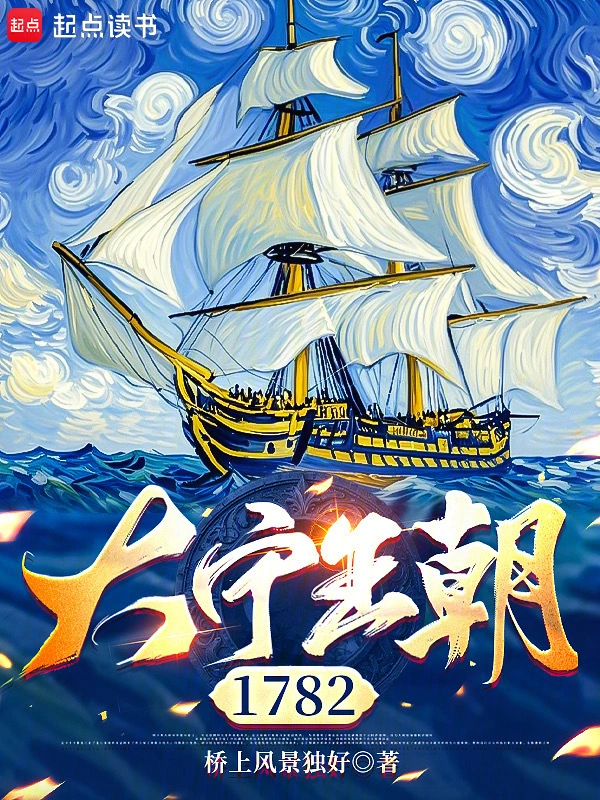
Daning Dynasty 1782
大宁王朝1782
- Status
- Ongoing
- Length
- 2.1M Words
- Genre
- Historical
- Audience
- Male
- Subgenre
- Qing & Republican Era
- Updated
- 1d ago
- Source
- Qidian
Stats
286Monthly votes
13.5kRecommends
30.5kFans
586Chapters
Tags
Honours
Synopsis
Reader comments
In booklists 1


Readers also read
 Northern Qi, Sage Khan
 Red Mansion: Start Escaping and Farming from the Equipment Bar
 After Lying in Bed for Three Years, He Was Forced to Help the Han Dynasty
 Gou Served as Sima Under Dong Zhuo
 Siheyuan: Start by Picking up Attributes
 I Am a Great Power
 New Han Dynasty 1834
 Immortal Who Seizes the Body
 Devouring the Starry Sky: Infinite Opportunities to Hoard Treasures at the Beginning
 The Wind Rises 1898: Becoming a Warlord from Nanyang
 Make Habsburg Great Again!
 Persian Empire 1845
 Win the New Financial Era
 My Investing Days
Pre-requisite technology for the crusade against Jiannu
Judging from the First Opium War, there are brown basses, sailing battleships, sextants, and standardized production artillery. As for Daying's accumulation of vassal theory as a forerunner in the world's colonial era, Daning has been based in Nanyang for so many years and is a genuine successor to the Ming Dynasty. His understanding of Jiannu is only stronger than Daying's. From the perspective of Zheng Zhilong's era, fire attack ships were more effective against European plywood giant ships by taking advantage of the familiarity with the hydrological conditions of offshore and inland rivers. With steam-powered ships, inland river maneuverability was stronger, which was more conducive to responding to fire attack ships. In particular, going deep into the Yangtze River to cut off water transportation was the real pain point for Jiannu.
The pacing is too slow. The naval battle in front of you dragged on for so long, and it was not exciting at all. There is also too little explanation of the history of the country, but it is still very interesting, but the pace needs to be speeded up.
Why don't you write business articles? I still want to read Investment Times.
In real history, 30 million Chinese went to Nanyang and only occupied a country as big as a booger, Singapore. Why? It's not just that the white people united with the indigenous people to strangle... The white world has always been very wary of the rise of China, because China has been the world hegemon for thousands of years. The current few hundred years have only temporarily lagged behind. In the future, the only people who can threaten Western rule are the Chinese.
Ideal core land area
Uh-huh
Where do you come from with so much advice to the author, eunuch?
I'm really convinced. If I don't like watching this, I'll look at the others. From time to time, I'll post a message urging people to commit suicide. You won't watch other people, either? It's really disgusting
Alternate history, what kind of fan fiction is this 😅? Historical texts are fan fiction, and historical facts are the original works. Alternate history is fan fiction without the original work. It's not surprising that it's a big fan fiction. There are Qin fans for Qin Dynasty literature, there are Three Kingdoms fans for Three Kingdoms literature, and there are Ming fans for Ming Dynasty literature. What is the fan base for fictional history?
After reading the author's latest chapter, I hope the author can understand one thing, that is, it is impossible for China to use Western methods to carry out the industrial revolution. In the middle of the land enclosure movement, the peasant uprising should destroy the dynasty, and then start a new round of chicken eating. If factory owners pursue efficiency too much and reduce workers' treatment to too low, a workers' uprising will directly kill the factory owners and the emperor together.
In the Qing Dynasty, not only men were shaved to change clothes, but women were also shaved. They were too ugly to look at
Seeing it now, I'm confused. No, I'm so powerful. I don't want to fight against the Qing Dynasty.
Great book, two little questions
It is well written. In the 18th century AD, the first countries in the Age of Exploration competed in the oceans, making up for the regret that our country was forced to stay away from the world stage during the Qing Dynasty. However, the author also needs to consider two issues. One is the relationship with the Qing Dynasty. Regardless of whether there was the Ming Dongning Kingdom or the Great Ning Dynasty, there was such a regime that never stopped wearing Han clothes, etiquette, and music. The Qing Dynasty would always be restless, and the people of Fujian, Guangdong, and Zhejiang would always look forward to this regime to expel the Tartars. Just like in history, even if the country's surname Zhu Jing lost his name, The territory on the west bank of the gorge also has a dark history of angering the previous generation of King Yanping to death. During the Battle of the Three Feudatories, the second generation of the Western Expedition was still supported by the people of Fujian and Chaoshan. Although the unintended western expedition led to the surrender of Geng Fan and Shang Fan, the prestige of the two generations of Yanping Kings can also be seen. Therefore, if the Dongning regime intends to expand into Southeast Asia, how to achieve cold peace with the Qing Dynasty is very important. The ideal situation is to trade and import the mainland's population while maintaining the status of Zhengshuo of China. Another problem is to monopolize the profitable tropical specialties of East India while maintaining trade routes. Currently, the book is fighting against the British and Dutch. I am afraid it will be difficult for European trade, and we cannot take the trans-Pacific route.
I haven't started reading it yet, but just reading the introduction makes me want to complain Where in the Philippines can't we build the foundation for a strong country? If the typhoon birthplace is swept once a year, we can't build it, let alone diseases and other factors. It's okay to dig holes in plantations or something to accumulate money. At least the Malay Peninsula or the Red River Plain should be the center to radiate to the South China Sea.
The writing is also too slow.
War is just a means to change history. It cannot be without it, but it cannot be too long. Readers of history books like to change history through means. In the context of historical turning points, the changes in economy, culture, finance, education, military industry, etc., As well as the indispensable improvement of people's livelihood, the focus of war should be on the progress of the nation and the expansion of living space. During the great process, those ordinary people bravely and courageously sacrificed their lives for the nation and the collective. Instead of focusing on long descriptions of how the war was fought, how to walk, how many shells were fired, and how to fire the shells, the above is just a few thoughts, not a suggestion or a guide to the author on how to write. I just finished reading it a long time ago. After a while, I found that I pushed forward a little too slowly.
Thoughts after viewing
I finally finished reading the chapter that I have saved for a long time today. Let me share my thoughts. The country of Daning has already started to turn from prosperity to decline. Without the protagonist as a variable, it may also end in disintegration. Various corrupt bureaucratic noble classes are constantly squeezing the bottom. The 1990s are an era of rapid development, whether it is technology or ideas, first of all democracy, nation, and what kind of republic, etc., With the current big Ning's exploitation of the lower class will result in being overthrown and then separated, not to mention various internal and external hostile forces, and he does not respect the army that much. In the article, passers-by often use insulting words for the army, such as Qiu Ba and big-headed soldiers. They are all opinions about the army. What can be expected? It depends on how the protagonist reforms after he takes over. I'm looking forward to it, but it will take a while to grow up. It's too torturous to read chapter by chapter.
I hope to tell more stories about Daning itself, some folk customs, the story of opening up territory and building a place. I feel like Daning's setting still has some holes.
It is inappropriate for Emperor Shunchang's temple to be named Taizu
It is inappropriate for Emperor Shunchang's temple to be named Taizu. Although he was the founder of the Daning Dynasty and was named emperor, it is inappropriate to use the temple name Taizu after his death because he essentially became emperor by carrying forward the foundation created by Zheng Chenggong and Zheng Jing, the Yanping kings of the Ming and Zheng regimes. It is more appropriate for the real Taizu to be Zheng Chenggong. According to the content of the novel, the protagonist will succeed to the throne and proclaim himself emperor. If we follow the practice since the Song Dynasty and honor Emperor Shunchang as Taizu, we will be suspected of denying the relationship between the four previous kings of the Ming and Zheng regimes and Daning, or thinking that Emperor Shunchang's achievements far exceed those of the previous four kings. According to the content of the novel, the Daning Dynasty is a regime that has been in existence for more than a hundred years. Its prosperity contains crises and is in a stage of decline. This is obviously in the middle stage of the regime. The regime cannot be separated from the previous four kings. Emperor Shunchang is a bit like Li Longji. When he was young, he developed the country to its peak stage. When he was old, the country began to turn from prosperity to decline. His temple name is Taizu, the founder of the country. Is this really appropriate? While the plot has not yet reached the stage of Emperor Shunchang's death, let's change the temple name in the introduction to Gaozu. When the corresponding plot reaches the point in the novel, Zheng Chenggong will be honored as Taizu, and Emperor Shunchang will be given the temple name Gaozu.
I wanted to know when Nguyen Phuc Anh was going to be liquidated. When I read Chapter 267, I found that the male protagonist led Danin's army and was tricked by Ruan Phu Anh. The male protagonist sent weapons and equipment to others. As a result, they fought to save their strength. The male protagonist lost with all his strength. It turns out that the male protagonist stabbed more than twenty people in the back, but the male protagonist didn't dare to kill anyone. To be honest, I really don't know who has the upper hand between the male protagonist and Ruan Phu Anh. The male protagonist acted like a weak and honest man, which made me feel frustrated.
Does the Daning Dynasty in the book really have a future?
Does Daning really have a future? The author personally believes that if the author does not plan to move the capital in the future, there will probably be no future. It may be able to rely on its strength for decades and become a regional power in the future, but it will most likely not be a global industrial power. The author has indeed not found a low-latitude industrial power in the real world, because low-latitude and industrial Industry (especially heavy industry) has a contradictory relationship, especially in the future environment where global warming is irreversible. Daning's future solution is probably to become an exporter of raw materials and intensive processing. The economy may be good, but it is only an economic giant and an industrial dwarf. This kind of dimensional disadvantage will not be transferred by personal will.
Australia's iron ore ranks first in the world, coal ranks third in the world, and gold reserves rank first in the world... The resources are really abundant. Australia is much more valuable than Southeast Asia. With enough coal and iron, we can start the industrial revolution. Australia is more important than Southeast Asia. We must seize Australia early.
Come on, author, it's not easy to see a good article about queuing to be shot and naval battles in the East. The author should keep up the good work 🤭
Without the urge to subscribe, we wasted our national power in places like Vietnam. We did not cultivate our internal strength and rectify our internal affairs. We just beat those pigtails to death in the Northern Expedition. I really don't know what to say.
Let's finish it soon and start writing about cities. No one will read fictional fictional histories.
The pace can be faster, strategic deductions can be made, and there is no need to talk too much about tactics. Strategically speaking, Annan's Qing army must be lost is basically a dimensionality reduction strike. And if you control Taiwan and Ryukyu, you can basically land anywhere on the coast of South China with strong ships and cannons, and it is not difficult to cut off the canal, and you have complete control of the strategic initiative. It can be done faster
It's already two million words long and it's still in Nanyang 😴
The coup part was so poorly written, it would be better not to have that part of the story.
I've read about ten chapters. What is the protagonist doing as a war reporter?
I will definitely support writing about business. After all, I watched it a few years ago. I will watch it next time.
Author, please update more every day. If you update too little, your results will not be good. Don't cut it off when the time comes: 😐
Every time I come here to see what the author is going to write about the city
Give you all the votes, come on!