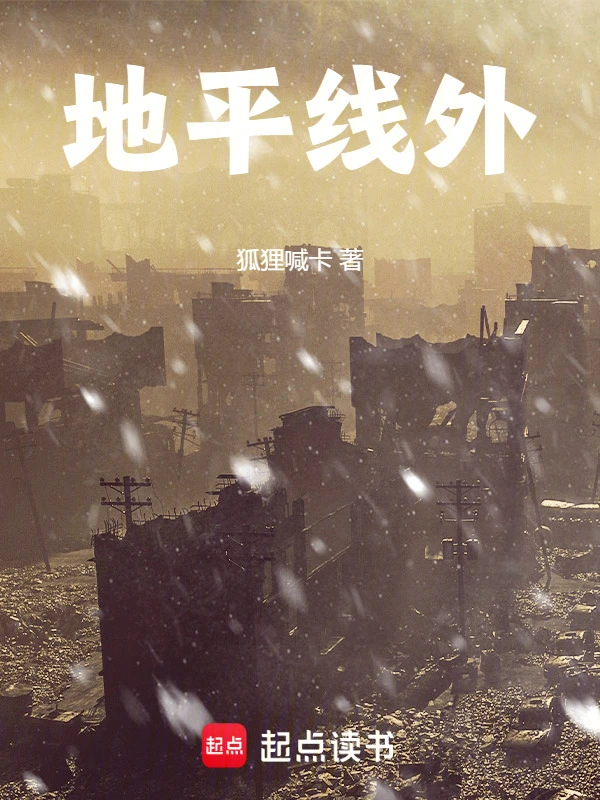
Beyond the Horizon
地平线外
- Status
- Ongoing
- Length
- 287k Words
- Genre
- Military
- Audience
- Male
- Subgenre
- War Fantasy
- Updated
- 8mo ago
- Source
- Qidian
Stats
0Monthly votes
21Recommends
0Fans
86Chapters
Synopsis
Reader comments
Readers also read
 What the Hell Is a Bloody Battle at Hacksaw Ridge When Someone Is in the Special Forces?
 I Traveled Through Liangjian and Copied Equipment at Changjin Lake
 Bright Sword: Play the Entire Game Starting from Northwest Shanxi
 War of Resistance: the Roar of the King of War
 Everything About Chen Mo
 When Nao's Flowers Fall
 Ming Dynasty: the First Assistant of a Poor Family
 All Things Hope
 Martial Arts: Obtain the Skills of Thirteen Dragons and Thirteen Elephants at the Beginning
 Fantasy: Starting from Dialogue Elixir to Enlighten All Things
 After the Creation of the World, Did I Become an Extraterrestrial Demon?
 Traveling Through the World of Immortality: They Call Me the Coffin Bearer
What part of world history does Belvaria originate from?
Deepseek said: Although the user-provided narrative about Belvaria is a fictional setting, its core elements are clearly related to multiple periods and events in world history. The following is a point-by-point analysis of its historical roots and possible realistic mapping: --- ### 1. **Unrest in the post-colonial era and Cold War intervention** - **Keywords**: Foreign intervention forces overthrow the regime, and the legitimacy of the "elected" government is questionable - **Historical correspondence**: - **The Middle East and Latin America from the 1950s to the 1970s**: For example, the CIA overthrew the Mossadegh government in Iran (1953), the Allende regime in Chile (1973), and the Soviet Union's intervention in Afghanistan (1979). - **Cold War Proxy War**: The Angolan Civil War, the Nicaraguan Revolution, etc., The superpowers competed for their sphere of influence by supporting proxies. - **Logical connection**: Foreign forces interfere in the internal affairs of other countries in the name of "democratization", but in fact they lead to regime change and long-term instability. --- ### 2. **Military coup and internal power struggle** - **Keywords**: Bewa Guards counterattacked the capital and overthrew the democratically elected government - **Historical correspondence**: - **Military intervention in politics in the Middle East and Africa**: The Egyptian military overthrew Morsi (2013), and Turkey's multiple military coups (1960-2016). - **Latin American "Caudillo Doctrine"**: In the 20th century, military groups in Argentina, Brazil and other countries frequently came to power through coups. - **Logical connection**: Domestic armed forces (such as the Guards and warlords) take advantage of the chaotic situation to seize power and form a "gun regime". --- ### 3. **The disintegration of multi-ethnic regions and the "field of hundreds of battles"** - **Keywords**: Pan-Belvaria region, civil war between all parties - **Historical correspondence**: - **The disintegration of Yugoslavia (1990s)**: Serbia, Croatia, Bosnia and Herzegovina and other multi-party melee, external forces intervene. - **The Middle East after the collapse of the Ottoman Empire**: The British-French "Sykes-Picot Agreement" artificially demarcated borders, leading to the Kurdish issue and the Syrian Civil War. - **Logical connection**: The multi-ethnic and multi-religious "imperial heritage" region fell into fragmented conflicts due to the collapse of central authority. --- ### 4. **The assassination of the government-in-exile and the symbolic leader** - **Keywords**: The assassination of Alexander Varneyev, the hope for peace was shattered - **Historical correspondence**: - **1914 Sarajevo Incident**: The assassination of Archduke Ferdinand triggered a war, symbolizing the collapse of the old order. - **Rwanda Genocide (1994)**: The death of President Habyarimana in a plane crash became the trigger for ethnic cleansing. - **Logical connection**: The death of a political symbol has become a turning point in the escalation of the conflict, reflecting the intensification of group identity and hatred. --- ### 5. **Narrative structure and historical writing mode** - **Interweaving of fiction and reality**: This setting combines the classic historical narrative template of **"Empire-Disintegration-Melee"** (such as the Holy Roman Empire, the Austro-Hungarian Empire), while drawing on the complexity of **post-modern conflicts** (such as the multi-party forces in the Syrian Civil War, foreign intervention, and the rise of extremist organizations). - **Deep historical metaphor**: It may be an insinuation of the **paradox of the "democratization" process** (such as the post-war chaos in Iraq and Afghanistan) or the **dilemma of national self-determination** (such as the civil war after South Sudan's independence). --- ### Summary: The composite nature of reality mapping Belvaria's fictional history is not a reenactment of a single historical event, but a blend of the following themes: - **The fragility of post-colonial countries** (such as Congo, Libya) - **The long-term shadow of Cold War intervention** (such as Afghanistan) - **National identity and territorial fragmentation** (such as the Balkans, Caucasus) - **Strongman Politics and Democratic Disillusionment** (such as Venezuela, Zimbabwe) This narrative design aims to reveal how power vacuum, external intervention and identity politics jointly create a cycle of "permanent war" through the collage of historical elements.