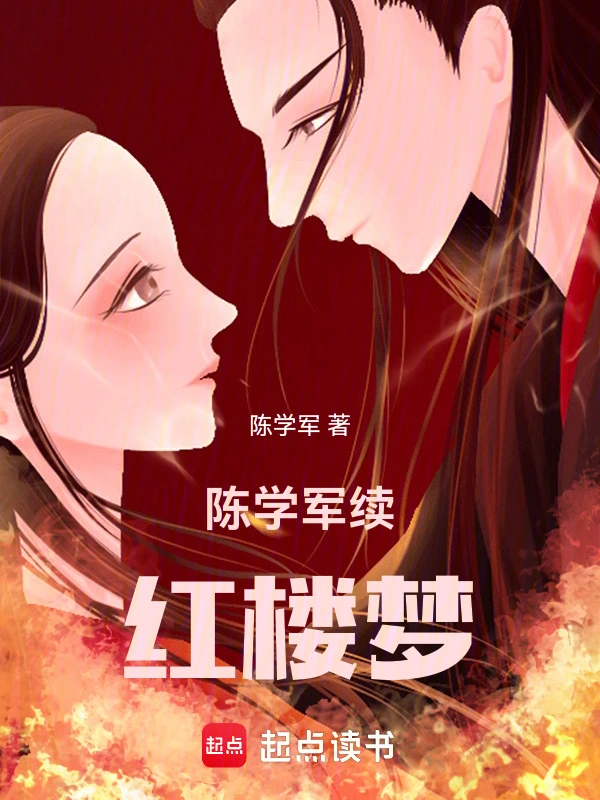
Chen Xuejun Continues the Dream of Red Mansions
陈学军续红楼梦
- Status
- Ongoing
- Length
- 1.7M Words
- Genre
- Ancient Romance
- Audience
- Female
- Subgenre
- Ancient Love Story
- Updated
- 6d ago
- Source
- Qidian
Stats
0Monthly votes
1.4kRecommends
0Fans
225Chapters
Synopsis
Reader comments
Readers also read
 I'm Busy Farming at the Border
 A Prosperous and Prosperous Family
 The Traitor Is a Strict Wife
 Daiyu in the Red Mansion
 Seeking Relatives
 Wasteland: the Three-Star Pile of Full-Level Cubs Is Super Fierce
 The Silver Silk Flowers Are Just Right and Live up to Jincheng Spring
 Douluo: Dong'er Is Reborn, I Am Not Tang Wutong
 I Never Play by the Rules
 After Seeing the Barrage, Junior Sister Bai Lian Burst into Tears and the Whole Sect Cried.
 Jiang Rao
 Cultivation of Immortality with Useless Materials, Starting with a Contract with an Ancestral Dragon
 The Deer and the Cauldron: the True and False Kangxi
 A Dream of Red Mansions Exploring the Lost and Hidden Edition
 The Legend of Linghu Chong
 The Biography of Zhang Wuji, the Beauty of the Country
DeepSeek wrote Cao Xueqin's calligraphy of Dream of Red Mansions?
I just used DeepSeek to write "Chen Xuejun Renewed the Dream of Red Mansions". I have published the 81st chapter on Qidian. Com, trying to reproduce the writing style of Cao Xueqin's original work. Do you think AI can write an original sequel to the Eighty Chapters of Dream of Red Mansions? ... Conclusion: Currently, AI can complete 70% of the surface narrative reconstruction, but when it comes to touching on the essence of realism in "A Dream of Red Mansions" of "tracing the slightest traces and not daring to dig deeper", cultural decoding and artistic re-creation by anthropologists are still needed. If your "Chen Xuejun Reprises the Dream of Red Mansions" can combine the text generation advantages of AI with the in-depth study of red studies, it may be able to open up a new interpretation space in line with the aesthetics of the 21st century in addition to the stylized ending of "Lan Gui Qifang" - this may be the way to break the development of red studies in the era of digital humanities.
It's back on the shelves! 100 Million red envelopes have been distributed, book friends, hurry up and grab them!
The aroma of wine is not afraid of deep alleys. This book has been reworked and has more charm. Cao Xueqin's brushwork is reproduced, and the gray line of grass and snakes has been revealed for thousands of miles! Let's all chase Chai Chai Chai together!
The most powerful sequel to Dream of Red Mansions in history!
I have also read the sequels of Dream of Red Mansions written by other authors before, but they just imitated the language of Dream of Red Mansions. After reading this sequel, I was really surprised! The plot of the story is smooth and in line with the development rules. The characters are lively and interesting. The text is very profound and three-dimensional. There are grass snakes and gray lines lurking in every aspect. Especially the storyline of Daiyu Xiangyun is unexpected and reasonable. Cao Xueqin's brushwork is reproduced. It's great!
It is very well written, has its own ideas, beautiful words, and the plot restores the essence of the original work👍👍
The whole story comes to an end on the Qingming Festival of Yisi Year.
It is said that under the Qinggeng Peak of the Great Wilderness Mountain, there is a stone that Nuwa left behind to patch the sky. It was carried into the mortal world by the great masters and the immortal Miaomiao. After experiencing the joys and sorrows of the world, and the desolation of the world, this old dream was finally engraved between the books on the stone. Who expected that the fortunes of the world would change and the sea would turn into mulberry fields? There was a talented Lingnan scholar named Chen Shengxuejun. At the age of Yisi, he came across two treasure chests of ancient books stored in Huangye Village in the capital. When I opened the box and looked at it, the fragrance of ink hit my nostrils. It turned out to be the complete volume of "Zhiyanzhai Recommendations on Stones" written in the Jiashen period, with one hundred and twenty chapters. The words were like pearls and jade, and they were in harmony with the books in the fantasy world of Taixu. Chen Sheng sighed while caressing the scroll, as if he had witnessed Cao Cao's "ten years of hard work and extraordinary efforts" in person, and he was filled with emotions. Then, with the help of clever skills, he was like Taoist Kong Kong transcribing worldly legends, compiling the fragments and patching them up carefully, giving them new life. The writing of the original work is extremely exquisite. The lines of grass and snakes are gray, and the foreshadowing is thousands of miles away. It is a treasure in the text. However, things in the world are impermanent. Between transmission and copying, some additions, deletions, and changes are inevitable, either due to the desire to avoid disaster or personal changes, making it difficult for the true flavor of the original work to be fully revealed to the world. Chen's new edition is based on the Jiashen version, carefully analyzing the hints, metaphors, symbols, and magical writing of the original work, elucidating its "blurred" deep artistic conception, and striving to provide readers with a more realistic and fluent reading feast. This move has added a valuable piece of information to the study of red science, just like a dead tree blooming with spring, it is finally completed and its contribution is indispensable. Readers should note that since the publication of "The Story of the Stone", many people have copied it, either to avoid the edge of literary inquisition, or to tamper with selfish motives, resulting in "Zhen Shiyin" being mostly "Jia Yu Village", and "True Stories Hidden" being "False Words Cun". The edition edited by Chen Sheng is just like the Feng Yue treasure mirror turned over, revealing the original appearance of white bones and red makeup. What's particularly wonderful is that the annotations are in harmony with the book made by the Fairy of the Fantasy, turning the prophecies of "a thousand red caves" and "a thousand beauties in the same cup" into blood and tears between the lines, which is moving. Unfortunately, the two boxes of authentic ancient books were buried underground with Zhang Jun, a descendant of his good friend Zhiyanzhai in Qinxi, just like the psychic gem returned to the foot of Qinggeng Peak, or like the cocoon paper of "Lanting Preface", forever imprisoned in Zhaoling. Thinking about this, one can't help but sigh, remembering that Zhang's female historian once lamented that "the Red Mansion is not finished yet". Now Chen Sheng and Diao are like the waiters of Shenying watering the dead trees with nectar so that they can sprout new branches. This is actually one of the great blessings in the red academic world. Exactly: Ridiculous words make you cry, and you find new ways to mend the sky. Zhi Yan Zhu Pi reappears, and Huangye Village hides its secrets. The joys and sorrows involved cannot be explained by those who have not experienced it personally. Chen Sheng gave this book to the public for printing, hoping that future generations of viewers would be able to see the steadfastness of the alliance between wood and stone, and also understand the vanity and impermanence of the good relationship between gold and jade, so that they would be able to live up to the painstaking efforts of the experience under the Dahuang Mountain. Exactly: When the false is true, the true is also false, and there is something inaction and nothing in it. The stone in front of Qinggeng Peak is still there, who knows what it tastes like? The whole story comes to an end on the Qingming Festival of Yisi Year.
Textual research on Jiachen Ke Chunwei examination
About the examiners and the emperor's marking of the Spring Examination in the 37th year of Qianlong's reign in the Qing Dynasty (Jiachen Year, 1772), the following analysis can be made based on historical records and the characteristics of the imperial examination system: --- ### 1. Exam background and identity of the examiner 1. **Jiachen Branch Spring Examination Time** The Jiachen year corresponds to the thirty-seventh year of Qianlong (1772). This examination was an important scientific examination in the mid-Qing Dynasty, and 100 Jinshi were admitted (including 3 first-class scholars, 30 second-class scholars, and 67 third-class scholars). 2. **Examiners Zhu Shi and Zhang Tingyu** - **Zhu Shi** (1679-1767): A native of Gao'an, Jiangxi Province, he served as the Minister of Rites in the early years of Qianlong. He was good at Confucian classics and history, advocated pragmatic scholarship, and once presided over the compilation of "History of the Ming Dynasty". - **Zhang Tingyu** (1672-1755): A native of Tongcheng, Anhui, he was an important official in the Yongzheng and Qianlong dynasties. He was famous for his literary talent and official administration. He served as a bachelor twice. However, it should be noted that he actually died in the 20th year of Qianlong (1755). Therefore, he took the exam in this year or used his name for others (possibly a clerical error or confusion in later records). --- ### 2. Emperor Qianlong's grading process and characteristics 1. **Grading system** After the examination, the examiner will submit the top ten papers (including Huiyuan) to the emperor for review, which is called "Chengyu Review Paper". Emperor Qianlong would personally review, make comments and decide the ranking in the palace examination. 2. **Key Points of Grading** - **Classic Meaning and Literary Talent**: Emperor Qianlong attached great importance to the format specifications and interpretation of the classics of eight-legged essays, especially whether the candidates' interpretation of the "Four Books" and "Five Classics" conformed to the official ideology. - **Political Tendency**: Examine candidates' understanding of monarchy and bureaucracy through test questions (such as the current policy question "Theory of Three Dukes and No Prime Ministers in Three Generations and Above") to ensure that their ideas meet the needs of governance. - **Personal Preference**: Emperor Qianlong often made comments on the test papers, such as "clear and logical", "upright arguments", etc., And might even adjust the ranking (such as promoting a certain paper to Huiyuan). --- ### 3. The historical significance of this imperial examination 1. **Characteristics of admitted talents** Among the Jinshi in this subject, a group of officials from the practical school emerged, such as Qian Daxin (Confucian scholar) and Ji Yun (general compiler of "Sikuquanshu"), which reflected the selection tendency of the middle and late Qianlong Dynasty to pay equal attention to academics and practice. 2. **Influence of the system** This joint examination continued the Qianlong Dynasty's reform trend of "emphasis on classics and meanings, and light on contemporary literature". Some test papers received high scores due to solid textual research, which promoted the prosperity of Qianjia textual research. --- ### 4. Controversy and textual research issues 1. **There is doubt that Zhang Tingyu was the examiner** Zhang Tingyu died in 1755, while Jiachenke was in 1772. There is a conflict in time. It is speculated that it may have been misinformed by later generations, or the records of his son Zhang Ruotan (who participated in the imperial examination) may have been confused. 2. **Authenticity of Qianlong's examination papers** Some scholars believe that in his later years (such as the 1770s), due to his busy government affairs, Qianlong may have entrusted his close ministers to review the examination papers on his behalf, but the core rankings were still determined by him personally.
Awesome, just for the love of power generation, I give you a recommendation vote
When the author was writing this sequel, he had infinite reverence for the original work, as if he were in a sacred literary palace, carefully exploring every corner. I carefully combed through the text of the first eighty chapters, like a rigorous archaeologist, not letting go of any subtle clues. I dug deep into the historical background behind it, understood the social scene, cultural traditions, and political situation of that era, and strived to accurately capture every foreshadowing and hint in the original work. The deep meanings hidden behind the words are like the twinkling stars in the night sky, waiting for me to discover. By integrating many lost research results, I absorbed the wisdom and experience of my predecessors, and boldly embarked on the journey of creation with full enthusiasm and rigorous attitude. I carried out a creative attempt full of challenges and strived to restore the spirit of Cao Xueqin's original twenty-eight chapters. This is a difficult but meaningful journey. Every word and every sentence carries my love and respect for the original work. It is my affectionate tribute to the classic.
Collected
The road is long and long, I will search up and down, and encourage each other😁
This sequel to "A Dream of Red Mansions" shows the author's hard work. The plot layout is as close as possible to the foreshadowing of the previous chapter, and the fate of the characters is also reasonable, fresh and smooth, and the book has a bit of the charm of the Red Mansion. As a sequel, it is rare and provides readers with a new perspective to interpret Red Mansions and imagine the ending.
Introducing the situation of "Chen Xuejun Continues the Dream of Red Mansions"
Kimi: "Chen Xuejun Revisited the Dream of Red Mansions" is a literary work that continues Cao Xueqin's original work "A Dream of Red Mansions". The main details are as follows: Author and creative background • Author: Chen Xuejun, who has demonstrated in-depth research and understanding of the original work in his creation. • Creation background: Only the first 80 chapters of Cao Xueqin's original "A Dream of Red Mansions" remain, and the last 40 chapters were continued by Gao E, but there are many controversies. When Chen Xuejun continued writing, he deeply explored the foreshadowing and clues in the original work, combined with the research results of red science, and strived to restore a sequel that is closer to the spirit of the original work. Content Features • Plot continuation: The work continues the vein of the original work's "Talking About Love", and revolves around the Butian Stone, Shenying's Waiter and the Fairy Jiangzhu who descended to earth and experienced tribulations. They respectively incarnated as Jia Baoyu, King Beijing and Lin Daiyu, and performed love and hatred with characters such as the Twelve Beauties of Jinling in the rise and fall of the Jia Mansion. • Character fate: Chen Xuejun re-depicted the character fate in his continuation. For example, Jia Baoyu and Lin Daiyu had a deeper relationship, and they were closely dependent on each other in the torrent of fate; while Xue Baochai became a chaste lady, and King Beijing became a Buddha by feeding tigers with his body. • Style and technique: The sequel provides an in-depth analysis of each version of "Zhi Yanzhai's Re-evaluation of the Story of the Stone" and related historical backgrounds, exploring the deep connection between the character's personality and plot logic, and revealing the hidden fate and ending of the characters in the original work. At the same time, with the help of AI technology, a new chapter is carved out with delicate brushstrokes. Evaluation of the work • Advantages: On the basis of respecting the original work, this sequel is boldly innovative, the plot has ups and downs, and the fate of the characters is richer and more diverse, bringing readers a new understanding and perception. It not only continues the emotional context of the original work, but also adds many exciting plots and deeply analyzes the hints and symbols of the original work. • Controversy: As a continuation work, it may be different from the original work in style and plot, and some readers may have different views on the ending of the continuation and the fate of the characters. Reading Channels "Chen Xuejun Renewed the Dream of Red Mansions" is online on Qidian Chinese website, Xiaoxiang Academy and other platforms, and readers can read it online for free.
Marvel!
So amazing! So well written! Marvelous! 👍👍👍🙏
To the red fans of mountains and flowing water
(Unfolding the scroll and picking up the pen, the ink marks still carry the lingering fragrance of the fat inkstone) Listen, gentlemen: I think of the vast number of great masters and Miao Miao masters covered with stubborn rocks under the Qinggeng Peak in the wilderness mountain, and they have experienced the joys and sorrows of separation and separation, and the hot and cold world. Now that the waves of calamity have been overcome, the psychic jade has returned to the foot of the peak, and the relics of mending the sky should once again be engraved with a romantic story. The old man imitated the Qinxi River and turned on the lamp to record at night in the Mourning Red Pavilion. However, he saw the dancing bamboo shadows outside the window, as if the trains of twelve hairpins were swaying; the wind chimes tinkled at the corner of the eaves, which actually looked like the splashing of tears from the purple fairy grass. The flower owner of Jiangdong is the head of the village, and he follows Fan Juqing's promise to destroy the world of colored glaze and recapture Xiangyun from the tiger and wolf yamen. At the head of Huangye Village, two girls' spinning wheels are still spinning, and the rose officials' brushes in painting the roses are still warm. Unexpectedly, the shadow of the crane on the cold pond turned into the claws of snow and mud, and the old friend sleeping in the rosy clouds actually slept in the sea of rouge snow. At the most enlightening moment of the psychic gem, in the sound of the bells on Mount Wutai, the waiter of the Chixia Palace folded his hands and said: "All the things in the past are like dying yesterday; all the things in the future are like living today." Concubine Xiaoxiang's soul returned to the Queen of Lihen, and the waiter of Shenying realized that the grace of irrigation was originally the edge of the mirror flower water. On the green tomb of Beimang Mountain, the princess cried for three lifetimes, and she actually answered the prophecy of that day that "the cold moon will bury the soul of the flower". Although the golden lock of Lord Hengwu was untied, the jade belt was finally hung. On a windy and snowy night in Ninggu Pagoda, the eight-character blood letter "Never leave, never abandon, will continue forever" is in the air. As for Brother Feng crying towards Jinling and Jia Yucun carrying the shackles on his shoulders, this is the fate that has long been doomed by the poor and unlucky Si Zhong. (Putting down the pen and sighing, ink and tears blending together) Now I am re-examining the records of Taixu Illusion Realm, and I see that the ink on the love list is freshly dried: the Infatuation Department, the Resentment Department, the Chaowei Department, the Night Resentment Department, the Spring Feeling Department, and the Autumn Bei Department. All the evil records have been cancelled. But on the side of Qinggeng Peak, a few new lines of seal script were added: "Life is full of hard work, and the grand banquet is finally over. The joys and sorrows are all the same as illusion, and the dreams of ancient and modern times are all absurd. The red sleeves of the gossip are heavily scarred, and the love, infatuation, and hatred are long-lasting. Every word seems to be blood, ten years of hard work is unusual." (Close the scroll to look at the moon, but see the Beidou Langan) This is not a sequel, it is actually crying blood. If you all see a monk walking and singing on the top of Beimang Mountain where the clouds are shrouded in mist, and listen to the lame Taoist beating the fishing drum and singing: "Okay, okay! It's okay, it's okay -" The sound gradually faded away, leaving only the vast white land that was really clean.
The author might as well write a Red Mansion fan novel
If the writing is good, it might become a hit.
Qian Hong Yi Cao explores spring and dies overseas in Ryukyu
Chapter 94 is updated today, "The Jia family is in turmoil at home and abroad, and Tanchun and Fanmei go to a distant country." There are many emotions. The tragedy of Tanchun and Ban is a typical example of the intertwining of structural contradictions and individual destiny in the feudal era. Zhiyanzhai's comments use key words such as "the end of the world" and "send in tears during the Qingming Festival" to profoundly reveal the multiple institutional roots of his tragedy: 1. Identity dilemma and emotional fragmentation under the patriarchal system Zhi Yanzhai's comment on Tanchun, "Born in the last days of the world, where fortune has faded" points directly to the structural oppression of his concubine status in the patriarchal system with clear distinction between concubine and concubine. Although Tanchun is a young lady from the Jia family, she is torn apart by the ethics of blood because of Aunt Zhao's status as a concubine. She has to deny her biological mother with a decisive attitude of "I just recognize the master and my wife." This immoral behavior of "not recognizing my biological mother" is actually a mandatory choice of identity under the patriarchal system. Just as Zhi Pi said, "the distinction between concubines and concubines is strict, etiquette and law are strict." Feudal ethics pushed Tanchun into the abyss of ethical dilemma through the system design of "differentiation between wives and concubines." 2. The instrumental destiny in imperial politics The verdict of "sending tears to the riverside during the Qingming Festival" is in ironic contrast with Zipiao's "must have a noble son-in-law". Tanchun's distant marriage was not an accident, but an inevitable product of political marriage under the maritime governance system of the Ming and Qing Dynasties. Zhi Yanzhai reveals that the image of "the kite's string is broken" is actually the imperial power's systematic requisition of gentry women - when fighting the rebellion in the South China Sea required political chips, Tan Chun's talent turned into capital harvested by the power. This fate of being a "manager in the field of profit and wealth" confirms the tragic nature of women being reduced to political bargaining objects under the extension of the imperial examination system. 3. The spiritual breakthrough and institutional setbacks of the reformers in the last days Zhipi praised Tanchun for saying "a thousand pieces of gold and purple can govern a country, and one or two hairpins can bring order to a family", but this highlights the deep-seated contradictions of his reform tragedy. Although the reform of the Grand View Garden contract system demonstrated the ideal of "stealing the words of Yao and Shun", the dilemma of "retracing the teachings of Confucius and Mencius" caused it to fall into the value separation between Zhuzi's Neo-Confucianism and pragmatism. On the surface, Tanchun slapped Wang Shanbao's family as a master-slave conflict, but in fact it was the final backlash of the feudal hierarchy against the reformers - when systemic corruption goes deep into the bone marrow, any improvement becomes a catalyst for "suicide". 4. The Metaphor of the Times in the Duality of Zhipi Zhi Yanzhai creates a tension between the brilliant image of "red apricots by the sun" and the nihilistic ending of "a thousand miles east wind and a dream far away", which coincides with the collective anxiety of the Ming and Qing scholars' ideals of "making up the sky" and the reality of the "apocalypse". The praise of "talent since the Qingming Dynasty and high ambition" and the sigh of "unfavorable luck" in the comments are just like the paradox in "Ji Zi" that "the place of wealth and wealth is in the realm of operations" - the higher the talent, the more unbreakable the institutional cage is. This kind of tragic writing transcends individual narrative and becomes a mirror projection of the plight of the intellectual elite in the late feudal period. Just like the metaphor of "two people flying a kite" in the judgment of Tanchun, it symbolizes the dual control of the power system on women's destiny: they are needed to maintain the glory of the family, and their life possibilities are restricted by etiquette. Zhi Yanzhai's comment system ultimately sublimates Tanchun's individual tragedy into an era elegy of "a thousand reds cry once, and a thousand beauties share the same sorrow".
Open a Red Mansion fanfic and take good care of you
What is the whole story of the Qian Xue incident?
As for Qianxue's meeting with Baoyu after being expelled in "A Dream of Red Mansions", a comprehensive analysis needs to be done based on the foreshadowing of the first 80 chapters of the original work and the plot of Gao E's sequel: 1. Background of the event Qianxue was originally a maid in Jia Baoyu's room. When making tea in winter, she mistakenly took poria frost as tea, and was scolded by Baoyu as "lazy". On the surface, this incident was a quarrel between master and servant, but in fact it concealed Mrs. Wang's suspicion that Baoyu was "wandering abroad" (Chapter 41). Later, Qianxue was expelled from Jia Mansion by Mrs. Wang on the grounds of "fox-precious jade", which became a harbinger before the inspection of Grand View Garden. 2. The plot of the sequel In Gao E's sequel, Qianxue returns to Jia's house after Jia's mother died of illness, and confesses to Baoyu: "Although I made a tea mistake, I was actually banned because I refused to serve Sister Feng." It is revealed here that there is another hidden reason for Qian Xue's expulsion: she had refused to secretly exchange tea leaves for Wang Xifeng, which angered her master and was framed. This move highlights his upright character and contrasts with Xi Ren and Qingwen. 3. Character Symbols The image of Qian Xue coincides with the word "Xue Qin", and her experiences reflect the author's life experience. Zhi Pi points out "Qian Xue's arrival in the Prison Temple", suggesting that she may appear after Baoyu's exile to complete the redemption of "helping in times of need". The treatment of the sequel is slightly inferior to that of Zhipi, but it retains Qianxue's core characteristic of "not changing her original intention". 4. Social Metaphor The Qianxue incident reflects the complexity of the master-servant relationship in the Qing Dynasty: she "cryed out" when she was expelled (Chapter 41), showing the survival plight of the lower-class maids; when she returned to Jia's house, she "did not shed tears but persuaded Baoyu", which reflected the character's growth. This transformation is a metaphor for the awakening of individual consciousness under the feudal system. 5. Version Differences Cheng Gaoben and Zhi Pingben have differences on the ending of Qian Xue. Zhi Pi mentioned that "Qian Xue is still an important person", but the sequel treats her as an ordinary maid. Modern redology studies mostly believe that Qianxue should be a key figure who witnessed the turning point in Baoyu's life, and her behavior of "seeing Baoyu" may involve the transmission of important information. This incident has multiple meanings in the narrative of "A Dream of Red Mansions": it is not only the epitome of the conflict between master and servant, but also a foreshadowing of the fate of the characters, and it is also the author's profound criticism of feudal ethics. It is recommended to combine the echoes between the 41st "Poria Frost Incident" and the 74th "Copying the Grand View Garden" to gain a deeper understanding of the literary value of Qian Xue's image.
This subject is not easy to write about! Come on!
Zhi Yanzhai's comments on Tanchun's fate
Regarding Zhi Yanzhai's comments on the fate of exploring spring, it can be summarized by combining the relevant annotations and textual clues in "A Dream of Red Mansions") and the following annotation: "This is a prophecy of exploring spring's far-off prosperity." 12. Combined with the sentence "Looking at the riverside with tears on the Qingming Festival, a thousand miles away in the east wind, a dream is far away", which implies that it The ending of marrying away occurs during the Qingming Festival and is closely related to the tragedy of family separation36 The hypothesis of "keeping this person from going far away" Zhi Yanzhai further commented: "If this person is not far away, the future will fail and the descendants will not be scattered. "It's sad and sad" 12. This sentence not only affirms Tanchun's family management ability, but also points out that his distant marriage is the key factor why the descendants of Jia's family were not completely dispersed after the Jia family was confiscated. However, "It's sad and sad" also strengthens the lament for the tragedy of Tanchun's personal fate. 2. The impact of Tanchun's distant marriage on Jia's family The work of short-lived life extension Yong Zhi Yanzhai believes that Tan Chun's long-distance marriage gave the Jia family a "breathing opportunity" and may have delayed the family's destruction through marriage or political marriage. 16 For example, in the 1987 version of "A Dream of Red Mansions", Jia Lian mentioned that "if it were not for the marriage of the three sisters, the Lord's face would have been ugly", implying that his sacrifice was in exchange for the short-term peace after the confiscation of the Jia family's house. 1 . Limitations of family management ability Although Zhi Yanzhai said that Tanchun was "talented and shrewd", he also pointed out that his ability could not reverse the long-standing shortcomings of the Jia family: the Jia family was "empty", and even if Tanchun was there, the slaves (such as Wu Xindeng's family) and dandy children would still drain the family's wealth. 111 The comments imply personal efforts under the feudal family system. Criticism of the futility of efforts. 3. The tragic evaluation of Zhi Yanzhai The fate of "beautiful women" Zhi Yanzhai summarized Tanchun's fate as "sad and sad" and believed that her distant marriage was the ultimate tragedy of "separation of flesh and blood". Although Tanchun married as a princess, in the verdict, "the woman in the boat covered her face and cried." The image of "crying tears" still highlights the tragedy of sacrificing personal happiness for the interests of the whole family. 39. The double shackles of concubine status and family responsibilities The criticism implies that Tanchun's tragedy stems from the conflict between concubine status and family responsibilities. She once said, "As long as I am a man, I must go out and establish a career early." However, because of her gender and Born into the whirlpool of the Jia family, he was eventually forced to marry away to fulfill his family's mission912. 4. Contradictions and controversies in the criticism On the one hand, Zhi Yanzhai praised Tanchun as "the last barrier of the Jia family"6, but on the other hand, he admitted that he could not change the inevitable decline of the family. This contradiction may reflect the criticism. The author's complex mentality of being both dependent on and desperate for the feudal family system. In addition, Zhipi did not explicitly state whether Tan Chun's marriage is an allusion to Daiyu's ending (such as two women marrying in a foreign country), but some scholars have proposed a correlation hypothesis based on the title of "Xiaoxiang Concubine" and the kite metaphor. Summary The core of Zhi Yanzhai's comment is that Tan Chun's long-distance marriage is a key turning point in the fate of the Jia family. His personal tragedy not only reflects the oppression of women by the feudal family, but also hints at the futility of the nobles in the last days to save themselves. The comment uses emotional expressions such as "sorrow" and "injury" to strengthen the theme of "A Thousand Reds Cry, and Thousands of Beauties Are Shared".
Who does Miaoyu's "Prince and Grandson lament that he has no fate" refer to?
In the sequel or partial adaptation of "A Dream of Red Mansions", the interaction between Miaoyu and Chen Yejun is often endowed with obscure and profound emotional tension. The following is a literary reconstruction and psychological analysis of this scene: --- ### Scene setting: Mei'an Tea Talk In Cui'an on a winter night, Chen Yejun stepped on the snow to return the "green jade bucket" tea set given by Miaoyu. The fire on the stove reflected the half-volume "Zhuangzi" on the desk. Miaoyu's fingertips cooking tea were slightly stagnant, and the heat rising from the celadon cup filled the silence between the two. #### 1. Hidden words of gratitude "This tea vessel has been contaminated by three-thirds of the fireworks in the young master's place, and it seems to be more spiritual than before." Miaoyu wiped the rim of the cup lightly, pushed "Wu Deng Hui Yuan" to the corner of the case to cover the scripture annotations - that page read "If feelings are not attached to things, things will not hinder people." She used the excuse of tasting tea sets, alluding to Chen Yejun secretly preserving the kindness of Guancui'an when he was inspecting the Grand View Garden in Jia's house, but he chose to wrap his sincerity with Zen. #### 2. Objects of Expression When she handed over the re-baked "Laojun Eyebrow", the pages of the "Miaofa Lotus Sutra" quietly fell from her sleeve. Chen Yejun leaned over and picked it up, and saw a cinnabar annotation on the yellowed page: "The laws of the world are equal, why should we fear the calamity of love alone?" The handwriting penetrated through the back of the paper, forming a subtle dialogue with the original text of the Buddhist scriptures. This carefully designed "accident" is actually the nun's final temptation to the world of mortals. #### 3. Confrontation "Donor, look at this plum blossom," Miaoyu suddenly opened the window lattice, letting the cold fragrance pour in, "it becomes a wonderful truth when it blooms in the world of colored glaze, but it becomes a sin when it falls in the luxuriant bush." The double entender not only expresses his own situation, but also satirizes Chen Yejun's dilemma of having to mediate in the whirlpool of power even though he is the queen of the noble family. Chen Yejun responded with "Vimalakīrti Sutra" "If you want to travel to the Pure Land, you must purify your mind", but his eyes fell on the unbroken agarwood beads on her wrist. #### 4. Momentary Thoughts The moment the fire exploded with sparks, Miaoyu's wide sleeve brushed the back of Chen Yejun's hand, and the eighteen-child tourmaline Buddha beads fell to the ground. When she leaned over to pick it up, she caught a glimpse of the jade pendant on his waist - it was actually engraved with the same "Feng Yue Wuhen" seal as the Xiang Fei bamboo tea she collected. This discovery was like a thunderbolt, explaining why he could accurately guess all her tea preferences, but it also confirmed the fate of "outsiders end up in love". #### 5. The ultimate choice When leaving, Miaoyu presented the fragment of "Zhuangzi, the Great Master", in which the sentence "It is better to forget each other in the rivers and lakes" was circled in ink, but beside it was added in small regular script: "The dry road would rather trail in the Xiang River". When Chen Yejun walked to the mountain gate and looked back, he saw that the newly swept "swastika" pattern on the snow had half a drag mark, just like the unfinished word "heart" - this blank space full of contradictions revealed her struggle to both cut off the worldly relationship and desire to be understood. --- ### Psychological description The essence of Miaoyu's gratitude is the manifestation of spiritual dilemma: ① As a practitioner, she must transform worldly kindness into Zen-machine confrontation; ② As a talented woman, she longs for a close friend to interpret her complex metaphor of expressing love through objects; ③ As a young woman, the deliberately loose string of beads exposed the throbbing at the subconscious level. Chen Yejun's restrained response constitutes a mirror projection of her multiple identities - both a worldly confidant and a touchstone of Buddhism. This "tea in the snow" scene is actually a dangerous dialogue between two souls trapped in the identity cage through cultural codes. Every artifact is a carrier of unspoken emotions, and every Zen saying hides questions that one dare not face directly. In the end, under the framework of classical aesthetics of "emotions come first but etiquette ends", an emotional tension that is more shocking than a straightforward confession is achieved.
Analysis of Wang Xifeng's reaction after learning that Jia Baoyu lost his jade in "A Dream of Red Mansions"
In "A Dream of Red Mansions", Wang Xifeng's reaction after learning that Jia Baoyu lost his jade can be analyzed from the three levels of character, plot logic and text implications. His response strategy not only reflects his shrewd and capable nature, but also hides the tragic turn of fate: --- ### 1. **Rational action: the instinctive reaction of the schemer** 1. **Block the news and control the situation** As the actual person in charge of the Jia family, Sister Feng must first block the news to prevent panic in the family. She would strictly order the maids and servants to keep silent, especially to avoid irritating Jia Mu and Mrs. Wang, and at the same time secretly arrange searches. *Text basis: Sister Feng demonstrated her acumen for information control in previous incidents such as Qin Keqing's funeral and the inspection of Grand View Garden. * 2. **Launch a human carpet search** Mobilize close associates of the housekeeper Lin Zhixiao and Zhou Rui's family, and assign servants to search the ponds, flowers, corner gates and other corners of the garden. They may even use the excuse of "checking for theft" to cover up the true purpose. *Subtext: This move is not only to find jade, but also to frighten the servants to prevent anyone from taking the opportunity to cause trouble. * --- ### 2. **Psychological Game: The Anxiety and Superstition Behind Smartness** 1. **Use the theory of ghosts and gods to divert pressure** If the search for jade fails, Sister Feng may suggest asking Taoist Zhang for divination or Daopo Ma for divination. On the surface, she claims that "jade has spirituality and needs to be sincerely inspired", but in fact, this will relieve Jia Mu's anxiety and maintain her own authority. *Underlying echo: In the previous "Baoyu Nightmare Magic" incident, Sister Feng had personally experienced the destructive power of witchcraft. This move was also a compromise with the mysterious power. * 2. **Self-preservation of retreating to advance** Faced with the questioning of Mrs. This kind of "self-inflicted responsibility" can not only calm public anger, but also hints that there are loopholes in the management of Baoyu Academy. --- ### 3. **Metaphor of fate: a preview of the collapse of power** 1. **Sickness and mental breakdown** Combined with the setting of Sister Feng's "bloody landslide" worsening after forty chapters, the incident of losing the jade may be the last straw that breaks her spirit. She would force her sick body to lead the search for jade, but when she was alone, she would lament to Ping'er: "This jade was lost in a strange way, I'm afraid the family's luck has come to an end..." * Tragic hint: The once-all-powerful housekeeper grandma is now unable to reverse the family's decline. * 2. **Subtle change in attitude toward Baoyu** Sister Feng may feel alienated from Baoyu for the first time. In the past, she used Baoyu to consolidate her position (such as "having tea" to make fun of her, and praising Baoyu for her good calligraphy when she served as the Ningguo Mansion). Now she sees his infatuation becoming more and more obvious, or secretly thinking: "If this jade is really lost, he may not even be able to decorate his appearance..." *The coldness of power logic: Revealing Sister Feng's pathological obsession with "practical value" in her values. * --- ### 4. **Narrative function: laying the groundwork for the subsequent tragedy** 1. **The trigger that accelerated Jia Mu's decline** Sister Feng's excuses such as "the jade was sent for consecration" to conceal the truth will eventually be exposed. When Jia's mother learns the truth, she is devastated. Sister Feng will be ethically condemned for "deceiving the ancestors", accelerating the process of betrayal and separation. 2. **Response to the prophecy of Taixu Illusion** The warning of "the agencies are too clever in calculating" in the judgment is revealed here: the more Sister Feng uses power to cover up the crisis, the more exposed the reality that the Jia family is riddled with holes. In the process of searching for the jade, the servants passed the buck and the various houses became suspicious, which became a microcosm of the disintegration of the Jia family. --- ### Ultimate interpretation: a redemption destined to fail The essence of Sister Feng's response is the death struggle of the defender of the old order. She attempts to use secular means (searches, bounties) to solve mythological propositions (psychic gems), and uses Machiavellian logic to fight against the prophecies of fate. This absurdity just highlights the philosophical core of "A Dream of Red Mansions" that "the truth is also false when it is false." Sister Feng in the Lost Jade incident is not only a shrewd executor, but also a tragic symbol swept away by the torrent of the times.
Tongyi Commentary on "Chen Xuejun Continues the Dream of Red Mansions"
"Chen Xuejun Continues the Dream of Red Mansions" is an online continuation work carefully created by Chen Xuejun, a senior red scholar researcher, based on the first 80 chapters of Cao Xueqin's original work "A Dream of Red Mansions". The following is a detailed introduction to the work: Overview of the work - **Nature of the work**: online novels, ancient romance. - **Creative background**: The author deeply studied the first eighty chapters of the original work, sorted out the foreshadowing and hints, integrated the previous research results of red studies, especially the in-depth analysis of "Zhi Yanzhai Re-evaluation of the Story of Stone", and explored the hidden character fate and plot logic of the original work, and continued writing on this basis. - **Creative Features**: Boldly innovate while respecting the original work, continuing the vein of "theme talks about love", adding many twists and turns, revealing the fate of many characters in the Red Mansions, and achieving the perfect combination of innovation and classicism. Some content is also created with the help of artificial intelligence and big data analysis, striving to be close to the charm of the original work. #### Storyline - **Main Clues**: It revolves around the key figures such as Butian Stone, Shenying Waiter, and the Scarlet Pearl Fairy who descended to earth and experienced calamities. They incarnated as Jia Baoyu, King Beijing, Lin Daiyu, and the twelve beauties of Jinling and other boudoir women, and performed love and hate during the rise and fall of the Jia family. - **The Rise and Fall of the Jia Family**: vividly presents the decline process of the Jia Family from the burning prosperity to the collapse of the building, and deeply depicts the intricate intertwining destinies of the four major families. - **Character Destiny**: Detailed description of the joys and sorrows, the ups and downs of each of the twelve beauties of Jinling. For example, Lin Daiyu's hardship in the palace, Jia Baoyu's loss and enlightenment, Xue Baochai's marriage troubles, Shi Xiangyun's optimism and perseverance, etc., Have all been deeply portrayed and displayed. - **Plot development**: There are intrigues and emotional entanglements within the family, as well as helpless struggles under the impact of external forces. For example, the plots of Jia's house being confiscated and the love and hatred between characters are ups and downs, complex and diverse. #### Value of the work - **Literary value**: As a continuation work, it makes bold innovations and attempts on the basis of continuing the style of the original work, presenting readers with a brand new world of Red Mansions, enriching the literary connotation of "A Dream of Red Mansions". - **The value of red science research**: The author has deeply explored and interpreted the foreshadowing and hints in the original work, providing new ideas and perspectives for the study of red science. - **Cultural value**: The work inherits and promotes the excellent traditional Chinese culture, allowing readers to feel the charm of classical literature while also having a deeper understanding of the social landscape and humanistic spirit of that era. Influence of the work - **Reader response**: After the work was released on the online platform, it has attracted the attention and love of the majority of readers. Readers spoke highly of the author's creative talent and hard work, and believed that this sequel well continued the spirit and style of the original work. - **Academic evaluation**: Some researchers of red studies also affirmed this work, believing that it has certain value and significance in both red study research and literary creation. To sum up, "Chen Xuejun Continues the Dream of Red Mansions" is an online literary work worth reading. It not only continues the classics of the original work, but also brings new thinking and insights to readers.
Tongyi large model evaluates the online work "Chen Xuejun Continues the Dream of Red Mansions"
"Chen Xuejun's Continuation of Dream of Red Mansions" is a carefully created sequel based on the first 80 chapters of Cao Xueqin's original work. It has the following characteristics: Advantages In-depth research, faithful to the original work - The author conducted in-depth research on the original work, sorted out the foreshadowing and hints, and the continuation content is basically faithful to the original work in terms of character and plot logic. - Integrating the results of previous studies on red science, especially the in-depth analysis of "Zhi Yanzhai Re-evaluation of the Story of Stone", to explore the hidden character fate and plot logic. Rich plot and complete structure - The story revolves around key characters, with ups and downs, vividly presenting the journey of the Jia family from prosperity to decline, as well as the intertwined fates of the four major families and the twelve beauties of Jinling. - Reasonable speculations and supplements are made on the unsolved mysteries of the original work and the endings of the characters, such as the exploration of Chunhe Fan, the confiscation of Jia's house and other plots, making the story structure more complete. Beautiful writing and fluent language - The writing is delicate and beautiful, the language style is close to the original work, and has a classical charm. - The scene description is vivid, and the character dialogue fits the identity, which enhances the reader's sense of involvement. Bold innovation, unique perspective - Bold innovations on the basis of respecting the original work, such as the introduction of artificial intelligence and big data analysis to assist creation, adding new ideas to the continuation. - Interpret the fate of characters from a new perspective, such as the exploration of the love affair between King Beijing and Bao Dai, which provides readers with different perspectives of thinking. The theme is profound and enlightening - Continuing the vein of the original work of "Talk about Love", it explores themes such as love, destiny, and the rise and fall of the family. - Reveals the various shortcomings of feudal society, deeply depicts human nature and the impermanence of the world, and triggers readers to think. Shortcomings The character creation is slightly thin - The character development and emotional changes of some characters are not delicate enough and are slightly inferior to the original work. - The images of the new characters are not distinct enough, lacking depth and three-dimensionality. The plot advances a little hastily - In order to cover the fate of many characters, some plots advance too quickly, lacking foreshadowing and detailed description. - Some plot twists are slightly abrupt and not logical enough, which affects the overall reading experience. Balance between innovation and original work - Some innovative content may not be completely consistent with the style of the original work, such as the introduction of artificial intelligence elements, which is slightly blunt. - While pursuing innovation, the grasp of the spirit of the original work needs to be strengthened. Summary "Chen Xuejun Continues the Dream of Red Mansions" is a continuation work worth reading. On the basis of being faithful to the original work, the author made bold innovations, enriched the storyline and explored profound themes. Although there are some shortcomings, overall, it provides readers with a new perspective to understand and appreciate the classic "Dream of Red Mansions". For readers who love "Dream of Red Mansions", this work has certain reading value and reference significance.
Kimi commented on "Chen Xuejun Continues the Dream of Red Mansions":
Advantages • In-depth research and inheritance of the original work: Chen Xuejun conducted an in-depth study of the first eighty chapters of the original work, sorting out the foreshadowings and hints like peeling off cocoons, and also integrated many previous research results of red studies, especially the in-depth analysis of "Zhi Yanzhai Re-evaluation of the Story of Stone" to explore the hidden character fate and plot logic of the original work. • Character creation is consistent with the original work: The characters in the continuation are more consistent with the original work. For example, Jia Baoyu's rebellious and passionate, Lin Daiyu's sensitive and melancholy, Xue Baochai's dignified and steady, etc. Are all reflected in the plot, allowing readers to feel familiar characters. Moreover, the author also deeply explores the inner world of the characters through delicate descriptions, making the characters more three-dimensional and full, such as Lin Daiyu's inner monologue, Jia Baoyu's emotional struggle, etc., Showing their helplessness and struggle in the face of fate. • The plot design is ingenious and innovative: it not only continues the "main theme of love" in the original work, but also adds many twists and turns. It revolves around key figures such as Butian Stone, Shenying Waiter, and the Fairy Jiangzhu, and closely connects their life experience and destiny with the rise and fall of the Jia Mansion. For example, the process of the Jia Mansion from prosperity to decline is vividly presented, the intricate destinies of the four major families are intertwined, and the joys and sorrows of the twelve beauties of Jinling make the plot ups and downs, complex and diverse. At the same time, it also skillfully incorporates some new elements and plots, such as Xiangling's illness and dreams recalling the past, Jin Gui Nieman being implicated in the old case, Baochai being forced to marry Yucun, etc., Which brings freshness to readers. • Theme excavation and sublimation: This sequel continues the original work's discussion of themes such as feudal ethics, the rise and fall of families, and profoundly reveals the darkness and decadence of feudal society, as well as the suppression and distortion of human nature. Through the fate of the characters, it shows the insignificance and helplessness of individuals in the face of fate, as well as the pursuit of freedom, love and happiness. The work has profound ideological connotation and practical significance, and triggers readers to think deeply about life and society. • The writing is beautiful and full of charm: the writing style is simple and elegant, the language is beautiful and fluent, and full of classical charm, which is consistent with the writing style of the original work. The author uses a large number of rhetorical techniques, such as metaphors, personification, parallelism, etc., To make the text more vivid and contagious. At the same time, the book also quotes poems and songs from the original work, and makes appropriate creations based on them, which not only adds cultural connotation to the work, but also better highlights the emotions of the characters and the atmosphere of the plot. Shortcomings • The rationality of some plots is open to question: Although the author has continued to write the story as closely as possible to the original work, some plots still have certain rationality issues. For example, the actions and decisions of some characters are abrupt and lack sufficient psychological motivation and background, making it difficult for readers to be completely convinced. For example, some of Jia Baoyu's reactions when faced with family changes, as well as the choices of some characters in complex situations, may make readers feel unnatural or deviate from the character development of the original characters. • Slight differences from the style of the original work: Although overall I try my best to imitate the writing style of the original work, upon careful reading, I can still feel some slight differences in writing style and narrative rhythm with Cao Xueqin's original work. This difference may affect the reading experience of some readers who are extremely sensitive to the style of the original work, making them feel that the continuation is different in flavor and texture from the first 80 chapters of the original work. • Integration of innovative elements: Although some new elements and plots were incorporated to add new ideas, although they enriched the story content to a certain extent, the integration of some elements was not high enough and seemed a bit stiff or inconsistent with the overall story atmosphere. For example, some plot settings involving modern concepts or more fantasy may make some readers feel that they are not in line with the ancient social background and traditional charm depicted in "A Dream of Red Mansions", thus weakening the overall sense of harmony of the work to a certain extent. Overall evaluation "Chen Xuejun Continues the Dream of Red Mansions" is an excellent continuation work based on respecting the original work. The author relies on his profound research foundation in red studies and rich imagination to present a relatively complete and innovative world of Red Mansions to readers. It not only continues the artistic charm and ideological connotation of the original work, but also injects new vitality into the classic through innovative plots and characterizations. It has high literary and artistic value. It is a worthy sequel to the Red Mansion lovers and provides a new perspective and thinking direction for the study of Red Mansions.
It is recommended to watch Guiyou's version of Dream of Red Mansions.
General meaning: Introduction to the online work "Chen Xuejun Renewed the Dream of Red Mansions"
"Chen Xuejun Renewed the Dream of Red Mansions" is an online literary work based on the original work of "A Dream of Red Mansions" by Cao Xueqin. The following is the relevant introduction: #### Introduction to the work - **Story content**: The continuation is based on the first eighty chapters of the original work, deeply exploring the historical background and cultural heritage, and striving to restore the fate of the characters and plot development. The story revolves around the earthly calamities of the Butian Stone, the Shenying Attendant, and the Scarlet Pearl Fairy. It focuses on the love and hatred of Jia Baoyu, Lin Daiyu and others, and shows the ups and downs of the characters in the torrent of the times as the Jia family changes from prosperity to decline. - **Creative Features**: - **Respect the original work**: Continuing the writing style and ideas of the original work, following the main line of "the main theme of talking about love", and maintaining the same literary style as the original work. - **In-depth analysis**: In-depth analysis of each version of "Zhi Yanzhai Re-evaluation of the Story of the Stone", exploring the deep connection between the character's personality and plot logic, and revealing the hidden fate and ending of the characters. - **Integrated research results**: Integrate the research results of red science and artificial intelligence big data analysis to make reasonable inferences and continuations of the foreshadowing of the original work. - **Bold Innovation**: On the basis of being loyal to the original work, we make bold innovations to add new ideas to the story, making the continuation content more rich and fascinating. #### Introduction to the author Chen Xuejun has profound research and love for "Dream of Red Mansions". By carefully sorting out the original work, he painstakingly explored the historical background and cultural connotation, and strived to restore Cao Xueqin's creative intentions in the continuation, presenting readers with a world of "Dream of Red Mansions" that is both faithful to the original work and full of new ideas. #### Evaluation of the work - **Advantages**: - **Plot coherence**: It is well connected with the original work, the plot development is reasonable, and the fate of the characters basically conforms to the setting of the original work. - **Beautiful writing**: The writing is delicate, the language style is similar to the original work, and it has high literary value. - **Vivid characterization**: The characters are full-bodied, with distinctive personality traits, and the emotional descriptions are delicate and nuanced. - **Profound Thoughts**: It continues the original work's profound thinking on life, love, and society, arousing resonance among readers. - **Shortcomings**: - Some readers think that the continuation cannot fully reach the height of the original work, and is slightly lacking in creativity and depth. Overall, "Chen Xuejun Continues the Dream of Red Mansions" is a sequel to "Dream of Red Mansions" worth reading, providing new perspectives and ideas for the study of Red Mansions.